
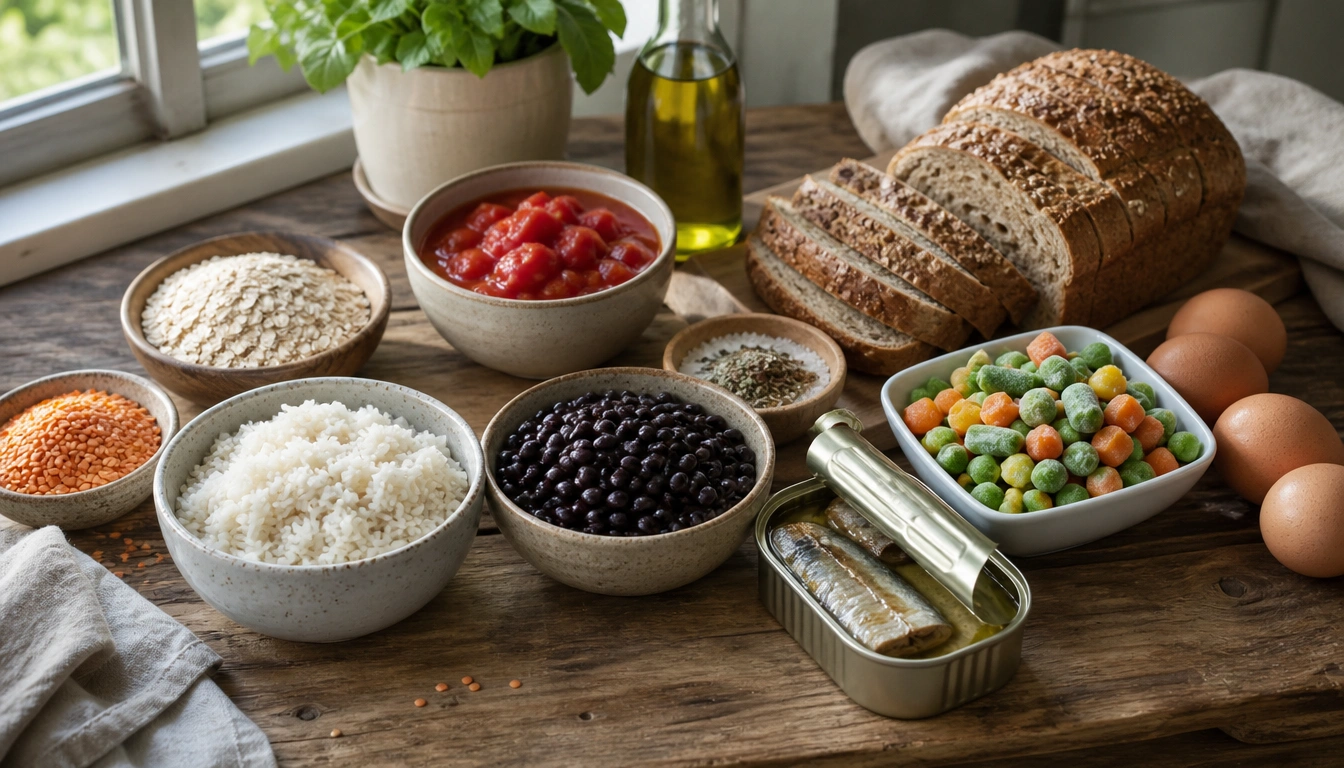
Cheap pantry cooking can be healthy, filling, and balanced. The easiest approach is to combine a grain or starch, a protein, and a fruit or vegetable, then use low-cost flavor boosters to make the meal appealing. Beans, lentils, oats, eggs, tinned fish, frozen vegetables, canned tomatoes, and whole grains are some of the best value staples. Frozen, canned, and dried foods can all work well when you watch sodium, added sugar, and food safety.
Key Takeaways
- Build meals from three parts: grain or starch, protein, and produce. That keeps budget cooking balanced without needing a full recipe.
- Beans, lentils, oats, eggs, tinned fish, and whole grains are among the cheapest nutrient-dense pantry staples.
- Frozen and canned produce can be as useful as fresh options, especially when it is plain, unsweetened, or no-salt-added.
- Rinsing canned beans and vegetables can lower sodium, and fruit packed in water or 100% juice is a better choice than syrup.
- Use pantry staples to scale meals up for children, pregnant people, and active adults by increasing portions of nutrient-dense foods.
- Check cans carefully: dented, bulging, rusted, or leaking cans should be discarded, and some medical conditions need individualized advice.
Budget pantry meal strategy: think in building blocks
Healthy pantry meal ideas work best when you stop looking for one “perfect” recipe and start mixing building blocks. A grain or starch gives structure and energy. A protein source helps the meal satisfy hunger. Produce adds fiber, vitamins, and volume. Then you layer in a flavor booster so the meal is pleasant enough to repeat on a busy week.
This approach is practical for students, families, and anyone shopping on a tight budget because it gives you flexibility. If one item is missing, you can swap in another: oats instead of rice, beans instead of meat, frozen peas instead of fresh broccoli, or canned tomatoes instead of a fresh sauce base. Public health guidance from the NHS and similar bodies supports using shelf-stable foods in this way, because frozen, canned, and dried foods can still contribute to a balanced diet when chosen wisely.
Food-first cooking also helps reduce waste. A half bag of rice, a can of beans, and a handful of frozen vegetables can become breakfast, lunch, or dinner. That makes pantry cooking less about strict recipes and more about combining what you already have into a satisfying meal.
Best low-cost pantry and freezer staples to keep on hand
A budget pantry does not need dozens of items. It needs a few reliable foods you can use in multiple meals.
Base foods: rolled oats, brown rice, white rice, whole-wheat pasta, couscous, potatoes, tortillas, and flour or whole-grain bread if you have freezer space. These are the foundation for bowls, soups, breakfasts, and quick dinners.
Proteins: dried or canned beans, lentils, chickpeas, peanut butter, eggs, tinned tuna, sardines, mackerel, and salmon. These are affordable ways to add protein, iron, and staying power. Canned fish is especially useful when you need a no-cook meal.
Produce: frozen mixed vegetables, frozen spinach, frozen berries, canned tomatoes, canned corn, canned carrots, canned pumpkin, and fruit packed in water or 100% juice. Dried fruit can also help, but use it as a small addition because it is more concentrated.
Flavor boosters: onions, garlic, tomato paste, vinegar, soy sauce, mustard, curry powder, cumin, chili powder, dried herbs, bouillon, salsa, and olive or rapeseed oil. These can make simple foods taste complete without adding much cost.
To keep costs down, buy the forms you will actually use. Dried beans are often the cheapest option if you have time to cook them. Canned beans save time. Frozen vegetables help when fresh produce is expensive or spoils too quickly.
How to build a balanced pantry meal with MyPlate or Eatwell proportions
MyPlate and the Eatwell Guide offer a simple visual formula for balanced meals. Roughly half the plate should be fruits and vegetables, about one quarter should be grains or starchy foods, and about one quarter should be protein. That is a useful target even when the meal comes from shelf-stable ingredients.
For a pantry lunch bowl, you might use rice or pasta for the grain portion, then add beans, lentils, eggs, or tinned fish for protein. The remaining space can come from frozen vegetables, canned tomatoes, or a simple side of fruit. If the produce is in the meal itself, the “half plate” does not need to look like a salad; a soup, stew, or pasta dish can still meet the same balance.
Healthy pantry meal ideas become easier when you build the meal in this order: base first, protein second, produce third, flavor fourth. That order helps you avoid a meal that is mostly starch and leaves you hungry again soon after. It also makes it easier to stretch a small amount of protein across more servings.
For people who need more energy, the same formula still applies. The meal can be made larger by increasing the grain portion slightly or adding calorie-dense extras like peanut butter, eggs, or a little oil. For people who need lighter meals, the grain portion can shrink while the vegetables increase.
Smart swaps that improve nutrition without raising cost
Some of the best budget upgrades do not cost more. They simply replace less useful versions of the same food.
Choose whole grains when possible, such as brown rice, oats, whole-wheat pasta, or whole-grain bread. They bring more fiber than refined grains and often help meals feel more satisfying. Use lentils and beans often because they are inexpensive, versatile, and naturally rich in fiber and protein. They are especially useful in soups, curries, rice bowls, and pasta sauces.
Frozen vegetables are a smart swap for expensive or wilted fresh produce. They are often picked and frozen quickly, which helps preserve nutrients. Canned tomatoes, peas, corn, and pumpkin can also play a major role in inexpensive meals. According to public health guidance, frozen and canned produce can be nutritionally comparable to fresh options when the ingredients are plain and the product is chosen carefully.
For protein, canned fish can be a strong value, especially sardines, mackerel, and tuna. Eggs are another low-cost option that work in breakfasts, fried rice, baked dishes, and simple dinners. If you eat meat, consider using smaller amounts and extending them with beans or lentils. That keeps the cost per serving lower and adds fiber.
How to make canned and frozen foods healthier
Canned foods can be a major help on a budget, but it pays to read the label. Many canned beans and vegetables are high in sodium, and canned fruit may come in syrup. The easiest fixes are simple and effective: choose no-salt-added versions when possible, rinse canned beans and vegetables under water, and buy fruit packed in water or 100% juice instead of heavy syrup.
Rinsing can reduce some of the surface sodium and improves the taste of beans and vegetables too. That matters if you are using several canned foods in one meal, such as beans plus tomatoes plus broth. When available, choose plain canned tomatoes, no-salt-added beans, and low-sodium stock or bouillon.
Label reading matters for frozen foods as well. Plain frozen vegetables are usually the simplest option. Sauced or seasoned frozen sides can be convenient, but they may contain more sodium, added sugar, or saturated fat than you expect. The same rule applies to frozen fruit: plain fruit is usually the best choice for oats, yogurt bowls, and smoothies.
If you are buying fruit in a can, choose water or juice-packed versions. That helps avoid unnecessary added sugar while still giving you a shelf-stable fruit option that can fit breakfast, snacks, or dessert-style meals.
Mix-and-match meal ideas for breakfast, lunch, and dinner
Breakfast can be as simple as oats cooked with milk or fortified plant milk, topped with peanut butter and frozen berries. Overnight oats are useful when you do not want to cook. Another low-cost option is toast with peanut butter and a piece of fruit, or eggs with whole-grain toast and canned tomatoes on the side.
For lunch, a bean and rice bowl is hard to beat. Combine rice with rinsed beans, frozen vegetables, and a spoon of salsa or tomato sauce. You can also make tuna or sardine toast with tinned tomatoes or corn on the side. If you want something cold, chickpea salad on whole-grain bread or crackers can work well.
Dinner can be a lentil pasta sauce, a vegetable soup with beans, or a quick fried rice with egg and frozen peas. Canned tomatoes, onions, garlic, and lentils can make a filling one-pot meal. If you have potatoes, bake or microwave them and top them with beans, salsa, and a little cheese or yogurt if available.
No-cook options matter when time, electricity, or equipment are limited. Try canned beans with crackers, canned fish with whole-grain toast, peanut butter sandwiches with fruit, or yogurt with oats and canned fruit in juice. These are not elaborate meals, but they can still be balanced enough to hold you over.
How to stretch ingredients further
Stretching ingredients is one of the best ways to save money without shrinking the meal. Batch cooking helps a lot: make a large pot of rice, lentils, beans, or soup and repurpose it across several days. Leftover rice can become fried rice; leftover beans can become a wrap filling; leftover vegetables can go into an omelet or pasta sauce.
If you cook meat, use it as a flavor component rather than the entire meal. Mixing minced meat with beans or lentils can double the volume of a chili, pasta sauce, or casserole while keeping a satisfying texture. This is especially useful when feeding a family or trying to make a few servings last longer.
You can also stretch calorie-dense staples for people who need more energy. Add peanut butter to oats, eggs to rice, or a drizzle of oil to vegetables and grains. For children, pregnant people, and active adults, larger portions of beans, oats, eggs, tinned fish, and whole grains can help meet higher needs without requiring expensive specialty foods.
Keep leftovers safe by cooling them quickly, refrigerating them promptly, and reheating them until steaming hot. Pantry cooking is affordable only if it also avoids food waste.
Safety and special-diet considerations
Food safety still matters when you rely on shelf-stable foods. Never use cans that are bulging, leaking, severely dented on the seam, or rusted through. Those are warning signs that the food may not be safe. After opening, use a clean utensil and transfer leftovers to a container if the can is not being emptied right away.
People with food allergies need to read labels carefully. Canned sauces, baked beans, broths, and seasoning mixes may contain hidden allergens or be processed in facilities that also handle nuts, wheat, soy, or dairy. If you need gluten-free meals, check for wheat-based ingredients in sauces, soup mixes, and crackers, not just in the main starch.
Some health conditions require more personalized advice. People with celiac disease need strict gluten avoidance. People with kidney disease may need to limit protein, potassium, phosphorus, or sodium depending on the plan from their clinician. People managing diabetes or hypertension may also need to pay closer attention to carbohydrate portions and sodium from canned foods. In those cases, a registered dietitian or other healthcare professional can help tailor pantry choices to the person, not just the budget.
If you are feeding someone who is immunocompromised, pregnant, very young, or medically fragile, use extra care with food storage, leftovers, and can safety. Pantry meals can still be a good choice, but they should be handled with the same food-safety standards as any other meal.
Frequently Asked Questions
What pantry staples are the healthiest and cheapest to keep on hand?
Beans, lentils, oats, brown rice, whole-wheat pasta, eggs, peanut butter, canned tomatoes, frozen vegetables, and tinned fish are some of the best-value staples. They are flexible, filling, and easy to combine into balanced meals.
How can I make canned foods healthier, especially for sodium and added sugar?
Choose no-salt-added canned beans and vegetables when you can, rinse regular canned beans and vegetables under water, and pick fruit packed in water or 100% juice instead of syrup. Plain frozen vegetables are also a strong option.
What is an easy formula for building a balanced budget meal from pantry ingredients?
Use a simple plate pattern: about one quarter grains or starch, one quarter protein, and about half fruits and vegetables. In practice, that might be rice plus beans plus frozen vegetables, or oats plus peanut butter plus fruit.
How do frozen and canned vegetables compare with fresh produce for nutrition?
Frozen and canned vegetables can be very comparable to fresh produce, especially when they are plain and minimally processed. They are often picked and preserved quickly, which helps lock in nutrients and makes them practical when fresh food is expensive or unavailable.
How can I stretch beans, lentils, eggs, or tinned fish into more servings without losing nutrition?
Use them as the protein anchor, then bulk up the meal with grains, vegetables, or potatoes. Beans can be mixed with rice, lentils can extend pasta sauce, eggs can be added to fried rice, and tinned fish can top toast or pasta for a bigger meal.
The Bottom Line
Healthy pantry meal ideas do not need fancy ingredients. A smart budget meal usually combines a grain or starch, a protein, and a fruit or vegetable, then uses simple seasonings to make it satisfying enough to repeat.
Frozen, canned, and dried foods can all help you eat well on a budget. If you choose plain versions, rinse when needed, and watch labels for sodium and added sugar, pantry cooking can stay both affordable and nutritious.
For people with allergies or chronic conditions, pantry planning should be more specific. The best low-cost meal is one that fits the person’s health needs, food access, and cooking setup as well as the grocery budget.
Medical disclaimer
Medical disclaimer: This content is for educational and informational purposes only and is not a substitute for professional medical advice, diagnosis, or treatment. Dietary needs and supplement suitability vary by individual.
Sources
- National Health Service (NHS) — nwknowledgenow.nhs.uk. Accessed November 2026.
- National Health Service (NHS) — ruh.nhs.uk. Accessed November 2026.
- National Health Service (NHS) — cntw.nhs.uk. Accessed November 2026.
- National Health Service (NHS) — swlondon-healthiertogether.nhs.uk. Accessed November 2026.
