
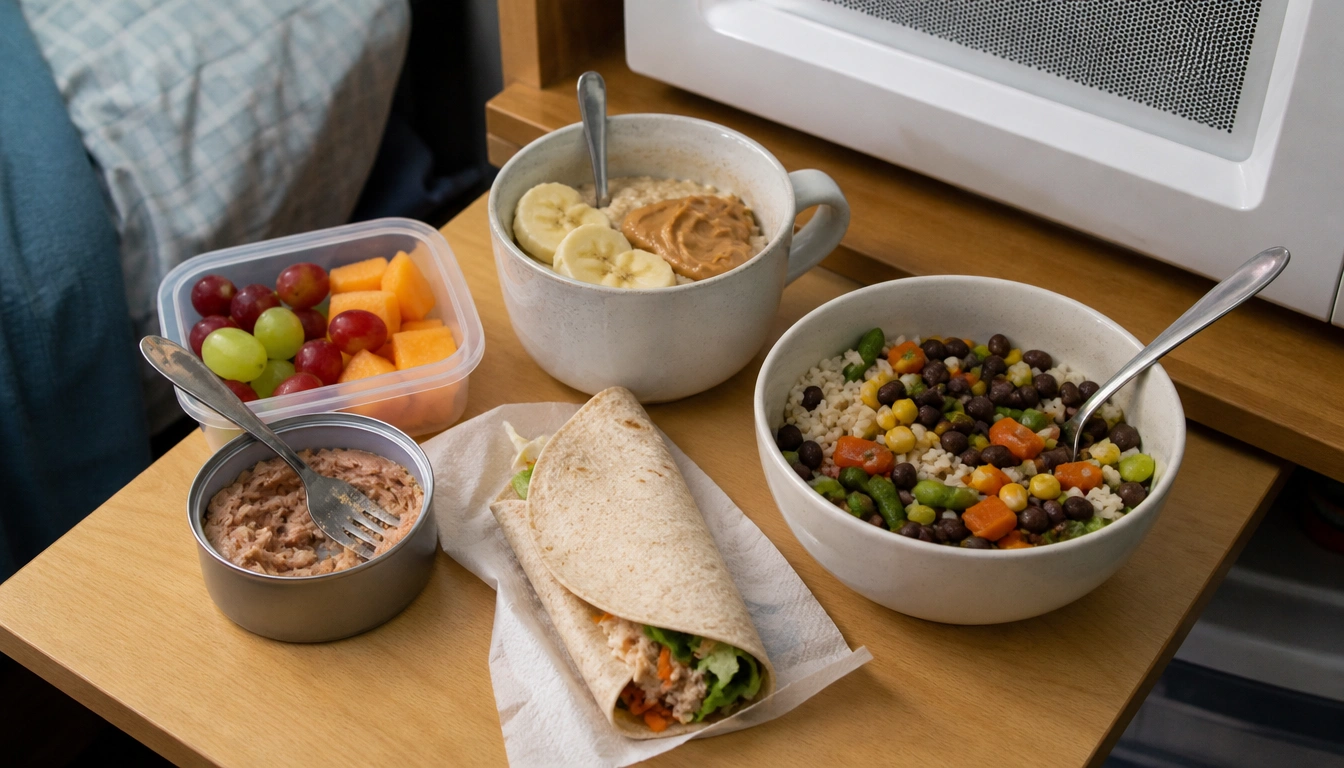
You can make cheap, healthy, filling meals from pantry staples by combining a protein source, a whole grain or starch, and produce in a simple bowl, wrap, or breakfast dish. For dorms, that often means microwave rice, beans, oats, canned fish, frozen vegetables, peanut butter, and fruit. In a shared apartment kitchen, you can scale the same basics into bigger batches and leftovers.
Key Takeaways
- A small pantry can cover most student meals if you stock protein, whole grains, produce, and a few flavor boosters.
- The MyPlate-style plate method works well without calorie counting: half produce, one-quarter protein, one-quarter whole grains.
- Dorm meals can be built with a microwave, mini-fridge, and a few shelf-stable items like oats, beans, canned fish, and rice.
- Frozen and canned fruits and vegetables are practical budget foods and can be just as useful as fresh produce in student housing.
- Shared kitchens and dorms need extra food-safety care, especially for leftovers, open cans, and cross-contamination.
- Athletes and highly active students usually need larger portions of grains and protein than a standard pantry meal provides.
Why a college pantry works better than relying on takeout
A healthy college pantry is less about perfection and more about having enough building blocks to make a real meal when time, money, and storage are limited. For many students, the biggest problem is not knowing how to cook. It is getting home late, opening the fridge, and seeing only condiments and random leftovers. Pantry and freezer foods solve that by giving you ingredients that last, travel well, and can be turned into several different meals.
Whole grains, beans, oats, canned fish, nut butter, and frozen vegetables cover the basics of energy, fullness, and nutrient intake. According to the National Institutes of Health and university nutrition guidance, regular intake of fiber-rich grains, protein foods, and fruits and vegetables supports steadier energy and better meal quality than a diet built mostly on snack foods and convenience items. For students with tight schedules, shelf-stable foods also reduce food waste, because they are easier to keep on hand than fresh produce that spoils quickly.
The best pantry strategy depends on your housing. In a dorm with a mini-fridge and microwave, lean on ultra-shelf-stable foods and small containers. In a shared apartment kitchen, you can add larger bags of rice, more produce, and batch-cooked beans or pasta to stretch the week.
Best pantry staples for a healthy college meal plan
A useful student pantry has four parts: protein, grains, produce, and flavor. You do not need dozens of items. You need a few dependable ones that mix well in different meals.
Protein: canned black beans, chickpeas, lentils, tuna, salmon, eggs, tofu if you have fridge space, and peanut or almond butter. These foods help meals feel satisfying and support muscle repair and daily recovery.
Whole grains and starches: rolled oats, whole-wheat bread or tortillas, microwave brown rice, regular brown rice, whole-wheat pasta, and plain instant oats. The Dietary Guidelines for Americans recommend that at least half of your grains come from whole grains, so these foods are a smart base.
Produce: frozen vegetables, canned tomatoes, canned corn, apples, bananas, oranges, raisins, and frozen berries. Frozen and canned produce are especially useful in student housing because they are often picked at peak ripeness and are less likely to go to waste.
Flavor and fats: olive oil, soy sauce, salsa, mustard, hot sauce, garlic powder, cumin, black pepper, cinnamon, and a small jar of pesto or curry paste if your budget allows. These make a plain bowl taste like an actual meal without much effort.
If you are shopping on a tight budget, start with foods that can become breakfast, lunch, or dinner. Oats, rice, beans, peanut butter, and canned vegetables give you more flexibility than specialty snacks or single-purpose ingredients.
How to build a balanced college meal without calorie counting
The MyPlate-style method is simple: fill half your bowl or plate with fruits and vegetables, one-quarter with protein, and one-quarter with whole grains. You do not need to weigh food or count calories to use it. The visual pattern is enough for most everyday meals.
For example, a microwave bean bowl can start with brown rice in the bottom, then beans or tuna for the protein, then a generous layer of frozen vegetables or salsa-based vegetables on top. A breakfast bowl can use oats as the grain, peanut butter or yogurt as the protein-rich piece, and fruit for the produce half. If your meal is more of a wrap or sandwich, think in the same way: include a grain wrapper or bread, a protein filling, and a fruit or vegetable on the side.
This method is especially useful for students because it does not require a perfect kitchen setup. If you only have a microwave and a mini-fridge, you can still build balanced meals from shelf-stable ingredients and a few chilled items. If you have a shared kitchen, the same template can guide bigger meals like pasta with beans and vegetables or rice bowls with eggs and greens.
For students who rely on campus dining sometimes, use the same plate idea there too. Aim for a plate where the vegetables are not an afterthought, the protein portion is visible, and the starch is something more filling than white bread or chips.
Dorm-friendly meals with minimal equipment
Some of the best dorm meals are almost assembly-only. The goal is not restaurant-level cooking. It is making something warm, filling, and more balanced than a bag of chips.
Microwave bean and rice bowl: Heat a microwave rice pouch or leftover rice, add rinsed black beans, frozen corn or mixed vegetables, salsa, and a spoonful of plain yogurt or shredded cheese if you have it. If you want more protein, add a hard-boiled egg or canned chicken.
Upgraded instant ramen: Cook ramen, use only part of the seasoning packet if you want less sodium, and add frozen vegetables, spinach, an egg, or a spoonful of peanut butter with soy sauce for a richer broth. This is a better base than plain noodles because it adds protein and produce.
Tuna or salmon melt: Mix canned fish with mustard, yogurt, or a little mayo, then spoon it onto whole-wheat bread or a tortilla with cheese. Microwave until warm or use a toaster oven if your dorm allows it. Pair it with fruit or baby carrots for a fuller meal.
Quick oats: Stir rolled oats with milk or fortified soy milk, then add peanut butter, banana, frozen berries, or raisins. Microwave for a hot breakfast, or soak overnight if you want it ready when you wake up.
If you keep just a few extras like cinnamon, salsa, and a bag of frozen vegetables, these meals stop feeling repetitive fast.
How to adapt these meals for a shared apartment kitchen or batch cooking
A shared apartment kitchen gives you more options, but it also creates more chances for dishes to pile up. The best approach is to cook once and use the same ingredients in different ways over a few days.
With more space, you can buy larger bags of brown rice, dried pasta, oats, and beans. A pot of rice or a pan of roasted vegetables can become grain bowls, burritos, pasta bowls, or fried rice. Beans can be cooked in bulk or prepared from canned versions and used in soup, chili, quesadillas, and salad toppings. Eggs can move from breakfast to a fast dinner.
Batch cooking works well when you keep the components separate. Cook a grain, a protein, and a vegetable, then mix them with different sauces across the week. For example, rice plus black beans can become a burrito bowl one night, a soup topper the next, and a quick skillet meal with salsa after that. This helps prevent boredom without requiring a new recipe every day.
If you share a fridge, label containers clearly and store leftovers on one shelf together. That makes it easier to see what needs to be eaten first and reduces the chance of food disappearing or spoiling in the back.
How to make pantry meals more filling and use campus food wisely
Cheap meals become more satisfying when you increase the parts that add fiber, protein, and volume. Frozen vegetables are one of the easiest ways to do that because they cook quickly and cost less than many fresh options. Canned vegetables, canned tomatoes, canned beans, and canned fruit in juice can also help you round out meals without depending on fresh produce every day.
If a meal feels too small, add one more scoop of rice, another slice of bread, extra beans, or an egg. If it feels one-note, add vegetables or fruit on the side. A basic ramen bowl becomes more substantial when you add frozen broccoli and peanut butter. A plain tuna sandwich feels more like lunch when you add tomato, spinach, or an apple. Small additions matter.
Campus dining can help stretch your pantry budget. Use the salad bar to add vegetables, chickpeas, corn, shredded carrots, or hard-boiled eggs to a grain bowl or wrap. If the dining hall has soup, fruit, or a side salad, those items can turn a basic pantry meal into something closer to a full plate. This hybrid approach is often cheaper and more realistic than trying to cook every meal from scratch.
For students who are active, this is also the place to add more food if needed. A standard pantry bowl may be enough for a class-heavy day, but not for a long practice or weight-training session. In that case, add more rice, more oats, or another protein serving rather than just more vegetables.
Food safety basics for dorms and shared kitchens
Food safety matters more in student housing because kitchens are crowded, fridges are small, and meals are often eaten at odd hours. According to public health guidance, perishable leftovers should not sit at room temperature for more than two hours. If the weather is hot, that window can be even shorter. Put leftovers away promptly and reheat them until they are steaming hot.
Open canned food should not stay in the can for storage. Transfer leftovers to a clean container with a lid and refrigerate them. This is especially important for tuna, beans, tomatoes, and fruit. It is also wise to label leftovers with the date so you know what to use first.
Shared kitchens create more cross-contamination risks. Wash hands before cooking, use clean utensils, and keep raw eggs, meat, or fish away from ready-to-eat foods like fruit, bread, and salad ingredients. If a shared sponge or cutting board looks questionable, clean it before you use it. Simple habits matter more than fancy equipment.
Students with food allergies, celiac disease, diabetes, or other medical diets need extra care with packaged foods and shared surfaces. If you have ongoing symptoms, unexplained weight change, or trouble managing a medical condition with food, campus health services or a registered dietitian can help you make a safer plan.
How to eat enough if you are an athlete or highly active
Students who train hard often need more food than a typical dorm meal plan provides. Club athletes, varsity athletes, dancers, lifters, and students with physically demanding jobs may need larger portions of grains and protein to keep energy up and help muscles recover.
If you feel hungry soon after eating, or if your meals are mostly salad and snack foods, that is a sign to make your pantry meals larger and denser. Add extra rice, oats, pasta, bread, or tortillas first, then increase protein with beans, eggs, tuna, yogurt, tofu, or nut butter. For many active students, a grain bowl that seems normal to a less active classmate may need a second scoop of rice and another protein serving.
Carbohydrates matter here. Whole grains, oats, rice, and pasta help refill stored energy after training. Protein helps repair tissues and supports recovery. A simple post-workout meal can be oats with peanut butter and banana, rice with beans and eggs, or pasta with tuna and vegetables. You do not need supplements to make pantry food work for training, but you do need enough total food.
If your appetite is low after practice, choose easier-to-eat options such as smoothies, yogurt with oats, peanut butter toast, or a rice bowl with sauce. If you are losing weight unintentionally or never feel satisfied, talk with a sports dietitian or campus health professional rather than trying to push through it.
Frequently Asked Questions
What are the best pantry staples for a healthy college meal plan?
Start with oats, brown rice, whole-wheat bread or tortillas, canned beans, canned tuna or salmon, peanut butter, frozen vegetables, canned tomatoes, and a few seasonings. Those foods can cover breakfast, lunch, and dinner without needing a full kitchen.
How do I build a balanced meal from canned, frozen, and shelf-stable ingredients?
Use the plate method: half produce, one-quarter protein, one-quarter whole grains. For example, rice plus beans plus frozen vegetables, or pasta plus tuna plus tomatoes and spinach. The mix matters more than any single ingredient.
What are easy dorm-friendly meals that only need a microwave or mini-fridge?
Microwave rice bowls, upgraded ramen, tuna melts, and quick oats are the easiest options. They work because they rely on shelf-stable foods and only need small additions like frozen vegetables, fruit, eggs, or yogurt.
How can college athletes or very active students eat enough from pantry meals?
Increase the size of the grain and protein portions first. Add more rice, oats, pasta, eggs, beans, tuna, yogurt, or peanut butter. Active students usually need more total food than a standard dorm meal provides.
How do I use the dining hall or salad bar to upgrade pantry meals affordably?
Use the salad bar for vegetables, beans, eggs, or fruit and add those to rice bowls, wraps, or pasta. Dining hall sides can fill nutrient gaps without making you cook a full extra meal.
The Bottom Line
A healthy student pantry does not need to be large. A few dependable foods—oats, rice, beans, canned fish, frozen vegetables, fruit, and peanut butter—can turn into meals that are cheap, filling, and realistic in a dorm or apartment.
Use the plate method to keep meals balanced, then adjust portions if you are very active or still hungry. Frozen and canned produce are not backup foods; they are practical tools that make student meals easier, cheaper, and more consistent.
Food safety matters just as much as recipe choice in shared housing. Store leftovers properly, move open canned food into containers, and keep shared surfaces clean so your meals stay both convenient and safe.
Medical disclaimer
Medical disclaimer: This content is for educational and informational purposes only and is not a substitute for professional medical advice, diagnosis, or treatment. Dietary needs and supplement suitability vary by individual.
Sources
- National Institutes of Health (NIH) — nih.gov. Accessed November 2026.
- Academic Research Institution — ucdavis.edu. Accessed November 2026.
- Academic Research Institution — uic.edu. Accessed November 2026.
- Academic Research Institution — qcc.edu. Accessed November 2026.
