
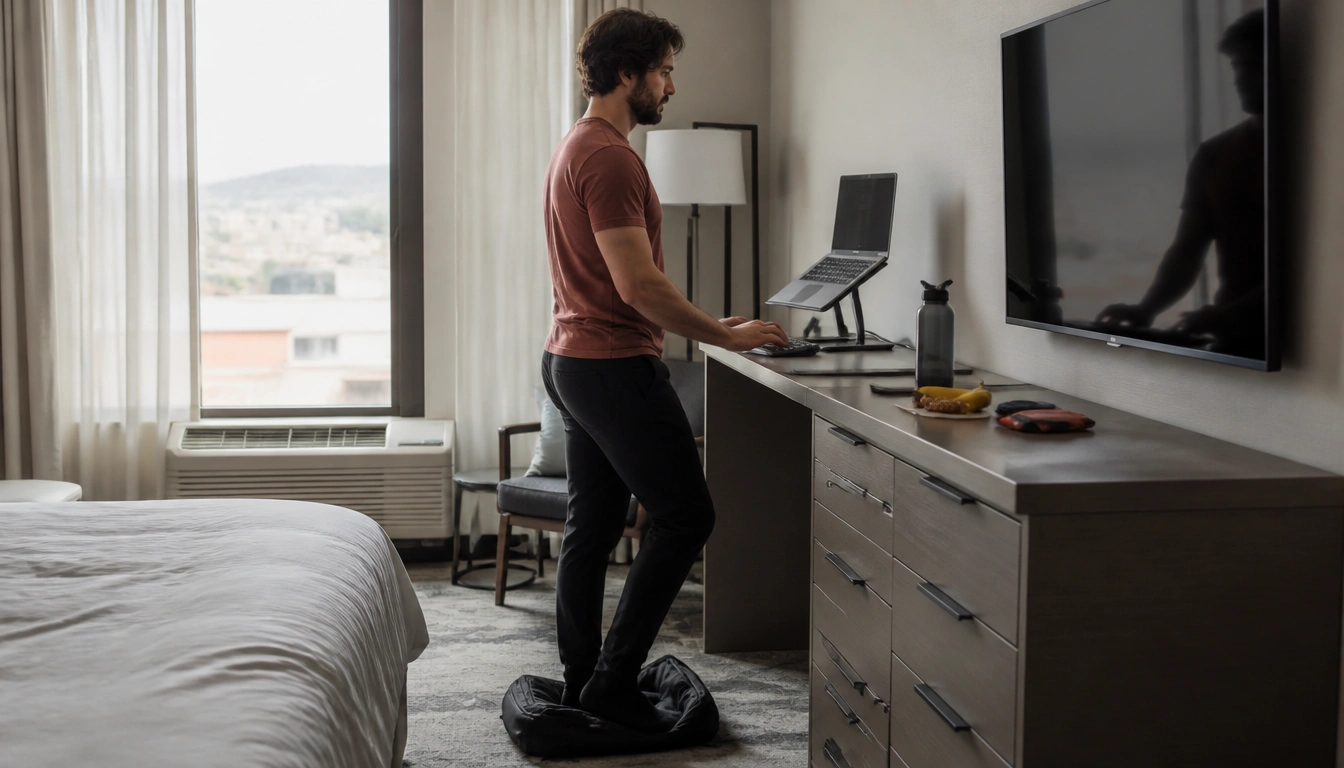
You can keep a healthy daily routine while traveling by making it portable, not perfect. Build a basic ergonomic setup wherever you are, move throughout long transit days, protect sleep with daylight and a hard work stop, and use simple food and water safety habits. If you travel often, keep one or two anchor habits the same each day so your body and mind have some stability.
Key Takeaways
- A healthy routine during travel for remote workers starts with a portable setup: screen height, foot support, and lumbar support matter even in temporary spaces.
- Long flights, train rides, and drives can increase stiffness and circulation problems, so regular movement breaks are part of work health, not a bonus.
- Morning daylight and a consistent shutdown time help your body adjust to time zones and support better sleep.
- Food and water safety should change with the destination; when sanitation is uncertain, choose bottled, boiled, or treated water and hot, thoroughly cooked foods.
- Frequent travelers usually need an anchor routine and recovery time, while one-off trips often need only a temporary reset.
- If you have chronic illness, a clotting history, or persistent digestive or mental health symptoms, get medical advice before or during travel.
Why travel disrupts a healthy routine
Travel changes the basic conditions that make healthy habits easy at home. Your seat may be too low, your table too high, your sleep window may shift, and meals may happen whenever Wi-Fi or transit allows. For remote workers, that can quickly affect posture, energy, mood, and the ability to focus for long stretches.
There are a few main health pressures to manage. First, awkward work setups encourage neck and lower-back strain. Second, long periods of sitting can leave you stiff and reduce circulation. Third, crossing time zones can throw off sleep and alertness. Fourth, unfamiliar food and water conditions can upset your stomach and derail the workday. The goal is not to recreate a perfect home routine everywhere. It is to keep the basics stable enough that work and recovery both stay functional.
The easiest approach is to build a routine around a few repeatable cues: a decent workstation, planned movement, light exposure, hydration, and a clear stop time. Those small anchors matter more on the road than they do at home because travel adds enough unpredictability on its own.
Build a portable office for travel
A good temporary workstation is less about the location and more about the angles. According to CDC ergonomic principles, aim for a setup that keeps your screen high enough that you are not looking down for hours. If you are on a laptop, raise it with a stand, books, or a stable surface, then use an external keyboard and mouse when possible. If that is not available, shorten work sessions and take more posture breaks.
Use foot support if your feet do not rest flat on the floor. A backpack, folded blanket, or sturdy box can help bring your knees and hips into a more comfortable position. That matters in hotel rooms, cafés, airport lounges, and short-term rentals where chairs are often too tall or too low.
If you must work from a bed or couch for a short period, support your lower back with pillows and avoid hunching over the screen. Try to sit on a firm edge rather than sinking into soft cushions for long stretches. A dining chair is usually better than a bed for anything beyond a brief check-in.
For cafés and shared spaces, think in layers: choose the least awkward chair, keep the screen at eye level as much as possible, and use noise reduction if you can. Even a modest improvement in setup can reduce fatigue across a long travel week.
Move through the day to protect circulation
Travel days often turn into long sitting marathons, which is hard on stiffness and circulation. Break that pattern early. On long flights, trains, or drives, flex your ankles, tighten and release your calf muscles, and stand or walk whenever it is safe to do so. Small movement repeated often is more useful than trying to “make up for it” later with one workout.
If you are on a plane, aisle walks and ankle circles can help interrupt stillness. If you are in a car, build movement into rest stops. If you are working from a hotel, set a timer so you do not sit for hours without a break. A short walk after meetings can also help clear the mental fog that builds when you stay seated all day.
People with a history of blood clots, clotting disorders, or other risk factors should speak with a clinician before long travel about whether compression stockings or other preventive measures are appropriate. That advice should be individualized; do not assume the same approach is right for everyone.
For most travelers, the best habit is simple: do not let transit or desk time run uninterrupted for too long. Regular movement is part of travel safety, not just fitness.
Protect sleep and circadian rhythm
Sleep is often the first thing to get scrambled on the road, especially if you are crossing time zones or working odd hours. The body’s circadian rhythm responds to light, routine, and timing. One of the most useful habits is getting morning daylight soon after waking. A walk outside, even a short one, can help your brain register the local day and adjust more quickly.
Pair that with a hard work stop in the evening. A defined shutdown time tells your nervous system that the workday is over and helps prevent the “just one more email” habit that quietly erodes sleep. If you keep working until bedtime, you often end up carrying alertness into the night.
Caffeine can help on a demanding travel day, but timing matters. If you are already struggling to sleep, avoid using it as an all-day crutch. A better pattern is to use it earlier, then taper off so it does not interfere with sleep quality later. That is especially important when you are trying to adapt to a new time zone.
Simple shutdown rituals also help: close the laptop, set out what you need for the next morning, dim lights, and repeat the same wind-down sequence even if the location changes. Consistency reduces decision fatigue and makes sleep more likely to arrive on time.
Eat and hydrate safely on the road
Food and water safety deserve more attention when you are traveling in places with different sanitation standards. When local water is uncertain, use bottled, boiled, or treated water. Be careful with ice, raw rinsed produce, and even teeth brushing if tap water is not considered safe. According to NHS and CDC-style travel guidance, the safest default is often to avoid relying on untreated local water unless you know it is safe.
For food, choose hot meals that are thoroughly cooked when possible. Foods that can be peeled by you, such as some fruits, are usually safer than raw items washed in questionable water. Street food can be fine in some places, but the more uncertain the sanitation, the more you should favor food that is cooked and served hot.
For workdays, packing a few shelf-stable snacks can prevent long gaps between meals. Nuts, seeds, crackers, protein bars, and similar options are useful when meetings run long or you cannot find a reliable place to eat. Hydration also matters more than many travelers expect, especially on planes and in dry climates, so carry a bottle and refill it when safe.
Think food planning, not dieting. The practical goal is stable energy and fewer digestive surprises, not a perfect menu. If you are in transit for much of the day, a basic backup plan keeps you from skipping meals and then overeating when the next available option is fast, salty, or very heavy.
Support mental health and focus
Travel can be exciting and still be mentally draining. Noise, unfamiliar rooms, changing schedules, and constant adaptation all require extra attention. Over time, that can wear down concentration and make small problems feel bigger. A healthy routine during travel for remote workers should include ways to lower background stress, not just ways to stay productive.
Boundary-setting helps. Let colleagues know when you are offline, and protect a few nonnegotiable blocks for meals, sleep, and recovery. If you do not set those limits, travel tends to swallow the whole day. A clear end to the workday also gives your brain a cue that it can stop scanning for tasks.
Noise management can be simple: earplugs, noise-canceling headphones, or choosing a quieter corner may be enough. If you are in a shared space, try to alternate focus work with lower-stakes tasks so you are not trying to do deep work in a chaotic environment all day.
Isolation matters too. Frequent travel can reduce your usual social contact, which affects mood and motivation. A short call with someone you know, a routine check-in with a friend, or regular coworking sessions can help keep the trip from feeling like a series of disconnected work sprints.
Adjust for one-off trips versus frequent travel
A one-off work trip and a frequent digital nomad lifestyle are not the same problem. If you are traveling occasionally, the main job is to stay functional for a limited period and then recover when you return home. You can be more flexible for a few days if you know your usual routine will resume soon.
If you travel often, the strategy changes. Frequent relocation creates cumulative fatigue, and that is where an anchor routine helps. An anchor routine is a small set of habits you keep the same no matter where you are: a morning daylight walk, a consistent wake time, a short mobility break, or a fixed shutdown sequence. The point is not rigidity. The point is to give your body and mind something familiar when everything else keeps changing.
One-off travelers usually need recovery time after the trip: extra sleep, lighter meals, and a return to normal movement. Frequent travelers need more prevention during the trip itself, because there is less time to fully reset between locations. If you cross time zones regularly, anchor habits become even more valuable because they reduce the constant start-over feeling that leads to burnout.
When to get medical advice before or during travel
Some situations deserve personal medical guidance rather than general advice. If you have diabetes, hypertension, a clotting history, chronic gastrointestinal disease, significant mental health symptoms, or another ongoing condition, plan ahead with a healthcare professional. That can help with medication timing, supplies, and destination-specific risks.
You should also seek advice before travel if you have previously had a blood clot, have major risk factors for clotting, or will be immobile for long periods. Compression or other preventive measures should be individualized.
During travel, get medical help for persistent vomiting, high fever, bloody diarrhea, signs of dehydration, chest pain, shortness of breath, or leg swelling that could suggest a clot. If stress, anxiety, or low mood keeps building instead of settling, use telehealth or local support sooner rather than later. Travel is easier to recover from when you address problems early.
For many remote workers, the best outcome is not a perfect routine. It is a routine that is stable enough to support sleep, work, digestion, and focus while the trip itself stays unpredictable.
Frequently Asked Questions
How do I set up an ergonomic workspace in a hotel, Airbnb, train, or café?
Aim for three basics: screen at about eye level, feet supported, and lower back supported. A laptop stand, pillows, a bag as a footrest, and an external keyboard can help. If the setup is poor, shorten the session and take more breaks rather than forcing hours in a bad position.
What can I do to reduce jet lag and adjust to new time zones faster?
Get morning daylight soon after waking, keep a consistent wake-and-stop schedule, and avoid working late into the night. Light and routine help your body clock reset. If you cross time zones often, keep the same morning and evening anchor habits even when the location changes.
How often should I move during long flights or drives to lower travel-related stiffness and clot risk?
Move regularly throughout the trip rather than waiting until you arrive. Flex your ankles, use your calf muscles, and walk when it is safe and permitted. If you have a clotting history or major risk factors, ask a clinician before traveling about compression or other prevention.
What foods and drinks are safest when traveling and working remotely in unfamiliar places?
Use bottled, boiled, or treated water when sanitation is uncertain. Choose hot, thoroughly cooked foods and peelable fruit when possible. Be cautious with ice, raw produce, and tap water used for brushing teeth if local water safety is unclear.
How can I protect my mental health and avoid burnout during frequent work travel?
Keep one or two anchor habits the same every day, protect sleep, and set a hard work stop. Add quiet time, brief social contact, and realistic expectations. Frequent travelers need more recovery planning because repeated relocation creates cumulative fatigue.
The Bottom Line
A healthy routine during travel for remote workers works best when it is simple, repeatable, and realistic. Focus on the basics you can control: a workable setup, regular movement, daylight, sleep boundaries, and safer food and water choices.
If you travel only once in a while, aim to stay functional and recover afterward. If you travel often, keep an anchor routine so your body does not have to relearn everything from scratch each week. And if you have chronic health concerns, clot risk, or persistent symptoms, get individualized medical advice before or during the trip.
Medical disclaimer
Medical disclaimer: This content is for educational and informational purposes only and is not a substitute for professional medical advice, diagnosis, or treatment. Dietary needs and supplement suitability vary by individual.
Sources
- Centers for Disease Control and Prevention (CDC) — cdc.gov. Accessed November 2026.
- National Health Service (NHS) — wales.nhs.uk. Accessed November 2026.
