
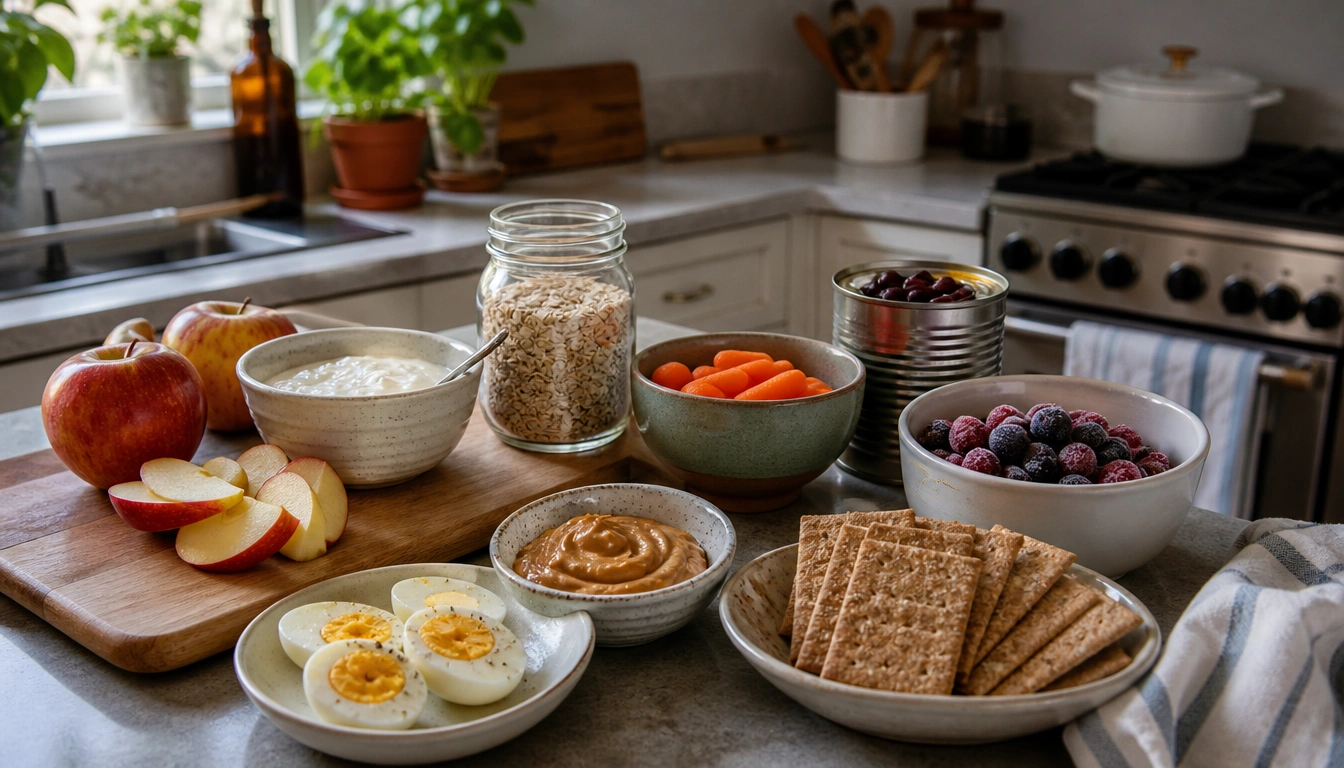
Choose snacks that combine protein and fiber, then build them from low-cost staples you already use for meals. That formula tends to keep people full longer, support steadier energy, and reduce impulse snacking later. To keep costs down, plan from your pantry, compare unit prices, lean on frozen or canned produce, and use simple mix-and-match snacks instead of convenience foods.
Key Takeaways
- Protein plus fiber is the most useful snack-building rule for satiety, steadier energy, and fewer impulse snacks later.
- Frozen and canned produce can be practical budget options when fresh items spoil too quickly or cost more per serving.
- Pre-shop inventory, a written list, and unit pricing help households buy what they will actually use and avoid waste.
- Bulk staples such as oats, beans, eggs, plain yogurt, peanut butter, and whole-grain crackers make fast, low-cost snacks.
- Children, older adults, and people with blood sugar concerns may need different snack formats, not necessarily different spending levels.
Build around protein and fiber first
The easiest way to make healthy snack planning for budget-conscious households work is to start with one protein source and one fiber-rich food. That pairing is useful because it tends to digest more slowly than a refined-carb-only snack, which can help people feel satisfied longer and avoid the quick drop in energy that often leads to more grazing. Public health guidance from the USDA and CDC also supports choosing foods that fit a healthy pattern built around whole grains, fruits, vegetables, beans, dairy, and lean proteins.
You do not need expensive specialty products to use this rule. A snack can be as simple as plain yogurt with fruit, peanut butter on whole-grain crackers, or beans paired with vegetables. The point is not perfection. The point is to choose something that actually holds people until the next meal, so the household is less likely to spend again on impulse snacks later in the day.
For many families, the best version of this rule is also the simplest: use what you already keep on hand, then ask whether the snack contains a protein anchor and a fiber source. If it does not, add one. That small habit can improve both satiety and spending discipline.
Plan before you shop so food does not go to waste
Budget-friendly snack planning starts before the store trip. The USDA recommends checking what is already in the pantry, refrigerator, and freezer before making a list. That step sounds basic, but it is one of the fastest ways to cut duplicate purchases and reduce spoilage. If you already have oats, apples, yogurt, or frozen berries, those foods should shape the week’s snack plan before anything new gets added.
List adherence matters just as much. Shopping without a plan makes it easier to buy snack foods that look appealing in the aisle but do not support your budget or your health goals. A short written list also helps households resist buying extra packaged snacks that disappear quickly and cost more per serving than simple staples.
If time is tight, build a repeating snack list for the week. Include a few flexible items that can be used in different combinations, such as eggs, fruit, plain yogurt, crackers, peanut butter, and beans. Repeating the structure makes shopping faster and lowers decision fatigue, which is often when impulse buying sneaks in.
Use unit pricing to compare real value
Sticker price can be misleading. A larger package may cost more at checkout, but still be cheaper per serving. That is why unit pricing matters. Shelf tags that show cost per ounce, pound, or gram help you compare true value across brands and package sizes. The USDA and CDC both encourage consumers to use this kind of comparison to make healthier choices more affordable.
Unit pricing is especially useful when choosing between whole foods and convenience versions of the same food. For example, a bulk tub of plain yogurt usually costs less per serving than individual cups. A bag of carrots or apples may be a better value than pre-cut snack packs. Even when the upfront price feels higher, a better unit price can save money over several snacks.
A helpful habit is to compare same-food-to-same-food first: whole yogurt versus single-serve yogurt, block cheese versus cheese sticks, whole produce versus cut produce, and dry beans versus snack bars. Then ask whether the extra convenience is worth the markup. Sometimes it is. Often it is not.
Choose low-cost staples that do the most work
Some foods consistently give better nutrition for the money because they are versatile, shelf-stable, and easy to turn into snacks. Dry legumes such as beans and lentils are one of the strongest examples. They are inexpensive, filling, and useful in dips, spreads, or warm snack bowls. Oats are another dependable staple because they are cheap, filling, and easy to pair with fruit, yogurt, or peanut butter.
Eggs, plain yogurt, and peanut butter are also useful because they bring protein in practical formats. Whole-grain crackers can stretch those foods into a more satisfying snack, especially when paired with a spread or dip. According to USDA food guidance, frozen and canned produce can be nutritionally comparable to fresh options when chosen wisely, which means frozen berries, peas, corn, or vegetables can help households save money without giving up nutrition.
For canned foods, look for fruit packed in juice rather than heavy syrup, and choose vegetables with low sodium or rinse them before eating. For frozen produce, plain versions with no added sugar or sauce are often the best fit. These foods reduce spoilage risk and make budgets more predictable because they stay usable longer than highly perishable produce.
Skip the convenience tax when you can
Pre-cut vegetables, single-serve cups, and individually wrapped snack items are convenient, but convenience usually costs extra. That markup can be useful in specific situations, especially when it helps a household eat more fruits or vegetables. Still, if the budget is tight, buying whole or bulk versions and portioning them at home usually gives better value.
The goal is not to eliminate convenience entirely. The goal is to decide where convenience earns its keep. A household might keep a few ready-to-grab items for very busy days, but rely mostly on unpackaged staples the rest of the time. For example, a large tub of yogurt can be divided into reusable containers, and a bag of carrots can be washed and portioned once for the next few days.
This approach also helps reduce food waste. When foods are already pre-portioned at home, people are more likely to eat them before they spoil. That makes convenience a tool, not a budget trap.
Turn basic ingredients into real snacks
Snack planning works best when the ingredients can be assembled quickly. The most useful formats are often the simplest: a protein plus a fiber source in a form people will actually eat. That might look like hard-boiled eggs with fruit, plain yogurt with thawed frozen berries, bean dip with whole-grain crackers, or peanut butter spread on toast or crackers.
You can also build snacks from leftovers in small, practical ways. Oats can become overnight oats or a quick bowl with peanut butter and fruit. Beans can be mashed into a dip with seasoning. Eggs can be boiled ahead for several days. These options are especially useful because they do not require many extra ingredients or specialized products.
When households want more variety, think in combinations rather than recipes. A starch, a protein, and a fruit or vegetable is often enough. For example: crackers plus peanut butter and a piece of fruit; yogurt plus oats and berries; or beans plus vegetables and whole-grain crackers. Repeating a few patterns keeps snack planning low-stress and low-cost.
Adjust snacks for age and blood sugar needs
Children usually need nutrient-dense energy, but that does not mean expensive snack foods. Smaller hands and smaller stomachs often do well with simple options like fruit with yogurt, peanut butter on toast, or crackers with bean dip. The main job is to provide filling foods that support growth and activity without relying on heavily marketed snacks that disappear fast and cost more.
Older adults may benefit from more protein distributed through the day, especially if appetite is smaller or muscle maintenance is a concern. Soft, easy-to-chew options such as yogurt, eggs, hummus, or mashed beans can be practical. The nutrition goal is similar, but the texture and portioning may need to change.
For people with blood sugar concerns, fiber-rich, lower-glycemic snacks are usually the better fit. That often means emphasizing beans, oats, plain yogurt, nuts or peanut butter if tolerated, and vegetables or whole fruit instead of refined snacks with added sugar. Individual medical advice still matters here, especially for anyone using glucose-lowering medication or following a therapeutic meal plan.
Watch for situations that need extra caution
Some households need more than general snack advice. Food allergies are one example. Bulk buying can save money, but not if the family has peanut, tree nut, dairy, or gluten concerns. Always read labels and choose snacks that are safe for everyone who will eat them.
Chronic kidney disease, severe gastrointestinal disorders, and other medical conditions may require limits on sodium, potassium, phosphorus, fiber, fat, or texture. In those cases, snack planning should be individualized with a registered dietitian or physician rather than based on general budget rules. The same is true if a person needs a therapeutic diet for another health condition.
Persistent food insecurity is also a reason to seek help. If the household regularly cannot afford enough food, community programs, food banks, school meal supports, or social services may be more important than any snack strategy. And if strict budgeting is causing anxiety, guilt, or disordered eating patterns, professional support is appropriate.
| Budget-friendly snack base | Why it helps | Easy example |
|---|---|---|
| Beans or lentils | Inexpensive protein and fiber | Bean dip with crackers |
| Oats | Cheap, filling, easy to mix | Oats with yogurt and fruit |
| Eggs | Portable protein | Hard-boiled eggs with fruit |
| Plain yogurt | Protein with flexible add-ins | Yogurt with berries |
| Frozen or canned produce | Less spoilage, steady cost | Thawed berries or canned fruit in juice |
Frequently Asked Questions
What cheap snacks are both filling and nutritious?
Good low-cost choices often pair protein and fiber: peanut butter on whole-grain crackers, yogurt with fruit, hard-boiled eggs with produce, oats with berries, or bean dip with vegetables. These options tend to be more satisfying than snacks made mostly of refined flour or added sugar.
How do I build healthy snacks using protein and fiber on a budget?
Start with one inexpensive protein source such as eggs, plain yogurt, beans, peanut butter, or cottage cheese, then add a fiber-rich food like fruit, vegetables, oats, or whole grains. That combination usually costs less than packaged snacks and helps people stay full longer between meals.
What store-bought snack choices are the best value per serving?
The best value is often the plainest version of a food: large tubs of yogurt instead of single cups, whole produce instead of pre-cut packs, dry oats or beans instead of snack bars, and frozen fruit or vegetables instead of fresh items that spoil quickly. Unit pricing helps confirm the best buy.
How can I reduce snack spending without relying on packaged convenience foods?
Use pantry inventory before shopping, make a short list, and buy flexible staples that can be portioned at home. Batch-prep simple items like boiled eggs, bean dip, or yogurt portions so you still have convenient snacks without paying the convenience markup.
Which budget snack options work for kids, older adults, or people with blood sugar concerns?
Kids often do well with small, nutrient-dense snacks like fruit and yogurt or peanut butter and crackers. Older adults may need softer protein foods such as eggs, yogurt, or hummus. People with blood sugar concerns usually do better with lower-glycemic, fiber-rich snacks such as beans, oats, vegetables, and plain dairy.
The Bottom Line
Affordable snack planning works best when you treat snacks as part of the eating pattern, not as random extras. Build around protein plus fiber, then use low-cost staples that can be mixed and matched through the week.
The biggest savings usually come from simple habits: check what you already have, use unit pricing, lean on frozen or canned produce, and buy less convenience packaging when you can. Those steps help protect both the grocery budget and the food you actually eat.
Medical disclaimer
Medical disclaimer: This content is for educational and informational purposes only and is not a substitute for professional medical advice, diagnosis, or treatment. Dietary needs and supplement suitability vary by individual.
Sources
- Centers for Disease Control and Prevention (CDC) — cdc.gov. Accessed October 2026.
- U.S. Government / Health Authority — nutrition.gov. Accessed October 2026.
- U.S. Government / Health Authority — usda.gov. Accessed October 2026.
- Centers for Disease Control and Prevention (CDC) — cdc.gov. Accessed October 2026.
- U.S. Government / Health Authority — usda.gov. Accessed October 2026.
- Academic Research Institution — harvard.edu. Accessed October 2026.
