
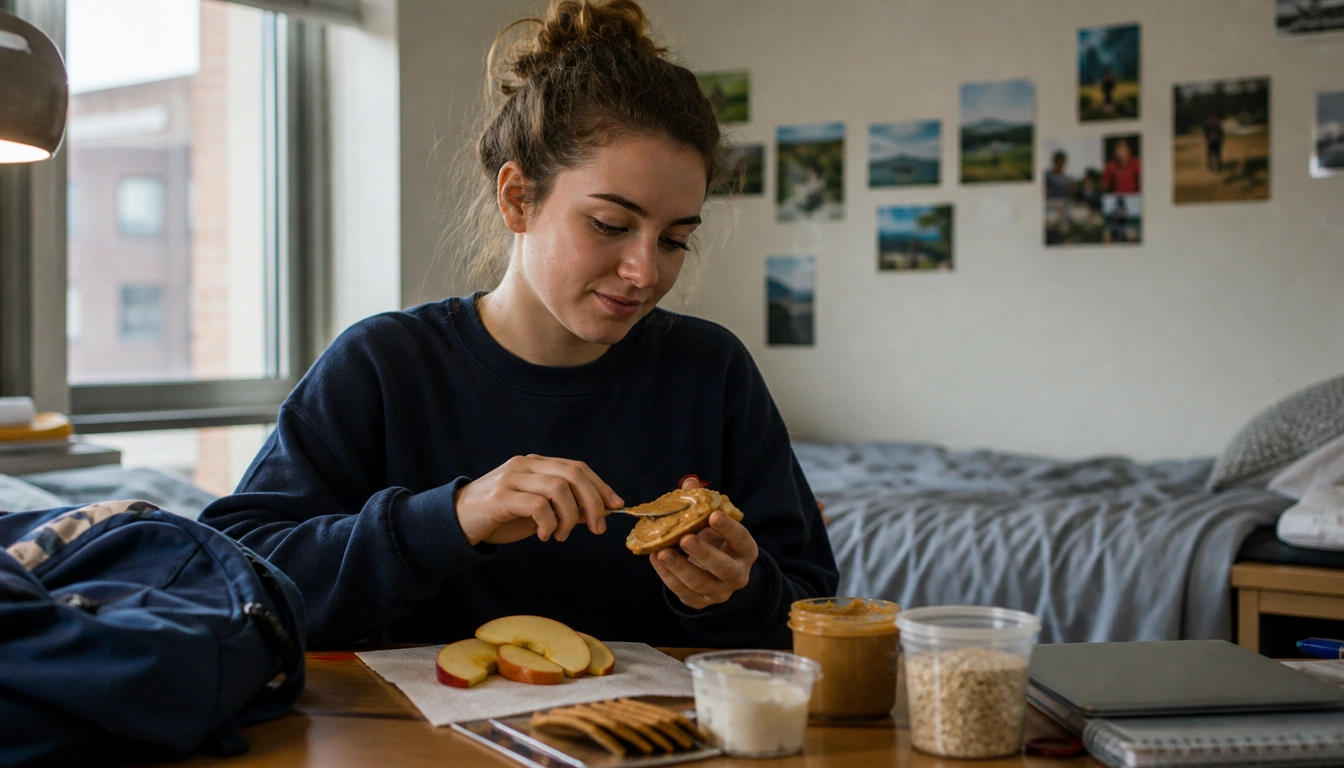
Healthy snack planning for college students works best when you keep it simple: pair a fiber-rich carbohydrate with protein or healthy fat, stock a few shelf-stable staples, and plan for your real schedule, not an ideal one. That approach helps steady energy, makes study sessions easier, and reduces last-minute vending-machine choices. If you have allergies, are very active, or have food safety concerns, adjust the plan to fit your situation.
Key Takeaways
- A “power pair” snack—fiber-rich carbohydrate plus protein or healthy fat—tends to keep you fuller and support steadier energy than a solo carb snack.
- College food choices are strongly shaped by stress, convenience, and late-semester fatigue, so planning ahead matters as much as the snack itself.
- Budget-friendly staples such as oats, peanut butter, dry-roasted edamame, beans, frozen fruit, and whole-grain crackers can cover many snack needs.
- Shelf-stable foods are often the safest and easiest dorm option; use a mini-fridge carefully for perishables and keep temperature control in mind.
- Snack portions should match your activity level: student-athletes and highly active students usually need more than sedentary students.
- A healthy snack plan should stay flexible; if tracking or “perfect” food rules start causing guilt or anxiety, it is time to step back.
Why college snacking changes so much
College life changes both when you eat and what is available. Long gaps between classes, late-night study sessions, commuting, training, and irregular meal times make snacks more than a convenience; they often become the bridge between meals. That is why healthy snack planning for college students is less about willpower and more about designing for real life.
The campus environment can work against good intentions. Vending machines, convenience stores, and grab-and-go counters usually make highly palatable foods the easiest option. When stress rises or the semester gets busy, those foods can feel especially appealing. Planning snacks ahead of time reduces the chance that hunger, fatigue, and convenience make the decision for you.
The goal is not to eat “perfectly.” It is to keep enough nourishing food within reach so your body and brain have a steadier supply of fuel during long days. Public health guidance from the USDA and CDC emphasizes whole grains, fruits, vegetables, and protein-rich foods as part of a balanced pattern, which fits well with snack planning too.
The power pair formula for fuller, steadier energy
The easiest snack structure is a power pair: combine a fiber-rich carbohydrate with protein or healthy fat. Fiber slows digestion, while protein and fat help a snack feel more satisfying. Together, they can support steadier energy and reduce the “I’m hungry again in 20 minutes” problem that often happens with a refined-carb-only snack.
Examples are simple. An apple with peanut butter, whole-grain crackers with hummus, oats with seeds, or yogurt with fruit all follow the same pattern. You do not need a complicated recipe or a nutrition label to make this work. If a snack contains only chips, candy, or a pastry, it may fill you briefly but usually does less to support focus between classes.
A useful shortcut: if your snack is mostly carbohydrates, add protein or fat. If it is mostly protein, add a fiber-rich carbohydrate. This makes snacks more practical for real college schedules because the food is portable, quick, and less likely to leave you searching for another snack soon after.
Best snack ideas for different college situations
The best snack depends on the moment. For a short break between classes, choose something that travels well and does not require a lot of prep. For a long study block, you may want something a little more substantial. For pre- or post-workout timing, the snack should support performance or recovery.
Between classes
Try fruit with nuts, a granola-style option with lower added sugar plus a protein source, whole-grain crackers with cheese, or a banana with nut butter. These are easy to carry and easy to eat quickly.
Late-night study sessions
Choose snacks that feel satisfying without being overly heavy. Oats, yogurt, dry-roasted edamame, popcorn with a protein side, or whole-grain toast with peanut butter can work well. Hydration matters here too; thirst often feels like hunger when you are tired.
Pre- and post-workout
Active students often need more fuel than students who spend most of the day seated. Before exercise, a simple carb-plus-protein or carb-plus-fat snack may be enough to get you through practice. Afterward, aim for something that includes protein plus carbohydrate so recovery is easier. Student-athletes and highly active students often need larger portions than sedentary peers.
Backpack- and dorm-friendly options
Good no-cook choices include dry-roasted edamame, peanut butter packets, whole-grain crackers, shelf-stable milk, instant oats, roasted chickpeas, tuna or salmon pouches if you eat fish, apples, bananas, and frozen fruit for use with yogurt or oatmeal. These foods are practical because they do not require a full kitchen.
| Situation | Simple snack idea | Why it works |
|---|---|---|
| Between classes | Apple + peanut butter | Fast, portable, filling |
| Long study session | Oats + chia or seeds | More steady energy |
| Pre-workout | Banana + nut butter | Easy to digest, portable |
| Post-workout | Yogurt + fruit | Useful mix of protein and carbohydrate |
| Dorm backup | Whole-grain crackers + hummus cup | Shelf-stable if packaged properly |
How to snack well on a college budget
Healthy snacking does not need specialty products. In fact, many expensive “health” snacks are less useful than inexpensive basics. Store-brand oats, peanut butter, beans, frozen fruit, whole-grain crackers, dry-roasted edamame, popcorn, and canned tuna or beans often give more flexibility for less money. The USDA’s food pattern guidance supports using simple staples built around whole foods rather than chasing niche products.
One budget strategy is to buy ingredients that can serve multiple roles. Oats can become breakfast or a study snack. Peanut butter can go with fruit, crackers, or toast. Beans can become dip, topping, or a side. Frozen fruit is often cheaper than fresh fruit, lasts longer, and works well in oatmeal or yogurt.
Campus dining halls can also help stretch groceries. If your meal plan allows it, save an extra piece of fruit, a hard-boiled egg, or a small container of plain yogurt for later. At campus stores or vending machines, look for the most “whole food” option available: nuts, crackers with hummus, trail mix with minimal candy, milk, yogurt, fruit, or a sandwich with visible protein. The CDC and USDA both support patterns that favor minimally processed foods over ultra-processed snack foods when possible.
Trying to “save money” by skipping food usually backfires because it increases the odds of impulse buying later. A small, planned snack stash is often cheaper than repeated convenience purchases.
Dorm food safety and storage basics
Food safety matters more in dorm life because storage is limited and kitchens are shared. Shelf-stable snacks are often the safest choice when you do not have reliable refrigeration or you will be carrying food for several hours. That includes items like dry cereal, nuts, nut butter packets, crackers, oats, roasted chickpeas, and many packaged protein snacks.
If you do use a mini-fridge, temperature control matters. Keep perishable foods cold and do not leave dairy, meat, or cut fruit sitting out for long periods. A small fridge is useful, but only if it is functioning well and not overloaded. In shared spaces, label food clearly and check expiration dates often.
Perishable snacks can still fit into college life; they just require more care. Yogurt, cheese, hummus, and pre-cut fruit are convenient, but they are best when you know you can store and eat them safely. If you are heading to class, the library, or practice for several hours, shelf-stable foods are usually the safer default.
How much to pack if you are active or mostly sedentary
Snack size is not one-size-fits-all. A student who spends most of the day sitting in class and studying will often need a smaller snack than a student who lifts, runs, practices, or works a physically demanding job. Body size, appetite, and training load also matter. The aim is to match the snack to the gap you need to fill.
For sedentary students, a snack may be enough if it is modest and balanced. For highly active students, the snack may need to be larger or more protein-focused, especially around training. What feels “too much” for one student may be exactly right for another.
If you are training hard, notice whether you are frequently hungry, unusually tired, or recovering slowly. That can be a sign that your current snack plan is too small. If you are mostly sedentary and snack out of habit rather than hunger, a smaller portion may be enough. A campus dietitian or sports nutrition professional can help if you need more specific guidance.
Allergies, dietary restrictions, and label reading
Shared living spaces and campus food areas make label reading more important. Common allergens such as peanuts, tree nuts, dairy, eggs, soy, wheat, fish, and shellfish may show up in snacks in less obvious ways. For students with allergies, it is worth checking ingredient lists every time, because products and manufacturing lines can change.
If you avoid animal products, gluten, dairy, or nuts, there are still many practical options. Sunflower seed butter can replace peanut butter. Roasted chickpeas, beans, soy yogurt, oat-based products, and seed-based snacks can work well depending on your needs. The safest choice is the one that fits both your dietary pattern and your living situation.
When you buy snacks for a shared room, consider cross-contact and storage. Keep personal foods sealed, separate, and clearly labeled if needed. If you have a history of severe reactions, your campus health team or a registered dietitian can help you set up a safer plan.
A simple weekly plan that actually fits student life
The most sustainable snack system is the one you can repeat during busy weeks. A weekly routine helps you avoid starting from zero every day. Pick one time, such as Sunday evening or right after grocery shopping, to restock the basics. Check what you already have, then replace the items you use most often.
A simple list might include one or two fruits, one protein-rich staple, one whole-grain item, and one backup snack for emergencies. For example: bananas, apples, peanut butter, oats, whole-grain crackers, and dry-roasted edamame. From there, you can add variety without rebuilding the whole system.
It also helps to decide in advance when you will use which snacks. Keep portable options in your backpack, study bag, or desk drawer. Keep more perishable foods for days when you know you will be back near a fridge. This is less about strict control and more about reducing friction so good options are easier to reach than vending-machine food.
A healthy snack plan should leave room for flexibility. If you like food rules so much that you feel guilty eating outside the plan, the plan may be too rigid. A good system supports energy, convenience, and peace of mind at the same time.
Frequently Asked Questions
What are the best healthy snack combinations that keep me full during classes and study sessions?
The most filling snacks usually pair fiber-rich carbohydrates with protein or healthy fat. Good examples include fruit with nut butter, whole-grain crackers with hummus, yogurt with fruit, or oats with seeds. That mix tends to digest more slowly and supports steadier energy than a snack made mostly of refined carbs.
How can I build a healthy snack plan on a college budget?
Start with inexpensive staples that can be used in several ways: oats, peanut butter, beans, frozen fruit, whole-grain crackers, popcorn, and dry-roasted edamame. Store brands and dining-hall extras can stretch your food budget too. The goal is to buy flexible basics instead of lots of specialty snacks.
What shelf-stable snacks work in a dorm room or backpack without refrigeration?
Good shelf-stable choices include nut butter packets, oats, dry-roasted edamame, roasted chickpeas, whole-grain crackers, apples, bananas, tuna or salmon pouches if you eat fish, and shelf-stable milk. These are useful when you will not have a fridge or when you need food that can stay safe for several hours.
How do I choose healthier snacks in a campus dining hall, vending machine, or convenience store?
Look for the option that is closest to a whole food: fruit, yogurt, nuts, cheese, hummus, milk, crackers with a protein, or a simple sandwich. If the choice is mostly chips, candy, or pastries, see whether there is a version with more protein or fiber. Planning ahead helps you avoid impulse buys when you are stressed or tired.
What should students with allergies or dietary restrictions look for in college snacks?
Read ingredient lists every time, because allergens can be hidden in sauces, bars, crackers, and bakery items. Look for clear labels and use safe alternatives such as sunflower seed butter, soy yogurt, beans, fruit, oats, or seed-based snacks. If you have a severe allergy, keep foods sealed and separate and ask campus health staff for help if needed.
The Bottom Line
A good college snack plan does not need to be fancy. Build around the power pair idea, keep a few shelf-stable staples on hand, and match the snack to your schedule, budget, and access to refrigeration.
The easiest win is consistency, not perfection. If you plan ahead for classes, study sessions, and late nights, you will be less dependent on vending machines and more likely to have food that actually keeps you full.
If food rules start feeling rigid, stressful, or guilt-filled, step back and make the plan simpler. A snack system should support your energy and daily life, not become another source of pressure.
Medical disclaimer
Medical disclaimer: This content is for educational and informational purposes only and is not a substitute for professional medical advice, diagnosis, or treatment. Dietary needs and supplement suitability vary by individual.
Sources
- National Institutes of Health (NIH) — nih.gov. Accessed October 2026.
- U.S. Government / Health Authority — usda.gov. Accessed October 2026.
- Centers for Disease Control and Prevention (CDC) — cdc.gov. Accessed October 2026.
- National Institutes of Health (NIH) — nih.gov. Accessed October 2026.
- U.S. Government / Health Authority — usda.gov. Accessed October 2026.
