
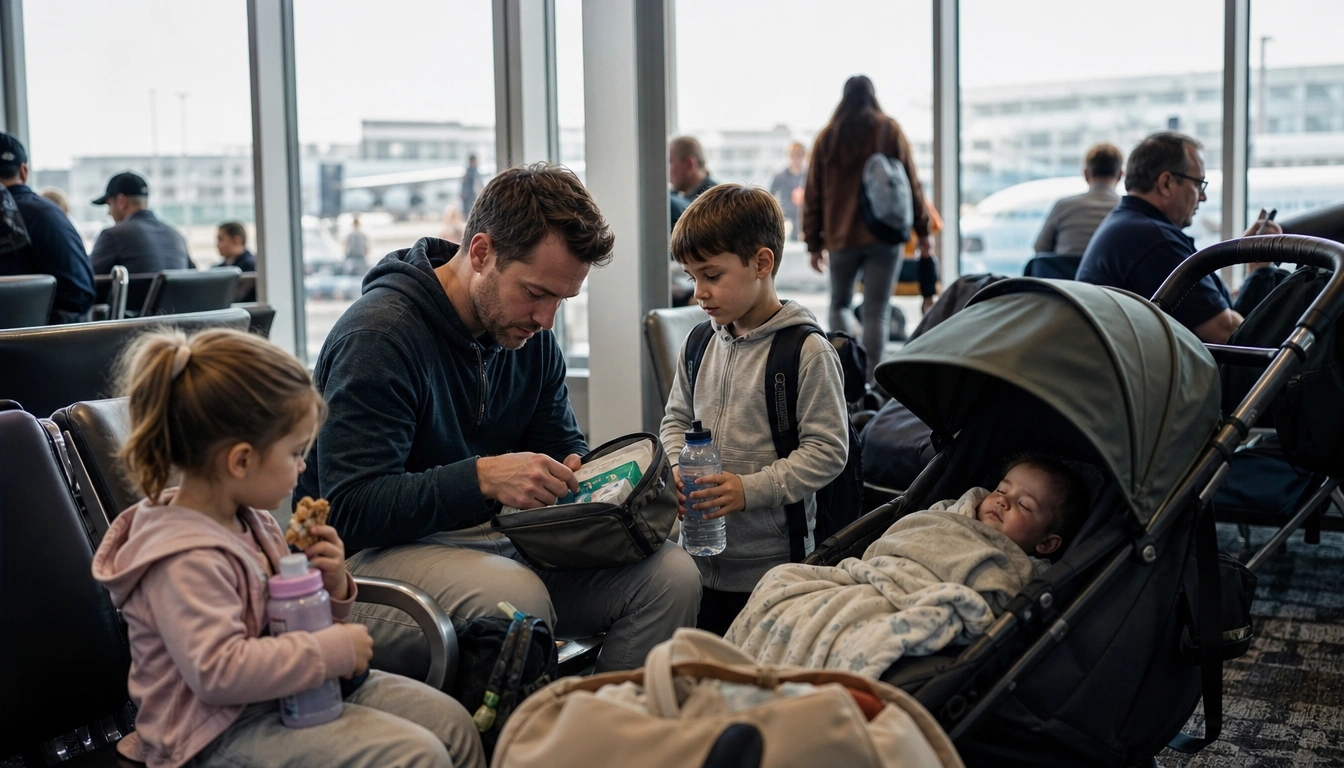
Busy parents should start health prep 4 to 6 weeks before departure, confirm vaccines and medications, pack a simple family health kit, and plan around sleep, food, water, and hand hygiene from the start. During travel, protect babies and toddlers differently from older children, share duties so adults can rest, and know the red-flag symptoms that mean a child needs medical care right away.
Key Takeaways
- Start with a 4 to 6 week check-in for vaccines, prescriptions, allergies, insurance, and destination risks so there is time to fix gaps.
- Pack for the realities of travel, not the ideal version: medications, thermometers, oral rehydration supplies, wipes, and a few reliable snacks.
- Infants and young children need extra protection from sun, water, germs, repellent misuse, and long periods in car seats.
- Crowded hubs raise infection risk, so hand hygiene and surface cleaning matter more at airports, stations, and rest stops.
- Parents do better when they split duties, protect their own hydration and meals, and plan short recovery windows instead of trying to “push through.”
- Fever in an infant under 3 months, severe dehydration, lethargy, or persistent fever after travel should prompt urgent medical advice.
Trip preparation timeline: what to do 4 to 6 weeks before departure
The healthiest family trips start well before the bags are packed. A 4 to 6 week window gives parents time to review routine vaccines, fill prescriptions, and sort out any destination-specific advice without rushing. According to the CDC and NHS guidance, that is also the right time to ask whether any family member needs travel vaccines or an earlier dose because of age or destination risk.
Use this window to make one family checklist rather than managing each child separately. Confirm each child’s regular immunizations are current, especially routine childhood vaccines and the seasonal flu vaccine if it applies. If you are traveling internationally, ask a clinician whether any child needs special planning because of age, destination, or time until departure. This is especially important for infants and children with chronic conditions, allergies, or a history of severe reactions.
Also check practical details that are easy to overlook when life is busy: who carries insurance cards, where prescriptions are stored, and whether you have enough medication for the full trip plus a small delay buffer. Keep all important medication in carry-on luggage rather than checked bags so a lost suitcase does not become a health problem. If your child uses rescue medicine, inhalers, epinephrine, or daily prescriptions, make sure every adult traveling knows where they are kept and how they are used.
Family medical prep essentials: vaccines, prescriptions, allergy notes, insurance cards, and destination research
Healthy travel routine for busy parents means reducing preventable surprises. Put each child’s allergy list, medication list, and key medical notes in one place that is easy to reach, not buried in a phone app no one else can access. Include emergency contacts, insurance details, and any language notes that would help if you needed care far from home. If you travel internationally, add any travel insurance information and a simple note about how to contact your plan.
Destination research should be practical, not exhaustive. Focus on the risks that actually change daily decisions: whether local tap water is safe, what medical facilities are near your lodging, and whether English-speaking care is available if needed. The CDC and NHS both emphasize planning ahead for access to care, especially when traveling with children who can become dehydrated or feverish quickly. If your child has a chronic health condition, ask ahead whether the destination affects medication storage, allergen exposure, or the need for extra documentation.
Think of vaccines and prescriptions as one part of a larger system. A family can have every shot up to date and still run into trouble if a child runs out of medication, gets separated from a spacer or inhaler, or does not have a record of what they take. The more visible and shareable the information, the easier it is to stay calm if plans change.
Building a travel health kit that is realistic for busy parents
A good family travel health kit is compact, not overstuffed. The goal is to cover the common issues that come up on planes, in cars, and in hotels: fever, pain, small cuts, dehydration, and dirty hands. Public health guidance commonly recommends a digital thermometer, age-appropriate fever and pain medicine, oral rehydration solution, adhesive bandages, antiseptic wipes, and barrier cream for younger children.
For busy parents, the best kit is one you can actually carry. Keep one small bag accessible and use a second larger pouch if needed. Put the most likely items at the top: thermometer, basic first-aid supplies, hand sanitizer, tissues, wipes, and any personal medications. If your child uses medical devices, pack spare batteries or chargers and anything needed to keep the device functional for the whole trip.
It also helps to pack for the most likely disruption, not the rarest. For example, a few shelf-stable snacks and a reusable water bottle can prevent a cranky, overheated child from becoming a sick one. For older children, non-perishable foods that are easy to portion are often better than trying to find the “perfect” meal while rushing through transit.
Infant and toddler travel safety: formula, water, sun, insect repellent, car seats, and ear discomfort
Babies and toddlers need different travel rules than school-age children. Infants under 6 months should be kept out of direct sunlight, using shade, canopies, and lightweight clothing instead of relying on sunscreen alone. For older babies and children, use a broad-spectrum child-formulated sunscreen and reapply as directed, but keep shade and clothing as the first layer of protection.
Formula and water need special attention if you are traveling somewhere the water quality is uncertain. If you are making formula with bottled water, remember that bottled water is not sterile; local advice may still call for boiling. The grounded guidance also notes that some bottled water mineral content matters, so follow local or clinician advice if you are traveling internationally with a formula-fed infant. When tap water safety is unclear, do not improvise with untreated water.
For insect protection, follow child-specific label directions carefully. The CDC and American Academy of Pediatrics advise using repellents with DEET in the lowest effective concentration for children, while avoiding application to hands, eyes, mouth, or broken skin. For infants under 3 months, physical barriers such as mosquito netting are preferred over chemical repellents. Oil of lemon eucalyptus or PMD products should not be used on children under 3 years old.
Car-seat comfort also matters. On long road trips, babies should not stay in a car seat for very long without breaks; a roughly two-hour rhythm is a practical way to remember to pause, stretch, feed, and reposition. On flights, check airline rules for approved child seats before you travel. To help with ear pressure during takeoff and landing, feeding, nursing, or active sucking can make descent and ascent easier for infants and toddlers.
Food, water, and hand-hygiene routines that lower illness risk while traveling
Travel hubs are crowded by design, which means higher exposure to respiratory and stomach bugs. Airports, train stations, rest stops, and busy tourist areas all increase the chance that children touch contaminated surfaces or encounter sick travelers. That does not mean families should avoid travel; it means the hygiene routine needs to be more deliberate than at home.
Hand hygiene matters most before eating, after bathroom visits, after changing diapers, and after touching shared surfaces. When soap and water are available, use them. When they are not, alcohol-based hand rubs with at least 60% alcohol are a practical backup. Wipe down tray tables, high-touch surfaces, and hands before snacks, especially during long travel days when children are more likely to eat on the move.
Food choices also affect illness risk. In places where sanitation is uncertain, the classic “boil it, cook it, peel it, or forget it” rule remains a useful guide. Prefer freshly cooked hot foods and avoid risky raw items, unpasteurized dairy, and undercooked meats or seafood. For children, the simpler the food routine, the less likely you are to end up with stomach upset that derails the whole day.
Hydration is part of illness prevention too. Mild dehydration can make children irritable, tired, and more vulnerable to overheating. Keep water visible and easy to access, and treat it as a routine, not a reward. If your child is not drinking well and is also vomiting or having diarrhea, oral rehydration guidance matters more than plain juice or guessing at thirst.
Sleep disruption often travels with food disruption. Crossing time zones or staying up late changes melatonin and cortisol rhythms, which can make children and parents more reactive. Try to keep the day anchored with a few familiar cues: morning light, predictable meals, a bedtime wind-down, and the same comfort item or sleep routine whenever possible. A near-normal routine is more realistic than a perfect one.
Parent energy management: split duties, hydration, snack planning, and rest windows
Parents often focus so much on the children that they forget their own basics. That is usually when small travel hassles become big ones. A shared-duty plan helps preserve adult energy: one adult handles boarding passes, luggage, and logistics while the other manages snacks, diapers, or the stroller, then switch when fatigue starts to build. If you are traveling solo, plan the day in smaller blocks and lower the standard for what “done well” looks like.
Hydration and food matter for adults just as much as for children. Bring a water bottle you can refill easily, and pack snacks that do not require a full stop to eat. Parents who skip meals are more likely to get irritable, make rushed choices, and miss early signs that a child is getting sick. A few regular breaks are usually better than trying to power through until everyone is exhausted.
Rest windows do not need to be dramatic. A quiet stroller walk, a 20-minute hotel reset, or a tag-team nap can be enough to keep the whole trip from spiraling. If one adult is the only one who knows the schedule, the medications, and the backup plan, the trip becomes fragile. Share the information as well as the tasks.
Red-flag symptoms and when to seek urgent medical care on the road
Most travel illnesses are manageable, but some symptoms need prompt care. According to public health guidance, seek urgent medical help for signs of severe dehydration, such as very dry mouth, a child who is not making wet diapers, or a child who cannot keep fluids down. Persistent fever, unusual sleepiness or lethargy, and worsening weakness are also reasons to get medical advice quickly.
Fever in an infant under 3 months is an urgent medical issue and should not be watched at home. That same caution applies if a child is difficult to wake, breathing strangely, confused, or showing signs of serious distress. If you are unsure whether the symptoms are serious, err on the side of calling a clinician, local emergency services, or the hotel desk for help finding care.
Before travel, identify where to go if something happens: a nearby urgent care clinic, hospital, pharmacy, or English-speaking medical service if you are abroad. This preparation matters more when you are tired, away from your usual pediatrician, and managing more than one child at once. A good plan shortens decision time when it counts.
Return-home reset: what to check after travel if a child seems unwell
After the trip, watch for symptoms that show up once the family is back home and the pace slows down. A child may seem fine during transit and then develop fever, stomach upset, cough, fatigue, or rash later. That does not automatically mean the illness is serious, but it does mean the body is still catching up after the trip.
Use the first day or two home as a reset. Re-establish normal sleep, offer fluids regularly, and go back to familiar foods if the stomach has been unsettled. Check whether medications, inhalers, or supplements were missed during travel and whether anything needs refilling before the next outing. If a child has persistent fever, signs of dehydration, trouble breathing, or seems much less alert than usual, contact a healthcare professional rather than waiting for it to settle on its own.
Travel health works best when it is treated as a routine rather than a rescue mission. The more you prepare ahead of time, the less likely you are to spend the trip reacting to problems that were predictable.
Frequently Asked Questions
How do parents prepare kids for travel health-wise before a trip?
Start 4 to 6 weeks ahead by checking vaccines, prescriptions, allergies, and destination risks. Build a simple plan for food, sleep, water, and where to get medical help if needed. For children with chronic conditions, ask the clinician whether any special documentation or supplies are needed.
What should go in a family travel health kit?
A practical kit usually includes a thermometer, age-appropriate fever or pain medicine, oral rehydration solution, wipes, bandages, barrier cream, hand sanitizer, and any regular prescriptions. Keep it compact and easy to reach so you can use it quickly during delays or transit.
What travel health precautions are different for babies versus older children?
Babies need stricter sun protection, extra care with formula and water, and more caution with insect repellent use. Infants under 3 months should rely mainly on physical barriers for insects, and infants under 6 months should be kept out of direct sunlight. Older children can usually follow more standard travel routines with supervision.
How can parents reduce sleep disruption and manage fatigue on family trips?
Keep a few familiar anchors, such as regular meals, a bedtime routine, and morning light. Split duties with another adult when possible, and plan short breaks instead of trying to run all day without stopping. Parents do better when they protect their own hydration and snacks too.
When should a child see a doctor during or after travel?
Get urgent medical help for severe dehydration, persistent fever, lethargy, trouble keeping fluids down, or fever in an infant under 3 months. If symptoms seem to be getting worse rather than better, or you are unsure how serious they are, contact a healthcare professional promptly.
The Bottom Line
A healthy travel routine for busy parents is built in stages: prepare 4 to 6 weeks ahead, pack only the supplies you will actually use, and decide in advance how you will handle food, water, sleep, and hygiene. That approach reduces stress when delays, crowds, and cranky kids show up.
Babies and toddlers need extra protection around sun, water, formula, car seats, and insect repellent, while older children mainly need consistent routines and careful hygiene. Parents should also protect their own energy by sharing duties, drinking water, and taking brief rest windows.
If a child shows severe dehydration, persistent fever, lethargy, or any fever under 3 months of age, get medical help quickly. Travel problems are easier to manage when the family has a plan before the first suitcase is zipped.
Medical disclaimer
Medical disclaimer: This content is for educational and informational purposes only and is not a substitute for professional medical advice, diagnosis, or treatment. Dietary needs and supplement suitability vary by individual.
Sources
- National Health Service (NHS) — wales.nhs.uk. Accessed October 2026.
- Centers for Disease Control and Prevention (CDC) — cdc.gov. Accessed October 2026.
- National Health Service (NHS) — derbyshirefamilyhealthservice.nhs.uk. Accessed October 2026.
- National Health Service (NHS) — dorsethealthcare.nhs.uk. Accessed October 2026.
- National Institutes of Health (NIH) — nih.gov. Accessed October 2026.
