
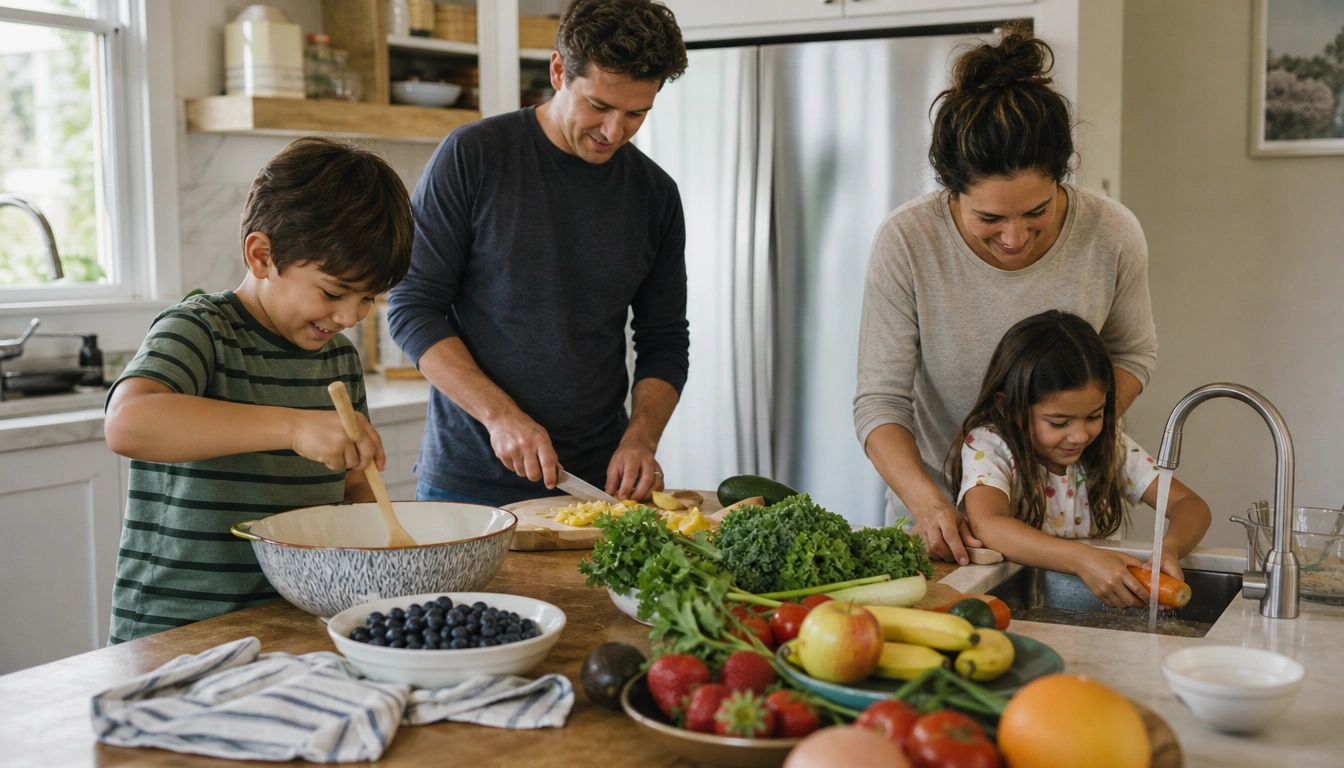
A healthy weekend for busy parents works best as a flexible framework, not a rigid schedule. Aim for four anchors—nourishment, movement, connection, and rest—then fit them around errands, chores, weather, and your children’s ages. Small choices, like a shared breakfast, an active outing, and a clear bedtime, can protect health without turning the weekend into another job.
Key Takeaways
- Plan around a few anchors, not a minute-by-minute schedule, so the weekend can survive fatigue, weather, and last-minute changes.
- Use “crowding out” instead of all-or-nothing rules: fill time with active play, shared prep, and family connection so screen time and snacking naturally shrink.
- Keep weekend sleep and screen habits close to weekday routines when you can, because large swings can leave kids and adults feeling off schedule.
- Let children help choose and prep simple foods; kids are often more willing to eat what they helped make.
- Match the plan to the child, not the other way around: toddlers, school-aged children, and teens need different amounts of structure, autonomy, and movement.
Why weekends matter for family health
Healthy weekend planning for busy parents starts with a simple idea: weekends still shape health. They are not a break from routine so much as a different kind of routine. The U.S. Centers for Disease Control and Prevention and the U.S. Department of Health and Human Services both emphasize the same broad pattern for families: regular movement, predictable sleep, nourishing food, and limits on sedentary screen time all support healthy growth and well-being.
That does not mean a family needs a polished schedule or a packed calendar. A flexible framework works better for most households because it leaves room for naps, sports, weather, errands, and plain old exhaustion. It also lowers all-or-nothing thinking. If Saturday goes sideways, the weekend is not ruined; you simply return to the plan at the next meal or the next hour.
Routines matter partly because children learn by watching. When they see parents taking a walk, making a simple meal, or setting a bedtime boundary, they learn that health is a normal part of family life. That modeling effect is powerful because it does not depend on lectures. It depends on repetition. The goal is not perfection. It is a weekend that makes healthy choices easier to repeat.
For many families, the best weekend plan is one that quietly supports the week ahead. A calmer sleep schedule, a little movement, and a less chaotic food rhythm can make Monday feel less abrupt. That is especially helpful for kids who struggle with transitions, and for parents who already feel stretched thin.
Build a weekend framework around four anchors
Think of the weekend as four anchors: nourishment, movement, connection, and rest. If each one shows up in some form, the weekend usually supports health even if the details change. This approach works better than making a giant list of goals, because it keeps the plan realistic.
Nourishment can mean a simple breakfast, a balanced lunch, and one family meal that is easy enough to repeat. Movement can be a walk, playground time, backyard play, dancing in the kitchen, or a trip to the store on foot if that is practical. Connection can be a shared game, car conversation, or time cooking together. Rest can be a slower morning, a quieter afternoon, or a predictable bedtime.
Food planning is easier when it is folded into the weekend rather than treated like a separate project. Start with one short grocery list built around familiar foods and a few low-effort additions: fruit, vegetables, whole grains, protein foods, yogurt, eggs, beans, or whatever your family already eats. If time is tight, choose meals that can be assembled rather than cooked from scratch. Build a taco night, pasta with vegetables, soup and bread, breakfast for dinner, or a sandwich-and-sides meal with cut fruit and raw vegetables.
Shared prep can make the plan feel lighter. Children can wash produce, tear lettuce, stir batter, add toppings, or arrange snack boxes with supervision. This is useful for the week ahead, but it also supports buy-in. Children are often more willing to try foods they helped prepare, which can reduce mealtime battles without turning the kitchen into a project for adults alone.
A practical version of crowding out looks like this: if Saturday afternoon usually turns into screens and snacks, add a short outing, a kitchen task, or a family game before screens come on. The goal is not to ban downtime. It is to make sure the day includes enough active, shared, and nourishing moments that screens are not the default for every open hour.
Movement as connection
Many parents hear “exercise” and picture a formal workout. Families do not need that to support health. Children and teens benefit from regular physical activity, but the easiest way to get there is often through play and movement that feels like part of family life.
For younger children, movement can be playful and brief: a neighborhood walk, a game of chase, a park visit, scooter time, or an obstacle course made from cushions and tape. For older children, a family bike ride, a hike, a basketball game, or a walking errand may fit better. The point is to build movement into the day rather than waiting for a perfect block of free time.
Short bursts count. A 15-minute walk after lunch, dancing while dinner cooks, or a backyard game before cleanup can make a real difference across a weekend. This is especially useful for busy parents who do not have the energy for long outings. Repeated small bursts are often more realistic than one ambitious plan that collapses when someone is tired.
Let children help choose the activity when possible. That simple shift can reduce resistance. A child who gets to pick the game is more likely to join in, and a teen who helps choose the route or destination is more likely to stay engaged. Shared movement also creates connection, which matters on weekends when family time can otherwise get swallowed by chores and errands.
If weather, budget, or transportation limit options, use what is available: stairs, hallways, a living room dance break, local parks, or community spaces. The best movement plan is the one your family can repeat, not the one that looks best on paper.
Protecting sleep and screen boundaries
Weekend planning should protect sleep and screen boundaries on purpose. When sleep times swing too far from the weekday routine, children and adults can feel out of sync on Sunday night and Monday morning. Public health guidance also warns that too much screen time can crowd out sleep, family interaction, and physical activity.
You do not need strict control to see a benefit. A few steady boundaries often help more than a long list of rules. Many families do well with screen-free meals, a phone-free first hour after waking, or a calm wind-down before bed. The exact rule matters less than the consistency.
Try to decide in advance when screens are most likely to take over. For some families it is Saturday morning. For others it is the late afternoon slump or the hour before bedtime. Once you know the vulnerable time, fill it with something easier to start than an argument: a snack together, a walk, a board game, a craft, a bath, or a shared cleanup routine.
“Crowding out” also helps here. If the day has enough movement, enough food structure, and enough connection, screens have less room to expand. That does not mean no screen time. It means screen time stays one part of the weekend instead of becoming the entire weekend.
Age-specific planning tips
Weekend routines work best when they match the child’s stage of development. A plan that suits a toddler may feel boring to a teen, while a teen-friendly plan may overwhelm a young child. Age nuance matters.
Toddlers usually need short, simple blocks of activity and plenty of repetition. They do well with predictable meals, naps, outdoor time, and familiar transitions. Overplanning can backfire because toddlers are sensitive to hunger, fatigue, and overstimulation. Keep choices small and the day flexible.
School-aged children often benefit from a mix of structure and fun. They can help with grocery shopping, food prep, cleanup, and choosing between two or three activity options. They also tend to do well with visible routines: breakfast, movement, downtime, chores, and a family activity.
Teenagers usually need more autonomy and more respect for their own sleep needs. Some teens will join family activities if they have input and if the plan feels relevant. Others may prefer a later start, a workout with friends, or a role in meal planning. Weekend routines for teens should not feel like toddler routines in bigger bodies. Give them some say, and they are more likely to participate.
Across ages, the same principle holds: structure helps, but flexibility keeps the plan workable. The best weekend routine is not identical for every child. It is responsive to the child you have.
Adaptations for neurodiversity, disabilities, or chronic conditions
Some families need more than general lifestyle advice. Children with sensory sensitivities, disabilities, chronic illnesses, food allergies, or developmental differences may need modified plans that fit their comfort, safety, and energy levels. That is not a failure of planning. It is the right way to plan.
If noise, crowds, textures, or unpredictable transitions are hard for a child, choose quieter activities and build in warnings before changes. If mobility is limited, look for seated games, adapted sports, accessible parks, or movement options recommended by a clinician or therapist. If fatigue is part of the picture, shorten outings and protect rest more carefully.
Families managing a medical condition should avoid borrowing advice meant for the average child without checking whether it fits. A pediatrician, dietitian, occupational therapist, or physical therapist may suggest specific adjustments that matter more than generic weekend tips. That is especially true when food choices, exercise tolerance, sleep, or medications are part of the plan.
The main goal is not to force the same weekend everyone else has. It is to build a weekend that supports the child in front of you while still leaving space for family connection and enjoyment.
A sample low-pressure weekend blueprint
A healthy weekend blueprint does not need to be exact to be useful. Think of it as a loose template that can be reshuffled when life changes. The sample below shows one way to keep the four anchors in place without making the weekend feel overbooked.
Saturday morning: Start with a simple breakfast and a short planning moment. Choose one priority errand, one movement idea, and one family connection activity. If possible, involve children in the food plan: wash fruit, pack snacks, or mix ingredients for lunch.
Saturday afternoon: Use an active outing that fits your energy and budget. That might be a park visit, walk, bike ride, playground stop, or an at-home movement game. Afterward, keep the rest of the afternoon low-pressure so everyone can reset.
Saturday evening: Make dinner simple and predictable. Reduce screen creep by deciding when devices are off and by choosing one low-key family activity after dinner, such as a game, music, or reading.
Sunday morning: Keep the morning close to the weekday rhythm if possible, especially for sleep and meals. A steadier wake time can make Monday smoother and reduce the “weekend hangover” feeling that comes from very late nights.
Sunday afternoon: Leave room for chores, prep, or downtime, but pair them with something pleasant. Put laundry away while listening to music, prep school snacks together, or take a walk before the day winds down.
Sunday evening: Aim for a calm finish. Pack bags, check the calendar, and start bedtime early enough that the next day does not feel abrupt. The blueprint works because it is flexible. If weather, mood, or fatigue change the day, move the activity rather than abandoning the plan.
When a weekend plan should become a medical conversation
Most weekend planning problems are lifestyle problems, not medical emergencies. Still, some signs deserve a conversation with a healthcare professional. If a child has ongoing sleep problems, a sudden change in appetite, unexplained weight change, repeated fatigue, growth concerns, developmental concerns, or major difficulty tolerating normal activities, check in with a pediatrician.
It is also wise to ask for guidance when a family is managing a chronic condition, severe food allergy, eating disorder concern, neurodevelopmental diagnosis, or physical limitation that affects meals, movement, or sleep. In those situations, a one-size-fits-all weekend plan may not be appropriate.
If you are unsure whether a concern is medical or simply a matter of routine, trust that uncertainty and ask. A brief clinical conversation can save a lot of guessing. Public health guidance gives families a strong starting point, but individualized care belongs with the clinician who knows the child.
Frequently Asked Questions
How can busy parents fit physical activity into a weekend without scheduling a formal workout?
Use movement that already fits family life: a walk after lunch, park time, dancing in the kitchen, a bike ride, or an active errand. Short bursts count, especially when they happen regularly. The goal is to keep movement easy to start and easy to repeat, not to force a perfect exercise session.
What are simple healthy weekend meal ideas that kids will actually help with and eat?
Choose meals that are familiar and flexible, like tacos, pasta with vegetables, breakfast for dinner, soup and bread, or sandwiches with fruit and raw vegetables. Let children wash produce, stir, add toppings, or arrange snack boxes. Kids are often more willing to eat foods they helped prepare.
How do I keep weekend screen time from taking over family time and sleep?
Set a few predictable boundaries, such as screen-free meals, a device-free wind-down before bed, or a morning time when devices stay off. It also helps to fill likely screen-heavy periods with something simple and appealing, like a game, a walk, or a shared snack.
How do weekend routines differ for toddlers, school-aged children, and teenagers?
Toddlers usually need short, simple, predictable routines and plenty of rest. School-aged children can help with choices, food prep, and cleanup. Teenagers usually need more autonomy and later sleep flexibility, plus a voice in the plan. One weekend structure will not fit every age.
What should families do if a child has sensory sensitivities, a disability, or a chronic condition?
Modify the plan to match the child’s needs instead of forcing a generic routine. Choose accessible activities, reduce sensory stress, and protect rest. If food, movement, sleep, or safety needs are medically complicated, ask the child’s clinician or therapist for individualized guidance.
The Bottom Line
A healthy weekend for busy parents is usually built from small repeatable choices, not a perfect schedule. If you protect nourishment, movement, connection, and rest, you are already doing the main work.
The easiest plans are flexible enough to handle errands, weather, and tired kids. Use shared food prep, active play, and steady sleep and screen boundaries to crowd out the habits that leave weekends feeling scattered.
If a child has ongoing sleep, eating, growth, sensory, or activity concerns, bring in a healthcare professional. Lifestyle planning can help a lot, but some families need individualized medical guidance as part of the weekend plan.
Medical disclaimer
Medical disclaimer: This content is for educational and informational purposes only and is not a substitute for professional medical advice, diagnosis, or treatment. Dietary needs and supplement suitability vary by individual.
Sources
- Centers for Disease Control and Prevention (CDC) — cdc.gov. Accessed October 2026.
- U.S. Government / Health Authority — health.gov. Accessed October 2026.
- Centers for Disease Control and Prevention (CDC) — cdc.gov. Accessed October 2026.
- National Health Service (NHS) — www.nhs.uk. Accessed October 2026.
