
Small daily habits can support your health without demanding a complete lifestyle overhaul. The most useful wellness basics are usually simple, realistic, and repeatable enough to fit ordinary days.
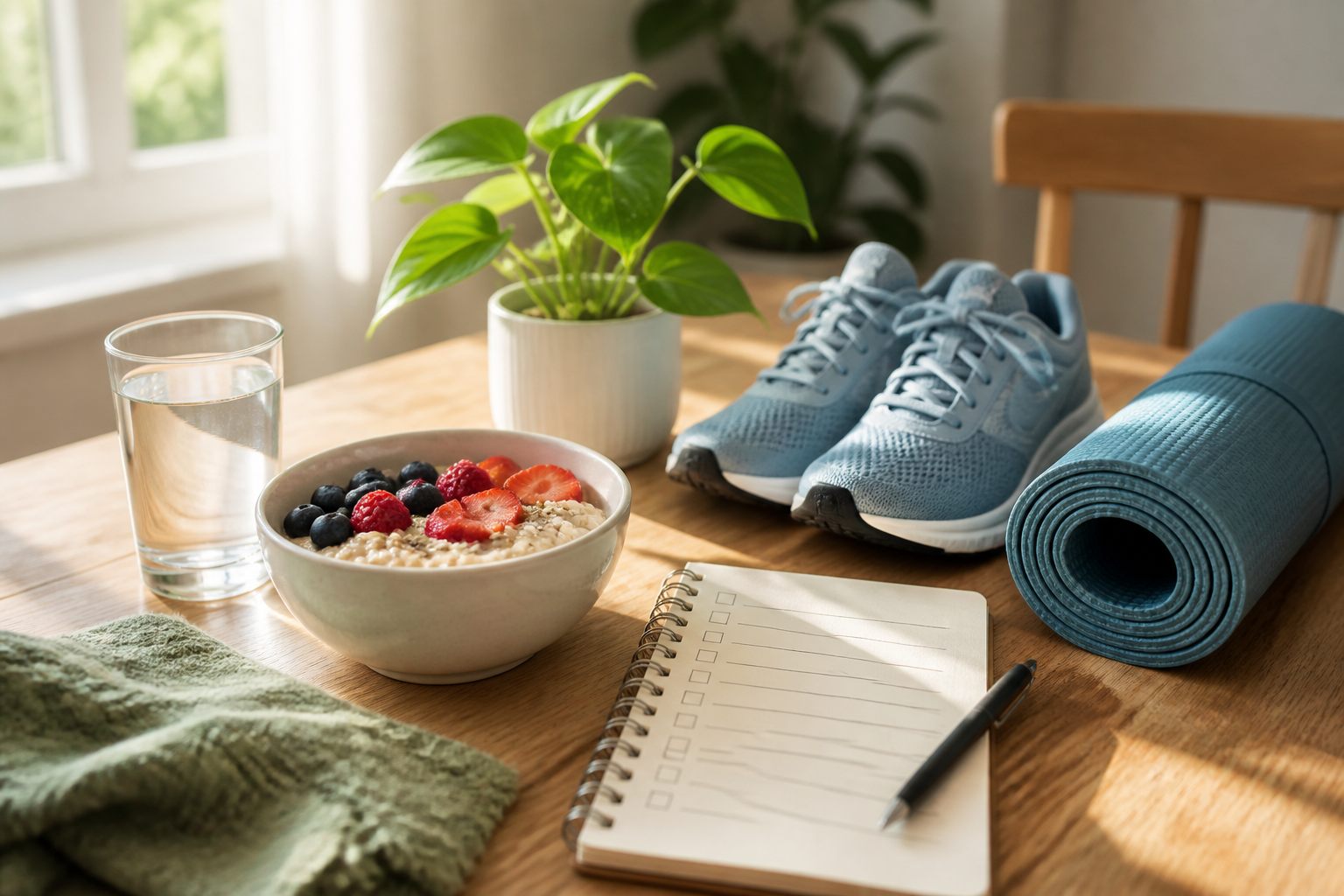
Why small daily habits matter
Health is shaped by patterns over time. A short walk, a glass of water with breakfast, a regular bedtime, or adding produce to one meal may seem modest, but each can make a healthy choice easier to repeat. Small steps also leave room for work, family responsibilities, culture, budget, and changing energy levels.
Seven wellness basics to practice
Walking, cycling, dancing, gardening, and short strength sessions all count. Adults can work toward federal activity guidelines gradually; any movement is a useful starting point.
Include vegetables or fruit, a protein source, and a satisfying carbohydrate. Variety matters more than chasing a perfect “clean” meal.
Place water where you work or eat. Fluid needs vary, and foods plus other beverages also contribute to hydration.
A consistent wake time and a calmer pre-bed routine can support sleep. If sleep problems persist, discuss them with a qualified clinician.
Try slow breathing, stretching, daylight, music, journaling, or a short conversation with someone you trust.
A quick call, shared meal, class, or neighborhood walk can make connection more regular and less dependent on special occasions.
Make a healthy habit easier to repeat
- Be specific: “Walk for 10 minutes after lunch” is easier to act on than “exercise more.”
- Use a cue: Attach the habit to coffee, lunch, brushing your teeth, or closing your laptop.
- Reduce friction: Put shoes by the door, prepare produce in advance, or charge your phone outside the bedroom.
- Track lightly: A simple check mark can show consistency without turning wellness into a scorecard.
- Restart without punishment: Missing a day is information, not failure. Adjust the habit to fit real life.
A realistic one-week wellness starter
Pick one morning habit and one evening habit. In the morning, drink water and step outside for a few minutes of daylight. In the evening, prepare one item for tomorrow and begin winding down at a consistent time. Keep the plan steady for a week, then decide whether to continue, simplify, or add something new.
When general wellness advice is not enough
Daily habits support wellbeing, but they do not replace medical care. Seek professional guidance for persistent pain, major sleep changes, concerning symptoms, significant mood changes, or questions about how activity and diet relate to a health condition or medication.
Wellness basics FAQ
What is the best first wellness habit?
Choose the smallest action that feels useful and realistic for you. A brief daily walk, a regular wake time, or adding fruit or vegetables to one meal are practical examples.
How long does it take to build a healthy habit?
There is no universal deadline. Habit formation varies by the person, behavior, and environment. Focus on repetition and making the action easier rather than expecting a fixed number of days.
Do short walks count as exercise?
Yes. Short bouts of movement contribute to overall activity. Build duration and intensity gradually based on your current health and abilities.
How many habits should I change at once?
One or two small changes are often easier to maintain than a long list. Add another habit after the first one feels reasonably stable.
When should I talk to a healthcare professional?
Ask for individualized guidance when symptoms persist, a condition affects activity or eating, or you are unsure whether a wellness change is safe for you.
This article provides general education and is not medical advice.
