
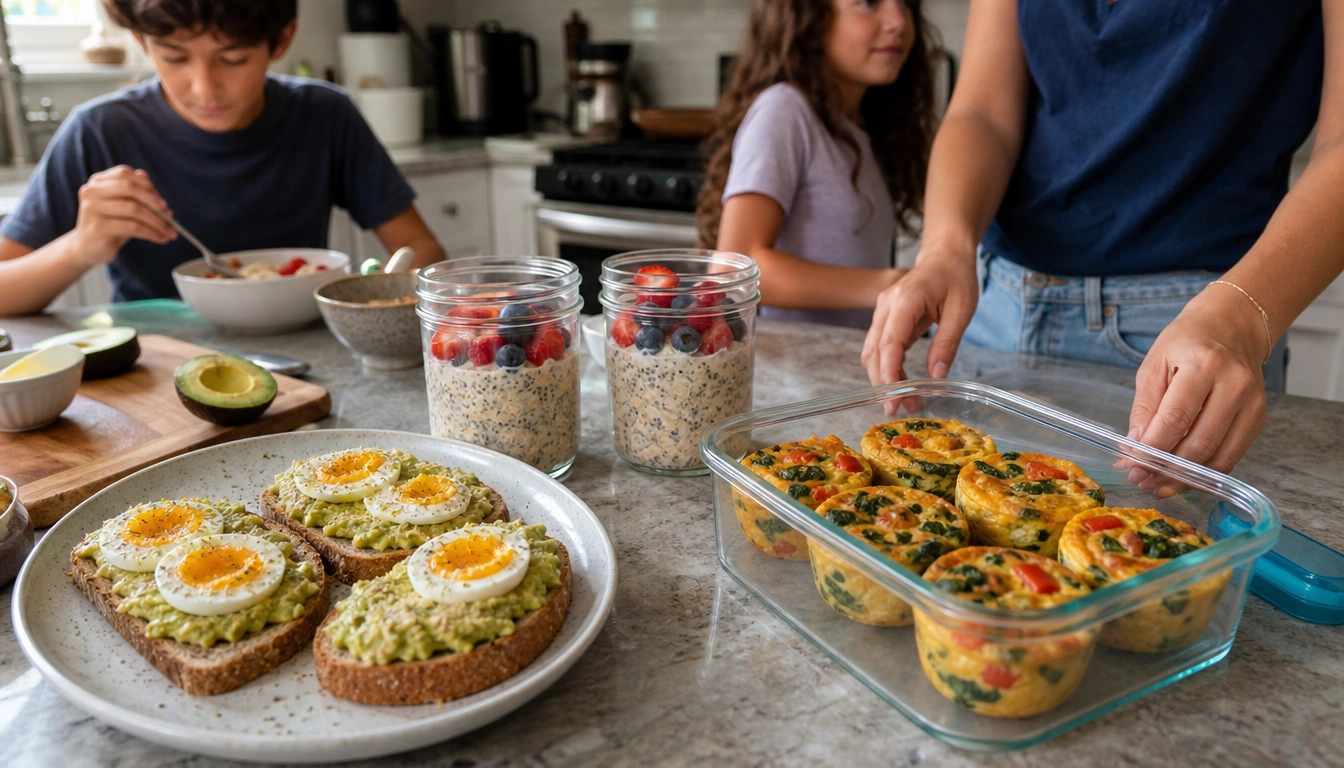
You can make a fast, kid-friendly high-fiber breakfast by building from simple staples like oats, whole-grain toast, fruit, yogurt, seeds, eggs, or beans. The easiest approach is to combine fiber with protein and healthy fats so breakfast is more filling and less likely to lead to a mid-morning crash. For many families, overnight oats, seeded toast with eggs, or freezer-friendly egg bites are practical starting points.
Key Takeaways
- Soluble fiber in oats, chia, fruit, and beans helps slow digestion and support steadier energy; insoluble fiber in whole grains, seeds, and skins helps regularity.
- Adults are often advised to aim for about 30 grams of fiber a day, while children’s needs vary by age and are lower than adult targets.
- A breakfast that includes fiber plus protein and healthy fats is more likely to keep kids and parents satisfied until lunch.
- The easiest swaps are usually the smallest: choose whole-grain bread, add berries to cereal, mix chia into oats, or serve eggs with fruit and toast.
- Increase fiber gradually and keep fluids up to reduce gas, bloating, or constipation as your family adjusts.
Why breakfast fiber matters for busy parents
For busy parents, high-fiber breakfast ideas are useful because fiber helps breakfast feel more substantial without requiring complicated cooking. Fiber is the part of plant foods the body does not fully digest, but it still does important work. Soluble fiber, found in oats, chia, beans, and soft fruit, forms a gel-like texture in the gut and slows digestion. Insoluble fiber, found in whole grains, seeds, and fruit and vegetable skins, adds bulk and supports regular bowel movements.
That combination matters in the morning. A breakfast built around fiber is less likely to leave everyone hungry again by 10 a.m., especially when it is paired with protein and healthy fats. Public health guidance from the NHS and the CDC emphasizes eating more plant foods overall, while adult fiber targets are commonly set around 30 grams per day. Children need less than adults, and their needs change with age, so breakfast should support the day without trying to force adult-sized portions.
For school mornings, the goal is not perfection. It is a repeatable breakfast that is quick, filling, and realistic enough to happen most days.
The easiest high-fiber breakfast building blocks
The simplest way to build a higher-fiber breakfast is to use foods you already know and make one or two better choices. Oats are a good example because they are gentle, fast, and naturally high in soluble fiber. Chia and flaxseed are small add-ins that can increase fiber without changing the meal much. Whole-grain bread, bran cereals, and seeded wraps add more insoluble fiber, which helps with regularity.
Fruit is another easy win. Berries, pears, apples, bananas, and oranges all bring fiber, water, and natural sweetness. Vegetables can also fit at breakfast in small amounts, especially spinach, tomatoes, mushrooms, peppers, and avocado. Beans may seem unusual in the morning, but a spoonful in a breakfast wrap, hash, or savory toast can work well.
For parents, the practical rule is simple: choose one base, one fiber booster, and one fruit or vegetable. A bowl of oats with berries, a slice of whole-grain toast with avocado, or yogurt topped with chia and fruit all move breakfast in the right direction without requiring a full recipe overhaul.
Fast breakfast formula: fiber plus protein and healthy fats
Fiber alone is helpful, but a breakfast that lasts until lunch usually needs more than fiber by itself. Protein and healthy fats slow stomach emptying and make the meal more satisfying. That is why oatmeal with nut butter feels more filling than plain oatmeal, and why eggs with whole-grain toast tend to hold people longer than toast alone.
A simple formula is: fiber base + protein + healthy fat. Examples include oats with Greek yogurt and walnuts, whole-grain toast with eggs and avocado, or a smoothie made with fruit, spinach, yogurt, and chia. If your family prefers sweet breakfasts, add nut butter, yogurt, or milk. If they prefer savory foods, pair toast or a wrap with eggs, cheese, or beans.
This balance is especially useful for parents who do not have time to snack. A breakfast that combines these elements can reduce the temptation to reach for a quick, sugary bite before lunch and can make mornings feel steadier for both adults and children.
Time-saving strategies that fit real mornings
The best breakfast system is the one that reduces morning decisions. Batch prep is often the easiest place to start. Overnight oats can be made for several days at once, and muffin-tin egg bites can be baked on the weekend, cooled, and stored in the fridge or freezer. If you are short on time, freeze portions in single servings so they can be reheated quickly.
Pantry-first swaps also help. Keep rolled oats, whole-grain bread, chia seeds, nut butter, and canned beans or lentils on hand. Frozen berries and frozen spinach are especially useful because they reduce prep and waste. If cereal is a family favorite, choose a higher-fiber option and add fruit and seeds rather than starting from scratch with a whole new routine.
Grab-and-go assembly is another useful strategy. A yogurt cup can become breakfast with berries and chia. Toast can become more filling with avocado, eggs, or nut butter. A breakfast wrap can be built from a whole-grain tortilla, scrambled eggs, and leftover vegetables in just a few minutes.
Practical high-fiber breakfast ideas for school mornings
Overnight oats with berries and chia
Prep time: about 5 minutes the night before. Mix rolled oats, milk, chia seeds, and fruit in a jar or container, then refrigerate overnight. In the morning, add nut butter or yogurt if you want more protein and fat. This works well for children who like a soft texture and for parents who want a breakfast that can be grabbed on the way out the door.
Whole-grain toast with eggs, avocado, and seeds
Prep time: about 5 to 7 minutes. Toast seeded or whole-grain bread, add scrambled, fried, or boiled eggs, then top with avocado or a sprinkle of pumpkin seeds. This is a strong option when you want something savory, filling, and simple. If a child does not like avocado, swap in cheese or a thin layer of nut butter on the side.
Freezer-friendly veggie egg bites
Prep time: active time about 15 minutes, plus baking. Whisk eggs with finely chopped vegetables such as spinach, peppers, mushrooms, or a small amount of beans, then bake in a muffin tin. Cool and freeze in portions. Reheat in the microwave for a quick breakfast alongside fruit or whole-grain toast.
Yogurt bowl with fruit, oats, and seeds
Prep time: 3 minutes. Start with plain yogurt, then add berries, sliced banana, a spoonful of oats, and chia or flaxseed. This is especially useful when you need a no-cook option and want to keep breakfast lightly sweet without relying on pastries or sugary cereal.
Savory breakfast wrap
Prep time: about 5 minutes if leftovers are ready. Use a whole-grain tortilla, scrambled eggs, and leftover vegetables, then add beans if your family likes them. Roll it up for a portable breakfast that works on rushed mornings and can be adjusted to different tastes.
How to increase fiber without digestive discomfort
When a family is used to lower-fiber breakfasts, adding a lot of fiber at once can cause gas, bloating, or constipation. A gentler approach works better. Increase fiber gradually over one to three weeks so the gut has time to adapt, especially if you are moving from refined grains and pastries to oats, beans, and seeds.
Fluids matter too. Fiber works best when the meal is paired with enough water or other drinks through the day. If fiber intake rises but fluids do not, constipation can actually get worse. For that reason, it helps to think of breakfast as part of the whole day’s routine rather than a stand-alone fix.
If higher-fiber foods seem to cause discomfort, reduce the amount temporarily and try smaller changes. For example, use half chia and half yogurt at first, or choose one high-fiber item instead of several at once. Cooking vegetables until soft, using peeled fruit, or choosing smoother textures can also make breakfast easier to tolerate.
Kid-friendly adjustments and picky-eater workarounds
Children do not always need to see a “high-fiber” breakfast to benefit from one. Small, familiar changes often work better than obvious swaps. If a child prefers toast, start with whole-grain bread and keep the toppings familiar. If they like cereal, add sliced banana or berries. If they like yogurt, stir in finely ground flaxseed or top with fruit instead of granola-heavy add-ons.
For picky eaters, keep texture in mind. Some children dislike seeds, chunky fruit, or visible vegetables. In that case, use smoother options such as applesauce, blended smoothies, finely grated zucchini in muffins, or oats cooked until soft. Under age 2, children should not be managed with the same fiber targets as older children and adults, so portion size and texture matter more than chasing a number.
It also helps to serve a “safe food” alongside the higher-fiber item. A child may be more willing to try a new breakfast if there is still something predictable on the plate, such as toast, yogurt, fruit, or eggs.
When a high-fiber breakfast may not be the right fit
Most families can increase breakfast fiber safely with gradual changes, but not every child or adult should follow the same plan. People with irritable bowel syndrome, inflammatory bowel disease, recent digestive surgery, swallowing problems, or other medical conditions may need individualized advice from a clinician or registered dietitian. In some cases, too much fiber or the wrong type of fiber can worsen symptoms rather than help.
Parents should also pause and seek medical guidance if a child has persistent constipation, abdominal pain, poor growth, vomiting, blood in the stool, or a major change in appetite. Those symptoms need assessment rather than a stronger breakfast strategy. For the rest of the family, the safest path is usually modest changes, better fluid intake, and a breakfast routine that can actually be repeated on a busy weekday.
Frequently Asked Questions
How much fiber should adults and children aim for at breakfast or across the day?
Adults are commonly advised to aim for about 30 grams of fiber per day. Children need less, and the target changes with age, so there is no single breakfast number that fits everyone. A practical approach is to include a fiber-rich food at breakfast and build the rest across lunch, dinner, and snacks.
Which breakfast foods are the easiest high-fiber swaps for white bread, cereal, or pastries?
The easiest swaps are whole-grain bread instead of white bread, higher-fiber cereal with fruit, overnight oats instead of pastries, and yogurt topped with berries and seeds instead of a sweet baked breakfast. Small changes are usually easier to keep than a complete menu overhaul.
How can busy parents add fiber without causing bloating, gas, or stomach discomfort?
Increase fiber slowly over one to three weeks and pair the change with more fluids. Start with one high-fiber food at a time and use familiar textures. If discomfort shows up, scale back a little and build up more gradually rather than making several big changes at once.
What are the best make-ahead high-fiber breakfasts for school mornings?
Overnight oats, freezer-friendly egg bites, and breakfast muffins made with whole grains or fruit are some of the most practical options. You can also pre-portion yogurt, fruit, and seed toppings so breakfast only takes a minute or two to assemble.
How do I pair fiber with protein and healthy fats so breakfast keeps us full longer?
Use a simple pattern: fiber base plus protein plus healthy fat. For example, oats with yogurt and nuts, toast with eggs and avocado, or fruit with yogurt and chia. That combination tends to be more filling than fiber alone.
The Bottom Line
A high-fiber breakfast does not need to be complicated. The easiest wins are oats, whole-grain toast, fruit, yogurt, seeds, eggs, and a few vegetables, assembled in a way your family will actually eat.
For busy parents, the most workable breakfasts are the ones that can be repeated: overnight oats, egg bites, toast with toppings, or yogurt bowls. Pairing fiber with protein and healthy fats helps breakfast last longer and makes morning routines easier.
If your family is increasing fiber, do it gradually and keep fluids up. If a child has persistent digestive symptoms or a medical condition that affects digestion, get individualized advice instead of forcing a standard high-fiber plan.
Medical disclaimer
Medical disclaimer: This content is for educational and informational purposes only and is not a substitute for professional medical advice, diagnosis, or treatment. Dietary needs and supplement suitability vary by individual.
Sources
- National Health Service (NHS) — www.nhs.uk. Accessed October 2026.
- Centers for Disease Control and Prevention (CDC) — cdc.gov. Accessed October 2026.
- National Health Service (NHS) — ouh.nhs.uk. Accessed October 2026.
- Academic Research Institution — harvard.edu. Accessed October 2026.
