
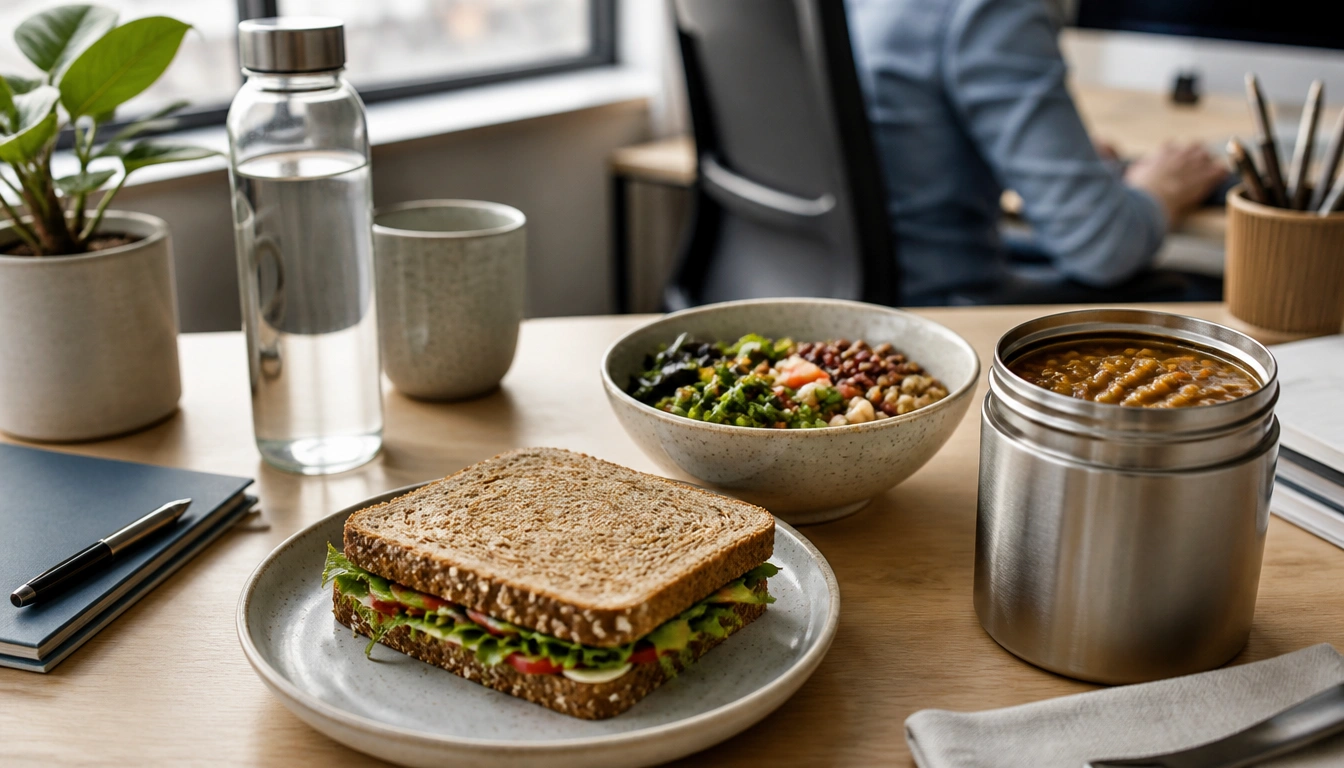
For a quick lunch that is high in fiber and fits a busy workday, aim for a simple meal built around whole grains, beans, lentils, vegetables, fruit, nuts, or seeds. A lunch with roughly 8 to 12 grams of fiber can meaningfully support daily fiber goals without needing a full meal prep routine. The easiest options are grain-and-legume bowls, upgraded sandwiches or wraps, and hearty soups made with pulses.
Key Takeaways
- A lunch target of about 8 to 12 grams of fiber can help you make real progress toward the day’s total without overcomplicating your meal.
- Whole-grain bread, beans, lentils, vegetables, fruit with skin, nuts, and seeds are the fastest ways to raise fiber in a workday lunch.
- Sandwiches, bowls, and soups are the most flexible office-lunch formats because they adapt easily to pantry foods and leftovers.
- If you increase fiber quickly, increase fluids too; otherwise bloating, cramping, or constipation can get worse instead of better.
- People with certain digestive conditions may need low-fiber meals at times, so high-fiber lunches are not the right choice for everyone.
Why lunch fiber matters for workday energy, satiety, and digestion
For busy professionals, lunch often has to do more than stop hunger. It has to carry you through meetings, deadlines, and long stretches without a snack. That is where fiber helps. Fiber slows digestion, especially when the meal includes soluble fiber from oats, beans, lentils, or barley. That slower pace can help prevent the sharp hunger rebound that tends to show up a few hours after a refined lunch.
Fiber also supports steadier blood sugar after eating, which is one reason a high-fiber lunch can feel more stable than a lunch built around white bread, white rice, or other refined grains. The effect is not magic, but it is practical: when digestion is slower, the post-meal rise and fall in energy is often less abrupt. Many people notice fewer cravings and less afternoon fog when lunch contains more plants and less refined starch.
Digestion benefits too. Insoluble fiber adds bulk and helps stool move through the gut, while soluble fiber can help form a softer, more manageable stool. That mix matters if your workday includes long sitting periods, irregular bathroom breaks, or travel between meetings. Public health guidance from the National Health Service and the U.S. Dietary Guidelines for Americans both support higher-fiber eating patterns for overall health, not just bowel regularity.
There is also a convenience angle. Fiber-rich lunches tend to be built from foods that store well, travel well, and mix easily: canned beans, microwaveable grains, bagged greens, apples, pears, carrots, seeds, and whole-grain bread. In other words, a higher-fiber lunch can be easier, not harder, once you know the formula.
How much fiber a lunch should provide
Daily fiber needs vary by age, sex, and energy intake, but many adults in the United States and the United Kingdom still fall short of recommended amounts. The U.S. Dietary Guidelines for Americans and public health guidance in the U.K. both point to roughly 25 to 34 grams per day for many adults, depending on individual factors. That makes lunch a useful place to make a meaningful dent in your total.
A good practical target is about 8 to 12 grams of fiber at lunch. That is enough to support daily goals without forcing every midday meal to be huge or overly complicated. It also leaves room for fiber at breakfast, dinner, and snacks. If you prefer a lighter lunch, you do not need to hit that number every day, but it is a useful benchmark for a lunch that actually contributes something substantial.
Think in terms of building blocks rather than counting every gram perfectly. One serving of beans or lentils, a whole-grain base, and one or two plant additions can often get you close to that range. If you are using packaged foods, check the label. Many breads, wraps, soups, and frozen meals advertise convenience but still contain very little fiber. Choosing the version with more whole grains or legumes can change the meal without changing your routine.
For most people, the goal is not to maximize fiber at all costs. It is to get enough fiber consistently, in a form you can tolerate and repeat during a normal workweek. That is usually more effective than aiming for a very high number one day and then abandoning the plan the next.
The easiest high-fiber lunch formulas for busy professionals
The fastest high-fiber lunches usually come from a few repeatable formulas. These are useful because they rely on assembly, not elaborate cooking. If you keep the ingredients on hand, lunch can come together in minutes.
Grain-and-legume bowls
A grain-and-legume bowl is the most reliable template. Start with a whole grain such as brown rice, quinoa, farro, barley, or bulgur. Add beans, chickpeas, lentils, or edamame. Then add a vegetable or two, plus a simple dressing. A bowl like this is high-fiber, filling, and easy to scale up for a larger appetite or down for a lighter lunch.
Examples include quinoa with black beans, corn, salsa, and greens; brown rice with chickpeas, cucumber, tomatoes, and tahini; or barley with lentils, roasted carrots, and spinach. The exact ingredients are flexible. The important part is pairing a whole grain with a legume, because that combination does much of the fiber work for you.
Upgraded sandwiches and wraps
Sandwiches are common office lunches, but they are often built on low-fiber bread and a narrow filling. To upgrade one, choose whole-grain, seeded, rye, or high-fiber bread or wraps. Then add vegetables that bring both texture and volume, such as leafy greens, tomato, cucumber, peppers, shredded carrots, or sliced radish. Beans, hummus, avocado, and nut or seed spreads can help raise the fiber even more.
A tuna sandwich on whole-grain bread with lettuce, tomato, and avocado is more fiber-rich than the same filling on white bread. A hummus and roasted vegetable wrap can be a very quick vegetarian option. If you need a sturdier lunch, pair the sandwich with an apple or pear rather than chips. That is an easy way to add fiber without much extra prep.
Pulse-based soups
Soups can be excellent desk lunches if they are built on beans, lentils, or split peas instead of cream or refined starch alone. Lentil soup, split pea soup, and white bean vegetable soup are especially practical because they reheat well and taste even better after sitting overnight. A thermos or microwave-safe container makes them easy to bring to work.
If you want more fiber without changing the whole recipe, add chopped vegetables, beans, or a small handful of seeds before eating. A soup with vegetables and pulses can be satisfying on its own, especially when paired with whole-grain crackers or a piece of fruit. For many people, soup is the easiest way to get a fiber-rich lunch when time is tight.
Smart ingredient swaps that raise fiber without making lunch complicated
The biggest fiber gains often come from small swaps, not from making a completely new meal. If you already have a lunch habit, look for the easiest place to improve it.
| Common choice | Higher-fiber swap | Why it helps |
|---|---|---|
| White bread sandwich | Whole-grain, seeded, or rye bread | Raises fiber without changing the sandwich format |
| Plain rice bowl | Quinoa, barley, brown rice, or a grain blend | Adds more fiber and often more staying power |
| Low-fiber deli filling | Hummus, bean spread, avocado, or extra vegetables | Improves fullness and texture with minimal prep |
| Soup with noodles or potatoes only | Soup with lentils, beans, or split peas | Turns a light soup into a more balanced meal |
| Chips or crackers on the side | Apple, pear, carrots, snap peas, or nuts | Adds fiber and often improves micronutrient density |
Do not underestimate vegetables. A sandwich with a good bread choice but no produce may still be modest in fiber. Adding even a few crunchy vegetables changes the meal more than many people expect. The same goes for fruit. An apple with the skin on or a pear can be a more useful desk-side side dish than a packaged snack that only feels filling for a few minutes.
Legumes are especially efficient. If you are short on time, canned beans or lentils are one of the easiest ways to upgrade lunch because they do not require much cooking. Rinse them to reduce excess sodium, then mix them into grain bowls, salads, soups, or wraps. This is one of the best food-first shortcuts for a busy schedule.
Meal-prep and desk-lunch strategies that actually stick
The best lunch plan is the one you can repeat on your busiest weeks. That usually means having a few ingredients ready, not full recipes for every day. Batch-cook one grain and one pulse on the weekend, then use them in different combinations across the week. For example, quinoa and lentils can become a bowl one day, a wrap filling the next, and a soup add-in later in the week.
Pantry and desk storage matter too. Keep shelf-stable foods on hand: canned beans, microwaveable grains, whole-grain crackers, tuna or salmon packets, nut butter, seeds, and low-sodium soup. At the office, a drawer with a spoon, fork, napkins, and a microwave-safe container makes better lunches much more likely. If you commute, choose containers that seal well and keep wet ingredients separate until you eat.
Portability can make or break a lunch habit. A jar salad with beans, grains, and dressing at the bottom works well if you like cold lunches. A soup thermos works well if you prefer something warm. A sandwich pack with fruit and vegetables works well when you need the least possible friction. The goal is not culinary complexity. The goal is a lunch you can open, eat, and finish without extra planning.
If you rely on convenience foods, look for versions with at least some whole grains or legumes. A packaged meal does not have to be perfect to be better than a refined lunch with almost no fiber. Even partial improvements can add up across a workweek.
How to increase fiber safely
If your current diet is low in fiber, adding a large amount all at once can backfire. Bloating, gas, abdominal cramping, and constipation are common when fiber rises too quickly. A start-low-go-slow approach is usually easier to tolerate. That may mean adding one extra fiber-rich food at a time rather than rebuilding every meal in a single day.
Hydration matters just as much. Fiber works best when there is enough fluid to move it through the digestive tract. If you increase beans, whole grains, vegetables, or seeds but forget to drink more water, constipation can worsen. This is especially important at work, where people often drink coffee but not enough water. A water bottle at your desk can make the adjustment easier.
Some high-fiber foods can also affect medication timing. Very high-fiber meals or fiber supplements may interfere with the absorption of certain medicines for some people. If you take regular prescription medication, ask your pharmacist or clinician whether you should separate it from meals that are especially high in fiber. That is a practical safety step, not a reason to avoid fiber altogether.
If you are trying to build tolerance, choose one daily change and keep it steady for a week or two before increasing again. For example, start with a bean-based lunch twice a week, then expand from there. The digestive system often adapts better to small, repeated changes than to a sudden overhaul.
When high-fiber lunches are not the right choice
High-fiber lunches are a good fit for many people, but there are important exceptions. During some digestive flares or after certain procedures, a low-fiber or low-residue diet may be recommended. That can apply to active inflammatory bowel disease flares, diverticulitis flare-ups, bowel strictures, or the immediate period before or after some surgeries. In those situations, a high-fiber lunch may worsen symptoms or conflict with treatment plans.
Some people also need individualized adjustments because of chewing problems, swallowing difficulties, very sensitive digestion, or medication schedules. If you have irritable bowel symptoms, a sensitive stomach, or a history of significant digestive trouble, you may need to introduce fiber more cautiously than a general guide suggests. The best plan is the one that matches your body and your clinician’s advice.
Get medical advice if you have persistent abdominal pain, blood in the stool, unexplained weight loss, ongoing constipation or diarrhea, or a sudden change in bowel habits. Those signs should not be treated as a simple fiber issue. A diet change can help with ordinary constipation or low-fiber eating, but it should not replace medical evaluation when symptoms are ongoing or unusual.
For most working adults, though, the path is straightforward: use more whole grains, legumes, vegetables, fruit, and seeds in lunch, keep the meal easy to assemble, and increase fiber gradually so your digestion can keep up.
Frequently Asked Questions
How much fiber should a lunch provide to meaningfully support daily goals?
A practical lunch target is about 8 to 12 grams of fiber. That range can help you move toward daily recommendations without making lunch overly large or hard to fit into a work schedule. The exact target matters less than consistency across the week.
What are the fastest high-fiber lunch swaps for sandwiches, bowls, and soups?
Use whole-grain or seeded bread, add hummus or beans, and include vegetables or avocado in sandwiches. For bowls, swap white rice for quinoa, barley, or brown rice and add lentils or chickpeas. For soups, choose lentil, split pea, or bean-based versions instead of cream-heavy soups.
How can I increase fiber without causing bloating or digestive discomfort?
Increase fiber gradually and drink more water at the same time. If your diet is currently low in fiber, add one new high-fiber food at a time rather than changing everything at once. Gas, bloating, and cramping are more likely when the increase is sudden.
What high-fiber lunch options work best for meal prep or desk lunches?
Grain-and-bean bowls, bean-based soups, and sandwiches on whole-grain bread travel well and reheat easily. Canned beans, microwaveable grains, and sturdy produce like carrots, apples, and cucumbers make meal prep simpler and help lunches stay portable.
When should someone avoid a high-fiber lunch because of a medical condition?
People with an active inflammatory bowel disease flare, diverticulitis flare, bowel stricture, or certain post-surgical situations may be advised to follow a low-fiber plan instead. If you have persistent pain, blood in the stool, or major bowel changes, get medical advice rather than self-adjusting fiber.
The Bottom Line
A high-fiber lunch does not have to be complicated. The easiest approach is to build around whole grains, legumes, vegetables, fruit, nuts, or seeds and aim for roughly 8 to 12 grams of fiber at midday.
For busy professionals, the most practical formats are grain bowls, upgraded sandwiches or wraps, and pulse-based soups. These work well for desk lunches, meal prep, and pantry-based cooking.
If you raise fiber, raise fluids too and increase fiber gradually so your digestive system can adapt. And if you have a medical condition that calls for low fiber, follow your clinician’s guidance instead of forcing a high-fiber plan.
Medical disclaimer
Medical disclaimer: This content is for educational and informational purposes only and is not a substitute for professional medical advice, diagnosis, or treatment. Dietary needs and supplement suitability vary by individual.
Sources
- National Health Service (NHS) — www.nhs.uk. Accessed October 2026.
- U.S. Government / Health Authority — dietaryguidelines.gov. Accessed October 2026.
- National Health Service (NHS) — stgeorges.nhs.uk. Accessed October 2026.
- National Health Service (NHS) — leedsth.nhs.uk. Accessed October 2026.
- Mayo Clinic — mayoclinic.org. Accessed October 2026.
