
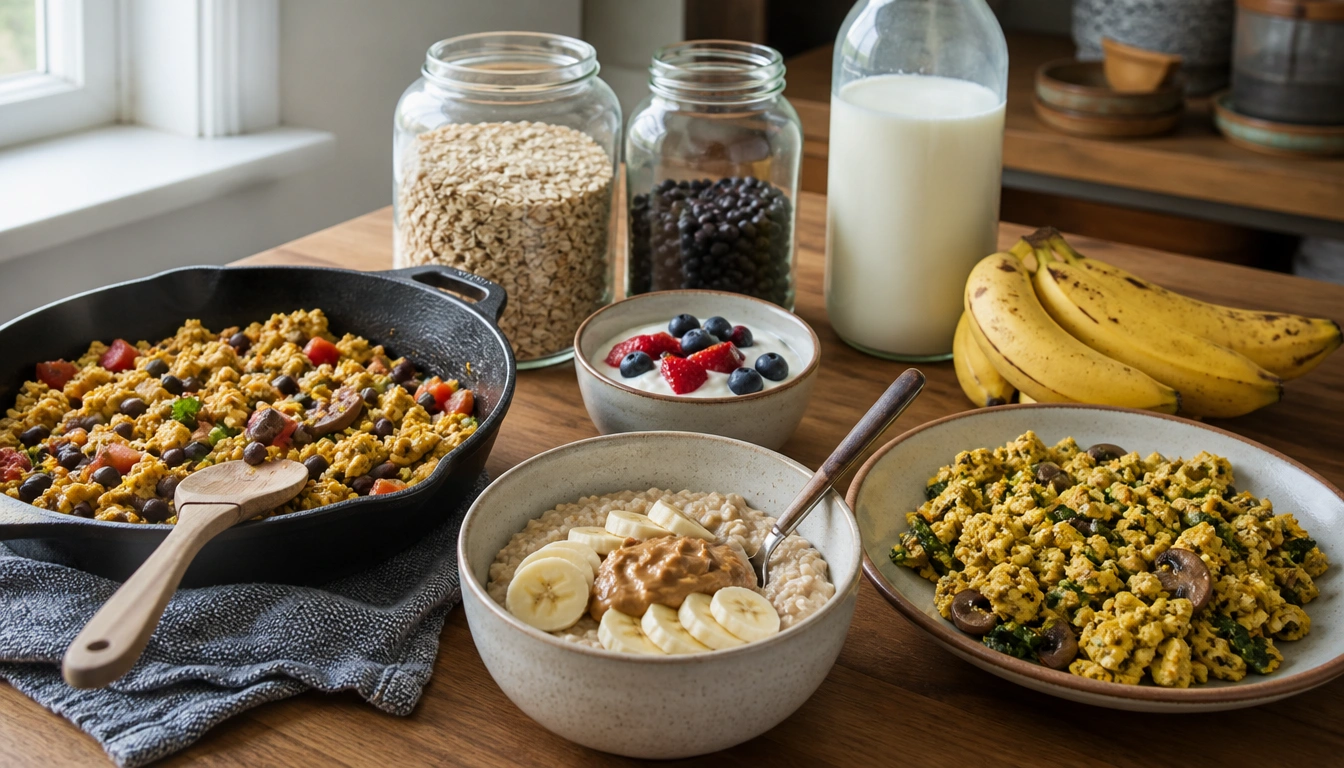
Yes—an inexpensive high-protein breakfast is very doable with ordinary foods. Eggs, beans, oats, tofu, store-brand Greek yogurt, cottage cheese, milk, and peanut butter can all create filling breakfasts without specialty products. A practical target for many people is roughly 15 to 30 grams of protein at breakfast, adjusted to your own needs, appetite, and health status.
Key Takeaways
- You can build a high-protein breakfast from low-cost staples, not just powders, bars, or premium packaged foods.
- Aiming for roughly 15 to 30 grams of protein at breakfast may help with fullness and steadier energy through the morning.
- Eggs, dairy, beans, tofu, oats, seeds, and fortified milk all work well in budget-friendly combinations.
- Plant-based breakfasts can still be protein-rich when you combine legumes, grains, soy foods, seeds, and dairy alternatives thoughtfully.
- Meal prep can save money, but cooked breakfasts need safe refrigeration and sensible storage windows.
- People with kidney disease, food allergies, or special medical needs should not copy a high-protein plan without personalized guidance.
Why a high-protein breakfast can be inexpensive
A high-protein breakfast does not have to mean specialty shakes or expensive “breakfast protein” products. The cheapest route is usually the simplest: start with foods that are naturally protein-rich, easy to store, and already useful in other meals. Eggs, dry or canned beans, lentils, plain oats, tofu, store-brand Greek yogurt, cottage cheese, and milk are all budget staples that can pull their weight at breakfast.
The reason this works is practical. Protein tends to be more filling than a breakfast made mostly of refined starches, and it can help you stay satisfied longer between meals. For many adults, building breakfast around a moderate amount of protein also makes the rest of the day easier to manage because you are less likely to be starving mid-morning. That does not mean breakfast has to be huge. It means it should be intentional.
If you are shopping on a budget, think in terms of ingredient families instead of products. Eggs, beans, oats, yogurt, tofu, and milk can each be paired with whatever is cheapest that week: frozen vegetables, bananas, apples, salsa, peanut butter, canned tomatoes, or bulk seeds.
How much protein to aim for at breakfast
The general protein RDA for healthy adults is 0.8 grams per kilogram of body weight per day, but that is a daily baseline, not a breakfast target. In everyday meal planning, many public health and clinical nutrition perspectives find it useful to spread protein across meals rather than saving most of it for dinner. For breakfast, a rough target of 15 to 30 grams can be a practical range for satiety and steady energy.
That range is flexible. A smaller adult may feel satisfied at the lower end, while a larger adult, an older adult, or someone with a higher daily protein need may do better closer to the upper end. The point is not to count every gram perfectly. The point is to avoid breakfasts that are mostly toast, cereal, or pastry when you know you feel better with more staying power.
If you are eating on the go, it can help to combine protein with fiber and a little fat. For example, oats plus milk and peanut butter; eggs plus beans and vegetables; or yogurt plus fruit and seeds. These combinations are usually more filling than a single ingredient alone.
Cheapest high-protein breakfast building blocks
Eggs are one of the most flexible budget proteins. They cook quickly, pair with nearly any leftover vegetable, and work in scrambles, omelets, breakfast sandwiches, burritos, or boiled-and-grabbed meals. If eggs are affordable where you shop, they are often one of the easiest ways to build a satisfying breakfast.
Beans and lentils are especially strong value foods. Canned black beans, pinto beans, or lentils can be folded into eggs, tucked into burritos, or spooned over toast or potatoes. Dry beans and lentils cost even less per serving, though they need more time and planning. They bring protein plus fiber, which is useful for fullness.
Greek yogurt and cottage cheese are convenient because they require no cooking. Store-brand tubs are often much cheaper than individual cups. Top them with fruit, oats, cinnamon, or seeds for a breakfast that feels complete without much effort. Cottage cheese is especially useful if you want something savory or if you do not want a sweet breakfast.
Oats are a budget anchor. On their own, oats are not a very high-protein food, but they become much more useful when cooked with milk or fortified soy milk and paired with peanut butter, yogurt, or seeds. Oats are filling, cheap, and easy to batch cook.
Tofu is a strong plant-based option, especially for people who want a savory breakfast. It can be crumbled like scrambled eggs, seasoned simply, and stretched with leftover vegetables. It is usually economical, stores well in the refrigerator, and absorbs flavor easily.
Milk and fortified soy milk are easy add-ins for porridge, coffee, smoothies, and overnight oats. They can quietly increase the protein content of breakfast without making the meal more complicated. If you buy shelf-stable or store-brand versions, they can be cost-effective too.
Three cheap breakfast formulas that actually work
Egg scramble with beans or vegetables
This is one of the most practical budget breakfasts because it uses pantry and freezer food well. Scramble two eggs with a splash of milk or water, then add canned black beans, lentils, onion, spinach, peppers, or any leftover vegetables you have. Serve it with toast, tortillas, or potatoes if you need more staying power.
The logic is simple: eggs give concentrated protein, beans add more protein and fiber, and vegetables increase volume for very little cost. If you like, top the scramble with salsa or hot sauce instead of buying pricier breakfast condiments. This is also a good way to use small leftovers before they go bad.
Greek yogurt or cottage cheese bowl
Start with a plain store-brand Greek yogurt or cottage cheese base, then add fruit, oats, sunflower seeds, chopped nuts, or a spoonful of peanut butter. Frozen berries are often a smart budget buy because they can be portioned out as needed and thaw quickly. Bananas and apples also work well if they are cheaper where you shop.
This style of breakfast is useful when you need something fast. It requires no stove, little cleanup, and very little planning. If the flavor feels too plain, cinnamon, vanilla extract, or a drizzle of honey can help, but you do not need expensive granola or specialty toppings to make it work.
Peanut butter oatmeal or overnight oats
Cook rolled oats in milk or fortified soy milk, then stir in peanut butter after cooking. If you prefer overnight oats, combine oats, milk, and yogurt or soy milk in a container and refrigerate overnight. Add fruit, cinnamon, or seeds in the morning.
This is a strong option when you want something warm, cheap, and filling. The oats bring slow-digesting carbohydrate and fiber; the milk, soy milk, or yogurt boosts protein; and the peanut butter adds both flavor and staying power. It is especially useful for busy mornings because it can be made in batches.
Budget-friendly plant-based and mixed-diet combinations
If you eat animal foods, you can mix them with plant staples to keep costs down. Eggs with beans, cottage cheese with fruit and oats, or yogurt with peanut butter and seeds are all inexpensive ways to build a more balanced breakfast. If one protein source is expensive that week, use a smaller amount of it and stretch the meal with beans, oats, or vegetables.
If you eat mostly plant-based, you do not need specialty products to get a useful breakfast. Tofu, soy milk, beans, lentils, oats, seeds, peanut butter, and whole-grain toast can work together very well. Over the course of the day, a varied mix of legumes, grains, nuts, and seeds helps cover amino acid needs. You do not have to make every single breakfast “complete” in one food.
A useful money-saving mindset is to combine one concentrated protein with one cheap base. Examples include tofu plus rice or toast, beans plus eggs, yogurt plus oats, or peanut butter plus oatmeal. This keeps the meal affordable while still making protein the focus.
How to shop cheaper without losing protein
Store-brand tubs of yogurt, cottage cheese, oats, and milk are often the best place to start. Bulk bins can help with oats, seeds, and dried beans if your store has them. Frozen vegetables are usually a better value than out-of-season fresh produce and work well in scrambles and tofu bowls. Canned beans and lentils are convenient when you need speed, while dry beans are usually cheaper if you have time to cook them.
It also helps to think in terms of “building blocks” rather than recipes. Buy one or two protein anchors, one filling carbohydrate, and one or two low-cost produce items. For example: eggs, oats, bananas, peanut butter, and frozen spinach can generate several breakfasts. That is often cheaper than buying many single-purpose breakfast items that sit in the pantry.
If you are comparing options, the lowest-cost choice is not always the one with the biggest package or the highest protein number on the front label. Look at the serving size, the amount of food you actually eat, and whether the ingredient can be used in other meals during the week.
Meal prep and food safety for batch breakfasts
Batch cooking can save money and time, but breakfast meal prep only helps if the food stays safe. Cooked eggs, grains, burritos, and similar prepared breakfasts should be refrigerated promptly and kept cold. For most prepared breakfast foods, a practical refrigerated storage window is about 3 to 4 days, which is why many people prep only a few days at a time.
That matters for foods like overnight oats, cooked rice or grains, and breakfast burritos. Use clean containers, cool hot food before refrigerating when appropriate, and avoid leaving prepared food out for long periods. If a burrito will not be eaten soon, freezing is often safer than stretching the fridge time. Reheat leftovers thoroughly before eating.
For overnight oats, keep the base cold and add fragile toppings, such as fresh fruit or nuts, closer to eating time if you prefer better texture. For egg-based breakfasts, texture may soften after storage, so make enough for a few days instead of a full week. Good meal prep should make breakfast easier, not riskier.
Who should be cautious with higher-protein breakfasts
Older adults often benefit from more protein density because they may need a more deliberate strategy to maintain muscle and function as they age. That does not automatically mean a large breakfast, but it does mean protein at breakfast can be especially useful. Meals that combine protein with enough energy from carbohydrate and fat may be easier to eat and more satisfying.
People with chronic kidney disease should not self-prescribe a higher-protein eating pattern. Protein needs can be individualized in kidney disease, and the right plan depends on your stage of illness and other medical factors. Anyone with kidney concerns should speak with a clinician or registered dietitian before increasing protein substantially.
Food allergies, digestive disorders, diabetes, or other conditions can also change what counts as a good breakfast for you. For example, some people do better with smaller, more frequent meals; others need specific limits on dairy, eggs, soy, or beans. Personal medical guidance matters more than a one-size-fits-all rule.
If you want the cheapest high-protein breakfast possible, start with familiar foods you can repeat easily: eggs and beans, yogurt and oats, tofu and vegetables, or peanut butter oatmeal made with milk or soy milk. Those combinations are affordable, realistic, and flexible enough to fit different budgets and routines.
Frequently Asked Questions
How much protein should a breakfast contain to help with fullness and energy?
A practical breakfast target for many adults is roughly 15 to 30 grams of protein. That range can help with fullness and may support steadier energy, especially when paired with fiber-rich foods like oats, beans, fruit, or vegetables. Needs vary by body size, age, and health status.
Which budget foods give the most protein per dollar at breakfast?
Eggs, dry beans, lentils, store-brand Greek yogurt, cottage cheese, tofu, oats with milk or soy milk, and peanut butter are among the most useful budget options. The best value depends on local prices, but these foods tend to stretch well and work in many breakfast combinations.
Can I get enough protein at breakfast without using protein powder or specialty products?
Yes. Most people can build a solid high-protein breakfast with ordinary foods like eggs, yogurt, cottage cheese, beans, tofu, oats, milk, soy milk, and peanut butter. You usually do not need powders or bars unless they are simply the most convenient option for your routine.
What are the best high-protein breakfast options for vegetarian or plant-based eaters on a budget?
Good options include tofu scramble, overnight oats made with soy milk and peanut butter, beans on toast, yogurt with oats and seeds if you eat dairy, and lentil or bean breakfast burritos. Using a mix of legumes, grains, soy foods, and seeds helps keep meals affordable and varied.
How can I meal prep cheap high-protein breakfasts safely for several days?
Cook only what you can refrigerate safely, use clean containers, and keep prepared breakfasts cold. A few days is usually a safer window for items like egg dishes, breakfast burritos, cooked grains, and overnight oats. If you will not eat them soon, freeze portions and reheat them thoroughly.
The Bottom Line
A high-protein breakfast on a budget is usually built from ordinary foods, not specialty products. Eggs, beans, oats, yogurt, cottage cheese, tofu, milk, soy milk, and peanut butter can all be part of filling breakfasts that are quick and affordable.
If you want a practical target, think in terms of roughly 15 to 30 grams of protein at breakfast and combine it with fiber-rich foods for staying power. Then shop store brands, bulk staples, and freezer-friendly ingredients so the plan is realistic enough to repeat.
For older adults, protein density may matter even more; for people with kidney disease or other medical conditions, the right protein level is individual. When in doubt, get personalized medical advice rather than forcing a generic high-protein plan.
Medical disclaimer
Medical disclaimer: This content is for educational and informational purposes only and is not a substitute for professional medical advice, diagnosis, or treatment. Dietary needs and supplement suitability vary by individual.
Sources
- Academic Research Institution — sdstate.edu. Accessed October 2026.
