
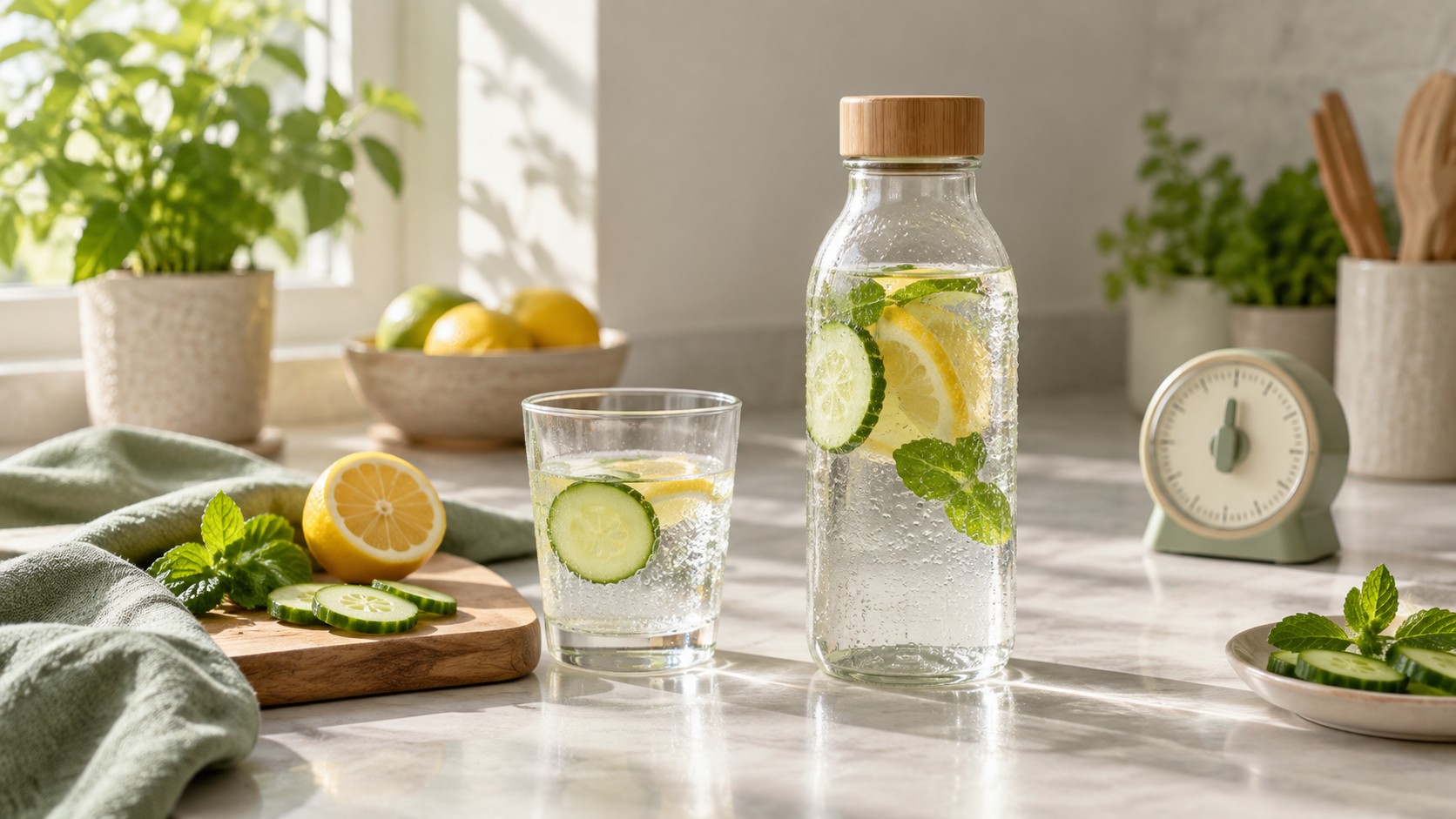
You can build useful hydration habits in 10 minutes by filling a reusable bottle, placing water where you will see it, pairing drinks with existing routines, and setting a simple refill plan. A 15-minute reset adds a quick check of your schedule, food, weather, and activity so you can prepare enough fluid without forcing a rigid one-size-fits-all target.
Key Takeaways
- Make water visible and convenient instead of relying on memory alone.
- Connect drinking water to routines you already do, such as meals and work breaks.
- Fluid needs vary with age, activity, climate, pregnancy, breastfeeding, illness, and medications.
- Water-rich foods and other beverages contribute to total water intake.
- Use thirst and urine color as practical clues, but seek medical advice for persistent dehydration symptoms.
Why Small Hydration Habits Work
Hydration supports normal body temperature, joint cushioning, waste removal, and other essential functions. Dehydration can affect thinking and mood and may contribute to overheating, constipation, and kidney stones. However, staying hydrated does not require complicated tracking for every healthy adult.
The most useful habit is one that makes drinking easier at the moments you already need it. A bottle beside your laptop, a glass with lunch, or a refill before leaving home can remove friction. Small environmental cues often feel more sustainable than trying to catch up by drinking a large amount at night.
Keep it flexible: There is no single fluid target that fits everyone. Your needs may rise in hot weather, during exercise, with fever, or after fluid loss from vomiting or diarrhea.
Hydration Habits in 10 Minutes
Use this quick reset at the start of the day, before work, or whenever your routine feels scattered.
- Minutes 0–2 — Choose your container: Pick a clean bottle or cup that is comfortable to carry and easy to refill.
- Minutes 2–4 — Fill and place it: Add fresh water, then put it within sight at your desk, in your bag, or beside your keys.
- Minutes 4–6 — Create two anchors: Decide to drink with two existing events, such as breakfast and lunch or your first and second work breaks.
- Minutes 6–8 — Prepare a backup: Chill a second bottle, identify a refill station, or add unsweetened lemon, cucumber, or berries if flavor helps.
- Minutes 8–10 — Make one reminder: Add a single helpful prompt to your calendar or place a sticky note where it will interrupt autopilot.
The aim is not to finish the bottle immediately. Sip across the day and refill according to thirst, activity, weather, meals, and any guidance from your healthcare professional.
Hydration Habits in 15 Minutes
The 15-minute version includes the same setup plus a brief plan for situations that can change your fluid needs.
- Minutes 0–5 — Set up water: Fill your bottle, place it where you will notice it, and prepare a backup refill.
- Minutes 5–8 — Review your day: Note workouts, outdoor time, travel, long meetings, or errands that may limit access to drinks.
- Minutes 8–11 — Add meal anchors: Plan a drink with meals and include water-rich foods such as fruit, vegetables, yogurt, or soup when they fit your diet.
- Minutes 11–13 — Improve the default: Put water ahead of sugary drinks and keep an unsweetened option ready for variety.
- Minutes 13–15 — Check your cues: Notice thirst, dry mouth, energy, and urine color, then decide when you will reassess later.
10 Minutes vs. 15 Minutes
| 10-minute reset | 15-minute reset |
|---|---|
| Best for busy mornings | Best for planning a full day |
| Creates two routine anchors | Adds meals, activity, and weather |
| Uses one reminder | Builds a backup plan for limited access |
| Simple daily minimum | More complete weekly reset |
Choose the shorter option when time is tight. Use the longer version before travel, a demanding workday, exercise, or hot weather. Both routines are preparation habits—not instructions to drink a fixed volume within 10 or 15 minutes.
How to Tell If Your Plan Needs Adjusting
Thirst is a useful signal for many healthy adults. Urine that is pale yellow often suggests adequate hydration, while dark yellow, strong-smelling urine or urinating less often may indicate that you need more fluid. Other dehydration symptoms can include dry mouth, tiredness, headache, dizziness, or light-headedness.
These signs are not a diagnosis, and urine color can change because of foods, supplements, or medicines. Persistent dizziness, confusion, rapid breathing, a fast heart rate, or unusual drowsiness can signal serious dehydration and needs prompt medical attention.
Hydration Safety
- Do not force large amounts of water quickly; excessive intake can be dangerous.
- During ordinary daily activities, plain water is usually a practical choice. Special electrolyte products are not automatically necessary.
- Vomiting or diarrhea may require oral rehydration solutions; ask a pharmacist or healthcare professional what is appropriate.
- Follow individualized advice if you have heart, kidney, or liver disease, take diuretics, or have been told to restrict fluids.
Frequently Asked Questions
The Bottom Line
Hydration habits in 10 minutes can be as simple as filling a bottle, making water visible, and pairing drinks with two reliable moments in your day. A 15-minute reset helps you account for meals, exercise, weather, travel, and access to refills.
Start with the smallest setup you can repeat. Adjust based on thirst, daily conditions, and medical guidance rather than chasing a rigid number or drinking a large amount all at once.
Medical disclaimer
Medical disclaimer: This content is for educational and informational purposes only and is not a substitute for professional medical advice, diagnosis, or treatment. Dietary needs and supplement suitability vary by individual.
Sources
- Centers for Disease Control and Prevention — About Water and Healthier Drinks. Updated March 5, 2026.
- National Health Service — Water, Drinks and Hydration. Accessed September 2026.
- National Health Service — Dehydration. Accessed September 2026.
- National Academies Press — Dietary Reference Intakes for Water: Summary. 2005.
