
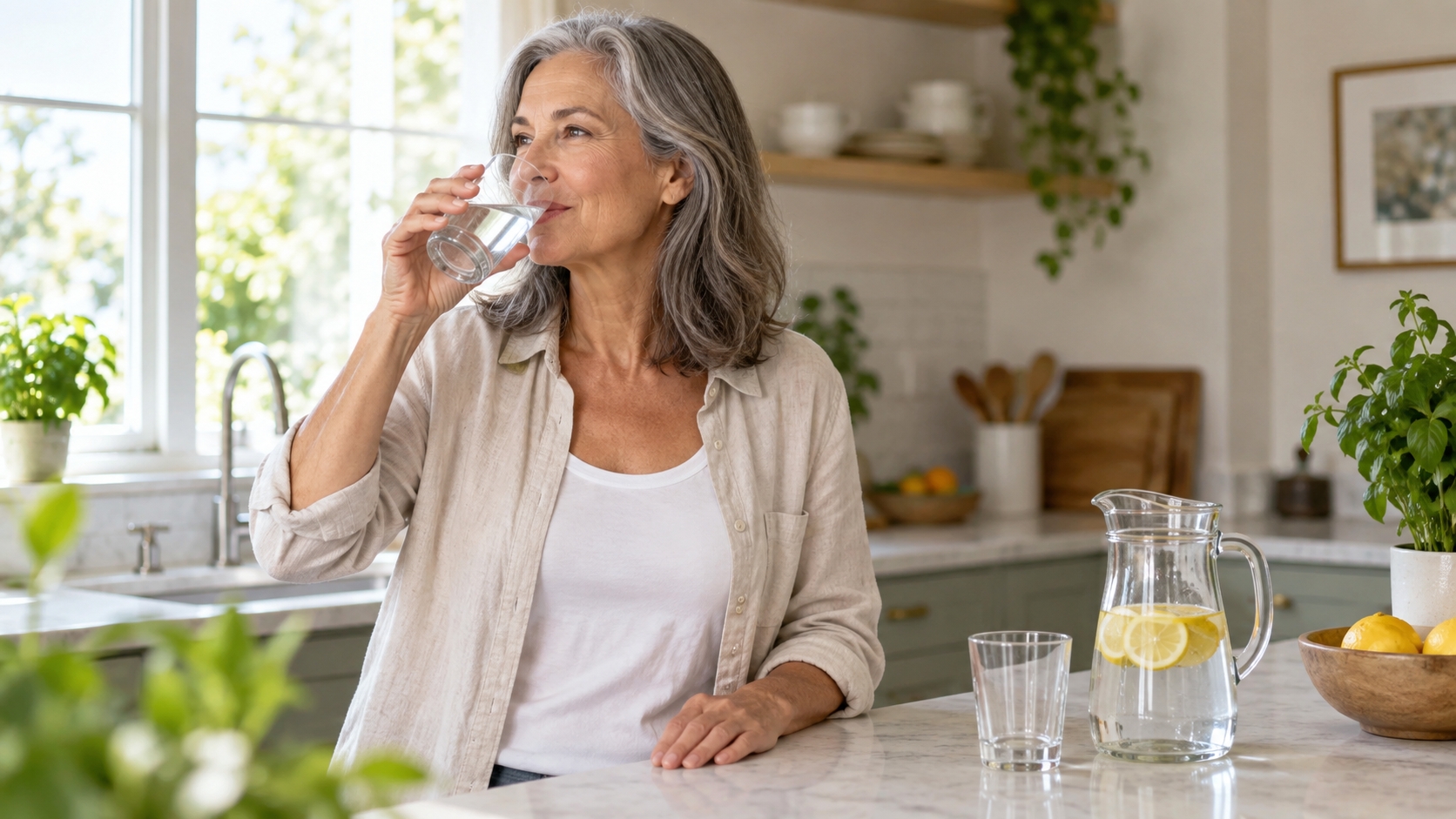
Hydration habits with no equipment can be simple: keep drinking water accessible, have fluids with meals, include water-rich foods, and drink more when exercise, heat, fever, vomiting, or diarrhea increases fluid losses. You do not need a smart bottle, hydration app, electrolyte tracker, or specialized drink for ordinary daily hydration. Most healthy adults can build a useful routine with regular beverages, food, and attention to changing needs.
Key Takeaways
- You do not need special equipment to build a reliable hydration routine.
- Water, other beverages, and moisture in food all contribute to total water intake.
- Fluid needs rise with heat, physical activity, fever, vomiting, diarrhea, and heavier sweating.
- Most ordinary days and shorter workouts do not automatically require electrolyte drinks.
- Population water-intake references should not be treated as mandatory plain-water targets for every person.
- Kidney disease, heart failure, fluid restrictions, and some medications can require individualized guidance.
What Does “No Equipment” Hydration Mean?
Hydration does not require a smart bottle, wearable sensor, measuring jug, electrolyte meter, or phone app. Those tools may be convenient for some people, but they are not necessary for everyday fluid balance.
A simple routine can rely on drinking water or other suitable beverages when they are available, having fluids with meals, eating moisture-rich foods, and increasing attention when you are active or exposed to heat.
The goal is not to calculate every ounce. It is to make adequate drinking a normal part of the day while recognizing situations that increase losses.
Simple principle: build hydration around ordinary meals, breaks, activity, and thirst before adding specialized products or tracking tools.
How Much Water Do Adults Need?
The National Academies set Adequate Intake values of about 3.7 liters of total water per day for adult men and 2.7 liters for adult women. These values include water from beverages and moisture in food.
They are population reference values, not instructions to drink 3.7 or 2.7 liters of plain water. Normal hydration can occur across a wide range of intakes.
CDC also notes that needs vary with age, sex, pregnancy, breastfeeding, activity, and other circumstances. Hot weather, increased physical activity, fever, diarrhea, and vomiting can raise fluid requirements.
Important: total-water reference values include both food and beverages. They should not be converted into rigid plain-water rules.
Habit 1: Use Meals as Hydration Cues
Meals are predictable points in the day, which makes them useful hydration reminders. CDC specifically suggests serving water during meals.
- Have water or another suitable beverage with breakfast.
- Drink with lunch and dinner.
- Use snacks as another opportunity when you are thirsty.
- Increase fluids around meals when exercise or heat has increased losses.
This approach creates repeated opportunities without requiring alarms or tracking technology.
Habit 2: Keep Drinking Water Easy to Access
Convenience matters more than specialized equipment. At home, keep drinking water somewhere you naturally pass during the day. At work or while traveling, use whatever practical container is available.
CDC recommends carrying a reusable bottle as one option, but the bottle itself is not the health intervention. A cup or glass works just as well when it makes drinking convenient.
If plain water feels monotonous, sparkling water, unsweetened tea, or water flavored with lemon or lime can provide variety.
Habit 3: Let Food Help With Hydration
Water in food contributes to daily total intake. CDC highlights fruits and vegetables as foods that can add water to the diet.
- Melon, berries, oranges, peaches, and other fruits
- Tomatoes, cucumber, leafy greens, peppers, and zucchini
- Soups and stews
- Milk, yogurt, and suitable fortified alternatives
- Oatmeal, beans, lentils, and other foods cooked with water
Food-based hydration is one reason you do not need to measure every glass to know your exact total water intake.
Habit 4: Drink More When Activity Increases
Exercise raises fluid needs when it causes sweating. The amount lost varies with intensity, duration, temperature, humidity, clothing, fitness, and individual sweat rate.
A short indoor walk creates different needs than several hours of strenuous outdoor exercise. Increase attention to fluids as workouts become longer, hotter, or sweatier.
For routine activity, water and normal meals are often enough. You do not need a sports drink simply because you exercised.
Match hydration to the workout: longer duration, higher heat, and heavier sweating usually deserve more attention than a short easy session.
Do You Need Electrolyte Drinks?
Usually not for normal daily activity. Regular meals supply sodium, potassium, and other electrolytes, while water commonly handles routine hydration.
CDC heat guidance states that water is generally appropriate for moderate activity in heat lasting less than two hours. When sweating continues for several hours, drinks containing balanced electrolytes may become useful.
This distinction helps avoid turning electrolyte products into everyday requirements. They have a role when losses are substantial, not because ordinary water is inadequate for everyone.
Hydration During Hot Weather
Hot environments increase sweating and can raise fluid needs. Drink regularly during sustained heat exposure and combine hydration with cooling, shade, lighter activity, and rest.
NIOSH recommends accessible cool water for workers in the heat. Its occupational guidance suggests about one cup every 15 to 20 minutes during moderate work in heat lasting less than two hours, while prolonged sweating may warrant balanced electrolyte drinks.
Those figures are workplace heat-safety guidance, not a universal everyday drinking schedule. A person sitting in a comfortable indoor environment has very different needs.
Heat safety: water does not make extreme heat safe. Confusion, fainting, severe weakness, altered behavior, or other signs of serious heat illness require prompt cooling and medical attention.
A Simple No-Equipment Daily Hydration Routine
| Part of the day | Simple habit |
|---|---|
| Morning | Have a suitable beverage when thirsty or with breakfast |
| Meals | Drink with meals and include fruits, vegetables, soups, or other moisture-rich foods |
| Work or home activities | Keep drinking water accessible and use natural breaks as reminders |
| Exercise | Increase attention to fluids as duration, heat, or sweating rises |
| Evening | Continue drinking according to needs without forcing a large late-night catch-up |
This structure provides regular opportunities to hydrate without requiring a timer, app, measuring bottle, or fixed hourly quota.
What About Coffee and Tea?
Coffee and tea contain water and contribute to fluid intake. National Academies evidence did not find convincing support for the idea that usual caffeine consumption causes a cumulative total-body water deficit.
That does not mean unlimited caffeine is ideal. Large amounts can affect sleep, anxiety, palpitations, or other symptoms in sensitive people.
Plain water remains a useful default because it provides hydration without calories, caffeine, or added sugar.
Can You Use Thirst as a Guide?
For many healthy people living in ordinary conditions, thirst and routine beverage intake around meals contribute to maintaining hydration. National Academies guidance notes that this pattern is generally sufficient for the average person.
Thirst becomes less reliable in some circumstances. Heat, prolonged exercise, older age, illness, medications, and medical conditions can justify more deliberate attention.
Rather than relying on one signal, consider thirst together with activity, sweating, environment, meals, illness, urine output, and any medical instructions you have received.
Possible Signs of Dehydration
Possible signs can include thirst, dry mouth, reduced urination, darker urine, dizziness, weakness, or fatigue. Dehydration can also make overheating more likely.
These symptoms are not specific to dehydration. Dizziness, weakness, headache, fatigue, and confusion can have many causes.
Persistent, severe, or unexplained symptoms should not automatically be treated by simply drinking more water.
Can You Drink Too Much Water?
Yes. Drinking more is not always better. Very large fluid intakes can overwhelm the body’s ability to maintain normal water and sodium balance.
NIOSH heat guidance cautions that fluid intake generally should not exceed six cups per hour in the occupational heat settings it addresses. That is another reminder that aggressive overdrinking is not a safe hydration strategy.
Avoid gallon challenges and rigid hourly water goals unless an appropriate healthcare professional has given you a specific plan.
Common No-Equipment Hydration Mistakes
Forcing a Fixed Water Target
One number cannot account for differences in activity, weather, food intake, health, medications, pregnancy, or sweating.
Waiting Until Night to Catch Up
Large late drinks can feel uncomfortable and may increase nighttime urination. Regular opportunities throughout the day are usually more practical.
Thinking a Special Bottle Improves Hydration
A bottle can improve convenience, but ordinary water from a clean cup or glass hydrates just as effectively.
Using Electrolytes for Every Workout
Shorter routine exercise does not usually create the same electrolyte losses as several hours of heavy sweating.
Ignoring Medical Fluid Restrictions
Generic advice to drink more should never override individualized instructions for heart failure, kidney disease, low blood sodium, or another condition.
When to Get Individual Hydration Guidance
General habits work for many healthy adults, but some situations need more specific advice.
- You have chronic kidney disease or heart failure.
- You have been prescribed a fluid restriction.
- You take medicines that affect sodium, potassium, urination, or blood pressure.
- You repeatedly become dehydrated during exercise or hot weather.
- You have persistent excessive thirst or unusually frequent urination.
- Vomiting, diarrhea, fever, or illness makes it difficult to replace fluids.
CDC notes that people with cardiovascular or kidney conditions may require special attention to both dehydration and fluid overload, particularly during hot weather.
Frequently Asked Questions
Related reading
The Bottom Line
Hydration habits with no equipment can be built around ordinary routines. Drink with meals, keep water accessible, include moisture-rich foods, and adjust intake when exercise, heat, illness, or sweating increases losses. You do not need a tracking app, smart bottle, or universal daily water challenge.
Water is usually the simplest choice, while electrolyte drinks are more relevant during prolonged heavy sweating or other substantial losses. Avoid forcing excessive fluids, and seek individualized guidance when heart disease, kidney disease, medications, or prescribed fluid restrictions change what is appropriate.
Medical disclaimer
Medical disclaimer: This content is for educational and informational purposes only and is not a substitute for professional medical advice, diagnosis, or treatment. Dietary needs and supplement suitability vary by individual.
Sources
- Centers for Disease Control and Prevention. About Water and Healthier Drinks. March 5, 2026.
- Centers for Disease Control and Prevention, National Institute for Occupational Safety and Health. Workplace Recommendations for Heat Stress. July 16, 2026.
- Centers for Disease Control and Prevention. Clinical Overview of Heat and Cardiovascular Disease. Accessed September 2026.
- Institute of Medicine. Dietary Reference Intakes for Water, Potassium, Sodium, Chloride, and Sulfate. National Academies Press. 2005.
