
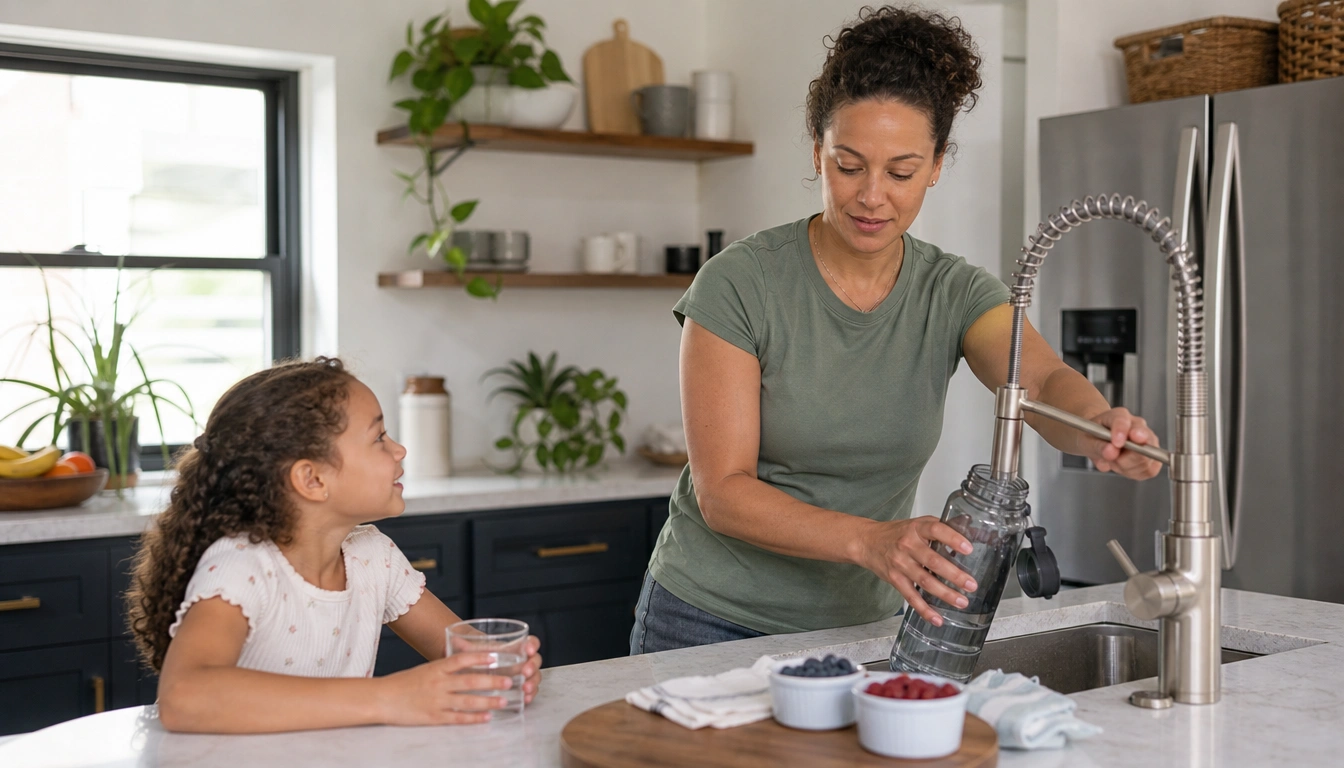
The easiest hydration reminder system for busy parents is to attach drinking water to routines you already do, keep water visible and within reach, and use simple checks like urine color instead of waiting for thirst. That approach lowers mental load, works better than phone alarms for many people, and can be adapted for pregnancy, breastfeeding, heat, exercise, or medical fluid limits.
Key Takeaways
- Tie water to repeat moments you never skip, such as diaper changes, school drop-off, making coffee, or snack prep.
- Keep a large reusable bottle with a straw or spout where you spend time most: kitchen counter, stroller, car seat area, or desk.
- Use a shared parent-and-child water routine so one pour serves two people and becomes part of family rhythm.
- Do not rely on thirst alone; by the time you feel thirsty, you may already be behind on fluids.
- Urine color is a quick practical check: pale yellow usually suggests adequate hydration, while dark yellow often means you need more fluids.
- If you are pregnant, breastfeeding, ill, very active, or on fluid restrictions, general advice may not be enough.
Why parents miss fluids and why thirst shows up too late
Busy-parent hydration problems usually come from distraction, not lack of knowledge. In a packed day, your attention is pulled toward meals, messages, school schedules, work calls, and childcare. That leaves very little room for noticing your own needs. A hydration reminder system for busy parents works best when it does not depend on memory or willpower alone.
Thirst is useful, but it is a lagging signal. Public health guidance and clinical advice both recognize that people often wait too long before they notice they need fluids. Mild dehydration can show up first as low energy, reduced focus, irritability, or a headache rather than a dramatic sense of thirst. For a parent who is already moving quickly, those symptoms are easy to dismiss or blame on stress.
That is why the goal is not perfection. The goal is to build small automatic drinking cues into the day so fluids happen almost without thought. The less you have to decide, remember, or prepare, the more likely the habit will stick.
Set up your environment so drinking water is the easy option
Environmental design does more for hydration than another reminder app for many families. Keep a large reusable bottle where you naturally pause: on the kitchen counter, beside the stroller, on the work-from-home desk, or near the place you feed or dress your child. A bottle with a straw or spout is especially useful because it reduces friction. You do not have to unscrew a lid, search for a cup, or stop what you are doing for long.
Visibility matters too. If water is tucked away in a cupboard, it is easier to forget. If it is in sight, it becomes part of the setting, like your keys or phone. Some parents do well with more than one station: one bottle downstairs, one in the car, and one near the diaper bag or lunch prep area. The point is to make the first sip obvious and convenient.
Think in terms of reach, not discipline. If you have to walk across the house to get water, the system is too hard. If you can take a sip without breaking your flow, you are more likely to repeat it.
Use family-linked cues and the tag-team drink together routine
Habit stacking works best when the new behavior is attached to a routine that already happens every day. For parents, that might mean drinking water during diaper changes, while the coffee maker runs, during school drop-off, after buckling a child into a car seat, or while you assemble snacks. These are built-in pauses that already exist in family life. You are not creating a new task; you are attaching a quick sip to a task you already perform.
A useful version of this is the tag-team approach: when you pour water for your child, pour some for yourself at the same time. That shared cue keeps both people hydrated and makes the action feel normal instead of extra. It also works well around predictable family moments such as breakfast, after playground time, or afternoon snack. Many children like rituals, so a simple “we drink together” pattern can become part of the routine.
This strategy is especially helpful on days when you feel too busy to think about yourself. By linking your drink to your child’s drink, you remove one more decision from the day. The action becomes automatic, brief, and socially reinforced.
What counts toward hydration during a parenting day
Plain water is the simplest choice, but it is not the only fluid that counts. According to the NHS and other public health guidance, adults can also get fluid from lower-fat milk, unsweetened tea, and coffee. Water-rich foods also contribute, including fruit, vegetables, soups, and yogurt. For parents who dislike plain water, that flexibility matters because an unsustainable rule is less useful than a realistic one.
If you prefer variety, you can rotate between plain water, sparkling water, or water infused with cucumber, lemon, mint, or berries. That can make drinking feel less repetitive without adding sugar. Milk and unsweetened beverages can be helpful when they fit your day and your health needs. The main caution is to avoid assuming that caffeine is a substitute for all fluid needs. Coffee and tea do contribute to hydration, but relying on them alone can become a habit of chasing alertness rather than maintaining steady fluid intake.
A practical food-first approach works well for parents. If you are already preparing fruit, vegetables, oatmeal, soup, or snacks for a child, you are also creating an opportunity to include hydration for yourself. That keeps the routine simple and reduces the feeling that you need a separate “water habit” on top of everything else.
Use urine color as a quick self-check when the day is chaotic
When you are too busy to notice thirst, urine color can be a fast reality check. Public health advice commonly suggests that pale, straw-colored or light yellow urine usually suggests adequate hydration, while dark yellow or amber urine can mean you need more fluids. This is not a diagnosis, but it is a practical signal that is easier to use than waiting for discomfort.
Use the check as part of normal life, not as a test you obsess over. For example, glance during a bathroom break, after a school run, or before bedtime. If the color is darker than you expect, add a glass of water and then reassess later in the day. If it stays dark despite drinking more, or if you have other symptoms, that is a reason to pay attention rather than ignore it.
Hydration is not just about comfort. Even mild dehydration can affect focus, mood, and headaches, which is exactly why a simple visual cue can be useful for overextended parents. It gives you information before your body turns discomfort into a louder signal.
How pregnancy, breastfeeding, heat, exercise, and caffeine change the picture
General advice is a starting point, not a universal target. Fluid needs often rise during pregnancy and breastfeeding because your body is supporting extra blood volume and milk production. If you are in either stage, a parent-friendly hydration routine is still useful, but you may need more frequent drinking opportunities and closer attention to your own cues.
Hot weather, outdoor play, family walks, and exercise can also increase fluid losses through sweat. On those days, the same routine may need a little more follow-through, such as bringing the bottle on the stroller, refilling it before leaving home, or drinking with each break. If you depend heavily on coffee to get through the day, remember that caffeine can crowd out water if you are using it as a stand-in for rest and fluids rather than as one beverage among several.
Children need support too. Young kids are often too absorbed in play to notice thirst early, so offering regular drinks during meals and breaks helps more than waiting for them to ask. A family routine that supports both parent and child makes the day easier for everyone.
Common mistakes that make hydration harder than it needs to be
One common mistake is depending on phone alarms alone. Alerts are easy to swipe away, especially when you are already interrupted. Another is keeping water out of sight or choosing a bottle that is awkward to open. If the system requires too many steps, it will break down on the busiest days.
Another trap is treating caffeine as the main fluid strategy. Coffee and tea can fit into a hydration pattern, but if they are the only drinks you reach for, you may miss the steadier benefit of water or milk. A related mistake is trying to “catch up” with a lot of fluid all at once after a long dry stretch. That is uncomfortable and does not build a stable routine.
It also helps not to overcomplicate the plan. You do not need a perfect schedule, a special app, or a major lifestyle change. You need a repeatable cue, an accessible bottle, and a few family moments that already happen every day.
When general advice is not enough and individualized fluid guidance matters
Some people should follow medical guidance rather than a general hydration routine. That includes anyone with severe kidney disease, heart failure, a prescribed fluid restriction, or another condition where a clinician has told them to limit or structure fluids in a specific way. In those cases, more water is not automatically better, and a standard parent-friendly rule could be the wrong fit.
You should also seek medical care if symptoms suggest more than ordinary dehydration, such as confusion, severe dizziness, inability to keep fluids down, very low urination, or a rapid heartbeat. Those signs need attention rather than a home strategy. On the other end, drinking extreme amounts of water in a short period can be harmful too, so more is not always safer.
If you are unsure whether a general recommendation applies to you, use your clinician’s advice first. The best hydration system is the one that fits your health status and daily life, not the one that sounds simplest on paper.
Frequently Asked Questions
How much fluid do adults generally need in a day?
Many public health sources suggest adults aim for about 6 to 8 glasses or cups of fluid daily as a general baseline. Exact needs vary with body size, activity, climate, pregnancy, breastfeeding, and medical conditions, so this is a starting point rather than a rule for everyone.
What are the easiest habit-stacking strategies for remembering to drink water?
Attach drinking to routines that already happen, such as diaper changes, school drop-off, making coffee, snack prep, or loading the car. The best habit stack is short, repeatable, and tied to something you already do without needing another reminder.
Can coffee, tea, milk, or watery foods count toward hydration?
Yes. Coffee, tea, milk, and water-rich foods all contribute to fluid intake. Plain water is still the simplest option, but variety can make hydration more realistic for busy parents. If you use caffeinated drinks, avoid relying on them as your only source of fluids.
How can I tell if I’m not drinking enough water?
Thirst can come late, so a practical check is urine color. Pale yellow usually suggests adequate hydration, while dark yellow or amber can mean you need more fluids. Headaches, fatigue, low focus, and irritability can also be clues, especially on hectic days.
When should someone with a medical condition follow individualized fluid advice instead of general guidance?
If you have heart failure, advanced kidney disease, a fluid restriction, or another condition managed by a clinician, follow your personalized plan instead of a general hydration tip. Pregnancy, breastfeeding, illness, or heavy exercise may also change your needs and deserve individualized advice.
The Bottom Line
A hydration reminder system for busy parents works best when it is built into the day you already have. Tie water to routine moments, keep it visible and easy to reach, and use family cues so drinking becomes automatic rather than another task to remember.
For many parents, the most useful checks are simple: drink before you feel very thirsty, notice urine color, and add fluid-rich foods or other unsweetened drinks when plain water feels tedious. That keeps the plan practical and low-effort.
If you have a medical condition, are pregnant or breastfeeding, or have symptoms of significant dehydration, general advice may not be enough. In those cases, follow individualized medical guidance rather than trying to force a one-size-fits-all routine.
Medical disclaimer
Medical disclaimer: This content is for educational and informational purposes only and is not a substitute for professional medical advice, diagnosis, or treatment. Dietary needs and supplement suitability vary by individual.
Sources
- Centers for Disease Control and Prevention (CDC) — cdc.gov. Accessed October 2026.
- National Health Service (NHS) — kentcht.nhs.uk. Accessed October 2026.
- National Health Service (NHS) — www.nhs.uk. Accessed October 2026.
- National Health Service (NHS) — cpft.nhs.uk. Accessed October 2026.
- Mayo Clinic — mayoclinic.org. Accessed October 2026.
