
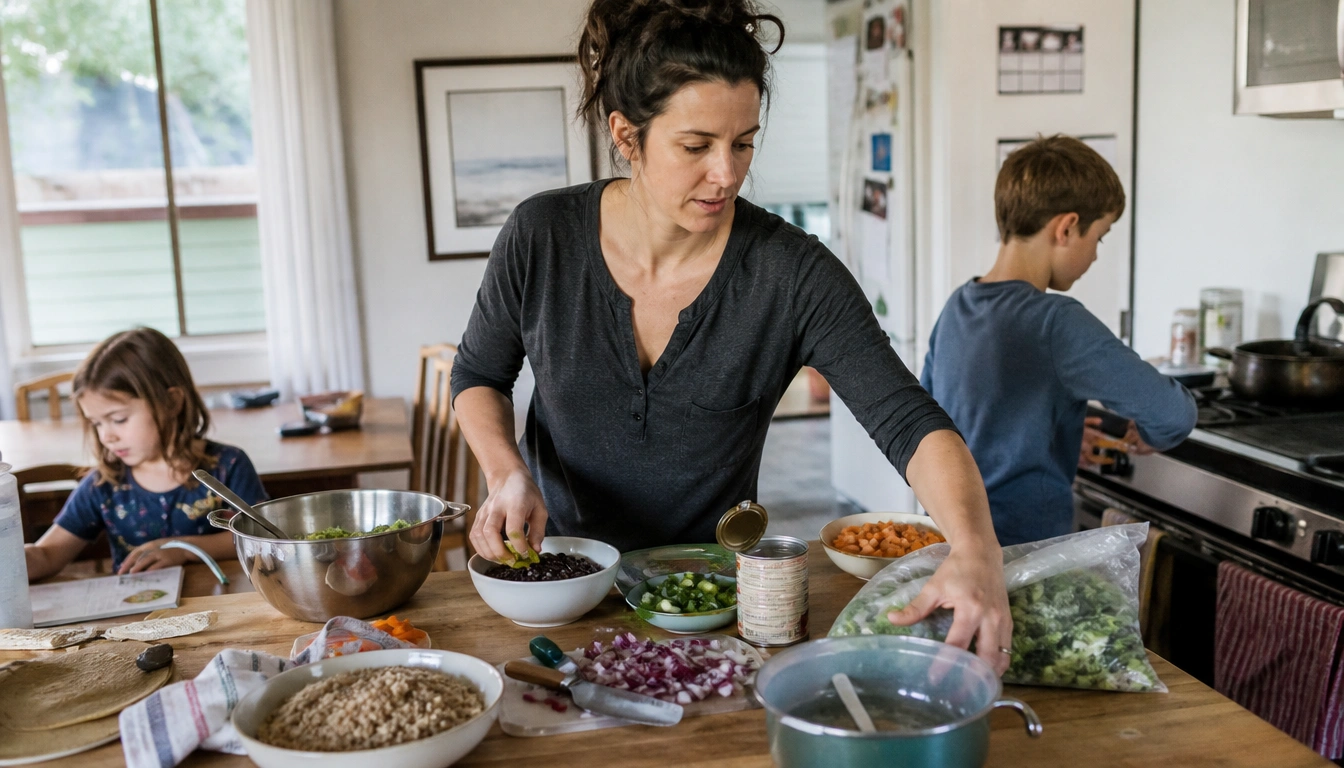
The cheapest, easiest healthy changes busy parents can actually stick to this week are usually the simplest ones: swap sugary drinks for water, build meals around frozen or canned basics, add short family walks or active play, and protect a regular bedtime wind-down. These habits cost little, fit messy schedules, and can support the whole family without requiring a full lifestyle overhaul.
Key Takeaways
- Frozen, canned, and dried foods can be practical budget staples for healthy meals, especially when fresh produce is expensive or hard to find.
- Kids, teens, and adults all need regular movement, but the target looks different by age, so daily active play and short walks can still count.
- The easiest healthy habits are often add-ons: batch cooking, drink swaps, family walks, active chores, and a screen-free bedtime window.
- Families in food deserts or on tight budgets can still build healthy meals around pantry, freezer, and shelf-stable foods.
- If growth, fatigue, diabetes, allergies, gastrointestinal symptoms, or mental health concerns are part of the picture, general advice is not enough and medical guidance matters.
Why low-cost healthy living is realistic for busy parents
Low-cost healthy lifestyle changes for busy parents do not have to mean specialty foods, gym memberships, or long meal-prep sessions. Public health guidance from the CDC and the NHS supports a simpler approach: build routines that are easy to repeat, affordable, and good enough to do on the busiest weeks.
For families, the biggest wins usually come from three areas: steadier food choices, more everyday movement, and better sleep. Those habits matter because they influence energy, appetite, mood, and long-term health. They also work best when they fit real life. A routine a family can repeat on tired Mondays is more useful than a perfect plan that only works once.
That is why the goal is not to overhaul everything at once. The goal is to make one or two changes that reduce friction. When healthy habits are easier to start, they are easier to keep.
The three highest-impact habits for busy families
If time and money are limited, start with the habits most likely to affect the whole household. First, make food a little more consistent by keeping affordable staples on hand. Second, build movement into ordinary family time. Third, protect sleep with a simple evening routine.
These habits work together. Better food choices can help with steadier energy. More movement can support mood and appetite regulation. Better sleep can make it easier to choose healthier food and stay active the next day. None of those requires a perfect schedule.
If you are overwhelmed, choose one habit for this week and make it very small. For example, one extra vegetable at dinner, one 10-minute walk after school, or one screen-free stretch before bed. Small changes are often easier to repeat than ambitious ones.
Low-cost healthy food swaps that still count
Healthy meals do not have to start with fresh produce only. Frozen vegetables, canned beans, canned fish, dried lentils, oats, brown rice, whole-grain pasta, and shelf-stable fruit in water or natural juice can all be useful, budget-friendly building blocks. They are convenient, reduce waste, and can make it much easier to put together a balanced meal on short notice.
Frozen vegetables are especially helpful because they are already washed and chopped. Canned beans and lentils add fiber and protein without much prep. Tuna or salmon can be quick protein options, and dried or canned fruit can fill the gap when fresh fruit is pricey or unavailable. The practical question is not whether a food is fresh, but whether it helps your family eat more often from nutrient-rich basics.
Drink changes are another low-cost win. Swapping soda, sweet tea, or juice drinks for tap water can reduce added sugar without changing the whole menu. If plain water is a hard sell, try ice, lemon, cucumber, or a splash of fruit for flavor. The best version is the one everyone will actually drink.
Simple meal assembly also helps. Think in parts: a grain, a protein, and a fruit or vegetable. For example, rice with beans and frozen vegetables, eggs with toast and fruit, or pasta with canned tomatoes and lentils. Meals do not have to be elaborate to be nourishing.
How to feed a family well on a tight schedule
Batch cooking is one of the most practical time-saving habits for busy parents because it reduces decision fatigue later in the week. Making extra rice, pasta, roasted vegetables, or soup once can create the base for several meals. Leftovers do not need to look identical to dinner to be useful for lunch or the next night.
Ingredient overlap is another budget saver. When several meals use the same core foods, shopping gets simpler and food waste tends to drop. For example, canned tomatoes, onions, beans, and frozen vegetables can be used in soup, pasta sauce, or a skillet meal. That kind of overlap keeps the grocery list shorter and makes it easier to buy in bulk when possible.
Leftover planning can also reduce the nightly rush. If dinner is likely to become lunch, cook enough on purpose. If one meal is for a very busy night, make it the easiest one: a sandwich plate, scrambled eggs, soup, or a simple grain bowl. A family routine does not need every meal to be exciting; it needs meals that are dependable.
Movement that fits family life
Exercise does not have to happen in a gym to count. Walking to school, parking farther away, taking stairs when possible, dancing in the living room, chasing kids at the park, and doing active chores all add up. The point is to use movement that fits the day you actually have.
Family movement works best when it feels normal rather than scheduled like a punishment. A short walk after dinner, a dance break while cleaning up, or a weekend trip to a playground can be enough to create momentum. Even ten minutes at a time can be worth repeating.
Habit stacking makes this easier. Pair movement with something already in your routine, such as stretching while the kettle boils, doing calf raises while brushing teeth, or walking during phone calls. Parents do not need a long workout to get health benefits from regular movement.
Start gradually if your family has been inactive. Short walks and simple active games are often a better entry point than an ambitious plan that leads to soreness and quitting. The easiest routine is usually the one that feels low-pressure enough to repeat tomorrow.
Age-by-age activity targets for toddlers, kids, teens, and adults
Age matters because activity needs are not the same for everyone. Toddlers should have active play throughout the day. That can mean free movement, climbing, dancing, running, and play that naturally comes in bursts. For this age, the goal is not structured exercise; it is frequent movement and exploration.
Children and teens ages 6 to 17 should aim for about 60 minutes of moderate-to-vigorous physical activity daily, according to public health guidance. That can include sports, brisk walking, active play, biking, dance, or other movement that raises breathing and heart rate. Some of that activity should also help build muscle and bone.
Adults can aim for at least 150 minutes of moderate-intensity aerobic activity per week. That does not have to happen all at once. A few short walks, active errands, or home-based movement sessions can still add up across the week. If parents are busy, the best target is the one that is realistic enough to keep.
| Family member | Practical activity target | Easy examples |
|---|---|---|
| Toddlers | Active play throughout the day | Floor play, dancing, playground time, chasing bubbles |
| Children and teens | About 60 minutes daily | Walking, biking, sports, active games, dance |
| Adults | About 150 minutes per week | Brisk walks, stairs, yard work, home workouts |
Sleep, screen time, and common barriers
Sleep is easier to protect when the evening routine is predictable. A screen-free window before bed can help lower stimulation and make it easier to settle down. The exact timing does not need to be perfect; a consistent habit matters more than a flawless one.
For families, reducing screen time is often less about strict rules and more about making the bedtime path simpler. Charging devices outside bedrooms, setting a regular wind-down activity, and choosing quiet options like reading, stretching, or bath time can reduce conflict. If the routine is too strict, it may fail; if it is too loose, it may not help.
Real-world barriers are common. Food deserts can limit access to fresh produce. Low income can make frequent store trips or specialty foods unrealistic. Fatigue, transport problems, picky eating, and inconsistent schedules can all get in the way. In those situations, pantry, freezer, and shelf-stable foods are not a backup plan; they are a valid foundation for healthy eating.
It also helps to lower the standard from perfect to repeatable. A frozen vegetable counts. A canned bean meal counts. A 15-minute walk counts. Progress is usually built from what a family can do reliably, not from what sounds ideal on paper.
When healthy-living advice is not enough
General advice is useful for everyday support, but it cannot replace individualized care when health concerns are present. A family should seek medical guidance if a child has growth changes, persistent fatigue, developmental concerns, ongoing stomach or bowel problems, food reactions, or signs of diabetes such as unusual thirst, frequent urination, or unexplained weight changes.
It is also important to get help for mental health concerns, including ongoing low mood, severe anxiety, sleep problems that do not improve, or behavior changes that affect daily life. Children and adults with allergies, gastrointestinal disorders, or chronic conditions may need tailored nutrition advice rather than broad lifestyle tips.
If you are unsure, a pediatrician, family doctor, or registered dietitian can help sort out whether a concern needs further evaluation. Healthy habits still matter, but some symptoms call for more than routine food, movement, and sleep changes.
Frequently Asked Questions
How can busy parents eat healthier on a budget without spending hours cooking?
Keep a short list of reliable staples and use them often: oats, eggs, beans, lentils, frozen vegetables, rice, pasta, canned tomatoes, and fruit. Batch cook once, then reuse leftovers in new meals so dinner also helps with lunch.
What are the best low-cost ways to get kids and adults moving every day?
Use movement that blends into family life: walks after dinner, active chores, dancing while cleaning, playground time, biking, and stairs when practical. For adults, short bursts still count when they add up across the week.
Which frozen, canned, and pantry foods count as healthy options?
Frozen vegetables and fruit, canned beans, lentils, tuna or salmon, canned tomatoes, oats, brown rice, whole-grain pasta, and shelf-stable fruit in water or natural juice can all support healthy meals. Check for options with less added sugar and sodium when possible.
How can parents improve sleep and reduce screen time without creating family conflict?
Make the routine predictable and simple rather than strict. A screen-free wind-down window, devices charging outside bedrooms, and a quiet replacement activity like reading or stretching can reduce arguments more easily than a sudden all-or-nothing rule.
What healthy habits matter most when time, money, and energy are limited?
Start with the habits that change the most at once: drink water instead of sugary drinks, keep affordable staples on hand, take short family walks, and protect bedtime. Those are often the easiest changes to keep during busy weeks.
The Bottom Line
Busy parents do not need expensive products or a perfect schedule to support family health. The most useful changes are usually the most ordinary ones: pantry and freezer staples, water instead of sugary drinks, short bouts of movement, and a calmer bedtime routine.
If you can only choose one place to start, choose the habit that removes the most daily stress. For many families, that is easier meals, more walking, or a screen-free wind-down. If growth, fatigue, allergies, GI symptoms, or mental health concerns are part of the picture, get medical advice rather than relying only on general lifestyle tips.
Medical disclaimer
Medical disclaimer: This content is for educational and informational purposes only and is not a substitute for professional medical advice, diagnosis, or treatment. Dietary needs and supplement suitability vary by individual.
Sources
- Centers for Disease Control and Prevention (CDC) — cdc.gov. Accessed November 2026.
- National Health Service (NHS) — cntw.nhs.uk. Accessed November 2026.
- National Health Service (NHS) — westlondon.nhs.uk. Accessed November 2026.
- National Health Service (NHS) — nwknowledgenow.nhs.uk. Accessed November 2026.
- Centers for Disease Control and Prevention (CDC) — cdc.gov. Accessed November 2026.
- National Health Service (NHS) — derbyshirehealthcareft.nhs.uk. Accessed November 2026.
