
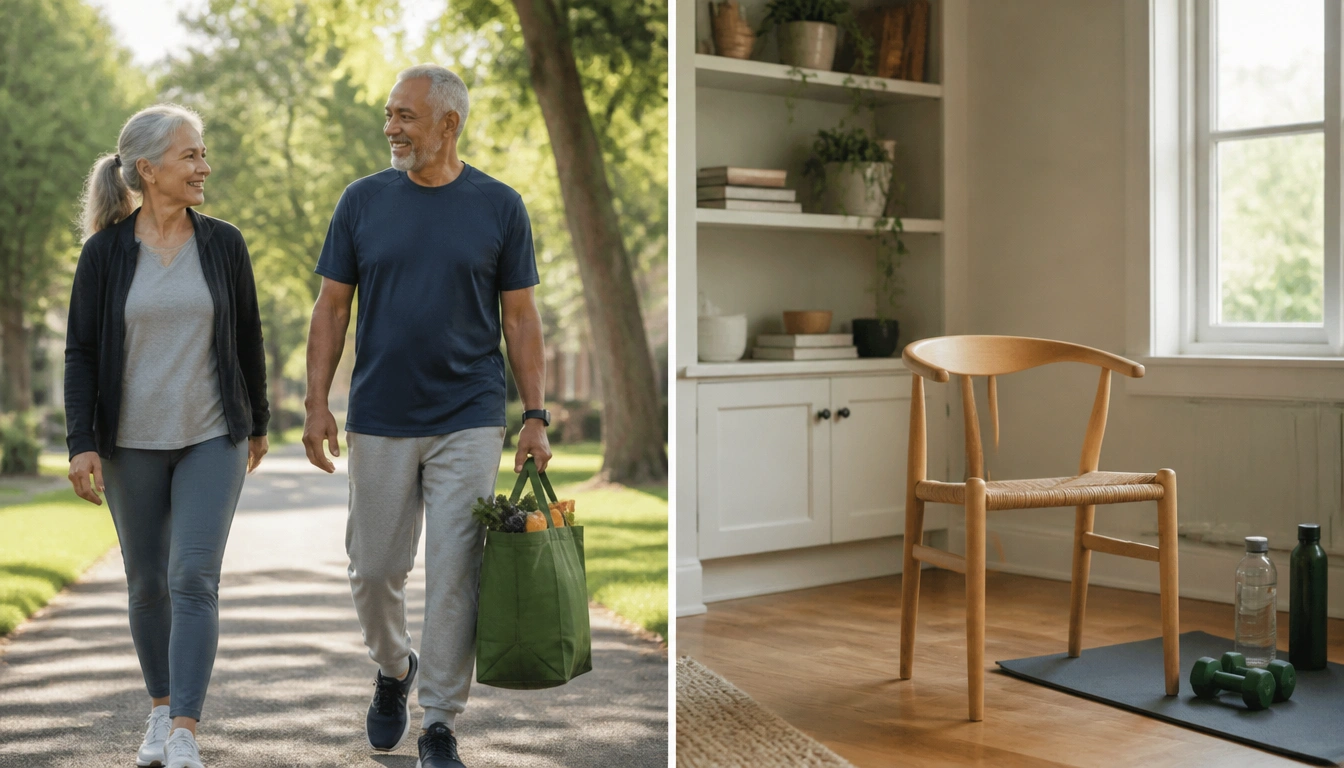
The most effective low-cost wellness basics for adults over 50 are ordinary movement, simple home strength exercises, affordable whole foods, regular sleep, and routines that support balance and social connection. You do not need a gym or special products to get meaningful benefits. Public health guidance points to walking, chores, stair climbing, and basic resistance work as practical ways to stay strong, steady, and independent.
Key Takeaways
- Brisk walking, chores, gardening, and stair climbing can help you build toward aerobic activity targets without formal workouts.
- Strength training at home can be done with a chair, water bottles, canned goods, or bodyweight exercises.
- Affordable foods such as eggs, beans, lentils, canned fish, dairy, and fortified plant milks can support muscle and bone health.
- Women in perimenopause and after menopause may need extra attention to weight-bearing movement and calcium- and vitamin D-supportive foods.
- If you have arthritis, heart disease, diabetes, dizziness, or a long period of inactivity, start smaller and check with a clinician before increasing activity.
What changes after 50 and why basics matter more now
After 50, the main goal is not chasing perfect fitness. It is protecting the functions that keep daily life easy: walking, carrying groceries, climbing stairs, rising from a chair, sleeping well, and recovering without getting wiped out. That is why low-cost wellness basics for adults over 50 work best when they focus on simple, repeatable habits instead of intense programs.
Muscle mass tends to decline with age, and bone strength can also become more fragile, especially for women during and after the menopausal transition. At the same time, blood vessels and metabolism gradually change. Regular movement and a steady eating pattern help support heart health, insulin sensitivity, strength, and energy. The Centers for Disease Control and Prevention and the World Health Organization both emphasize that these basics matter more than gadgets or trendy plans.
The practical shift is to think in foundations: move often, strengthen major muscles, eat enough protein and calcium-rich foods, sleep consistently, and keep social contact in your week. Those basics are affordable because they depend more on routine than on equipment.
How to think about healthy aging without buying special products or programs
Healthy aging is not a product problem. It is usually a consistency problem. A person can make real progress with a pair of sturdy shoes, a kitchen chair, a water bottle, and a short list of grocery staples. That approach is often more sustainable than paying for a program that feels impressive for two weeks and then gets dropped.
A useful mindset is to start with what already exists in your day. If you walk to the mailbox, make it a little farther. If you cook dinner, add a few extra trips to carry items or tidy the kitchen with a brisk pace. If you sit a lot, break up the sitting. These small efforts add up because the body responds to regular use.
Health agencies define moderate-intensity activity as movement that raises your heart rate and breathing but still lets you talk comfortably. That can be a brisk walk, active housework, yard work, or stair climbing. The right habit is usually the one you can repeat most weeks, not the one that looks hardest on paper.
Movement on a budget: walking, chores, gardens, and stairs
You do not need a gym to work toward the usual aerobic targets. Walking is the simplest starting point, and it is often enough to improve stamina if you do it regularly. Try a loop around the block, a walk after meals, or an extra trip during errands. If you are very deconditioned, even short bouts count when they are repeated across the day.
Ordinary chores can also serve as movement. Vacuuming, sweeping, washing windows, carrying laundry, raking leaves, and gardening all keep the body active. Stair climbing is another low-cost option if you have safe stairs available. These activities are especially useful because they fit into life instead of competing with it.
If you like structure, think in “exercise snacks”: 5 to 10 minutes of movement here and there. A brisk walk before breakfast, another after lunch, and an evening stair session can be enough to build a stronger weekly pattern. The point is not perfection. The point is to reduce long stretches of sitting and create a routine your body can rely on.
Low-cost strength training at home
Strength training matters after 50 because it supports balance, daily function, and independence. You do not need dumbbells or machines to begin. A sturdy chair, a countertop, a wall, and a couple of household items can cover the basics.
Chair sit-to-stands are one of the best home exercises because they train the legs and hips, which are essential for standing, stair climbing, and getting up from the floor. Wall push-ups help build upper-body pushing strength without putting much strain on the joints. Water bottles, soup cans, or bags of rice can act like light weights for curls, presses, and rows.
Start with movements that feel controlled and smooth. Aim for a level where the last few repetitions feel challenging but still manageable. If your joints are sensitive, shorter ranges of motion and slower pacing may feel better than trying to force a larger movement. The goal is to use your muscles regularly, not to exhaust yourself.
If you want a simple rotation, choose one lower-body move, one upper-body push, and one pulling or carrying movement on most strength days. That is enough to make home training useful without turning it into a complicated routine.
Balance and fall prevention that fit into daily life
Balance work does not have to look like formal exercise. It can be folded into normal routines. Standing on one foot while holding a counter, walking heel to toe along a hallway, or rising from a chair without using your hands are all practical ways to challenge stability in a controlled setting.
Good lighting, clear walkways, stable footwear, and handrails matter too. Many falls are prevented by reducing small hazards at home, especially loose rugs, clutter, and dim corners. If you feel unsteady, use support rather than trying to “push through” the wobbliness. Safety is part of the plan, not a sign of weakness.
For people with a history of falls or significant balance problems, supported exercises are the better starting point. It is more useful to practice steadiness near a counter than to attempt risky movements that create fear. Confidence improves when the body learns that standing, turning, and stepping can feel controlled again.
Food-first nutrition on a budget: protein, bone support, sleep, and connection
Food is one of the most powerful low-cost wellness tools after 50. To protect muscle, include affordable protein foods such as eggs, beans, lentils, cottage cheese, yogurt, canned tuna, and canned salmon. These are practical, familiar, and usually far less expensive than supplements or specialty shakes.
For bone support, dairy foods and fortified plant milks can help supply calcium and vitamin D. Seasonal produce, frozen vegetables, and frozen fruit give you nutrients without the cost or waste of produce that spoils quickly. The NHS and NIH both emphasize whole foods as a strong foundation for general health, especially when paired with movement.
Sleep also belongs in the wellness foundation. A steady sleep schedule, a calmer evening routine, and less late-night stimulation can support recovery and energy. You do not need expensive sleep products to improve the basics. Regular sleep timing often helps more than shopping for gadgets.
Social connection matters too. Isolation can wear people down physically and mentally, and it does not require money to address. A free walking group, a regular phone call, a neighbor check-in, or a community activity can provide a meaningful health boost. Small, repeated contact is often easier to maintain than big social plans.
How to start safely if you are deconditioned or living with chronic disease
If you have not been active for a long time, start smaller than you think you should. Short walks, light chores, and a few chair-based movements can be enough for the first stage. As your body adapts, you can add time, repetitions, or frequency. The safest plan is usually gradual, not dramatic.
For arthritis, choose movements that stay within a comfortable range and avoid forcing painful joints. For diabetes, regular activity can support glucose control, but medication timing and blood sugar patterns matter, so medical advice may be needed before a major change. For heart disease, chest discomfort, dizziness, unusual shortness of breath, or unexplained fatigue are reasons to pause and check with a clinician.
Ask for medical guidance before increasing activity if you have been inactive for years, have unstable chronic disease, or have symptoms such as dizziness or chest discomfort. Medication reviews can also matter because some medicines affect balance, hydration, or blood pressure. A little caution at the beginning is usually what keeps the routine going later.
A simple weekly starter plan for getting the basics in place
A workable starter plan is simple enough to remember. Most days, walk or stay active in ways that fit your routine. Use chores, errands, or stairs to build movement into normal life. Add a few minutes of strength work on at least two days each week. Include a balance practice most days, even if it is only a minute or two at the counter.
On the food side, build meals around a low-cost protein source and add a calcium-supportive food when you can. Frozen vegetables, beans, eggs, canned fish, yogurt, and milk or fortified plant milk are practical staples. That approach does not require a new diet, just a steadier pattern.
Across the week, protect sleep and keep one or two forms of connection in place. A phone call, a walk with a friend, or a community activity can be part of wellness just as much as exercise and food. Over time, these basic habits work together: movement supports strength, food supports recovery, sleep supports energy, and connection supports follow-through.
Frequently Asked Questions
How much exercise do adults over 50 need if they are starting from a low fitness level?
Public health guidance for older adults is often used as a benchmark: aim for regular moderate activity across the week, plus strength work on at least two days. If you are starting low, begin with short walks or small bouts of movement and build gradually. Consistency matters more than starting big.
What are the best budget-friendly foods that support muscle, bone, and heart health after 50?
Eggs, beans, lentils, cottage cheese, yogurt, canned tuna or salmon, dairy milk, and fortified plant milks are practical low-cost choices. Add frozen vegetables and fruit for variety, fiber, and micronutrients. These foods help cover protein and bone-supportive nutrients without relying on expensive supplements.
Can strength training be done at home without equipment?
Yes. Chair sit-to-stands, wall push-ups, countertop holds, and lifting water bottles or canned goods can all build strength at home. You do not need a gym to train the major muscles used for daily life. Start with movements you can do safely and repeat them regularly.
What safety issues should adults over 50 consider before increasing activity?
If you have chest discomfort, dizziness, a history of falls, unstable chronic disease, or a long period of inactivity, check with a healthcare professional first. Also review medications if balance or blood pressure is an issue. Use support for balance work and increase activity gradually.
How can adults over 50 improve sleep, balance, and social connection on a budget?
Keep a steady sleep schedule, reduce late-night stimulation, and make your evenings simpler. Practice balance near a counter during daily routines. For connection, use free options such as walking with a neighbor, calling family, or joining a community group. Small habits are often the most sustainable.
The Bottom Line
The most effective low-cost wellness basics after 50 are not special products. They are ordinary movement, simple strength work, affordable protein-rich foods, steady sleep, and regular connection with other people.
If you can walk, climb stairs, carry groceries, stand from a chair, and keep a few low-cost foods in regular rotation, you are already working with the habits that public health guidance supports. Start small, stay safe, and build slowly.
Medical disclaimer
Medical disclaimer: This content is for educational and informational purposes only and is not a substitute for professional medical advice, diagnosis, or treatment. Dietary needs and supplement suitability vary by individual.
Sources
- Centers for Disease Control and Prevention (CDC) — cdc.gov. Accessed November 2026.
- World Health Organization (WHO) — who.int. Accessed November 2026.
- National Health Service (NHS) — www.nhs.uk. Accessed November 2026.
- National Institutes of Health (NIH) — nih.gov. Accessed November 2026.
