
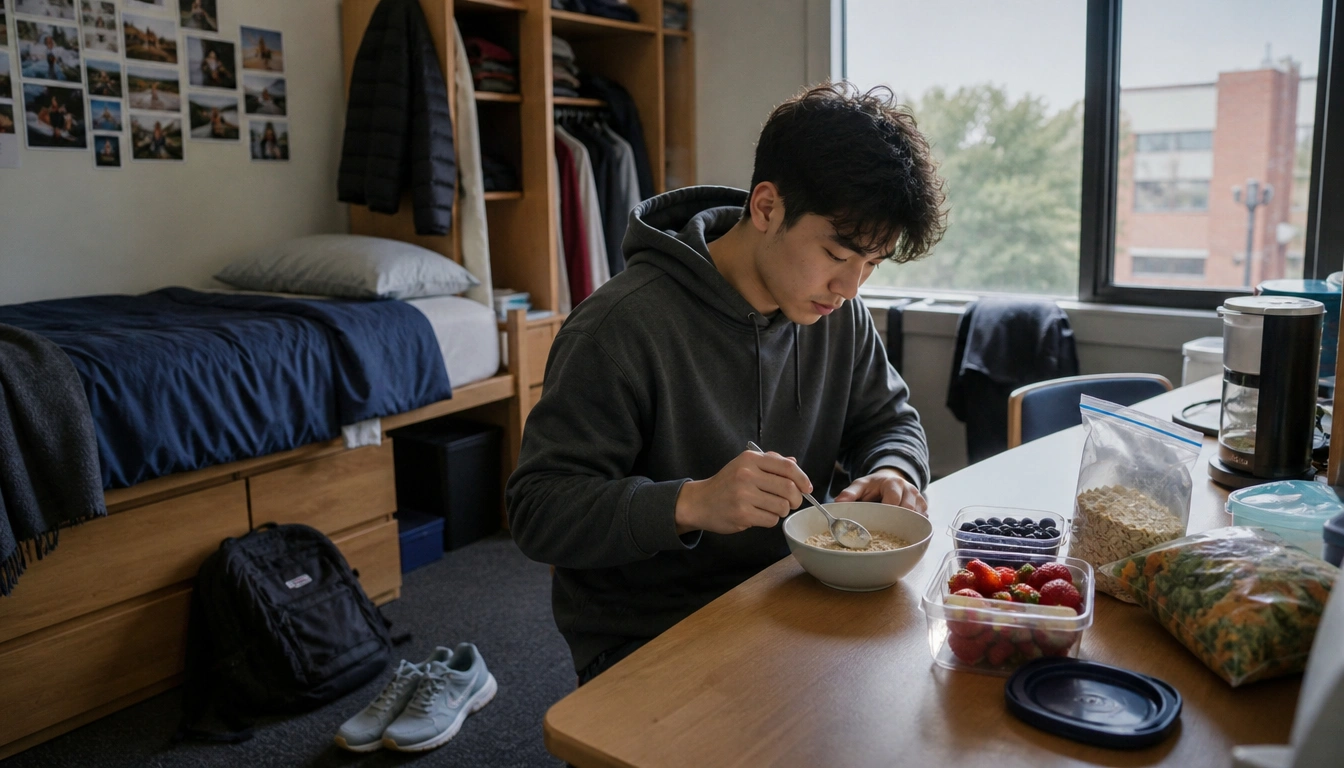
Yes—you can stay healthy in college without spending much money or a lot of extra time. The most effective low-cost routine is built around enough sleep, regular movement, and simple meals using affordable staples, frozen foods, and campus resources. You do not need supplements, a rigid workout plan, or an expensive diet to make steady progress.
Key Takeaways
- Aim for the basics: 7–9 hours of sleep, 150–300 minutes of moderate activity each week, and strength work at least twice weekly.
- Use what your campus already provides—walking routes, recreation centers, intramurals, food pantries, student health, and counseling services.
- Affordable foods can still be nutritious: oats, beans, lentils, eggs, frozen vegetables, rice, and canned fish or poultry are practical staples.
- Dorm life can make routines messy, so plan for noise, screen time, late classes, all-nighters, and days with no kitchen access.
- Consistency matters more than perfection; a routine that fits your real schedule is better than an ideal plan you cannot maintain.
College reality check: what matters most on a student budget
College wellness gets harder when money, time, sleep, and food access are all uncertain at once. Many students are trying to study, work, commute, share a room, and manage stress at the same time. That is why the best low-cost wellness routine for college students is not built around perfect habits. It is built around a few reliable basics that protect energy, mood, and focus.
The major health agencies and college-health frameworks are consistent on the fundamentals. For healthy young adults, that means regular physical activity, enough sleep, and steady food intake. Those habits support memory, concentration, immune function, and stress regulation. They also tend to be easier to maintain than complicated wellness plans with special products or long workouts.
The good news is that the basics do not require premium gear or a lot of free time. A walk across campus, a simple bodyweight routine, a frozen vegetable, or a regular bedtime can do more for day-to-day health than an expensive supplement habit. The goal is not to be perfect. The goal is to make the healthy choice the easiest choice most days.
The three non-negotiables: sleep, movement, and food basics
If you are trying to stay healthy in college on a budget, start with three anchors: sleep, movement, and food. The CDC and NIH-based guidance for adults points to 7–9 hours of sleep per night, 150–300 minutes of moderate-intensity activity each week, and muscle-strengthening work at least two days weekly. Those are reference targets, not a test you fail if one week goes badly.
Sleep is the foundation because it affects attention, reaction time, learning, and emotional control. Movement helps offset stress from sitting, studying, and long screen sessions. Food basics keep your blood sugar and energy more stable so you are less likely to crash, skip meals, or overuse caffeine. When these three areas are even reasonably steady, many students notice better focus and less burnout.
A practical routine does not ask for a perfect wake-up time, a pristine kitchen, or an ideal athletic identity. It asks you to cover the basics most days. If one area is weak during finals week, you do not have to rebuild your entire life. Just return to the smallest version that still works: a short walk, a simple meal, and a reasonable sleep window.
A simple weekly movement plan without a gym membership
You do not need a gym membership to reach the recommended activity target. Walking counts, biking counts, and active commuting counts. If you live on or near campus, the easiest routine is to make movement part of the trip you already take. Walk to class when possible, choose stairs, take the long route back to your dorm, or get off the bus one stop early.
A good student-friendly target is to spread activity across the week instead of trying to “catch up” all at once. Brisk walking for transportation, a few longer walks on free days, and short workout breaks can add up quickly. If your campus has a recreation center, use the student fee you may already be paying for. Many campuses also offer free access to weights, indoor tracks, fitness classes, and intramural sports.
For strength work, bodyweight exercises are enough for a basic routine. Push-ups, squats, lunges, glute bridges, planks, and wall sits can be done in a dorm room with no equipment. Two short sessions a week is a realistic starting point. You can keep them simple: a few exercises, a few rounds, and enough effort to feel challenged without needing a full hour.
If you like structure, try this flexible pattern: three or four days of walking or active commuting, two days of bodyweight strength, and one rec center or intramural session if available. If your schedule shifts, do not abandon the plan. Move the session to another day, shorten it, or split it into smaller pieces. The habit matters more than the exact calendar slot.
Budget nutrition strategies that actually fit student life
Healthy eating on a college budget is usually about smart substitutions, not fancy foods. Frozen vegetables are often cheaper than fresh produce, keep longer, and still provide useful nutrients. Beans, lentils, eggs, peanut butter, yogurt, oats, rice, pasta, potatoes, and canned fish or poultry can make filling meals without a high price tag. These are not “diet foods.” They are practical staples.
Campus or local food pantries can also be part of a normal wellness routine, especially if food insecurity is part of your reality. Using a pantry is a health-support step, not a failure. It can help you avoid the cycle of skipping meals, relying on snacks, or stretching one meal into two too-small portions. If your campus has a pantry, student services office, or emergency grocery support, learn how it works before you are in crisis.
For easy meal-building, think in simple parts: a grain, a protein, and a fruit or vegetable. Examples include rice with beans and frozen vegetables, eggs with toast and fruit, oatmeal with peanut butter, or pasta with lentils and canned tomatoes. If you have access to a microwave or communal kitchen, these meals are often faster than ordering food. If you do not have a kitchen, shelf-stable foods become even more important.
Try to avoid the all-or-nothing mindset around “clean eating.” You do not need organic-only groceries, expensive protein powders, or specialty wellness snacks. A low-cost routine is about enough calories, enough protein, and enough variety to keep your body and brain working. Small, repeatable meals usually beat ambitious food plans that collapse after a busy week.
Sleep hygiene that still works in a noisy dorm
College sleep problems are often less about willpower and more about environment. Dorm noise, late-night screens, roommate schedules, and uneven class times can all push sleep later. The goal is not to become an early riser at all costs. The goal is to get the right amount of sleep consistently enough to function well.
Start with a screen cutoff that is realistic for your schedule. The NIH notes that bright light and stimulating screen use can make it harder to wind down, so even a short buffer before bed can help. You do not need a perfect nighttime ritual. A lower-light hour, fewer notifications, and less scrolling can be enough to make sleep easier.
Small environmental fixes can help too. Earplugs, a sleep mask, a fan, or white noise can soften dorm disruption without much cost. If you study late, try to end with a short transition instead of jumping straight from intense work to bed. Put away the laptop, dim the lights, wash your face, or read something low-stakes for a few minutes. Those signals tell your body the day is over.
If you know you will have a late night, protect the next morning as much as you can. Try not to swing between extreme sleep deprivation and long catch-up sleep on weekends. Big schedule swings can leave you groggy and make it harder to fall asleep the next night. A somewhat steady sleep window is usually more helpful than chasing a perfect bedtime.
How to adapt when your schedule, commute, or kitchen is limited
Many students do not have a normal schedule. Classes may start at different times each day, work shifts can change, and commuting can take up hours. That is why your routine should be modular. If you cannot do one long workout, use short pieces. If you cannot cook, build around shelf-stable or campus-food options. If you cannot sleep at the same time every night, focus on total hours and consistency where possible.
For commuters, movement can happen before you even get to class. Walking from parking lots, taking stairs, or adding a few extra minutes of walking between stops all count. A commute can also be a built-in reset between classes if you use it instead of sitting for every transition. For students who live off campus, keeping a pair of walking shoes or a resistance band in a bag can make activity easier to fit in.
If you do not have a kitchen, build your routine around foods that need little preparation. Examples include peanut butter sandwiches, yogurt, fruit, trail mix, canned beans, tuna packets, instant oats, whole-grain crackers, and microwavable rice. These foods are not glamorous, but they are useful when time is short or cooking access is limited. The same goes for exercise: bodyweight movements and walking are enough to keep a routine alive during busy weeks.
When your schedule is chaotic, aim for “minimum effective habits.” That might mean a 15-minute walk, a short strength circuit, one planned meal, and a consistent bedtime cue. This is not lowering the standard. It is making the plan fit real life so you can keep it going.
Using campus resources to lower cost and stress
Student fees often pay for more support than students realize. Recreation centers, group fitness classes, intramural sports, walking maps, student health services, counseling, and nutrition support may already be available at little or no extra cost. According to campus-health guidance and public health frameworks, using these services early can help prevent small problems from becoming bigger ones.
If your campus has a food pantry, ask how to access it before you need it urgently. If there is a student health center, learn what is covered, how to make an appointment, and whether there are same-day options for minor illnesses or stress-related concerns. If counseling is available, it can be helpful even if you are not in crisis. Stress, homesickness, sleep problems, and anxiety can all interfere with daily functioning long before they become emergencies.
It also helps to treat campus resources as part of your routine, not as backup only. A weekly rec center visit, a pantry trip when supplies run low, or a check-in with student health can reduce both cost and mental load. Many students wait until they feel overwhelmed, but using support earlier is usually easier. The point is not to use every service. It is to know which ones exist and to rely on them when they fit your needs.
Common mistakes that quietly derail student wellness
Several habits can make a low-cost routine harder than it needs to be. The first is the all-nighter. Missing sleep to study may feel productive in the moment, but repeated sleep loss usually hurts memory, mood, and decision-making. If you are relying on all-nighters often, that is a sign to ask for academic help, time-management support, or a different study plan.
The second is leaning too heavily on energy drinks, strong coffee, or other stimulants to make up for poor sleep. Caffeine can be useful in moderation, but heavy use can increase jitteriness, palpitations, and sleep disruption. If you need more and more caffeine just to get through the day, the real problem is probably sleep debt, overcommitment, or inconsistent meals.
Meal skipping is another common trap, especially when money is tight. Skipping breakfast or delaying food all day can lead to low energy and overeating later. A simple breakfast or snack is often enough to stabilize the day. Perfectionism is the last major obstacle. Students sometimes stop a routine entirely because one meal, one workout, or one bedtime went off track. A low-cost wellness routine only works if you can restart it without guilt.
Healthy college life does not require an expensive program. It requires a few habits you can repeat when your week is messy. Sleep enough when you can, move your body in ways that fit your day, and keep affordable food within reach.
Frequently Asked Questions
What are the cheapest ways for college students to exercise regularly?
Walking, active commuting, stairs, bodyweight workouts, and intramural sports are usually the cheapest options. If your school has a recreation center, use the student access you may already be paying for. Short, repeated sessions work better than waiting for a perfect block of free time.
How can students eat healthy on a college budget without fancy diet foods?
Build meals from basic staples: oats, rice, beans, lentils, eggs, peanut butter, yogurt, frozen vegetables, fruit, and canned fish or poultry. These foods are usually cheaper than specialty wellness products and can still support balanced meals. Frozen and pantry items are often just as practical as fresh food.
How much sleep do college students actually need?
Most young adults need 7 to 9 hours of sleep per night. If your schedule is irregular, focus on reaching that range most nights and keeping your sleep timing reasonably steady. A slightly later bedtime is usually less disruptive than chronic short sleep.
What can I do if my dorm, schedule, or workload makes a routine hard to keep?
Shrink the routine instead of abandoning it. Use short walks, 10- to 15-minute workouts, shelf-stable foods, and a simple bedtime cue. When the week is chaotic, keep the minimum habits that protect energy: sleep, food, and some movement. That makes it easier to restart later.
When should a student use campus health or counseling resources?
Use them early if stress, anxiety, sleep problems, illness, or food access issues are affecting daily life. Student health centers can help with basic medical concerns, and counseling can help with overwhelm or persistent mood changes. If you are missing classes, sleeping very little, or struggling to function, do not wait.
The Bottom Line
A low-cost wellness routine for college students does not need to be complicated. Focus on the basics you can repeat: enough sleep, regular movement, and simple meals made from affordable foods.
Use campus resources whenever they can reduce cost or stress, including recreation centers, food pantries, student health, and counseling. The best routine is the one that fits your real life, not the one that looks ideal on paper.
Medical disclaimer
Medical disclaimer: This content is for educational and informational purposes only and is not a substitute for professional medical advice, diagnosis, or treatment. Dietary needs and supplement suitability vary by individual.
Sources
- Centers for Disease Control and Prevention (CDC) — cdc.gov. Accessed November 2026.
- National Institutes of Health (NIH) — nih.gov. Accessed November 2026.
- Academic Research Institution — mercyhurst.edu. Accessed November 2026.
