
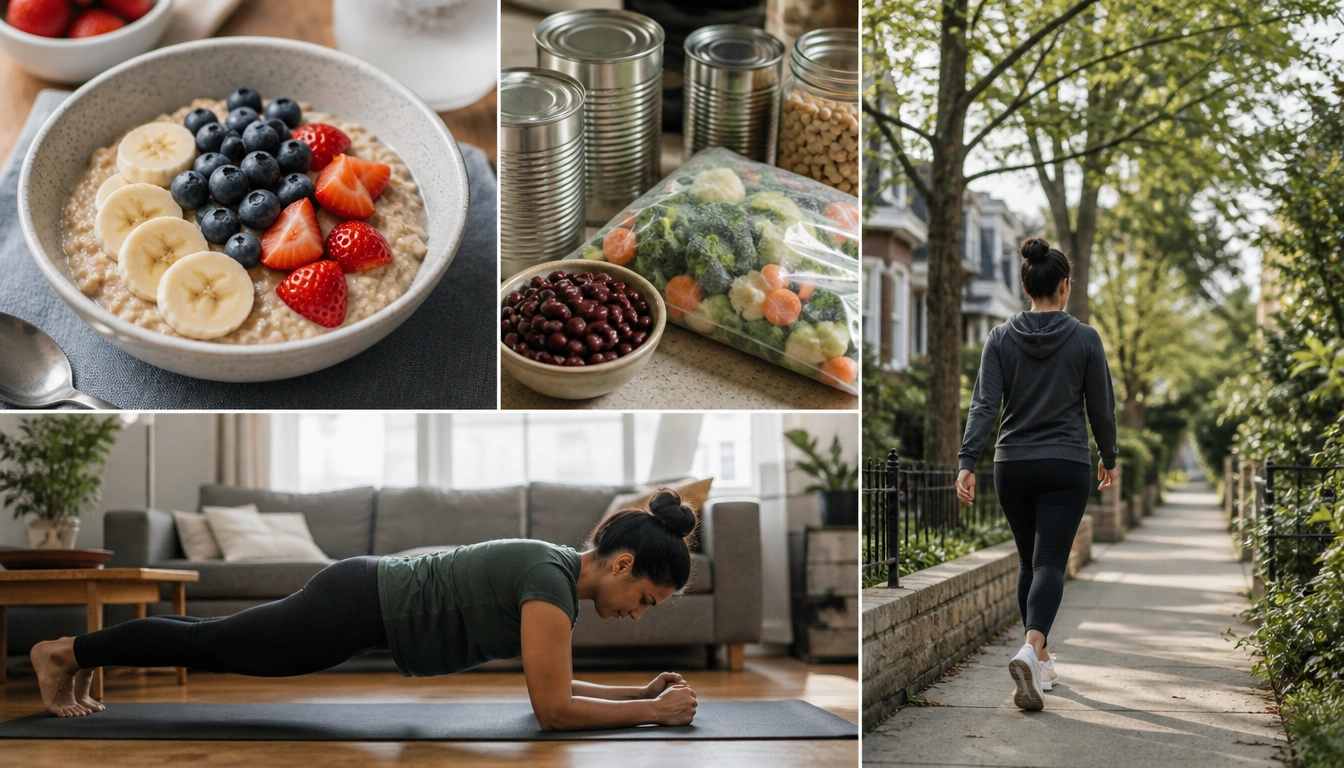
Yes—you can stay healthy on a tight budget by focusing on the basics that matter most: affordable nutrient-dense foods, regular movement, consistent sleep, and low-cost stress management. Public health guidance shows you do not need a gym or specialty products to support health. A workable routine usually mixes simple meals, walking, bodyweight exercise, and free sleep habits that fit your schedule and energy level.
Key Takeaways
- Frozen, canned, and dried foods can be budget-friendly and still support good nutrition if you choose low-sodium, low-added-sugar options.
- You can meet official activity guidelines without a gym by walking briskly, using stairs, and doing bodyweight strength work at home.
- Budget wellness often costs time more than money, so batch cooking and simple meal planning can save both cash and energy over the week.
- Older adults and people with joint pain or chronic conditions may do better with low-impact options such as flat-surface walking, chair yoga, or resistance bands.
- Free habits can help with stress and sleep, but they do not replace medical care for depression, severe anxiety, or concerning physical symptoms.
Start with the basics that give the most return
Low-cost wellness works best when you prioritize habits that support several parts of health at once. Food, movement, sleep, and stress are not separate projects; they interact. A more regular sleep schedule can improve energy for walking. Simple meals can make it easier to keep up activity. Daily movement can also support mood and appetite regulation.
If money is tight, avoid trying to fix everything at once. Start with the habit that creates the biggest immediate friction in your life. For many people, that means food planning or getting enough movement during the week. For others, it may mean sleep, especially if late nights and irregular schedules make the rest of the day harder.
A realistic low-cost wellness routine is one you can repeat during busy weeks, not only on your best days. Public health guidance from the CDC and other national health organizations supports steady, moderate habits over expensive or complicated programs.
Build a simple routine around food, movement, sleep, and stress
A cheap but effective daily wellness routine does not need to be elaborate. Think in terms of small anchors. Eat one filling breakfast or lunch that includes protein and fiber. Move your body in short sessions. Keep a regular wake time if you can. Add one simple stress reset, even if it is only a few minutes.
For example, a day might include oats with fruit, a walk after a meal, a short bodyweight circuit, and a quiet wind-down before bed. Another day might look different if you work long hours or care for family members. The point is to create a repeatable structure rather than a perfect schedule.
One useful way to think about budget wellness is this: the routine should be flexible enough to survive stress, transportation problems, and limited grocery money. If the plan falls apart whenever life gets busy, it is too complicated for real life.
Choose cheap foods that still support health
Some of the most affordable foods are also among the most useful nutritionally. Beans, lentils, chickpeas, split peas, oats, brown rice, wholegrain pasta, potatoes, eggs, peanut butter, and plain yogurt can be part of a balanced routine without a large grocery bill. They offer protein, fiber, and staying power, which helps many people avoid constant snacking.
Frozen vegetables and fruit are especially helpful when fresh produce is expensive or spoils quickly. Canned vegetables, beans, and fish can also be practical, especially when you choose options with minimal added sodium or sugar. Dried foods often cost less per serving and store well, which reduces waste.
Frozen, canned, and dried produce can still help you meet nutrition goals. The form matters less than what is added to it. A bag of frozen spinach, a can of tomatoes, or a bag of dried lentils can be excellent choices when you want a budget-friendly routine with less spoilage and fewer trips to the store.
For the cheapest high-protein meals, pair a bean or lentil base with whole grains and vegetables. If you eat animal foods, eggs, canned tuna, plain dairy, and sale-priced chicken can also stretch meals without much cost. The goal is not fancy superfoods. It is enough protein, enough fiber, and enough variety to keep meals workable.
Shop and prep in ways that reduce waste
Saving money on food often depends as much on planning as on what you buy. A loose weekly meal plan can prevent impulse purchases and reduce the chance that food spoils before you use it. Even a short list of repeat meals can help: oatmeal for breakfast, bean soup for lunch, rice and vegetables for dinner, for example.
Batch cooking is one of the most useful budget strategies. Cooking a large pot of rice, lentils, soup, chili, or pasta sauce gives you several meals from one round of effort. That matters if you are balancing work, caregiving, or commuting. It may take more time upfront, but it often saves time and money later in the week.
Flavor does not have to be expensive. Garlic, onions, pepper, cumin, curry powder, chili powder, dried herbs, and a little oil can make simple ingredients more satisfying. When food tastes good, you are more likely to use what you buy instead of wasting it.
If you are very short on time, hybrid shortcuts can help. Use canned beans instead of cooking dried beans every time. Choose frozen vegetables instead of chopping fresh produce each day. Buy pre-cooked grains or rotisserie chicken only when the time saved is worth the extra cost. Budget wellness usually means spending more time than money, but time-saving shortcuts can keep the routine realistic.
Exercise at home without a gym or equipment
Adults need regular aerobic activity and muscle-strengthening work, and that does not require a membership. Brisk walking is one of the simplest ways to meet activity guidelines. You can walk outside, pace indoors, take phone calls on foot, or walk part of a commute if that is safe for you. Stairs also add useful intensity when used safely.
For strength, bodyweight movements can be enough to get started. Squats, wall push-ups, step-ups, glute bridges, calf raises, planks, and lunges can be done in a small space without equipment. A short routine repeated twice a week can still be meaningful, especially if you are consistent.
If you want a no-gym plan, combine movement with your day rather than treating it as a separate project. Walk after meals, stand up during breaks, or do a few sets while waiting for dinner to cook. Small amounts add up, and consistency matters more than having perfect gear.
For people who cannot tolerate high impact, low-cost substitutes still count. Chair squats, seated marching, resistance-band rows, or gentle stair use may be more suitable than jumping exercises. The best plan is one you can recover from and repeat.
| Budget movement option | Why it helps | Cost |
|---|---|---|
| Brisk walking | Supports cardio fitness and daily activity | Free |
| Stairs | Adds intensity to everyday movement | Free |
| Bodyweight strength work | Builds basic muscular strength | Free |
| Resistance bands | Low-impact strength option | Low cost |
| Chair yoga | Gentler mobility and balance support | Free or low cost |
Use free sleep and stress tools that fit real life
Sleep and stress habits are often the hardest to protect on a budget because they are squeezed by work, caregiving, and screen time. Still, some of the most useful changes cost nothing. A consistent wake time can help anchor your body clock. Dimming lights before bed, lowering noise, and reducing late-night screen use can make it easier to fall asleep.
Breathing exercises are a practical free tool when stress spikes. Slow, steady breathing can help you settle your body and shift attention away from constant worry for a few minutes. Journaling can also help if your mind feels crowded. You do not need a polished notebook or long writing session. A few lines about what feels urgent, what can wait, and what you need tomorrow may be enough.
Public libraries can also support wellness without adding cost. Many offer books, quiet spaces, digital resources, and sometimes classes or access to apps. If you are trying to reduce stress, a library card can be more useful than a paid subscription.
These tools are not cures, but they are practical. They can support mood, routine, and recovery when used consistently.
Adjust the plan for age, pain, or chronic conditions
Older adults, beginners, and people with joint pain often need a lower-impact version of the same basic routine. That does not mean doing nothing. It means choosing movements that are easier on the body while still building strength, balance, and stamina. Flat-surface walking, seated exercise, chair yoga, and resistance bands are common options.
If you live with a chronic condition, the best plan depends on the condition and your current health status. Someone with arthritis may need shorter walks and more mobility work. Someone with chronic kidney disease or severe hypertension may need more specific nutrition guidance. Someone with balance problems may need safer exercise choices and fall-prevention support.
Older adults in particular may benefit from gentle strength work and balance practice because muscle and function matter for everyday life. A budget routine should help you stay independent, not wear you out. Start smaller than you think you need, then build only if your body tolerates it well.
If pain increases sharply, dizziness shows up, or a movement feels unsafe, stop and change the plan. Low-cost wellness should fit your body, not force you into someone else’s routine.
Know when budget wellness is not enough
Healthy habits can support mood and physical function, but they do not replace medical care. If you have chest pain, shortness of breath, fainting, new swelling, severe fatigue, or other concerning symptoms, get medical advice. The same is true if you are starting a vigorous exercise plan after a long period of inactivity and are not sure what is safe.
Food changes also have limits. Very restrictive budget diets can leave gaps in nutrients such as iron, calcium, or vitamin B12. If you have a medical condition that affects diet, you may need individualized guidance rather than general advice. Reading labels matters when sodium or sugar intake is a concern, but a label review is not the same as personal treatment.
For mental health, low-cost habits can help with day-to-day stress, but they are not a substitute for professional care when symptoms are severe or persistent. Clinical depression, severe anxiety, panic, or thoughts of self-harm deserve prompt support from a licensed professional or crisis service.
Frequently Asked Questions
What does a cheap but effective daily wellness routine look like?
A practical routine usually includes one affordable, filling meal, some daily movement such as walking, a regular sleep schedule, and a short stress reset like breathing or journaling. The best routine is simple enough to repeat on busy days, not just on ideal ones.
What foods give the most nutrition for the least money?
Beans, lentils, oats, brown rice, potatoes, eggs, peanut butter, frozen vegetables, canned tomatoes, and canned fish are often strong budget choices. They offer useful protein, fiber, and micronutrients without requiring expensive specialty products.
Can I meet exercise guidelines without a gym or equipment?
Yes. Brisk walking, stairs, and bodyweight strength work can all count toward activity goals. The CDC and other public health agencies emphasize regular aerobic activity plus muscle-strengthening work, and you can do both at home or outdoors.
How do I improve sleep and manage stress for free?
Try a consistent wake time, dimmer lights at night, less screen use before bed, and a few minutes of slow breathing or journaling. Free resources from libraries or community programs can also help if you want guided relaxation or reading materials.
What budget wellness changes are safe for older adults or people with health conditions?
Low-impact options such as flat-surface walking, chair yoga, seated exercises, and resistance bands are often gentler choices. If you have joint pain, balance problems, or a chronic illness, it is wise to tailor the plan to your condition and ask a clinician if you are unsure.
The Bottom Line
A low-cost wellness routine is usually built from ordinary habits: affordable food, daily movement, basic sleep routines, and simple stress tools. You do not need expensive products or a perfect schedule to support your health.
The most sustainable plan is the one that fits your money, time, and body. Frozen and canned foods, walking, bodyweight exercise, and free sleep habits can all be part of a realistic routine that works in real life.
If you have concerning symptoms, a medical condition, or severe mental health symptoms, lifestyle habits should not be your only plan. Budget wellness is helpful support, but it is not a replacement for professional care when you need it.
Medical disclaimer
Medical disclaimer: This content is for educational and informational purposes only and is not a substitute for professional medical advice, diagnosis, or treatment. Dietary needs and supplement suitability vary by individual.
Sources
- Centers for Disease Control and Prevention (CDC) — cdc.gov. Accessed November 2026.
- National Health Service (NHS) — derbyshirehealthcareft.nhs.uk. Accessed November 2026.
- National Health Service (NHS) — www.nhs.uk. Accessed November 2026.
- Centers for Disease Control and Prevention (CDC) — cdc.gov. Accessed November 2026.
- Centers for Disease Control and Prevention (CDC) — cdc.gov. Accessed November 2026.
