
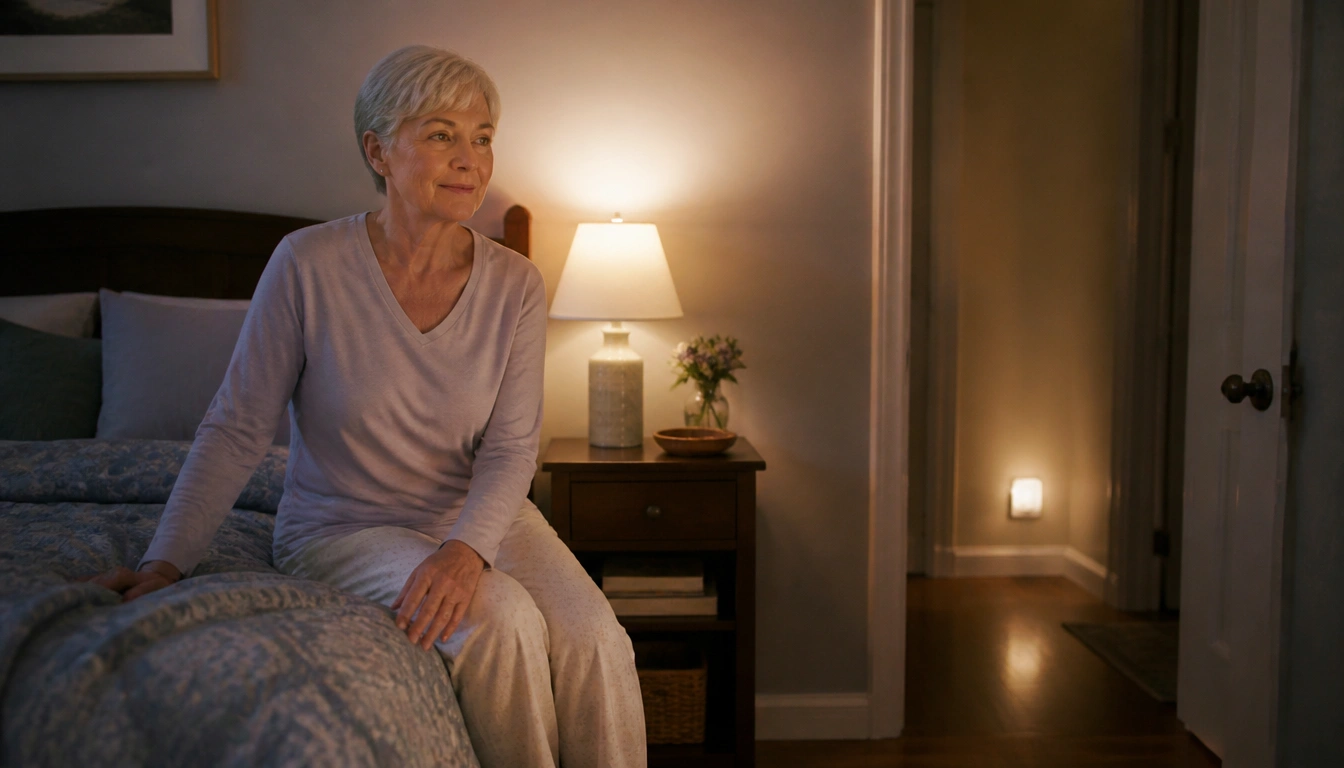
A good low-light evening routine for adults over 50 starts 60 to 90 minutes before bed: dim overhead lights, reduce screen use, switch to warm low-level lighting, and choose calm activities that help you unwind. Keep enough light to walk safely to the bathroom or hallway at night, because total darkness can raise fall risk. If sleep problems keep going despite these changes, it may be time to check for a medical cause.
Key Takeaways
- Adults over 50 usually sleep better with dimmer evenings, but the home should not be so dark that nighttime walking becomes unsafe.
- A 60 to 90 minute wind-down works well: dim lights first, then cut screens, then shift to quiet, low-stimulation activities.
- Warm amber or red nightlights can help you navigate hallways and bathrooms without flooding the bedroom with bright light.
- If you wake up and stay awake for about 20 minutes, get out of bed into dim light and do something quiet until sleepy again.
- Persistent insomnia is not always a lighting problem; pain, nocturia, sleep apnea, restless legs syndrome, and medication effects can all matter.
Why adults over 50 need a different evening routine
For a low-light evening routine for adults over 50, the goal is not just to “sleep more.” It is to work with older sleep biology. Aging often shifts the body clock earlier, light sleep becomes easier to interrupt, and melatonin signaling can become less robust. That means bright evening light can have a bigger effect than many people expect, especially if the routine is inconsistent.
The National Institutes of Health and the Centers for Disease Control and Prevention both support core sleep hygiene habits such as regular sleep and wake times, a dark bedroom, and avoiding caffeine, alcohol, and large meals late in the day. For many older adults, the best evening routine starts by lowering light exposure in a gradual way rather than flipping a switch at bedtime.
A practical wind-down often begins 60 to 90 minutes before sleep. First, dim the home. Then reduce screen time. Later, shift to quieter tasks that do not keep the brain highly alert. The point is to let sleep pressure and circadian timing line up naturally instead of forcing sleep with a late, stimulating evening.
How to balance sleep support with fall prevention
Older adults need a different light strategy than younger adults because the safety tradeoff matters. Too much light in the evening can delay sleepiness, but too little light can make a bathroom trip or hallway walk dangerous. The better option is dim, warm, low-level lighting rather than total darkness.
Use blackout curtains or shades if outside light leaks into the bedroom, but keep low-watt amber or red nightlights in places where you may walk after bed. Hallways, bathroom paths, and the route from bed to the door are common places for trips and stumbles. Low-level lighting should be bright enough to see the floor and furniture edges, not bright enough to feel like daytime.
If you share a home, try to make the whole route safe instead of depending on one bright ceiling light. A low lamp near the bed, a motion-activated nightlight in the hall, and a small light in the bathroom can help preserve both sleep and safety. That setup is usually more practical than a universally dark bedroom.
What to do instead of screens
Electronic screens are the easiest evening habit to cut back on because they combine light, stimulation, and content that can keep your mind engaged. If you want a lower-light evening, swap screens for activities that are calm and familiar.
Good choices include reading a physical book or magazine, listening to quiet audio, doing gentle stretching, or practicing slow breathing. A warm shower or bath can also help because the body cools afterward, which can support sleep onset. Keep the lighting low and warm while you do these activities.
If you use audio, choose something that is soothing and not too absorbing. If you stretch, keep it light and pain-aware, especially if you have arthritis or back discomfort. If reading makes your eyes strain, use a comfortable lamp rather than pushing through in a dark room. The idea is to reduce stimulation without creating a new source of tension.
Food, drink, and medication timing that can undermine sleep
Light is only one part of the picture. Evening food, drink, and medication timing can make sleep easier or harder, especially for older adults who may take several medications or wake up at night to urinate.
Caffeine late in the day can delay sleep, and alcohol can make sleep more fragmented later in the night even if it initially feels relaxing. Large or spicy meals close to bedtime can cause discomfort or reflux. Drinking a lot of fluid late in the evening can increase bathroom trips and interrupt sleep continuity.
Many adults over 50 also take medicines that affect sleep directly or indirectly. Some can be activating, some sedating, and some increase nighttime urination or dry mouth. If you suspect a medication is disrupting sleep, do not change it on your own. Ask a clinician or pharmacist to review timing and possible side effects, especially if you take several prescriptions.
How to build a routine around your real bedtime
Sleep routines work best when they fit your actual sleep pattern. Aging can shift circadian timing earlier, so many older adults naturally become sleepy earlier in the evening and wake earlier in the morning. Trying to force a much later bedtime can create stress and backfire.
Instead of aiming for a perfect clock time, build consistency around your own sleep window. Try to keep your bedtime and wake time fairly steady from day to day, including weekends, while still allowing for normal variation. That steady rhythm gives the body clearer cues than a rigid schedule that you have to fight every night.
If you feel anxious when you miss your target bedtime, shorten the routine rather than turning bedtime into a test. For example, you might keep the same sequence of dimming lights, screen shutdown, and quiet activities, but start it a little earlier or later as needed. The routine should support sleep, not create pressure around it.
What to do if you wake up at night
Waking up once or more during the night is common, but staying in bed awake for a long stretch can train the brain to associate the bed with frustration. A practical rule is to get out of bed if you have been awake for about 20 minutes and do something quiet in dim light.
Choose a non-screen activity such as reading a few pages, sitting quietly, or listening to calm audio. Keep the light low so you do not fully wake yourself up, but bright enough to move safely. Return to bed only when you feel sleepy again.
Try not to clock-watch. Checking the time tends to increase alertness and worry, which makes it harder to fall back asleep. If you wake often to use the bathroom, keep the path clear, use low-level night lighting, and avoid turning on bright overhead lights if possible.
When a low-light routine is not enough
A better evening routine can improve sleep onset and help sleep stay more stable, but it cannot fix every sleep problem. If you keep having trouble falling asleep, staying asleep, or waking unrefreshed for more than two to three weeks, it is time to talk with a healthcare professional.
Persistent sleep trouble in older adults can be linked to obstructive sleep apnea, restless legs syndrome, chronic pain, nocturia, anxiety, depression, or medication effects. A low-light routine may help at the margins, but these problems often need targeted evaluation. Loud snoring, choking or gasping at night, an urge to move the legs, repeated nighttime urination, or pain that regularly wakes you are all clues that sleep hygiene alone may not be enough.
If you are managing several health conditions, ask for a review that looks at sleep, medications, pain control, and nighttime bathroom habits together. That kind of evaluation is often more useful than making one more generic sleep rule.
A simple example evening routine for adults over 50
Here is a realistic sample routine that uses low light without making the home unsafe. About 90 minutes before bed, lower overhead lights and turn on warm lamps. Close blackout curtains if outside light is bright. Put on comfortable clothes and keep the house calm.
About 60 minutes before bed, power down screens or move them out of reach. If you need something to do, read a physical book, stretch gently, or listen to soft audio. Keep drinks modest and avoid heavy food, alcohol, and caffeine late in the evening.
About 30 minutes before bed, finish your last bathroom trip, check that the hall and bathroom nightlights are on, and keep the bedroom cool and quiet. Once in bed, keep the room as dark as is comfortable, but preserve safe lighting for any nighttime walk. If you wake up and do not fall back asleep, use the 20-minute reset in dim light rather than staying frustrated in bed.
This kind of routine is flexible. The details matter less than the pattern: dim the environment, lower stimulation, protect safety, and keep timing steady enough that your body learns the cue.
Frequently Asked Questions
How much does screen light before bed affect sleep in older adults?
Evening screen light can delay melatonin signaling and keep the brain more alert, which may make it harder to fall asleep. In older adults, the effect can matter more because sleep is often lighter and circadian timing is already shifting earlier. Reducing screens in the last 30 to 60 minutes before bed is a practical first step.
Should adults over 50 sleep in total darkness or keep a nightlight on?
Most adults over 50 do better with a dark bedroom and low-level lighting for safety. Total darkness is not always the best choice if it raises fall risk during nighttime bathroom trips. A dim amber or red nightlight in the hallway or bathroom is often a safer compromise.
What time should I stop using screens before bed?
A common target is 30 to 60 minutes before bedtime, though earlier is fine if screens make you feel alert or wired. If you cannot stop that early, dim the display, lower stimulation, and avoid emotionally charged content. The closer you get to bedtime, the less stimulating the screen should be.
What can I do if I wake up at night and can’t fall back asleep?
If you have been awake for about 20 minutes, get out of bed and do something quiet in dim light, such as reading a physical book or listening to calm audio. Avoid bright lights, phones, and clock-watching. Return to bed when you feel sleepy again.
How do sleep changes after 50 affect the best bedtime routine?
After 50, many people become sleepier earlier, wake earlier, and have lighter sleep with more awakenings. That means a gentle, consistent evening routine usually works better than trying to force a very late bedtime. The routine should fit your natural sleep window and support regularity without creating stress.
The Bottom Line
A low-light evening routine can help adults over 50 fall asleep more smoothly, but the best version is not total darkness. Use warm, dim lighting, reduce screens before bed, and keep the path to the bathroom safe with low-level nightlights.
Consistency matters more than perfection. Build a routine around your real bedtime, keep evenings calmer, and use the 20-minute reset if you wake during the night. If sleep problems persist or come with snoring, pain, restless legs, or frequent urination, get them checked instead of relying on sleep hygiene alone.
Medical disclaimer
Medical disclaimer: This content is for educational and informational purposes only and is not a substitute for professional medical advice, diagnosis, or treatment. Dietary needs and supplement suitability vary by individual.
Sources
- National Institutes of Health (NIH) — nih.gov. Accessed November 2026.
- Centers for Disease Control and Prevention (CDC) — cdc.gov. Accessed November 2026.
- National Institutes of Health (NIH) — nih.gov. Accessed November 2026.
- Centers for Disease Control and Prevention (CDC) — cdc.gov. Accessed November 2026.
- National Institutes of Health (NIH) — nih.gov. Accessed November 2026.
