
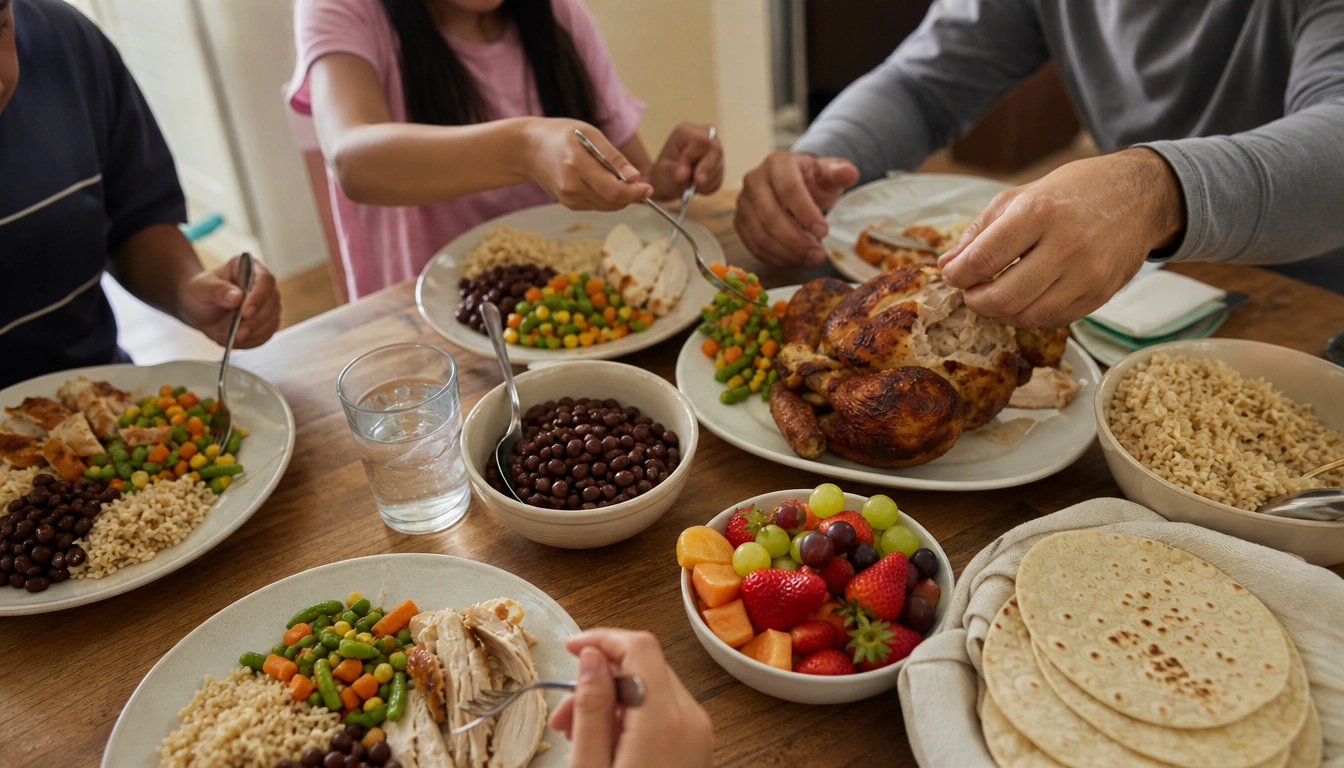
You can make a fast, kid-friendly, reasonably balanced dinner tonight by using a simple plate method: fill half the plate with vegetables or fruit, one quarter with protein, and one quarter with whole grains or other starchy carbs. Shortcut ingredients like canned beans, frozen vegetables, microwave grains, and rotisserie chicken make this much easier without turning dinner into takeout.
Key Takeaways
- Think in plate parts, not full recipes: produce, protein, and starch plus a little healthy fat is enough for a solid weeknight meal.
- A dinner does not need to be perfect every night; overall eating patterns across the week matter more than one rushed meal.
- Canned beans, frozen vegetables, rotisserie chicken, eggs, and microwave grains are practical shortcuts that can still fit public health advice.
- Build-your-own meals help with picky eaters because each person can assemble a version they’ll actually eat.
- For toddlers, modify choking hazards and textures; teens may need larger portions of protein and grains, especially if they are active.
Why low-prep dinners can still be nutritious
A busy night does not automatically mean a poor dinner. Public health guidance from the NHS and other nutrition organizations supports a flexible approach: meals can be simple, fast, and still include the food groups that matter most. The goal is not to cook from scratch every night or build a perfect plate. It is to make a dinner that gives your family enough vegetables, protein, and energy-giving carbohydrates to feel satisfied and get through the evening without relying on takeout or skipping food altogether.
This matters because many parents get stuck thinking that “healthy” has to mean a full recipe with multiple steps. In real life, a better approach is often more modular. If you can put together vegetables, a protein source, and a starch, you already have the bones of a balanced meal. That structure also leaves room for convenience foods, which can be useful when time, budget, and energy are limited.
Thinking this way can reduce decision fatigue. Instead of asking, “What elaborate meal can I make?”, ask, “What do I already have that could become dinner in 10 to 20 minutes?” That shift makes weeknight cooking more repeatable and less stressful.
The balanced plate method for fast family dinners
The easiest framework is the plate method, which is also used in public health models such as MyPlate and the NHS Eatwell approach. Half the plate goes to vegetables or fruit, one quarter to protein, and one quarter to starchy carbohydrates, preferably whole grains when possible. A small amount of healthy fat, such as olive oil, avocado, seeds, or a nut butter sauce, can round out the meal.
For parents, the value of this method is flexibility. You do not need a matching set of ingredients. A dinner can be built from freezer vegetables, a can of beans, microwave brown rice, and a drizzle of olive oil or salsa. If the protein portion is smaller one night, you can make up for it later in the week. Nutrition is best judged across the week, not by one rushed meal.
That weekly view is useful for busy households because it makes room for easier nights. Some evenings may lean on convenience foods more heavily. Other nights may include more home cooking. As long as the overall pattern includes produce, protein, and fiber-rich grains or starchy vegetables, your family can still eat well without nightly perfection.
| Plate part | Easy examples | Quick swap ideas |
|---|---|---|
| Vegetables or fruit | Frozen broccoli, bagged salad, steam-in-bag mixed vegetables, salsa, cherry tomatoes | Use whatever is already in the freezer or fridge |
| Protein | Rotisserie chicken, eggs, canned beans, lentils, tofu, tuna | Choose plant-based or dairy-based protein as needed |
| Starch | Microwave brown rice, whole-wheat pasta, whole-grain bread, tortillas, potatoes | Pick whole grains when available, but use what is practical |
| Healthy fat | Avocado, olive oil, seeds, hummus, nut butter | Use a small amount for flavor and satiety |
Best shortcut ingredients to keep on hand
The most helpful low-prep ingredients are the ones that save time without making dinner feel like a processed shortcut platter. Johns Hopkins Medicine and NHS guidance both support choosing minimally processed foods and using convenience items strategically. In practice, that means keeping a few dependable staples on hand.
Canned beans and lentils are especially useful because they add protein and fiber fast. Rinse them and they are ready for tacos, grain bowls, soups, or pasta. Frozen vegetables are another workhorse ingredient: they keep well, cook quickly, and reduce chopping. Rotisserie chicken can anchor bowls, wraps, pasta, and salads. Microwaveable whole grains such as brown rice or quinoa make it possible to assemble dinner without waiting on a pot of rice. Eggs, whole-grain tortillas, plain yogurt, hummus, and bagged greens are also practical.
Use these as building blocks, not as a rigid shopping list. The most useful pantry is the one your family actually eats from. If your kids prefer corn tortillas over rice, buy tortillas. If frozen peas disappear faster than broccoli, stock peas. Convenience ingredients work best when they fit your household instead of fighting it.
Five low-prep dinner templates you can repeat
These are not full recipes. They are dinner templates you can use with what is already in the fridge, freezer, or pantry. Each one can be adapted for different tastes and budgets.
Rotisserie chicken grain bowls
Build it with microwave brown rice or quinoa, shredded rotisserie chicken, and a frozen vegetable mix. Add salsa, olive oil, herbs, or a spoonful of yogurt sauce. For a warmer flavor profile, use soy sauce and sesame oil. For a milder bowl, keep the seasonings simple and let each person add toppings at the table.
Taco night with beans and toppings
Warm canned black beans or pinto beans, then serve with tortillas, lettuce, tomatoes, cheese, avocado, or salsa. If you have cooked ground turkey or plant-based crumbles, add them. Taco night is useful because it lets kids choose what goes on their plate while parents still control the main components.
Pantry pasta with vegetables
Toss whole-wheat or legume-based pasta with jarred marinara, frozen spinach, peas, or broccoli, and a protein such as beans, leftover chicken, or cheese. If you need a milder version for kids, keep the sauce plain and serve vegetables on the side. A little parmesan or olive oil can help finish the dish.
Egg night with toast or pita
Scrambled eggs, omelets, or a quick skillet frittata can become dinner in minutes. Serve with whole-grain toast, pita, fruit, and a vegetable like tomatoes, cucumbers, or leftover roasted vegetables. This works especially well when the fridge is almost empty because eggs are flexible and fast.
Hummus plates and snack-style dinners
For a no-cook option, build plates with hummus, whole-grain pita, cucumbers, cherry tomatoes, olives, fruit, and chickpeas or sliced chicken. This style is useful on very busy nights because it turns simple ingredients into a complete meal without much heat or cleanup.
You can repeat these ideas often by changing the flavor direction. Mexican-style taco night, Mediterranean hummus plates, and simple pasta bowls all use the same basic structure. That kind of repetition is a strength, not a flaw, because it makes dinner easier to remember and easier to shop for.
How to adapt low-prep dinners for picky eaters and different ages
Build-your-own and deconstructed meals are often the easiest way to handle picky eating. Instead of mixing everything together, serve the parts separately: protein in one bowl, vegetables in another, starch on the side, and sauces in small portions. That gives children more control and often lowers resistance.
For toddlers, texture and safety matter as much as flavor. Cut grapes lengthwise, slice cherry tomatoes into small pieces, soften raw vegetables, and avoid whole nuts or large chunks that could be choking hazards. If a vegetable is too firm, steam it or roast it until it is tender. For younger children, adults should still plate the meal rather than leaving every part fully self-serve.
For teens, the opposite problem may show up: the meal may simply be too small. Adolescents, especially active ones, often need larger portions of protein and starchy foods to support growth and energy needs. You can make the same meal work by adding an extra tortilla, more rice, another egg, or a larger scoop of beans or chicken.
Dietary restrictions are easier to manage when dinner is modular. Use tofu, beans, or lentils for vegetarian meals. Choose gluten-free grains or corn tortillas if needed. For dairy-free meals, skip cheese and use avocado, hummus, or olive oil-based sauces instead. If a child has severe allergies, keep ingredients separate and check labels carefully before serving.
Food safety and storage when you rely on shortcuts
Convenience foods still need basic food safety. The NHS advises keeping perishable foods refrigerated promptly and handling leftovers carefully. Rotisserie chicken, cooked grains, and opened prepared foods should not sit out for long. Refrigerate leftovers promptly and use them within safe storage windows. If you are unsure whether something is still safe, it is better to discard it than take a risk.
Bagged salads and pre-cut produce can save time, but they still need to be checked for freshness. Rinse produce if the package instructions or product type call for it, and throw out anything slimy, wilted, or off-smelling. Canned beans should be drained and rinsed unless the recipe needs the liquid. Microwave grains should be heated thoroughly before serving.
When serving children, pay special attention to choking risks. Whole grapes, raw carrot coins, popcorn, nuts, and large chunks of meat or cheese can be unsafe for young children unless they are appropriately cut or softened. Food safety is not just about germs; it is also about age-appropriate texture.
Budget-friendly batch prep and leftovers that make tomorrow easier
Low-prep dinners become even easier when you use a small amount of batch cooking to set up the next meal. If you are already cooking rice, pasta, roasted vegetables, or protein, make a little extra. Leftover components can be repurposed into grain bowls, wraps, quesadillas, soups, or salad toppers later in the week.
A practical habit is to keep one “rescue” dinner in the freezer or pantry at all times. That might be frozen vegetables, a bag of grains, canned beans, tortillas, and eggs. With those staples, you can make dinner without an extra store trip. It also helps to assign leftover jobs right after dinner: put away the grains, pack the chicken, wash the produce, and label what can be used tomorrow.
The best budget strategy is often not a complicated meal plan. It is a short list of ingredients that can become several different dinners. When the fridge is full of flexible staples, the family is far less likely to end up ordering expensive takeout out of desperation.
Frequently Asked Questions
How can I build a balanced dinner without following a full recipe?
Use a plate method: fill half the plate with vegetables or fruit, one quarter with protein, and one quarter with whole grains or another starchy food. Add a small amount of healthy fat if needed. This works even if you are using leftovers, canned foods, or freezer staples.
What are the best shortcut ingredients for healthy weeknight meals?
The most useful options are canned beans, frozen vegetables, rotisserie chicken, eggs, microwaveable whole grains, bagged salad, hummus, and plain yogurt. These ingredients save time while still fitting a balanced meal pattern better than relying only on ultra-processed convenience foods.
How can I make low-prep dinners work for picky eaters?
Serve meals in separate parts instead of mixing everything together. Build-your-own tacos, grain bowls, pasta with toppings on the side, and snack-style plates often work well. Let children choose among a few safe options so dinner feels less overwhelming.
What should I do if my child has food allergies or dietary restrictions?
Use the same meal template but swap the ingredients. Beans, tofu, lentils, gluten-free grains, dairy-free sauces, and corn tortillas can often replace common allergens. For severe allergies, read labels carefully and keep ingredients separate to avoid cross-contact.
How do I keep young children safe with quick-prep ingredients like grapes, carrots, or nuts?
Cut grapes lengthwise, soften raw carrots, and avoid whole nuts or other hard, round foods for young children. Serve age-appropriate textures and supervise eating. If a food is a choking hazard, change the shape or cooking method before serving it.
The Bottom Line
Fast family dinners do not have to be elaborate to be useful. If you build around vegetables, protein, and a filling starch, you can make a meal that is balanced enough for busy weeknights and flexible enough for whatever is in the fridge.
Shortcut ingredients are part of the solution, not a failure. Canned beans, frozen vegetables, rotisserie chicken, eggs, and microwave grains can help you feed your family well with less stress, especially when you use them in repeatable templates like taco night, grain bowls, pasta, or egg dinners.
The biggest win is consistency, not perfection. Keep a few staple ingredients on hand, adjust portions for toddlers or teens, and use leftovers to lower tomorrow’s workload.
Medical disclaimer
Medical disclaimer: This content is for educational and informational purposes only and is not a substitute for professional medical advice, diagnosis, or treatment. Dietary needs and supplement suitability vary by individual.
Sources
- National Health Service (NHS) — nwknowledgenow.nhs.uk. Accessed October 2026.
- National Health Service (NHS) — www.nhs.uk. Accessed October 2026.
- Johns Hopkins Medicine — hopkinsmedicine.org. Accessed October 2026.
