
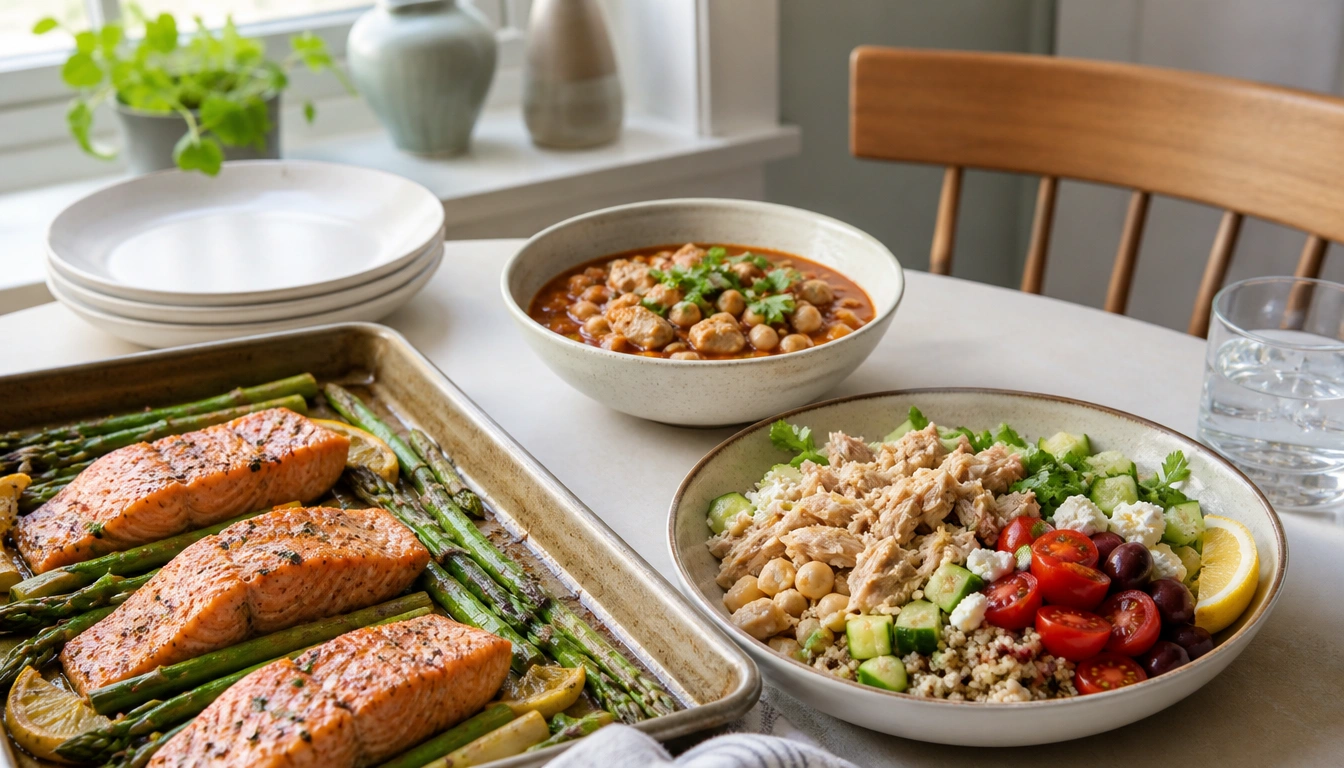
The easiest healthy dinner for adults over 50 is usually a simple meal built around protein, vegetables or beans, and a flavorful but low-sodium finish. Good options include salmon with asparagus, turkey and white bean chili, or a grain bowl with tuna or sardines. These meals are quick, flexible, and designed to support muscle, digestion, and appetite without requiring long cooking sessions.
Key Takeaways
- Adults over 50 often need fewer calories but more nutrient density, especially protein, fiber, and key vitamins.
- Low-prep foods such as canned beans, pouch grains, frozen vegetables, and pantry fish can still support a healthy dinner pattern.
- Aim for a dinner structure of protein plus a fiber-rich plant food plus healthy fat and flavor.
- Taste changes, fatigue, and chewing issues can be managed by soft textures, warm foods, and stronger seasoning without extra sodium.
- Portion size should match appetite and activity level; a smaller meal can still be nutritionally strong.
Why low-prep dinners matter more with age
Low-prep dinner ideas for adults over 50 are useful because cooking energy often changes before nutritional needs do. Many people need fewer total calories than they did earlier in life, but they still need enough protein, fiber, and micronutrients to support muscle, digestion, bone health, and daily function. That makes a meal built around convenience foods more than a shortcut; it can be a practical way to eat well consistently.
According to the National Institute on Aging and other public health guidance, older adults benefit from meals that are easy to prepare, easy to chew when needed, and easy to repeat on busy days. The goal is not to cook “perfectly.” It is to make dinner reliable enough that skipping meals or relying on highly processed takeout becomes less common.
That is especially important if standing at the stove feels tiring, if shopping trips are shorter, or if appetite is lower in the evening. A good dinner should feel doable on a weekday, not like a project reserved for days with extra energy.
The simple dinner formula that works best
A useful dinner pattern is simple: build the plate around protein, add a fiber-rich plant food, include a small source of healthy fat, and finish with flavor that does not depend on salt. This structure helps older adults get more from a meal even when the portion is modest.
Protein matters because muscle maintenance becomes harder with age, and many adults do better when protein is included at dinner instead of saved for just one meal. The plant side can be vegetables, beans, lentils, whole grains, or a mix. Healthy fats from olive oil, fish, nuts, seeds, or avocado can improve satisfaction and help a meal feel complete.
Flavor is not a minor detail. When taste dulls with age or medications, meals need more aroma, acidity, and seasoning from herbs and spices. Lemon, garlic powder, pepper, dill, cumin, paprika, vinegar, and ginger can make food more appealing without a heavy sodium load.
Three low-prep dinners that are worth repeating
One-pan lemon-herb baked salmon and asparagus is a strong option when you want a fast dinner with minimal cleanup. Put salmon and trimmed asparagus on a sheet pan, drizzle with olive oil, add lemon juice, and season with garlic powder, black pepper, and dried herbs. Bake until the fish flakes easily. Salmon supplies high-quality protein, and asparagus adds a quick vegetable side without extra pots or pans. If asparagus is not available, use green beans, zucchini, or broccoli florets.
Turkey and white bean chili works well when you want a meal that can stretch into leftovers. Brown lean ground turkey, then add rinsed canned white beans, diced tomatoes, low-sodium broth, onion if tolerated, and chili powder or cumin. Simmer until the flavors blend. If you are short on time, make it in a slow cooker after browning the turkey, or keep it as a quick stovetop simmer. You can swap in shredded chicken, black beans, or pinto beans if that is what you have.
Warm Mediterranean grain bowl with tuna or sardines is nearly no-cook and especially useful on nights when energy is low. Heat a pouch of whole grains, top with canned tuna or sardines, add baby spinach or another tender green, and finish with cherry tomatoes, olives, cucumber, or a little feta if desired. A drizzle of olive oil and a splash of vinegar or lemon keep it bright. This type of bowl is easy to assemble from pantry and fridge staples without much chopping.
Shortcuts that still count as healthy food
Pre-cut vegetables, canned beans, pouch grains, frozen vegetables, and pantry fish are all helpful tools, not second-rate choices. The best healthy dinner is the one you can actually make regularly. If a bag of pre-trimmed asparagus or a steam-in-bag vegetable helps you get dinner on the table, that is a win.
Rinsed canned beans can add fiber and plant protein fast. Frozen vegetables are often picked and packed at good quality, which makes them convenient for stir-fries, sheet-pan dinners, or soups. Pre-cooked grains save time and reduce cleanup. Canned tuna, salmon, or sardines can fill the protein role when fresh fish is not practical.
These shortcuts are especially useful for adults who tire easily, care for a spouse, or cook for one. The best approach is to keep a few “fast base” foods on hand and combine them in different ways rather than trying to assemble a large recipe every night.
How to adapt dinner for appetite, chewing, and fatigue
Appetite can drop with age, illness, hot weather, or medication changes. When a full plate feels unappealing, start with a smaller portion that is still protein-forward. A half bowl of chili, a smaller salmon fillet, or a grain bowl with extra vegetables may be more realistic than a large restaurant-style plate.
If taste seems muted, emphasize aroma and contrast. Warm foods often seem more appealing than cold ones. Add a bright sauce, a crunchy topping if chewing allows, or an acidic finish such as lemon or vinegar. When fatigue is the issue, choose meals that require one pan, one pot, or simple assembly.
For chewing or swallowing concerns, softer textures are usually easier: flaked fish, tender cooked vegetables, well-simmered beans, soft grains, soups, or finely chopped ingredients. If swallowing is difficult, food texture needs to be discussed with a healthcare professional or speech-language pathologist, because safety matters as much as convenience.
Flavor without relying on extra sodium
Lower-sodium meals do not have to taste bland. Herbs, spices, citrus, garlic powder, onion powder, and vinegar can make a big difference, especially for people whose sense of taste has changed. A squeeze of lemon over fish, a pinch of smoked paprika in chili, or a spoonful of salsa with grain bowls can lift the whole meal.
Salt-free seasoning blends are useful, but they work best when paired with other flavor sources instead of used alone. Roasting vegetables brings out natural sweetness. Browning turkey before simmering adds depth. A little olive oil improves mouthfeel and helps meals feel satisfying, which matters when appetite is smaller.
If you use canned ingredients, choose lower-sodium versions when possible and rinse beans and vegetables if appropriate. That can reduce sodium without taking away the convenience that makes these meals realistic during a busy week.
How much to serve depends on the person
There is no single portion size that fits every adult over 50. A very active person may need a larger dinner than someone who is mostly sedentary, and a smaller appetite may require more concentrated nutrition per bite. A practical approach is to think in building blocks rather than fixed portions.
For many people, dinner works well when it includes a palm-sized protein, one or two vegetables or another fiber-rich side, and a modest amount of grain, beans, or starchy food. If appetite is low, increase the protein and nutrient density first. If energy needs are high, increase the grain or add an extra side. If weight loss is unintended, a clinician or dietitian can help tailor the plan.
The same meal can be adjusted by changing the ratio, not the recipe. More beans and vegetables for extra fiber. More fish or turkey for more protein. A smaller bowl with olive oil, avocado, or yogurt-based sauce when chewing is easy but appetite is not.
Shopping and prep habits that make this easier all week
A repeatable dinner routine starts before cooking. Keep a short list of ingredients you know you will use: one or two proteins, a few vegetables, a pantry grain, beans, and flavor boosters like lemons, garlic powder, cumin, or dried dill. That makes it easier to assemble meals without another trip to the store.
Batching a few easy tasks can reduce the work later. Wash produce when you get home. Portion fish or turkey into dinner-sized amounts. Keep rinsed beans in the fridge for quick use. Store cooked grains in the refrigerator so they are ready for bowls or sides. If standing is hard, sit while you chop, season, or portion ingredients.
The best weekly plan is one you can repeat when energy is low. A salmon sheet pan, a pot of chili, and a pantry grain bowl can cover several dinners without feeling repetitive if you vary the vegetables, beans, herbs, or sauces. That kind of flexibility is often what makes healthy eating stick.
Frequently Asked Questions
What nutrients should dinners for adults over 50 emphasize?
Dinner should emphasize protein, fiber, and a variety of micronutrient-rich foods such as vegetables, beans, whole grains, and fish. Public health guidance also supports healthy fats and adequate fluids. For many adults, it is less about eating less and more about getting more nutrition into each bite.
How can I make low-prep dinners higher in protein and fiber?
Start with a protein source such as salmon, turkey, tuna, sardines, eggs, tofu, or beans, then add vegetables and a whole grain or legume. Canned beans, pouch grains, and frozen vegetables make this much easier. Even a simple bowl or soup can be high in both protein and fiber.
What are the easiest healthy dinner shortcuts for busy or low-energy nights?
Pre-cut vegetables, frozen vegetables, canned beans, pouch grains, and pantry fish are some of the easiest shortcuts. They reduce chopping, cooking time, and cleanup while still giving you a balanced meal. A one-pan dinner or an assembly-style bowl is often the most realistic option.
How do I keep dinner lower in sodium without losing flavor?
Use herbs, spices, lemon, vinegar, garlic powder, onion powder, and pepper to build flavor. Choose lower-sodium canned foods when available and rinse beans before cooking. Roasting, browning, and using olive oil can also make meals taste fuller without relying on extra salt.
What should I do if chewing, swallowing, or appetite makes regular meals harder?
Choose softer textures such as soups, chili, flaked fish, tender vegetables, and cooked grains. Smaller, more frequent meals may help if appetite is low. If swallowing is difficult, or if appetite loss or weight loss is ongoing, consult a healthcare professional for evaluation and personalized guidance.
The Bottom Line
Low-prep dinner ideas for adults over 50 work best when they combine convenience with nutrient density. Protein, fiber, and flavorful produce should still be the center of the plate, even if the ingredients come from the freezer, pantry, or deli counter.
Salmon sheets pans, turkey and white bean chili, and warm grain bowls are all practical starting points. They can be adjusted for appetite, sodium needs, chewing comfort, and activity level, which makes them more useful than rigid recipes.
The most sustainable dinner plan is usually the one you can repeat on tired days. A few reliable ingredients and a small set of flavor boosters can make healthy eating feel easier all week long.
Medical disclaimer
Medical disclaimer: This content is for educational and informational purposes only and is not a substitute for professional medical advice, diagnosis, or treatment. Dietary needs and supplement suitability vary by individual.
