
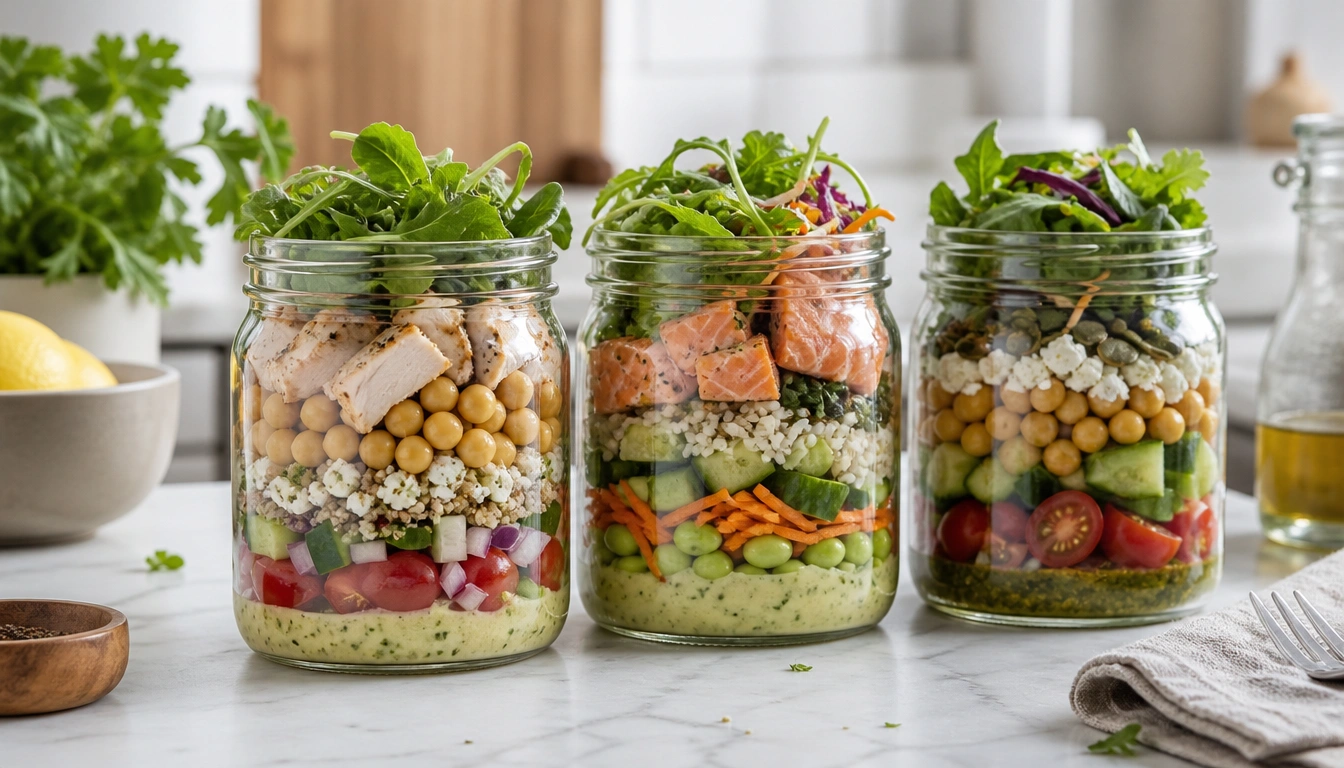
The best make-ahead salad jar ideas for adults over 50 are the ones built for freshness and balance: a flavorful dressing on the bottom, sturdy vegetables next, then beans, grains, or protein, with leafy greens on top. This structure helps the jar stay crisp for several days while supporting muscle maintenance, fiber intake, and convenient meal prep without relying on highly processed lunches.
Key Takeaways
- Adults over 50 often do better with salad jars that include enough protein, fiber, and colorful produce to support muscle, fullness, and overall nutrient density.
- Layering matters: dressing at the bottom, sturdy vegetables and grains in the middle, protein above them, and greens on top helps preserve texture for up to 4 to 5 days.
- Mediterranean, citrus chicken, salmon, and vegetarian bean-based jars are flexible templates that can be adjusted for taste, budget, and appetite.
- If you need to limit sodium or watch potassium, salad jars can still work with lower-sodium ingredients, smaller portions of salty add-ins, and individualized medical advice.
- People who take warfarin or who are increasing fiber should keep intake steady and add beans, lentils, and cruciferous vegetables gradually with plenty of fluids.
Why salad jars work especially well after 50
Make-ahead salad jar ideas for adults over 50 work because they solve two common problems at once: lunch fatigue and nutrition drift. As appetite, energy, or motivation for daily cooking changes, it becomes easier to fall back on convenience foods that are high in sodium and refined carbohydrates but low in fiber and protein. A salad jar offers a more practical middle ground: fast to assemble, easy to grab, and built from foods that can support long-term health.
After 50, body composition tends to change. Lean mass can gradually decline, and calorie needs may be lower than they were earlier in adulthood. That means each meal needs to work harder. The National Institute on Aging emphasizes the value of nutrient-dense meals with protein and produce; the goal is not just to feel full, but to preserve strength and support daily function. A well-built salad jar can help do that without feeling heavy or complicated.
These jars are also useful because they are customizable. Someone who wants a lighter lunch can build a vegetable-forward jar with beans and a small amount of cheese. Someone who needs more staying power can add chicken, salmon, tofu, or eggs. The format is flexible enough for different appetites, but structured enough to make prep predictable.
The over-50 nutrition priorities behind the recipe choices
For adults over 50, the best salad jar formulas usually center on three things: protein, fiber, and balanced fats or carbohydrates. Protein matters because it supports muscle maintenance, especially when intake is spread through the day rather than squeezed into one large meal. Lean proteins like chicken, tuna, salmon, eggs, edamame, tofu, or beans can all fit into a jar meal.
Fiber matters for digestive regularity, blood sugar steadiness, and heart health. The Dietary Guidelines for Americans encourage vegetables, fruits, beans, and whole grains as the base of a healthy pattern. In salad jars, that can mean chickpeas, lentils, quinoa, barley, brown rice, cabbage, carrots, cucumbers, peppers, or leafy greens. These ingredients help the meal feel satisfying without depending on refined grains.
Healthy fats and smart carbohydrates round out the meal. Olive oil, avocado, nuts, seeds, olives, and oily fish can make a salad more satisfying and help it stay interesting. Whole grains and beans also add staying power. The best combinations are not low-calorie at all costs; they are balanced enough to keep you full and energized until the next meal.
If you want a simple formula, think in layers of purpose: one protein source, one or two fiber-rich vegetables, one filling base such as beans or whole grains, and one dressing that adds flavor without overwhelming the rest of the ingredients.
The salad jar layering method that keeps ingredients crisp
The freshness trick is physical, not mysterious. A salad jar stays crisp because the ingredients with the most moisture and acidity are kept away from the delicate greens until serving. Dressing goes at the bottom so it does not touch the leaves early. Sturdy vegetables and grains sit above the dressing because they can handle marinating. Greens stay on top so they remain dry.
A reliable order is: dressing, sturdy vegetables, grains or beans, protein, then greens. If you want to add cheese, place it near the protein or just above the grain layer. The exact order can shift slightly depending on ingredients, but the principle stays the same: protect the most fragile foods from direct contact with liquid.
For best texture, use thoroughly dried greens and keep crunchy toppings separate. Seeds, nuts, croutons, and crispy onions are better added at the table. If you are using tomatoes, cucumbers, or other watery vegetables, slice them in a way that reduces excess liquid. Cooked grains should be cooled before assembling so they do not create condensation inside the jar.
A wide-mouth glass jar works best because it is easier to pack evenly and easier to eat from. If the jar is too narrow, the ingredients can compress unevenly and the greens may bruise. The goal is a tight but not crushed pack.
Salad jar formulas that are filling without being fussy
Mediterranean chickpea quinoa jar: Start with lemon-olive oil dressing, then add cucumbers, cherry tomatoes, chopped bell pepper, chickpeas, and cooked quinoa. Top with baby spinach and a little feta. This version is hearty, bright, and easy to adapt. Use more quinoa if you want a fuller meal, or more vegetables if you want it lighter.
Lean chicken citrus jar: Use a citrus vinaigrette or a light mustard dressing. Add shredded carrots, red cabbage, cucumber, cooked barley or brown rice, and sliced grilled chicken. The cabbage adds crunch that holds up well, while the chicken gives the meal staying power. This is a good option for people who prefer a milder, straightforward lunch.
Salmon and white bean jar: Build from Dijon vinaigrette, green beans, sliced celery, cannellini beans, and flaked cooked salmon. Finish with kale or another sturdy green. This version offers a strong protein base and a heart-healthy fish option. If canned salmon is used, choose a lower-sodium version when possible.
Vegetarian lentil and roasted vegetable jar: Layer balsamic dressing, roasted zucchini or cauliflower, lentils, chopped peppers, and baby greens. Add pumpkin seeds just before eating for crunch. This option is especially useful if you want plant protein and a more earthy flavor profile. Roasted vegetables add depth without requiring complex prep.
Egg and avocado jar: Use a simple vinaigrette, then layer cucumbers, tomatoes, quinoa, hard-boiled eggs, and greens, with avocado added close to serving time if possible. Avocado can brown, so it is better for a same-day lunch or a jar assembled the night before. This is a good choice when you want a softer texture and a familiar flavor.
How to customize jars for taste and tolerance
Not every salad jar needs bold flavors. Adults over 50 who are sensitive to strong seasoning, raw onion, or acidic dressings can build milder jars with cucumber, carrot, tender greens, cooked grains, and simple olive oil and herb dressings. A light vinaigrette, lemon juice, dill, parsley, or basil can give flavor without overwhelming the meal.
If you want lower sodium, focus on fresh foods and rinse canned beans well. Use less cheese, choose unsalted nuts or seeds, and avoid salty bottled dressings when possible. A dressing made from olive oil, vinegar or citrus, and herbs can deliver plenty of flavor without relying on a heavy salt load. For readers who manage blood pressure or fluid retention, this can make a meaningful difference in day-to-day meal planning.
Crunchy add-ins are best kept separate until mealtime. That keeps the jar pleasant to eat and lets each person adjust the texture. If a jar feels too dense, loosen it with more greens or add a side of fruit instead of increasing the salty components. If the meal feels too light, add more beans, grains, or a larger protein portion rather than extra dressing.
For digestion, gentle choices can help. Cooked vegetables are often easier to tolerate than a lot of raw cruciferous produce at once. A mix of cooked and raw ingredients may be easier on the stomach than a fully raw jar. Flavor should support comfort, not compete with it.
Food safety and storage rules for make-ahead jars
Food safety matters as much as flavor. Keep salad jars refrigerated at or below 40°F/4°C, and chill the ingredients promptly after cooking. Clean, airtight glass jars are a good choice because they seal well and make it easy to see the layers. If you are using a protein such as chicken, tuna, eggs, salmon, or tofu, assemble the jars with safe cooling practices and clean utensils.
Meat-, poultry-, and seafood-based salad jars should be eaten within 3 to 4 days. That timing helps protect both quality and safety. Vegetable-only jars may hold texture a little longer, but freshness still depends on how wet the ingredients are and how cold the refrigerator stays. If the jar smells off, looks slimy, or has excess liquid that was not there before, discard it.
To keep the greens from collapsing, make sure cooked grains and proteins are fully cool before packing. Warm ingredients create condensation, which can shorten shelf life. It also helps to store the jars upright and avoid opening them repeatedly before serving.
If you are making several jars at once, label them with the prep date. That small step makes it easier to use the oldest one first and avoid guessing. For busy households, that one habit can make meal prep much more reliable.
Special considerations for adults over 50
Fiber is helpful, but a sudden jump can cause bloating or gas. If beans, lentils, cabbage, kale, or other high-fiber foods are new to you, add them gradually instead of loading every jar at maximum volume right away. Drinking enough fluids throughout the day can also make fiber easier to tolerate. For many people, the best approach is to increase fiber step by step over several meals.
Vitamin K is another important consideration. Dark leafy greens such as spinach and kale can fit into salad jars, but people taking warfarin usually need a consistent pattern rather than big swings in intake. That does not mean avoiding greens entirely; it means keeping the amount and frequency steady and discussing the plan with a clinician or registered dietitian if needed. Consistency is more important than chasing a perfect number.
Potassium and sodium may also require extra attention for some readers. Beans, tomatoes, and many vegetables contribute potassium, which can matter for people with kidney disease or other conditions that require monitoring. Cheese, olives, cured meats, and packaged dressings can push sodium upward. If you live with a medical condition that changes what you should eat, use the jar as a template and adapt the ingredients to the guidance you have been given.
The best version of a salad jar is the one you will actually eat: fresh, filling, and easy to repeat. When the ingredients are chosen with age-related needs in mind, the jar becomes more than a convenience lunch. It becomes a steady meal habit.
Frequently Asked Questions
How do you layer a salad jar so it stays crisp for 4 to 5 days?
Start with dressing at the bottom, then add sturdy vegetables, beans or grains, protein, and leafy greens on top. Keep crunchy toppings separate until eating. Make sure cooked ingredients are cooled before packing and store the jars cold so condensation does not soften the greens.
What protein choices are best for adults over 50 in salad jars?
Good options include chicken, turkey, salmon, tuna, eggs, tofu, edamame, chickpeas, and lentils. The best choice is the one that fits your appetite, budget, and health needs while giving the meal enough staying power.
Which salad jar ingredients help support fiber intake without making the salad soggy?
Beans, lentils, quinoa, barley, cabbage, carrots, peppers, cucumbers, and sturdy greens all help increase fiber. To keep the jar from getting soggy, place wet ingredients low in the jar and use well-dried greens on top.
What are good low-sodium salad jar options for adults over 50?
Use fresh vegetables, rinsed beans, plain cooked grains, unsalted nuts or seeds, and simple homemade dressings made with olive oil, vinegar, lemon, and herbs. Limit salty cheese, cured meats, pickles, and heavy bottled dressings.
How can adults over 50 adjust salad jars if they take warfarin or need to watch potassium?
If you take warfarin, keep vitamin K-rich greens like spinach and kale consistent from week to week instead of changing amounts suddenly. If you need to watch potassium, be careful with beans, tomatoes, and other high-potassium foods and follow your clinician’s advice on portions.
The Bottom Line
Salad jars are a practical meal-prep option for adults over 50 because they can combine convenience with protein, fiber, and produce in one portable meal. The best versions are layered to stay crisp, built from minimally processed ingredients, and adjusted to your appetite and health goals.
Use the jar as a flexible template: dressing first, sturdy foods next, then protein and greens on top. Keep food safety in mind, introduce high-fiber ingredients gradually if needed, and pay attention to vitamin K, sodium, and potassium if those are relevant to your care plan.
Medical disclaimer
Medical disclaimer: This content is for educational and informational purposes only and is not a substitute for professional medical advice, diagnosis, or treatment. Dietary needs and supplement suitability vary by individual.
Sources
- U.S. Government / Health Authority — realfood.gov. Accessed November 2026.
- National Institutes of Health (NIH) — nih.gov. Accessed November 2026.
- Academic / Medical Research Institution — heart.org. Accessed November 2026.
