
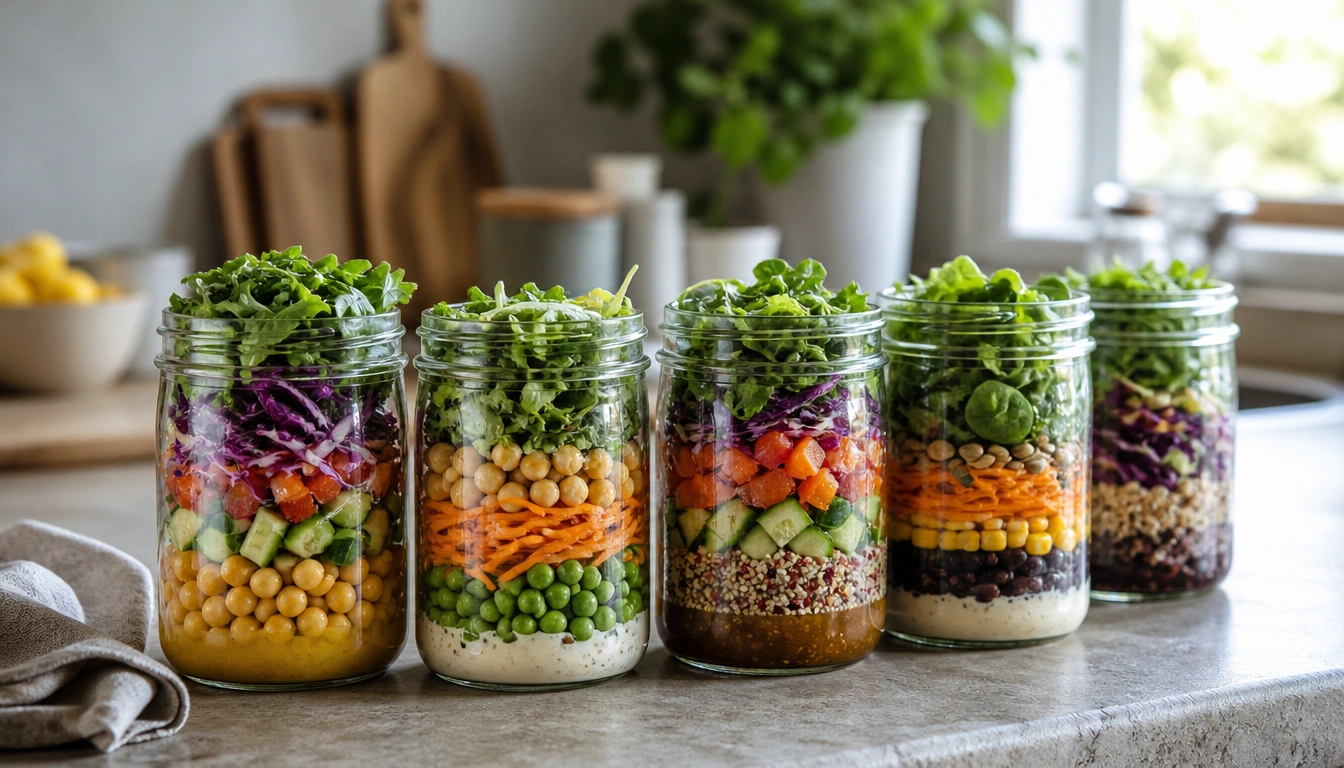
You can make filling, affordable salad jars that stay fresh for several days by using low-cost ingredients like beans, cabbage, carrots, grains, and store-brand dressings, then layering them to keep wet ingredients away from greens. Shop from an inventory-first list, use canned or frozen produce when it saves money, and keep jars refrigerated and tightly sealed until eating.
Key Takeaways
- Build salad jars around budget staples such as beans, eggs, cabbage, carrots, frozen corn, and whole grains.
- Use the salad jar layering method: dressing or wet ingredients on the bottom, delicate greens on top.
- Rinsing canned beans and choosing no-salt-added options can help reduce sodium.
- Beans, lentils, and whole grains add fiber and staying power, but people watching carbohydrates may need smaller portions.
- Most salad jars are best eaten within 3 to 5 days if kept cold at or below refrigerator temperature.
- A short shopping list and pantry check can stretch one grocery trip into several lunches without much waste.
Why salad jars can fit a tight food budget
Salad jars work well for budget shopping because they turn a few low-cost ingredients into several ready-to-eat meals. Instead of buying separate lunch items every day, you can assemble one batch from foods you already have or inexpensive groceries that keep well. That approach lines up with USDA and Dietary Guidelines for Americans patterns that emphasize vegetables, fruits, whole grains, and protein foods without requiring expensive specialty products.
A good budget salad jar does not need gourmet ingredients. The structure matters more than the brand. Think of the jar as a portable meal built from five parts: a flavorful base, vegetables, a protein source, greens, and something crunchy. If each layer is chosen with cost and shelf life in mind, the result can be satisfying, colorful, and practical for several days of lunches or light dinners.
The budget advantage also comes from reducing waste. A bag of cabbage, a pound of carrots, a can of beans, and a bulk grain can become multiple meals. When you plan around ingredients that last, you spend less on last-minute takeout and less on produce that spoils before you use it.
Best low-cost ingredients for each layer
The cheapest salad jars usually rely on ingredients that are sturdy, versatile, and widely available. Cabbage is one of the best base vegetables because it stays crisp longer than delicate lettuces. Carrots, especially shredded or matchstick carrots, add sweetness and crunch for little cost. Frozen corn is another useful option because it is often cheaper than fresh, keeps well, and can be thawed quickly for jar assembly.
For protein and fiber, beans are hard to beat. Canned chickpeas, black beans, white beans, and lentils are inexpensive, filling, and easy to keep on hand. Store-brand eggs, leftover chicken, and occasionally canned tuna or salmon can also work well when priced favorably. Whole grains such as brown rice, barley, bulgur, or farro can stretch a jar into a more substantial meal.
Dressings do not need to be expensive either. Store-brand vinaigrettes, oil and vinegar, salsa, or a simple mustard-based dressing can all work. The best choice is often the one you already enjoy and will actually use. A jar you like is more likely to get eaten, which matters just as much as nutrition on a budget.
If you want more crunch without a big expense, look for sunflower seeds, pumpkin seeds, or croutons made from leftover bread. Even small amounts can improve texture and make the meal feel more complete. The main goal is to choose ingredients that are both affordable and realistic for your kitchen.
How to shop smart before you assemble
The most effective budget strategy starts before you shop. Check the refrigerator, freezer, and pantry first so you do not buy ingredients you already have. This step saves money and helps prevent produce from being forgotten in the back of the fridge. USDA consumer guidance also emphasizes planning ahead and using a shopping list to stay focused.
Write the list by layer, not by recipe title. That makes it easier to swap ingredients based on price. For example, if romaine is costly, choose cabbage. If fresh cucumbers are expensive, use frozen corn or a leftover vegetable instead. If chicken is not on sale, lean on beans and eggs. Unit pricing is especially useful here because the cheapest-looking package is not always the best value per ounce.
Canned and frozen foods deserve a place in budget meal prep. The CDC and USDA both recognize that frozen vegetables and no-salt-added canned vegetables can be practical, nutritious options. They reduce spoilage risk and help you build salad jars even when fresh produce prices rise. If you use canned beans or vegetables, rinse them when appropriate to reduce sodium and improve flavor.
Layering the jar so it stays fresh
The order of the layers is what keeps a salad jar from turning soggy. Put the wettest ingredients at the bottom so they do not touch tender greens too soon. Dressing, salsa, or a bean layer mixed with seasoning can sit at the base. Above that, add sturdy vegetables and grains, then protein if you are using it, then the greens, and finally the dry toppings.
A useful rule is to keep anything soft and moist away from anything delicate. Beans can sit near the dressing because they hold up well. Cucumbers, tomatoes, and thawed corn are better in the middle than near the top. Greens like spinach, romaine, or spring mix should stay as dry as possible until eating time. Crunchy toppings such as nuts, seeds, tortilla strips, or croutons belong at the very top or in a separate container.
When you are ready to eat, shake the jar or pour it into a bowl so the dressing spreads through the ingredients. If the jar is packed correctly, the greens should still taste crisp. This layering system does not require special tools; it just uses moisture control to preserve texture for several days.
Budget salad jar combinations you can repeat all week
Black bean cabbage jar: Start with salsa or a simple vinaigrette, then add rinsed black beans, shredded cabbage, diced bell pepper, and cooked brown rice. Top with chopped lettuce and crushed tortilla chips added just before eating. This version is hearty, colorful, and especially affordable when cabbage is in season.
Chickpea cucumber jar: Use a lemony dressing or oil and vinegar at the bottom, followed by chickpeas, cucumber, shredded carrots, and a small portion of bulgur or barley. Add chopped spinach or romaine near the top. A little store-brand feta or sunflower seeds can make it feel more substantial without much added cost.
Chicken and corn jar: Place dressing in the bottom, then add leftover chicken, thawed frozen corn, cabbage or lettuce, and a scoop of whole grain such as barley or brown rice. This is a good way to use leftover cooked chicken without making a separate lunch recipe.
Egg and bean jar: Layer a mustard vinaigrette with white beans, chopped hard-boiled egg, shredded carrots, chopped greens, and a small handful of seeds. This works well when you want a low-cost protein combination using foods that are already in the fridge.
These combinations are flexible templates, not strict rules. Use what is cheapest and freshest in your kitchen, then repeat the jars that your household actually likes. Repetition is a strength in meal prep when it reduces waste and makes lunch predictable.
How to adjust for more fiber, more protein, or fewer carbs
If your goal is more fiber and fullness, emphasize beans, lentils, cabbage, carrots, and whole grains. Those ingredients help increase satiety because they are slower to digest than refined grains or snack foods with little fiber. They can also make a jar feel like a real meal instead of a side salad.
If you want more protein, increase the portion of beans or add eggs, chicken, tuna, or another affordable protein source. For some people, a bean-heavy jar is enough on its own. For others, pairing beans with eggs or chicken makes the meal more satisfying. Budget and appetite should guide the mix.
If you are watching carbohydrates or blood sugar, keep the grain and corn portions smaller and build more of the jar from nonstarchy vegetables and protein. The USDA and public health guidance support individualized planning for people with diabetes, so the best balance can vary from person to person. Beans and lentils still contribute carbohydrate, but they also bring fiber and protein, which may be easier to fit into a balanced meal than refined starches. If you need to manage blood sugar closely, a registered dietitian or clinician can help tailor the portions.
Food safety and storage for make-ahead jars
Salad jars need to stay cold from the moment they are packed until the moment they are eaten. Store them in a refrigerator at or below 40°F, and keep the lid sealed so the contents stay protected from contamination and drying out. If you use animal proteins such as chicken or eggs, they should be cooked thoroughly, cooled properly, and handled with clean utensils and surfaces.
Most raw vegetable and grain salad jars are best eaten within 3 to 5 days. That timeline is practical, not magic; the jar can still spoil sooner if your refrigerator runs warm or if ingredients were already near the end of their shelf life when you packed them. Strong smells, bubbling, slime, or unusual discoloration are warning signs to throw the jar away. If anything seems off, do not taste it to check.
Cold-chain handling matters most with leftovers and cooked proteins. Let hot ingredients cool before sealing them into jars, and do not leave the jar sitting at room temperature for long periods. If you pack jars for work or school, use an insulated bag with an ice pack until they can be refrigerated again.
How to stretch one shopping trip into several lunches
A single shopping trip can cover multiple salad jars if you build around overlapping ingredients. For example, one bag of cabbage can support several jars, and one cooked grain can be split between different flavor profiles. A can of beans can become two or three meals when paired with different dressings and vegetables.
Batch prep also saves time. Wash and chop sturdy vegetables once, cook grains in a larger pot, and portion proteins into containers before you assemble the jars. You do not need to prepare every layer from scratch every day. If you keep a small pantry of flexible ingredients, assembling a jar takes only a few minutes.
Leftovers are one of the best budget tools you have. Extra roasted vegetables, plain chicken, cooked rice, or even a spoonful of bean salad can become part of a jar instead of being thrown out. That approach cuts waste and helps make the next meal easier. The goal is not to create a perfect lunch every time; it is to make a lunch that is affordable, fresh enough, and ready when you need it.
For many households, the real savings come from repeating a simple system: check what you have, buy what you need, layer it correctly, and eat it within a few days. That routine turns salad jars into a dependable meal-prep habit rather than a one-off recipe.
Frequently Asked Questions
What ingredients work best in salad jars on a tight budget?
The most reliable low-cost choices are beans, cabbage, carrots, frozen corn, whole grains, eggs, and leftover chicken. Store-brand dressings and pantry seasonings can help keep the jars affordable while still tasting good.
How do you layer a salad jar so it doesn’t get soggy?
Put dressing or other wet ingredients on the bottom, then beans or sturdy vegetables, then grains or protein, then greens, and finally dry crunch toppings on top. This keeps moisture away from delicate leaves until you are ready to eat.
How long do salad jars last in the refrigerator?
Most salad jars are best eaten within 3 to 5 days if they are stored sealed in a refrigerator at or below 40°F. Toss the jar sooner if it smells off, looks slimy, or shows bubbling or unusual discoloration.
Can I use canned or frozen vegetables in salad jars and still keep them healthy?
Yes. Frozen and canned vegetables can be nutritious, convenient, and budget-friendly. Choose no-salt-added or lower-sodium versions when possible, and rinse canned beans or vegetables to help reduce sodium.
Are salad jars a good option for people watching carbohydrates or blood sugar?
They can be, but the portions matter. People watching blood sugar may want smaller amounts of grains, corn, and other starches, with more nonstarchy vegetables and protein. Because needs vary, individualized advice from a clinician or dietitian can help.
The Bottom Line
Budget-friendly salad jars work best when you treat them like a system: buy ingredients with a plan, use inexpensive staples that hold up well, and layer them to protect texture. Beans, cabbage, carrots, grains, and leftover proteins can create filling meals without pushing grocery costs higher.
The most useful habits are simple ones: check your pantry first, compare unit prices, use canned or frozen produce when it makes sense, rinse canned beans, and keep finished jars cold. With that approach, one shopping trip can turn into several fresh lunches that are practical, portable, and less wasteful.
Medical disclaimer
Medical disclaimer: This content is for educational and informational purposes only and is not a substitute for professional medical advice, diagnosis, or treatment. Dietary needs and supplement suitability vary by individual.
Sources
- U.S. Government / Health Authority — usda.gov. Accessed November 2026.
- U.S. Government / Health Authority — health.gov. Accessed November 2026.
- Centers for Disease Control and Prevention (CDC) — cdc.gov. Accessed November 2026.
- Academic Research Institution — psu.edu. Accessed November 2026.
