
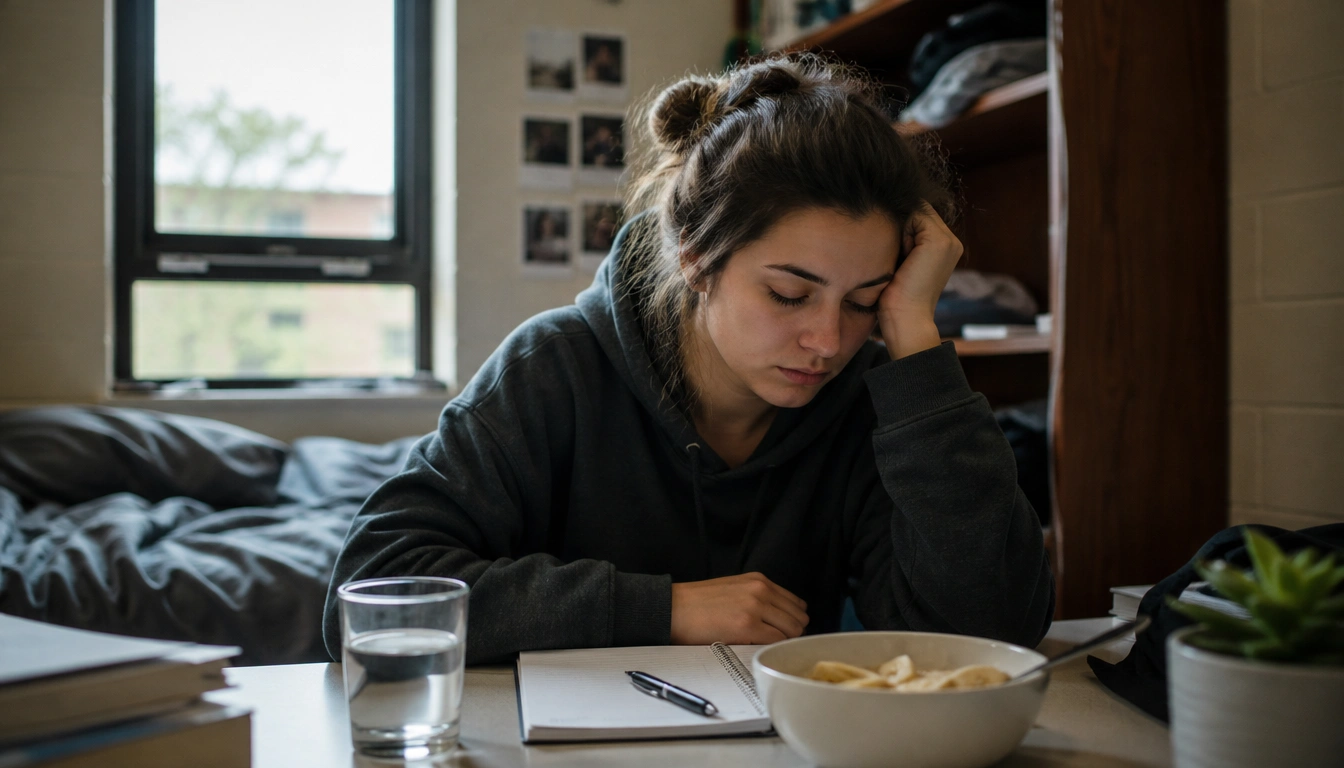
If you slept too little, start with bright light, water, and light movement before you lean on caffeine. Eat something steadying, keep naps short and early if you need one, and scale back your expectations for the day. If you feel dangerously sleepy, especially for driving or testing, do not push through—safety comes first. If poor sleep keeps happening or comes with mood or breathing symptoms, get evaluated.
Key Takeaways
- The best morning routine after poor sleep starts with light, hydration, and movement—not coffee first.
- Young adults often have a later body clock, so an early wake-up after a short night can feel even harder than it should.
- A short early-afternoon nap can help, but long or late naps can make tonight’s sleep worse.
- Use caffeine strategically in the morning only; too much or too late can deepen the sleep-debt cycle.
- Repeated bad sleep with anxiety, low mood, snoring, gasping, or restless legs deserves professional evaluation.
Why a bad night hits college students so hard
A short or broken night leaves you dealing with more than simple tiredness. Sleep loss increases sleep inertia, the foggy stretch after waking when thinking, reaction time, and coordination are still off. At the same time, adenosine, one of the chemicals that builds up during the day and helps drive sleep pressure, is still high when sleep is cut short. That combination can make the morning feel slow, heavy, and oddly stressful.
College students also face a timing problem. Many young adults naturally run later on the body clock, so an early alarm after poor sleep can feel disproportionately brutal. If you force yourself to function at full speed anyway, you can worsen the mismatch between your internal clock and the schedule outside your dorm room.
That is why the goal is not to “hack” your way into perfect alertness. The goal is to move from groggy to functional without setting yourself up for a bigger crash later.
A realistic first 30 to 60 minutes recovery sequence
Start with the order that gives your brain the strongest wake-up signal. First, get up and get some bright light as soon as practical. Sunlight is best, but even stepping outside for a few minutes or opening blinds wide can help your body understand that the day has started. According to the CDC and NIH, light is one of the main cues that helps anchor your circadian rhythm.
Next, drink water. Overnight fluid loss can make fatigue, headache, and dry mouth feel worse. After that, add a little movement: walk to the bathroom, stretch, or take a short brisk walk if your schedule allows it. Gentle movement helps circulation and can reduce that stuck-in-bed feeling without draining your limited energy.
Once you have light, water, and movement in place, eat breakfast if you can. Then, and only then, decide whether you still need caffeine. Framing the routine this way matters because it keeps the morning from turning into a caffeine-only rescue mission. If you have an early class, even a shortened version of this sequence can help: bright light, water, a few minutes of movement, then food or coffee.
What to do about coffee and energy drinks
Caffeine can be useful after poor sleep, but timing and amount matter. A moderate morning dose can improve alertness and attention, especially if you are already fighting sleep inertia. The problem is when students use caffeine as a substitute for recovery, stack multiple drinks too quickly, or keep drinking late into the day.
If you drink coffee on an empty stomach and you already feel shaky, you may end up more jittery than focused. Energy drinks can be even trickier because they often combine caffeine with sugar and other stimulants, which can feel like a quick lift followed by a harder crash. If you know caffeine makes you anxious or nauseated, it may help to have a few bites of food first.
For tonight’s sleep, the safest approach is to keep caffeine to the earlier part of the day and avoid using it as a late-afternoon rescue. The reason is simple: the same stimulant that helps you get through your morning can still be active when you are trying to fall asleep later. If you keep needing more and more caffeine to feel normal, that is a sign the sleep problem is starting to spill into the rest of the week.
Best breakfast choices after poor sleep
After a short night, breakfast should aim for steady energy, not a sugar spike. A mix of protein plus complex carbohydrates is usually the most practical option. Examples include eggs with toast, oatmeal with nuts, Greek yogurt with fruit, peanut butter on whole-grain bread, or a simple breakfast sandwich if that is what the dining hall offers.
This combination matters because it tends to hold you longer than pastries, candy, or a sugary drink alone. When blood sugar swings, fatigue can feel worse, concentration can wobble, and irritability can rise. If you are shaky, nauseated, or not very hungry, you do not need a huge meal right away. Start small: yogurt, a banana with nut butter, toast, crackers plus cheese, or half a sandwich can be enough to settle you.
If your stomach is upset, skip the breakfast that is heavy, greasy, or loaded with sugar. Those foods are not “bad,” but they are less helpful when your system is already stressed. The point is to choose something you can actually tolerate and that will carry you through class without a crash.
How to use naps without wrecking tonight’s sleep
A nap can help after a rough night, but the details matter. A short early-afternoon nap is the safest version because it can reduce sleepiness without stealing too much sleep pressure from tonight. Think of it as a reset, not a second sleep schedule.
The risk goes up when the nap is long or late. Long naps can leave you groggy when you wake up and can make it harder to feel sleepy at bedtime. Late naps can push your entire schedule later, which is the opposite of what you need after a short night. If you are going to nap, keep it brief and early enough that you still have a normal bedtime.
If you are so tired that you can barely keep your eyes open, a nap may be more than a comfort—it may be a safety measure. But if you already struggle to fall asleep at night, or if naps regularly become two-hour crashes, that pattern is worth paying attention to.
How to handle class, studying, commuting, and workouts on low sleep
On a sleep-deprived day, the goal is to protect your most important tasks, not to perform at peak level everywhere. For class, that may mean sitting closer to the front, taking notes more simply, or choosing the lecture you most need rather than trying to multitask. For studying, do the highest-value work first: review key concepts, finish the assignment with the nearest deadline, and postpone low-yield busywork if possible.
If you commute, give yourself extra margin for slow reaction time and distracted judgment. Sleep loss can make you less accurate about time, more irritable in traffic, and less able to notice when you are too tired to focus. For exercise, think “lighter and safer” rather than “prove you are fine.” A walk, mobility work, or an easier workout is usually smarter than an all-out session when sleep-deprived.
That adjustment is not laziness. It is a way to reduce mistakes. College life often rewards pushing through, but after a bad night, the more useful skill is deciding where to conserve energy.
When poor sleep is more than a one-off
One bad night is common. Repeated bad nights are different. If you are having trouble falling asleep or staying asleep several times a week, or if poor sleep keeps showing up for more than a month, it is time to look beyond the morning routine. According to the NIH, persistent sleep problems can overlap with stress, anxiety, depression, ADHD-related difficulties, or a sleep disorder that needs evaluation.
Watch for red flags such as loud snoring, gasping during sleep, restless legs, or sleeping that never feels restorative. Also pay attention if sleep loss is affecting your mood, motivation, relationships, or academic standing. A routine can help with one rough morning, but it cannot fix an underlying pattern on its own.
Students sometimes assume poor sleep is just a normal part of college. Some disruption is common; ongoing sleep problems are not something you have to accept as permanent.
Safety and judgment checks before driving, exercising, or taking exams
Severe sleep deprivation can impair judgment, reaction time, and attention in ways that are dangerous. If you feel drowsy enough that you are nodding off, missing turns, or zoning out, do not drive if you can avoid it. The same caution applies to operating equipment, biking in heavy traffic, or doing anything that needs fast reflexes.
Before an exam, check your reality, not just your motivation. If you cannot stay focused on a paragraph, keep rereading the same sentence, or feel mentally blank, you may need a practical adjustment: a slower start, a short walk, water, or caffeine used carefully and early. If you are so sleep deprived that you cannot think clearly, pushing harder can make performance worse rather than better.
Use this as a final decision point: if the plan is to stay upright and functional, fine; if the plan is to ignore dangerous sleepiness, do not. One rough night is usually manageable. The warning signs are when your body is telling you the problem has crossed into safety territory.
Frequently Asked Questions
How can I wake up faster after a bad night of sleep?
Start with bright light, then drink water and move your body for a few minutes. That order helps clear sleep inertia better than reaching for coffee first. If you still feel foggy, add a small breakfast and use caffeine later in the morning if needed.
Should I drink coffee first thing after poor sleep or wait?
Waiting a little is usually better. Try light, water, and a bit of movement first, then coffee if you still need it. That approach can reduce jitters and makes coffee more likely to help rather than becoming your only wake-up tool.
Is it better to nap after a short night of sleep?
Sometimes, yes. A short early-afternoon nap can help if you are very sleepy. Keep it brief and avoid late naps, because long or late naps can reduce sleep pressure and make it harder to fall asleep tonight.
What should I eat for breakfast after not sleeping enough?
Choose something with protein plus complex carbohydrates, such as eggs and toast, oatmeal with nuts, or Greek yogurt with fruit. If you feel nauseated or shaky, start small. Sugary pastries alone usually do not help as much.
When is poor sleep in college a sign of a bigger problem?
If poor sleep keeps happening, lasts more than a month, or comes with anxiety, low mood, loud snoring, gasping, or restless legs, it should be evaluated. Repeated sleep loss can be a sign of insomnia, stress-related problems, or a sleep disorder.
The Bottom Line
After poor sleep, your morning routine should be about recovery, not perfection. Light, water, movement, breakfast, and careful caffeine use give you the best chance of staying functional without making tonight harder.
Keep the day realistic. Scale back what is nonessential, use naps cautiously, and pay attention to safety if you are very sleepy. If bad sleep is becoming a pattern or is tied to mood or breathing symptoms, ask for help instead of trying to power through.
One rough night is common in college. A repeating pattern is not something to ignore.
Medical disclaimer
Medical disclaimer: This content is for educational and informational purposes only and is not a substitute for professional medical advice, diagnosis, or treatment. Dietary needs and supplement suitability vary by individual.
Sources
- National Institutes of Health (NIH) — nih.gov. Accessed November 2026.
- National Health Service (NHS) — uhs.nhs.uk. Accessed November 2026.
- National Health Service (NHS) — www.nhs.uk. Accessed November 2026.
- Centers for Disease Control and Prevention (CDC) — cdc.gov. Accessed November 2026.
- Academic Research Institution — colorado.edu. Accessed November 2026.
