

Nature and Mental Well-Being: Evidence-Based Benefits
Nature and mental well-being are closely connected, but you do not need a remote wilderness retreat to benefit. A neighborhood park, a tree-lined street, a garden, or time beside water may offer a restorative pause from everyday demands. Research links contact with green and blue spaces to better mood, lower perceived stress, and healthier routines, although results vary and nature is not a substitute for professional mental health care.
This evidence-based guide explains what researchers know, why natural settings may help, and how to build realistic outdoor habits safely.
What Does Nature and Mental Well-Being Mean?
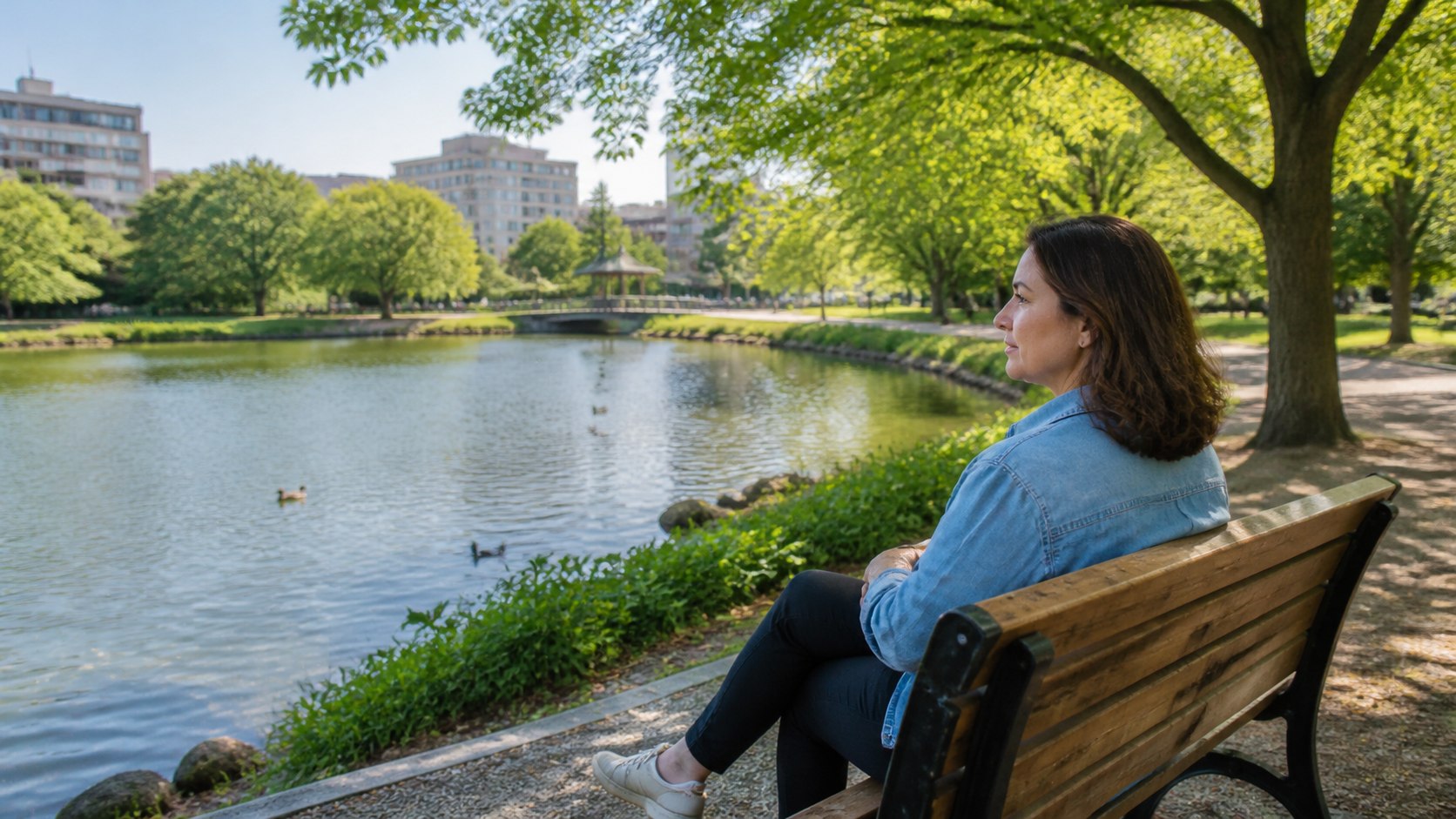
Nature exposure includes seeing, visiting, or being active in environments with vegetation, water, wildlife, or other natural features. It can be as simple as sitting under trees during lunch or walking through a local park. Mental well-being refers to more than the absence of illness: it includes emotional balance, life satisfaction, positive mood, resilience, and the ability to manage normal stress.
Systematic reviews generally report beneficial associations between nature exposure and mental health outcomes. However, much of the evidence is observational, so it cannot prove that greenery alone causes the improvement. People with easier access to parks may also differ in income, neighborhood conditions, physical activity, air quality, or social connection.
How Nature and Mental Well-Being Are Connected
Psychological restoration
Busy streets, notifications, and sustained concentration can leave attention feeling depleted. Natural scenes may engage attention more gently, creating room for mental recovery. This restorative effect may explain why some people feel calmer or clearer after time outdoors. Pairing outdoor breaks with healthier technology boundaries can also support a broader digital wellness routine.
Stress reduction
Nature-based activities have been associated with improvements in stress, anxiety, depressive mood, and positive affect in reviews of controlled and uncontrolled studies. Effects are not identical for everyone, and study quality varies, but the overall pattern supports nature as a useful component of a broader well-being plan.
Movement and sleep
Green spaces can make walking, cycling, gardening, and other movement more appealing. Regular physical activity independently supports mood and sleep. Outdoor light exposure, particularly earlier in the day, may also help reinforce the body’s sleep-wake rhythm. These overlapping behaviors make it difficult to isolate a single “nature effect,” yet they are practical benefits rather than drawbacks.
Social connection
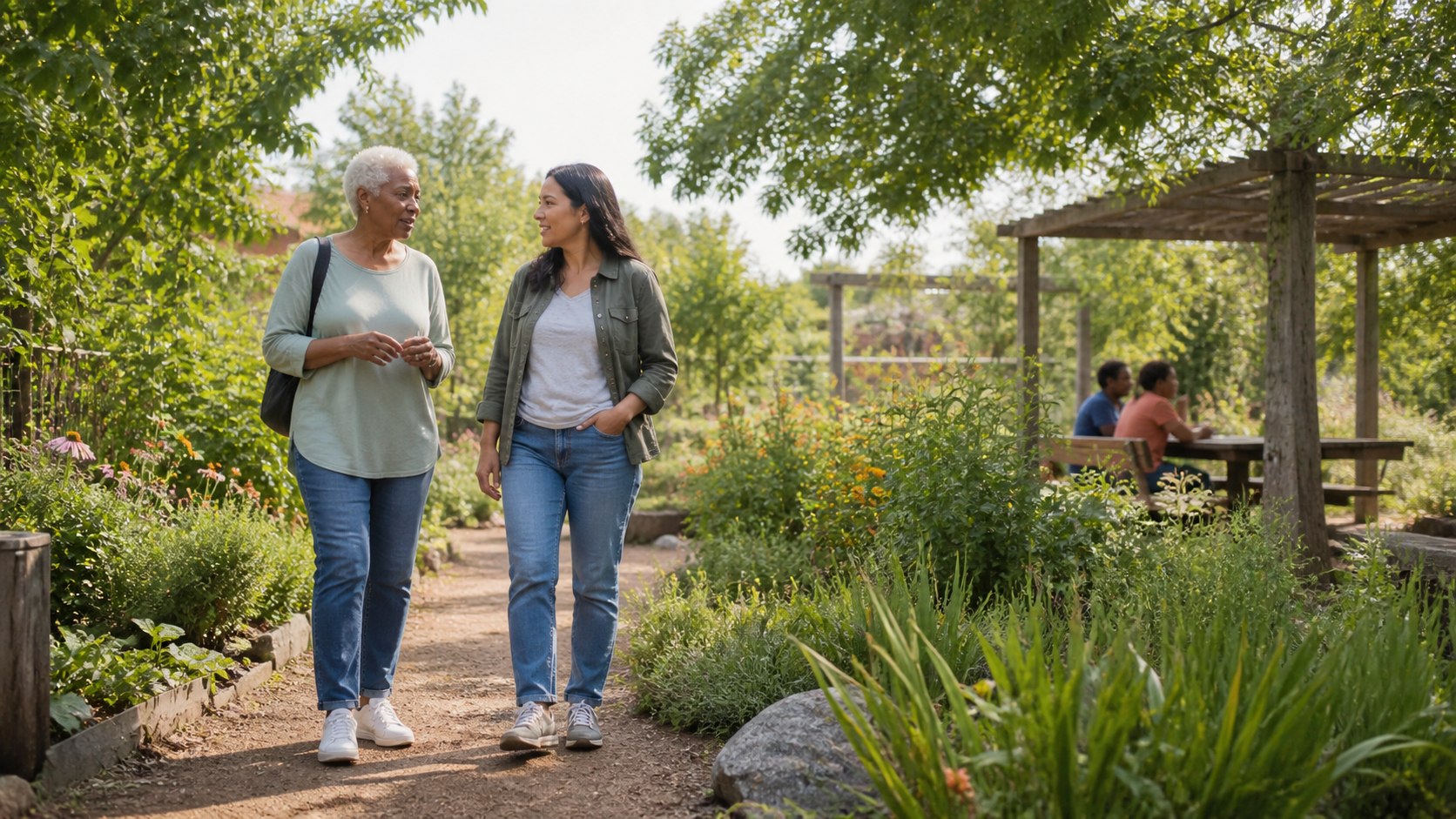
Parks, community gardens, and walking trails can create opportunities for low-pressure social contact. A shared walk may combine nature exposure, movement, and supportive conversation. Still, evidence about social cohesion as a pathway is mixed, and people who need solitude may benefit from quiet outdoor time instead.
Nature and Mental Well-Being in Green and Blue Spaces
| Type of setting | Simple examples | Ways to engage |
|---|---|---|
| Green space | Parks, woods, gardens, tree-lined streets | Walk, sit, garden, observe birds |
| Blue space | Lakes, rivers, coastlines, fountains | Walk nearby, listen to water, paddle safely |
| Everyday nature | Balcony plants, a courtyard, views of trees | Take a screen break, eat lunch outside |
| Structured activity | Guided walks, conservation groups, horticultural programs | Join a scheduled, supportive session |
No single setting is proven best for everyone. Accessibility, personal preference, safety, weather, mobility, and cultural comfort matter. A nearby place you can visit consistently is often more useful than an idealized destination you rarely reach.
How Much Time in Nature Is Enough?
There is no universally established prescription. Studies use different settings, activities, frequencies, and durations. One systematic review of structured nature-based interventions found benefits across programs and reported promising sessions ranging from roughly 20 to 90 minutes, often delivered over several weeks. That does not mean everyone needs the same “dose.”
Start with a manageable target, such as 10 to 20 minutes outdoors several times per week. Notice your mood, energy, and stress before and afterward. If the habit feels helpful, gradually increase the time or frequency. Consistency and enjoyment are more important than chasing a perfect number.
Nature and Mental Well-Being: A Practical Routine
- Choose the easiest location. Identify a safe park, shaded street, garden, or waterside path close to home or work.
- Attach it to an existing habit. Add a short outdoor walk after breakfast, lunch, or the end of your workday.
- Engage your senses. Briefly notice colors, sounds, air temperature, plant textures, and movement around you.
- Reduce digital interruption. Keep your phone available for safety, but silence nonessential alerts.
- Add movement if appropriate. Walk at a comfortable pace, stretch, or garden according to your ability.
- Invite someone when useful. A friend or family member can improve motivation and safety.
Indoor Options When Outdoor Access Is Limited
Disability, unsafe neighborhoods, severe weather, allergies, caregiving duties, and work schedules can limit access. Indoor plants, views of greenery, nature sounds, or nature videos may feel pleasant and restorative, but evidence is less consistent than for direct outdoor exposure. Treat these as flexible additions, not requirements.
Public libraries with gardens, indoor botanical spaces, accessible trails, community transport, and seated outdoor areas may expand options. People with limited mobility can focus on sensory contact—fresh air, daylight, birdsong, or a view of trees—without needing strenuous exercise.
Safety and Mental Health Considerations
Plan for heat, cold, sun exposure, hydration, insects, uneven surfaces, local wildlife, and air quality. Follow posted guidance and choose well-lit routes. If you have mobility, heart, lung, or allergy concerns, adapt activity to your needs and ask a healthcare professional when appropriate.
Nature can support well-being, but it does not replace therapy, medication, crisis care, or medical evaluation. Persistent sadness, anxiety, loss of interest, sleep disruption, or difficulty functioning deserves professional attention. If you may harm yourself or someone else, contact local emergency services or an appropriate crisis service immediately.
Frequently Asked Questions
Can spending time in nature cure depression or anxiety?
No. Nature exposure may support mood and reduce stress for some people, but it is not a cure or a replacement for evidence-based treatment.
Does a city park count as nature exposure?
Yes. Research includes urban parks, gardens, tree-lined areas, forests, and waterside environments. Convenient local green space can be valuable.
Is walking necessary to benefit?
No. Sitting, gardening, observing wildlife, or spending quiet time outdoors may also be meaningful. Walking adds the separate benefits of physical activity.
Should I leave my phone at home?
Not necessarily. Keep it for navigation and safety if needed, but consider muting avoidable notifications so you can pay attention to the environment.
What if nature makes me uncomfortable?
Start with familiar, maintained spaces and short visits. Choose company, daylight, and environments that feel safe. Nature-based routines should be adapted to you, not forced.
The Bottom Line
Nature and mental well-being can reinforce each other through restoration, movement, daylight, and social connection. The evidence is encouraging but not absolute, and benefits differ between people. Begin with an accessible setting and a small repeatable habit, then keep what genuinely helps. Pair nature time with sleep, movement, supportive relationships, and professional care when needed.
Sources
- World Health Organization: Green and Blue Spaces and Mental Health
- Nature-Based Outdoor Activities for Mental and Physical Health: Systematic Review and Meta-Analysis
- How Does Nature Exposure Affect Adults With Symptoms of Mental Illness? A Meta-Analysis
- Pathways Linking Greenspace Exposure and Mental Health: Systematic Review
- Life Course Nature Exposure and Mental Health Outcomes: Systematic Review
- U.S. EPA: Social Benefits of Green Infrastructure
Health note: This article is for general education and is not a diagnosis or treatment plan. Consult a qualified healthcare professional for personal mental health advice.
