
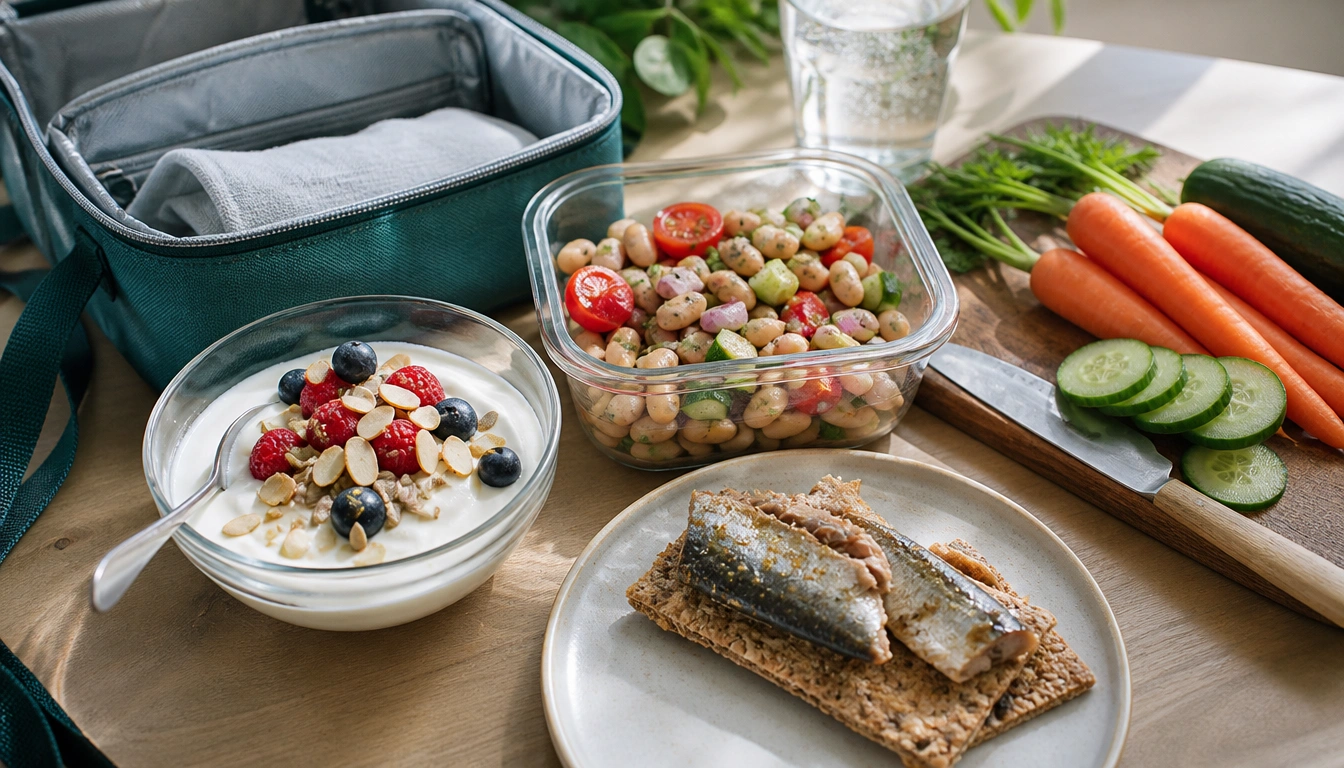
You can eat a healthy, cheap, no-cook lunch by building it from budget staples such as beans, lentils, tinned fish, whole grains, yogurt or cottage cheese, and seasonal or frozen produce. These foods give you protein, fiber, and staying power without cooking. The most reliable approach is to combine a carbohydrate, a protein, and produce, then keep perishable items cold until you eat.
Key Takeaways
- Beans, lentils, tinned fish, whole grains, and plain dairy are some of the cheapest ingredients that still give you protein, fiber, and useful nutrients.
- High-fiber no-cook lunches tend to be more filling than refined convenience foods and may help slow post-meal blood sugar rises.
- Canned foods can be budget-friendly, but rinsing beans and choosing low-sodium or no-salt-added versions can cut sodium.
- Cold lunches need food safety planning: use an insulated bag or ice pack for dairy, fish, and cut produce if you will not refrigerate them.
- Children, teens, and highly active adults may need larger portions, extra whole grains, or more energy-dense add-ins than a standard budget lunch.
Why no-cook lunches can still be healthy and filling
A no-cook lunch does not have to mean crackers and a snack bar. If you choose foods with fiber, protein, and some healthy fat, you can make a meal that supports steady energy and feels like real lunch rather than a stopgap. That is one reason budget-friendly staples work so well: they are simple, shelf-stable, and naturally balanced when you combine them well.
Public health guidance from the CDC and the NHS supports meal patterns built around vegetables, fruits, whole grains, and lean protein. For shoppers trying to spend less, that points toward basic foods rather than specialty products. Beans, lentils, oats, whole-grain bread, tinned fish, yogurt, and seasonal produce often give better value per serving than heavily packaged convenience meals.
No-cook meals can also be more satisfying than many ultra-processed ready-to-eat options. A lunch made from beans and whole grains is richer in fiber than refined bread, chips, or pastries, which helps slow digestion and can blunt faster rises in blood glucose after eating. That does not make any food magic, but it does explain why simple assembly meals often keep people fuller longer.
The best low-cost building blocks for no-cook lunches
Start with foods that do more than one job. Beans and lentils bring protein, fiber, and bulk. Tinned fish such as tuna, sardines, mackerel, or salmon bring protein and useful fats, and some canned fish is also a source of calcium if the bones are eaten. Whole grains such as wholemeal wraps, rye crispbread, whole-grain bread, or oatcakes add staying power.
Plain yogurt and cottage cheese are practical if you have access to refrigeration or a cold bag. They can work as a base, a dip, or a protein-rich topping. For produce, choose what is affordable and likely to keep: carrots, apples, bananas, cucumbers, cherry tomatoes, cabbage, seasonal fruit, or frozen produce that has been thawed and drained. Frozen and canned items are especially helpful when fresh produce spoils too quickly.
These foods are useful because they are flexible. Chickpeas can become a salad, a wrap filling, or a mash. Tuna can sit on crispbread, mix with yogurt and mustard, or top a grain bowl. Yogurt can replace a richer spread in a wrap or become a quick lunch bowl with fruit and seeds.
How to build a balanced no-cook lunch on a budget
A simple formula works better than chasing recipes: choose one carbohydrate, one protein, one produce item, and one small source of healthy fat. That might look like wholemeal bread plus tuna, sliced cucumber, and a little olive oil. Or it might be chickpeas, whole-grain crackers, tomatoes, and a spoonful of hummus.
This structure helps in two ways. First, it makes lunch more filling, because protein and fiber tend to slow how quickly you get hungry again. Second, it makes budget shopping easier because each part can be swapped based on price. If fish is expensive that week, use beans or lentils. If fresh vegetables are pricey, use carrots, cabbage, canned corn, or frozen veg that you thaw at home.
For diabetes-friendly lunches, the same structure is useful. Pairing beans or lentils with whole grains and vegetables is generally a better choice than building lunch from refined white bread, sweet snacks, or juice. Some people also find that a little protein or fat at the same meal makes portions feel more satisfying, but individual glucose responses vary, so routine personal monitoring is still important.
Four easy no-cook lunch ideas that stay affordable
Tinned fish and wholegrain crispbread plate: Arrange tuna, sardines, or salmon with rye crispbread or oatcakes and a side of tomatoes, cucumber, or carrots. If you like, add mustard, black pepper, or a squeeze of lemon. This is fast, portable, and easy to scale up for bigger appetites by adding extra crispbread or fruit.
Mediterranean bean and veggie jar: Rinse a can of chickpeas or mixed beans, then mix with chopped cucumber, tomatoes, peppers, or corn. Add a little vinaigrette, hummus, or plain yogurt-based dressing. A jar or container is useful because it keeps the ingredients from getting soggy until lunchtime.
Loaded wrap or pita: Fill a wholemeal wrap with lentils or smashed chickpeas, salad greens, grated carrot, and a light spread such as hummus or mustard. This is one of the easiest ways to turn inexpensive staples into something more substantial. If you need more energy, add avocado, cheese, or an extra wrap.
Yogurt or cottage cheese bowl: Use plain yogurt or cottage cheese as the base, then add fruit, seeds, or a small handful of oats. For a less sweet version, pair it with sliced cucumber, tomato, and whole-grain crackers. This format works well when you want something cold, quick, and high in protein.
Money-saving shopping and prep strategies
Store brands are often the easiest place to save money without sacrificing nutrition. Compare the shelf price per serving rather than the front-of-pack label. Large cans of beans, lentils, and fish can also cost less per portion than small single-serve packs. If you have room to store them, bulk purchases usually reduce the cost over time.
Seasonal produce is usually cheaper and better tasting, and frozen produce can be just as practical when fresh options are expensive or spoil too quickly. Carrots, cabbage, apples, bananas, and cucumbers are often lower-cost fresh choices. Frozen peas, corn, or mixed vegetables can be thawed overnight and packed cold the next day.
Leftovers can become no-cook lunches with very little effort. Extra cooked grains can be used cold in a salad the next day. Leftover roasted vegetables can go into a wrap. Extra chicken, tofu, or beans from dinner can become the protein in tomorrow’s lunch. The trick is to plan for a second meal while you cook the first one, so the cold lunch feels intentional rather than repetitive.
Food safety for cold lunches
Cold lunches are convenient, but they still need safe storage. Perishable foods such as dairy, fish, egg-based fillings, or cut vegetables should be kept chilled until you eat them. If you do not have a refrigerator, use an insulated lunch bag with an ice pack. That matters more in warm weather or if lunch will sit in a bag for several hours.
As a general rule, perishable food should not sit out for long at room temperature. Public health advice commonly uses a window of about four hours as a rough outer limit when food is kept cool; in warmer conditions, the safe window is shorter. If you are not sure how long something has been warm, it is safer not to eat it.
Pack cold items in a way that helps them stay cold: keep the lunch bag closed, place the ice pack close to the perishable item, and use sturdy containers that do not leak. If you are packing lunch in the morning for later in the day, pre-chill the food when possible. That small step can make a big difference in safety and quality.
Adaptations for sodium, diabetes, allergies, and bigger appetites
Canned foods are useful budget staples, but sodium can add up quickly. Rinsing canned beans and vegetables under water can reduce some of the salt, and choosing low-sodium or no-salt-added versions is helpful when they fit the budget. For tinned fish, compare labels and choose simpler options when possible, then add flavor with lemon, pepper, herbs, or vinegar instead of extra salt.
For people managing diabetes, a no-cook lunch is usually more blood-sugar friendly when it centers on beans, lentils, whole grains, vegetables, and protein rather than refined bread, sweets, or snack foods. A tuna-and-bean salad, a lentil wrap on wholemeal bread, or yogurt with oats and seeds can be more balanced than a pastry or white-bread sandwich with sugary sides. Personal response still varies, so meal planning should fit individual treatment advice.
Allergy and intolerance needs matter too. People with celiac disease need certified gluten-free bread, wraps, or crispbread. Those avoiding fish can use beans, lentils, tofu, yogurt, or cottage cheese if dairy is tolerated. If legumes are not tolerated, eggs, dairy, or other ready-to-eat proteins may be better options, depending on personal dietary needs.
Children, teenagers, and very active adults often need more energy than a standard budget lunch provides. Add another slice of bread, a second wrap, extra fruit, a larger scoop of beans, or a higher-calorie spread such as hummus, avocado, or nut butter. The goal is not to make the lunch expensive; it is to make sure the portion matches the person eating it.
Best budget no-cook protein sources and how to use them
| Protein source | Why it helps | Easy lunch uses |
|---|---|---|
| Beans and lentils | Cheap, filling, high in fiber, easy to store | Salads, wraps, crispbread toppings, jar lunches |
| Tinned fish | High protein, convenient, often shelf-stable for long storage | Plate lunches, sandwiches, grain bowls, salads |
| Plain yogurt | Fast protein option with a mild flavor | Bowls, dips, sandwich spread, savory dressings |
| Cottage cheese | Protein-rich and easy to pair with produce | Fruit bowls, crackers, tomato plates, wraps |
| Hummus | Plant-based spread that adds creaminess and flavor | Wraps, veggie plates, sandwiches, snack-style lunches |
This kind of list is useful because it turns shopping into a short decision instead of a daily puzzle. If one protein is on sale, build several lunches around it. If you already have beans, you only need a grain, some produce, and a spread or seasoning to finish the meal.
Frequently Asked Questions
What are the cheapest healthy ingredients for no-cook lunches?
Beans, lentils, oats, whole-grain bread or wraps, tinned fish, plain yogurt, cottage cheese, carrots, cabbage, apples, and seasonal or frozen vegetables are usually among the best low-cost options. They stretch well, store reasonably, and can be combined in many ways.
How do I build a balanced no-cook lunch on a tight budget?
Use a simple mix of carbohydrate, protein, produce, and a little healthy fat. For example, whole-grain bread plus beans, cucumber, and hummus. This makes the meal more filling than a refined snack-style lunch and is easier to adapt to sales and leftovers.
How can I keep cold lunches safe without reheating them?
Keep perishables chilled in a refrigerator until you leave, then use an insulated lunch bag with an ice pack if the food will not stay refrigerated. Dairy, fish, and cut produce should not sit warm for long. If food has been left out too long, it is safer to discard it.
Are canned beans, tuna, and yogurt good budget lunch staples?
Yes. They are practical, widely available, and easy to assemble into balanced lunches. Beans and tuna are especially useful for protein, while plain yogurt can work as a base, dressing, or snack-style bowl. Choosing lower-sodium versions when possible is a smart extra step.
How can people with diabetes make no-cook lunches more blood-sugar friendly?
Focus on beans, lentils, whole grains, vegetables, and protein instead of refined breads, sweets, or snack foods. Pairing carbohydrate foods with protein and fiber tends to be more balanced. People who use insulin or other glucose-lowering medication should personalize meals with their care team.
The Bottom Line
Healthy no-cook lunches can be affordable when you build them from basic foods rather than convenience items. Beans, lentils, tinned fish, yogurt, whole grains, and seasonal or frozen produce can cover the main food groups without a stove or microwave.
If you want the easiest pattern to remember, use this: carbohydrate + protein + produce + a little healthy fat. Then adjust for sodium needs, food allergies, diabetes goals, and the person eating the meal. That approach works for students, workers, families, and anyone trying to eat well on a tighter budget.
The most important practical step is food safety. Keep perishables cold, use an insulated bag or ice pack when needed, and plan portions for children, teens, or active adults who need more energy than a small lunch.
Medical disclaimer
Medical disclaimer: This content is for educational and informational purposes only and is not a substitute for professional medical advice, diagnosis, or treatment. Dietary needs and supplement suitability vary by individual.
Sources
- Centers for Disease Control and Prevention (CDC) — cdc.gov. Accessed October 2026.
- National Health Service (NHS) — www.nhs.uk. Accessed October 2026.
- Academic Research Institution — harvard.edu. Accessed October 2026.
- Academic / Medical Research Institution — heart.org. Accessed October 2026.
