
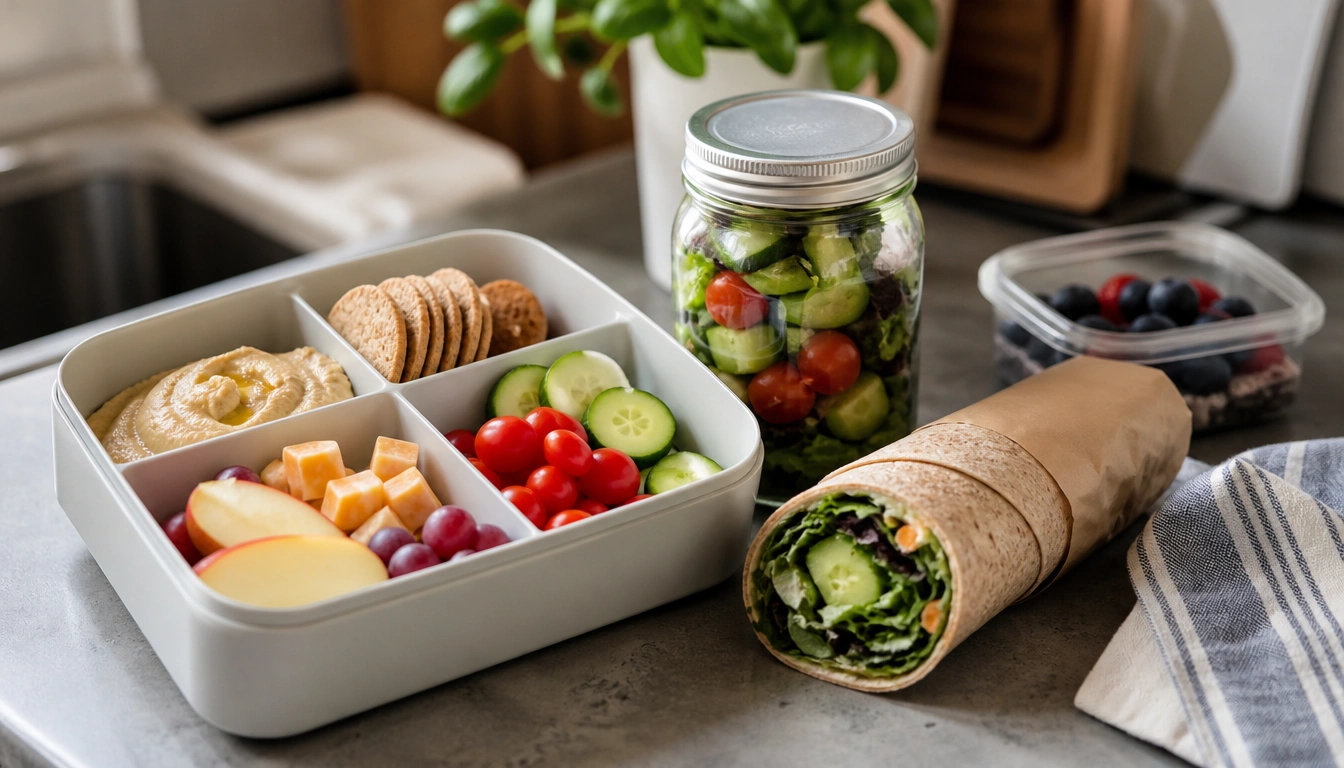
For a healthy, filling no-cook lunch, build around protein, fiber, produce, and a little healthy fat. Good options include tuna or bean salad, hummus with whole-grain pita and vegetables, Greek yogurt with fruit and seeds, nut-butter wraps, and bento-style snack boxes. With a stocked pantry and fridge, many of these can be packed in under five minutes and kept safe with refrigeration or an ice pack.
Key Takeaways
- Protein plus fiber is the most useful lunch formula for staying full and avoiding the midday crash.
- A small set of pantry, fridge, and freezer staples can turn lunch into a five-minute assembly job.
- Portable formats such as bento boxes, mason jars, wraps, and snack plates work well for both adults and kids.
- Perishable no-cook lunches need refrigeration or an ice pack; room-temperature time should be limited.
- Vegetarian, gluten-free, and allergy-aware swaps are easy when you rely on beans, seeds, certified gluten-free grains, and plant-based spreads.
Why no-cook lunches help busy parents
No-cook lunch ideas for busy parents solve a very ordinary problem: midday meals often fall apart when time, energy, and kitchen access are limited. Skipping lunch or grabbing random snacks can leave you under-fueled, which makes the afternoon feel longer and less steady.
The goal is not a perfect meal. The goal is a lunch that is easy to assemble, portable, and nutritionally solid enough to keep you satisfied. Public health guidance from the CDC and NHS encourages meals built from whole or minimally processed foods because they tend to be more filling and less dependent on added sugar, excess sodium, or heavy processing.
For parents, there is a second benefit: one flexible system can serve adults and children differently without doubling the work. A child might eat the same foods in a DIY lunch box with more dips and smaller portions, while an adult might want a desk-friendly jar or wrap that can be eaten quickly between tasks.
How to build a balanced no-cook lunch
A simple structure works better than improvising every day. Start with protein, add fiber, include produce, and finish with a little healthy fat. That mix is practical because it slows digestion, supports steadier energy, and makes lunch feel substantial without cooking.
Think of protein as the anchor. Good no-cook options include tuna, salmon, canned beans, chickpeas, lentils, Greek yogurt, cottage cheese, tofu, sliced poultry, hard cheese, seeds, and nut or seed butter. Fiber can come from whole-grain wraps, seeded crackers, rye crispbread, oats, beans, fruit, vegetables, or pre-cooked grains such as chilled brown rice or quinoa.
Produce adds volume and freshness. Cherry tomatoes, cucumbers, baby carrots, bell peppers, greens, apples, berries, oranges, and snap peas all travel well. Healthy fats can come from avocado, hummus, olive-oil dressing, nuts, seeds, or a plant-based spread. The combination does not have to be elaborate; it just needs enough variety to feel like a real meal.
A useful pantry and fridge setup makes this structure realistic. Keep a few shelf-stable proteins and grains, a few chilled vegetables and dips, and one or two freezer backups such as wraps or bread. That way, lunch becomes assembly instead of decision-making.
Portable formats that work for work and school
The container matters almost as much as the ingredients. Adults usually need lunches that are neat, compact, and easy to eat at a desk. Children often do better with food separated into small compartments because that makes lunch more appealing and less overwhelming.
Bento boxes are useful for both groups because they keep ingredients distinct. They are especially good for picky eaters who like choices. Mason jars work well for layered salads or grain bowls when you want dressing and wetter ingredients kept away from greens until eating time. Wraps are the easiest grab-and-go option, especially if they are tightly rolled and cut in half for children. Snack plates or compartment containers are ideal when lunch is more of a mix-and-match meal than a sandwich.
If you are packing for a school day, think in terms of interaction. A lunch child can open, dip, and choose is often better received than a fixed sandwich that comes back untouched. For adults, the best format is the one that survives commuting, fits in a lunch bag, and does not require reheating.
One practical tip: keep wetter items, like tomatoes, pickles, dressings, and yogurt, separated until eating time whenever possible. That protects texture and helps the meal stay appetizing.
Mix-and-match no-cook lunch ideas
These ideas are meant to be templates, not rules. Swap ingredients based on what you already keep on hand.
Mediterranean-style box: whole-grain pita or seeded crackers, hummus, cucumber, bell pepper, olives, cherry tomatoes, and feta or a hard-boiled egg if you want more protein. It is easy to pack, easy to eat, and flexible for both adults and children.
Tuna or bean salad jar: mix drained tuna or rinsed beans with a little olive oil, lemon, herbs, and chopped vegetables. Put the dressing and heavier ingredients at the bottom, then layer in greens or grains. This works especially well with chickpeas, white beans, or lentils if you want a vegetarian version.
Nut-butter fruit wrap: spread peanut, almond, sunflower, or soy butter on a whole-grain wrap, then add banana slices or thin apple slices. For a child version, cut it into pinwheels and pair it with fruit or yogurt on the side.
Yogurt-based lunch: plain Greek yogurt can be turned savory with cucumber, herbs, and a drizzle of olive oil, or sweet with berries and seeds. Add whole-grain crackers or fruit for more staying power.
Grain-and-protein bowl: use chilled quinoa, brown rice, farro, or another pre-cooked grain topped with beans, chopped vegetables, cheese, and a simple dressing. This is a strong option when you need a more substantial lunch but still want to skip cooking.
If you want variety without extra effort, rotate just one item in each category: one protein, one fiber source, one produce item, and one fat source. That gives you a new lunch without buying a whole new set of groceries.
How to keep no-cook lunches safe and appetizing
Food safety matters more with no-cook lunches because many ingredients are perishable. According to the NHS and CDC, chilled foods should be kept cold until eaten, and perishable items should not sit at room temperature for long. A lunch bag with an ice pack or access to a refrigerator is the safest default.
A practical rule is to treat four hours at room temperature as the outer limit for many perishable foods, and less time if the weather is hot. If a lunch contains yogurt, mayonnaise-based salads, cheese, cooked poultry, tuna, or cut fruit and vegetables, keep it cold until mealtime. If you are not sure the food stayed chilled, be conservative and do not risk it.
Layering helps with texture. Put dressing at the bottom of a jar, then sturdy vegetables or grains, then greens on top. For wraps, place drier ingredients against the tortilla and wetter ingredients in the center. For snack boxes, separate juicy produce from crackers so everything does not turn soggy.
With canned foods, check the can for dents, bulges, or damage before opening. Rinse beans if you want to reduce sodium, and drain canned fish well so the lunch does not become watery. Good food safety does not need to be complicated; it just needs to be consistent.
Customizing lunches for children, vegetarian diets, gluten-free needs, and allergies
Child-friendly lunches usually work best when children recognize the ingredients and can dip, assemble, or choose between a few options. That can improve compliance more than serving a single packed sandwich. Small portions of familiar foods often work better than trying to create a miniature adult meal.
For vegetarian lunches, beans, lentils, chickpeas, hummus, edamame, tofu, yogurt, cheese, seeds, and nut or seed butter are all useful protein sources. Pair them with whole grains and vegetables so the meal still feels complete. If you rely heavily on plant foods, a little extra attention to protein and fiber together tends to help with fullness.
For gluten-free lunches, choose certified gluten-free wraps, rice cakes, corn tortillas, oats that are certified gluten-free, quinoa, rice, and potatoes that have already been cooked and chilled. Always check labels on crackers, dressings, and spreads because gluten can show up in less obvious places.
For allergy-aware households, sunflower seed butter can replace peanut or tree-nut spreads, and hummus or bean dips can replace dairy-based fillings. When packing lunches for school, follow the school’s allergy rules closely and avoid cross-contact by using clean utensils and dedicated containers if needed.
Common no-cook lunch mistakes busy parents make
One common mistake is building a lunch from only snacks. Crackers, fruit, and a granola bar may feel convenient, but without enough protein and fiber, the meal often disappears fast and hunger returns sooner. The better approach is to make every lunch a little more balanced, even if it is still simple.
Another mistake is relying too heavily on ultra-processed convenience foods. They save time, but they can be less satisfying and easier to overeat. Public health guidance from the CDC and NHS favors a pattern built more often from whole foods, beans, produce, and grains. That does not mean convenience foods are forbidden; it means they should not be the whole plan.
Poor storage is another avoidable issue. A lunch that tastes good at home can become unappealing if it sits warm, leaks, or gets soggy. Packing sauces separately, using insulated bags, and choosing sturdy ingredients solves many of those problems.
Finally, many parents forget to make lunch repeatable. If every day requires a new recipe, the plan will not last. A better system uses a few reliable combinations and rotates them.
A simple weekly no-cook lunch prep routine
Spend a few minutes once or twice a week setting yourself up for faster lunches. This is not full meal prep; it is lunch infrastructure.
Start with a short shopping list: one or two proteins, one or two grains or bread options, a few vegetables, a fruit or two, and one or two spreads or dips. Then prep only what makes weekday assembly faster. Wash produce, portion dips into small containers, rinse beans, and move freezer bread or wraps to the fridge if needed.
A good routine also includes a backup plan. Keep one emergency lunch kit in the pantry or office drawer with shelf-stable items such as tuna, crackers, nuts or seeds, and a fruit cup or pouch. That way, an overscheduled morning does not automatically become a fast-food lunch.
On the night before a busy day, choose the container first, then fill it with one protein, one fiber source, one produce item, and one fat source. That simple pattern reduces decision fatigue and makes no-cook lunches realistic even during the busiest weeks.
Frequently Asked Questions
What are the best no-cook lunch combinations that stay satisfying for hours?
The most satisfying combinations usually pair protein and fiber, such as tuna with whole-grain crackers and vegetables, bean salad with quinoa, or Greek yogurt with fruit and seeds. Adding a little healthy fat, like hummus, avocado, or nuts, can help the meal feel more complete.
How can I make a no-cook lunch more balanced with protein, fiber, and healthy fats?
Use a simple template: one protein, one fiber-rich carb, one fruit or vegetable, and one healthy fat. For example, hummus on a whole-grain wrap with cucumber and peppers gives you all four parts without much effort.
What are easy no-cook lunch ideas for kids versus adults?
Kids often do better with smaller portions, dips, and separated foods, such as a bento box with crackers, cheese, fruit, and vegetables. Adults usually prefer something neater and faster to eat, like a jar salad, wrap, or grain bowl.
How do I keep no-cook lunches safe without a microwave or stove?
Keep perishable foods cold with a refrigerator or insulated lunch bag and ice pack. As a general safety habit, avoid letting foods with dairy, meat, fish, or cut produce sit out for long periods, especially in warm weather.
What pantry and fridge staples make no-cook lunches easier to assemble?
Helpful staples include canned beans, tuna or salmon, whole-grain crackers or wraps, nut or seed butter, hummus, yogurt, cheese, baby carrots, cucumbers, cherry tomatoes, and frozen bread or wraps. Those basics make fast lunch assembly much easier.
The Bottom Line
Healthy no-cook lunches do not need to be fancy. The most useful pattern is still simple: protein, fiber, produce, and a little healthy fat. That combination is what helps a lunch feel filling enough to carry you through a busy afternoon.
If you keep a small stock of reliable pantry, fridge, and freezer staples, lunch becomes a five-minute assembly task instead of a daily problem. For parents, that kind of repeatable system is often more useful than a long list of recipes.
For the best results, match the format to the person and the place: bento boxes for kids, wraps or jars for workdays, and chilled storage for anything perishable. A little planning goes a long way when time is tight.
Medical disclaimer
Medical disclaimer: This content is for educational and informational purposes only and is not a substitute for professional medical advice, diagnosis, or treatment. Dietary needs and supplement suitability vary by individual.
Sources
- Centers for Disease Control and Prevention (CDC) — cdc.gov. Accessed October 2026.
- National Health Service (NHS) — elht.nhs.uk. Accessed October 2026.
- National Health Service (NHS) — www.nhs.uk. Accessed October 2026.
- Academic Research Institution — wustl.edu. Accessed October 2026.
