
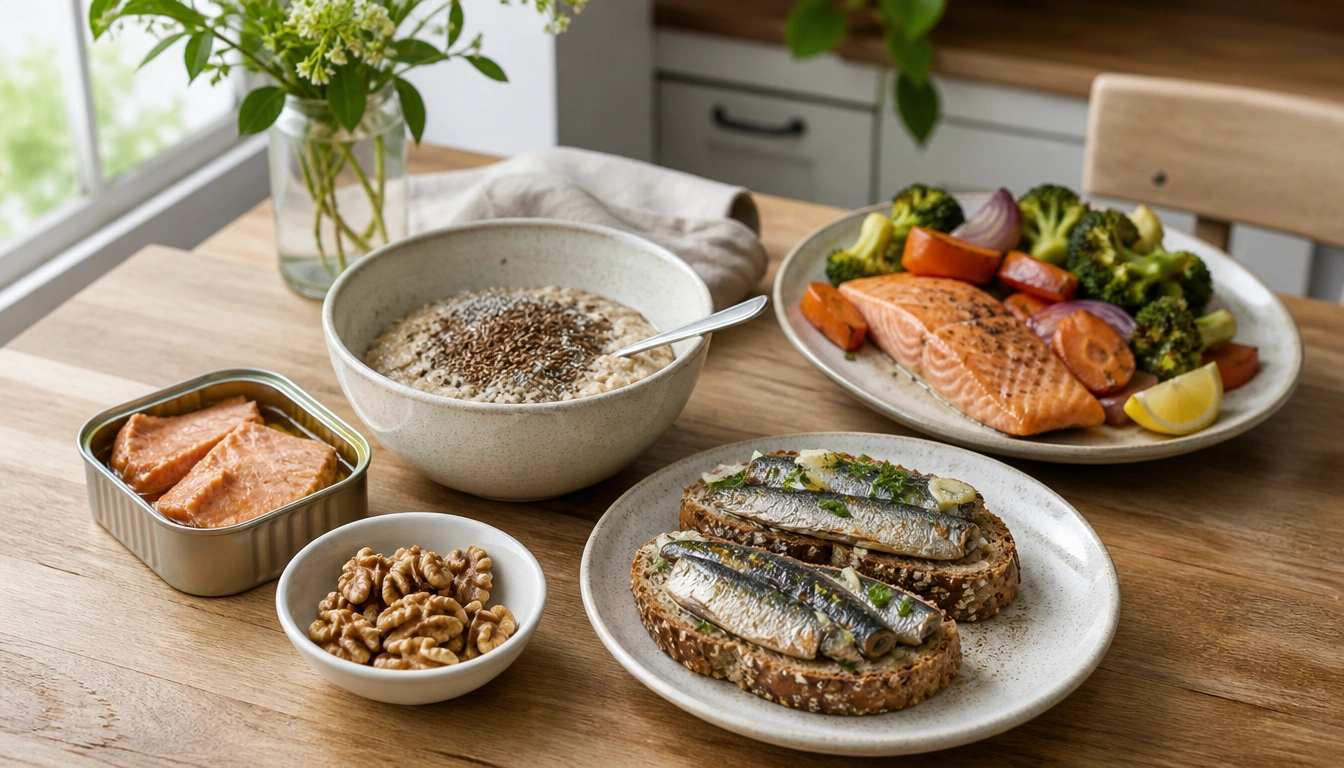
The best omega-3 foods after 50 are fatty fish and seafood such as salmon, sardines, trout, herring, and canned light tuna, because they provide EPA and DHA, the omega-3s most directly tied to heart, brain, and eye health. If you do not eat fish, chia, ground flax, walnuts, and certain oils can help with ALA, but plant omega-3s convert inefficiently to EPA and DHA, so they are not a full substitute for seafood for many people.
Key Takeaways
- EPA and DHA are the main omega-3s linked to heart, brain, and eye benefits; ALA is the plant omega-3 and is only partly converted to EPA and DHA.
- Adults over 50 can often meet general omega-3 goals with food alone by aiming for seafood about twice a week and using plant sources in between.
- Smaller fatty fish and canned seafood are often practical, affordable, and lower in mercury than large predatory fish.
- For fish-free eating, ground flax, chia, walnuts, and canola or soybean oil can raise ALA intake, but they do not fully replace marine omega-3s.
- If you have cardiovascular disease, severe high triglycerides, or an inflammatory condition, food choices may help but may not be enough without clinician-guided treatment.
Omega-3 basics for adults over 50
Omega-3 fatty acids come in three main forms, and they are not interchangeable. EPA and DHA are the long-chain omega-3s found mainly in seafood and algae. ALA is the plant form found in flax, chia, walnuts, and certain oils. For older adults, this difference matters because EPA and DHA are the forms the body uses most directly for heart, brain, and eye tissues.
DHA is especially concentrated in the brain and retina, while EPA is more closely involved in inflammation-related pathways. ALA is still useful and should not be ignored, but the body converts only a small amount of it into EPA and DHA. That means plant foods can improve your overall fat quality, yet they usually cannot supply the same marine omega-3 status as seafood.
The National Institutes of Health lists adequate intake values for ALA, not EPA and DHA, which is one reason food guidance often emphasizes seafood patterns rather than a single universal daily target for marine omega-3s. In plain language, the goal is steady intake from real foods, not perfection at every meal.
Why omega-3 matters more with age: heart, brain, inflammation, and eye health
As people age, omega-3s become more relevant because the body is more likely to face cardiovascular strain, low-grade chronic inflammation, and changes in cognition and vision. According to the American Heart Association, seafood patterns that include omega-3-rich fish fit well with heart-healthy eating patterns. EPA and DHA can help support healthy triglyceride levels and blood vessel function, and they may also support a healthier inflammatory response.
DHA deserves special attention for adults over 50 because it is structurally important in neural and retinal tissue. That does not mean omega-3 foods prevent every age-related change, but it does mean seafood and other omega-3-rich foods are a smart part of a healthy aging pattern.
Best food sources by type:
- EPA and DHA: salmon, sardines, mackerel, trout, herring, tuna, and other oily fish.
- ALA: ground flaxseed, chia seeds, walnuts, canola oil, soybean oil, and flaxseed oil.
- Mixed approach: seafood for direct EPA and DHA, plus plant foods to improve overall intake across the week.
Fatty fish and seafood you can actually use
If you want the biggest omega-3 return for your effort, start with fatty fish. Salmon is one of the most practical choices because it is widely available fresh or canned, mild enough for many people, and easy to use in simple meals. Sardines and mackerel are also strong options because they are small, naturally oily fish that usually provide substantial EPA and DHA in a compact serving.
Trout and herring are useful if you want something a little different from salmon. They tend to be mild to medium in flavor and fit well into simple baked dinners. Canned light tuna is convenient for lunches, though it is not as omega-3 dense as salmon or sardines. Still, it can help you keep seafood in rotation when time is short.
Low-prep ideas that work well for older adults include canned salmon mixed with plain yogurt or olive oil for a salad or sandwich filling, sardines on whole-grain toast with lemon, tuna mixed into a bean-and-vegetable bowl, and a simple baked fish fillet with frozen vegetables. These meals are realistic, affordable, and easy to repeat.
For people who do not like strong fish flavor, try fish in smaller portions, use citrus or herbs, or choose milder options like trout. Canned fish is often a good bridge because it is already cooked, keeps well, and reduces waste.
Plant-based omega-3 foods for non-fish eaters
If you avoid fish, plant foods can still play an important role. Ground flaxseed is one of the richest ALA sources and is easier for the body to use when ground rather than whole. Chia seeds are another simple option that can be stirred into oatmeal, yogurt, or smoothies. Walnuts are convenient as a snack or salad topping.
For cooking and dressings, canola oil and soybean oil contribute ALA, while flaxseed oil is a more concentrated option for cold uses such as salad dressing. Because flaxseed oil is delicate, it is usually better used without heat. Whole-food plant sources are useful, but remember that ALA conversion to EPA and DHA is limited, so a fish-free pattern can still be healthy while being less direct for marine omega-3 status.
A practical fish-free day might include oatmeal with ground flax in the morning, a walnut snack in the afternoon, and a salad dressed with canola or soybean oil at dinner. Those choices add up, especially when they are repeated consistently.
How to build a week of omega-3 meals without supplements
A food-first week does not need complicated recipes. Think in terms of repetition and convenience. Start with two seafood meals if you eat fish, and use plant omega-3 foods on most other days. The goal is not to chase a perfect number at every meal; it is to create a pattern you can maintain.
One simple structure is a seafood lunch and a seafood dinner each week, then plant-based add-ins the rest of the time. For example: salmon at dinner on Monday, chia in breakfast on Wednesday, sardines on toast for lunch on Thursday, walnuts in a snack on Friday, and tuna mixed into a grain bowl on Sunday. You can swap days based on your routine.
If you prefer breakfast foods, omega-3s are easy to add there. Stir ground flax into oatmeal, add chia to yogurt, or top toast with nut butter and walnuts. For lunch, canned salmon, sardines, or tuna can turn a basic salad, soup, or sandwich into a more omega-3-rich meal. For dinner, keep one frozen or canned seafood option available so you are not relying on a fresh fish trip every week.
That approach also helps caregivers and busy adults who need meals that are fast, budget-aware, and low effort. Consistency matters more than novelty.
Food-first targets and practical serving guidance for adults over 50
For general health, the most practical target is a pattern that includes seafood about twice a week, in line with major heart-health and dietary guidance. The Dietary Guidelines for Americans and the American Heart Association both support regular seafood intake, especially fish rich in omega-3s.
A reasonable serving guide is to aim for roughly one serving of seafood at a meal, then repeat it later in the week. Smaller fatty fish, canned fish, and simple fillets are often the easiest way to do this. Adults who do not eat fish can lean more heavily on ALA-rich foods every day, but they should understand that plant sources do not fully replace EPA and DHA.
If you are deciding between options, think this way: seafood is the most direct way to get EPA and DHA; plant foods are the easiest way to keep omega-3 intake regular. Using both gives you the most flexibility.
| Food | Best use | Why it helps |
|---|---|---|
| Salmon | Baked dinner, canned salad, patties | Reliable EPA and DHA, widely available |
| Sardines | Toast, crackers, pasta, salad | Small fish, practical, nutrient-dense |
| Trout or herring | Simple baked meal | Milder options with marine omega-3s |
| Canned light tuna | Lunch bowl or sandwich | Convenient, affordable, easy to store |
| Ground flax or chia | Breakfast bowls, smoothies, yogurt | Easy ALA boost, no cooking required |
The table is a starting point, not a rulebook. Choose the foods you will actually eat and repeat.
What to watch for: mercury, medication interactions, and when food may not be enough
Mercury concern is one reason low-mercury, smaller fish are practical choices for older adults. Sardines, salmon, trout, and herring are often preferred because they are smaller and lower on the food chain than large predatory fish. Canned light tuna is usually a more practical choice than larger tuna species, but variety still matters.
Food-based omega-3s are generally a different issue from supplements. Typical amounts from food are not usually the same as high-dose omega-3 capsules, which is why food choices rarely create major bleeding concerns by themselves. However, high-dose supplements can matter if you take blood thinners or antiplatelet medicines, or if you are preparing for surgery or an invasive dental procedure. In those cases, a clinician should review all supplements.
Food alone is often appropriate for general wellness and prevention. But if you have diagnosed cardiovascular disease, severe high triglycerides, or an inflammatory disorder, food choices may not be enough on their own. Those conditions sometimes need individualized medical treatment, and omega-3 strategy should be part of that plan rather than a substitute for it.
Simple shopping and storage tips for keeping omega-3 foods convenient and affordable
The easiest way to eat more omega-3s is to make the foods easy to reach. Keep one or two canned seafood options in the pantry, freeze fillets when they are on sale, and store walnuts, chia, and ground flax where you will remember to use them. If fish goes straight into the freezer, it is less likely to be forgotten.
Budget-friendly shopping often means choosing canned salmon, sardines, or tuna, plus one fresh or frozen fish option when possible. Read labels, but do not let label reading become a barrier. Basic canned seafood packed in water or olive oil can be a useful staple for salads, sandwiches, pasta, and grain bowls. For plant foods, buy small packages first if you are trying them for the first time so they stay fresh.
Storage matters for taste and quality. Ground flax and walnuts keep best when stored tightly sealed and away from heat. Flaxseed oil is especially sensitive, so use it cold and keep it stored as directed. A short shopping list with a few repeat items usually works better than a long list of one-time “healthy” buys.
Frequently Asked Questions
How much omega-3 do adults over 50 need from food each day or week?
There is no single universal daily EPA and DHA target for all adults, but major guidance supports eating seafood regularly, often about two servings a week. For ALA, the NIH lists adequate intake values for adults, but the most practical approach is to include omega-3-rich foods consistently across the week rather than aiming for one exact number at every meal.
What are the best seafood sources of EPA and DHA for older adults?
Salmon, sardines, mackerel, trout, herring, and canned light tuna are practical choices. Smaller fatty fish are especially useful because they provide marine omega-3s and are often lower in mercury than larger predatory fish.
What are the best plant-based sources of ALA if I do not eat fish?
Ground flaxseed, chia seeds, walnuts, canola oil, soybean oil, and flaxseed oil are the main food sources. Ground flax and chia are especially easy to add to breakfasts, smoothies, and yogurt. They improve ALA intake, though they do not fully replace EPA and DHA.
Can adults over 50 meet omega-3 needs through food alone, or are supplements sometimes needed?
Many healthy adults can get enough omega-3s for general wellness through food alone, especially if they eat seafood regularly. Supplements may be considered in some situations, but diagnosed high triglycerides, cardiovascular disease, or inflammatory conditions need clinician-guided treatment rather than self-directed supplement use.
Which omega-3 foods are easiest on a budget or easiest to prepare?
Canned salmon, sardines, and canned light tuna are usually the easiest seafood options because they are ready to use. For plant foods, ground flaxseed, chia, and walnuts are simple to keep on hand and require little or no preparation.
The Bottom Line
If you want the simplest food-first omega-3 plan after 50, build around seafood that is easy to buy and easy to cook, then add plant omega-3 foods on the days you do not eat fish. Salmon, sardines, trout, herring, and canned tuna are practical starting points.
If you do not eat fish, use ground flax, chia, walnuts, and omega-3-rich oils regularly, but remember that ALA is not the same as EPA and DHA. For heart disease, very high triglycerides, or inflammatory illness, food choices are helpful but may not be enough without medical guidance.
Medical disclaimer
Medical disclaimer: This content is for educational and informational purposes only and is not a substitute for professional medical advice, diagnosis, or treatment. Dietary needs and supplement suitability vary by individual.
