
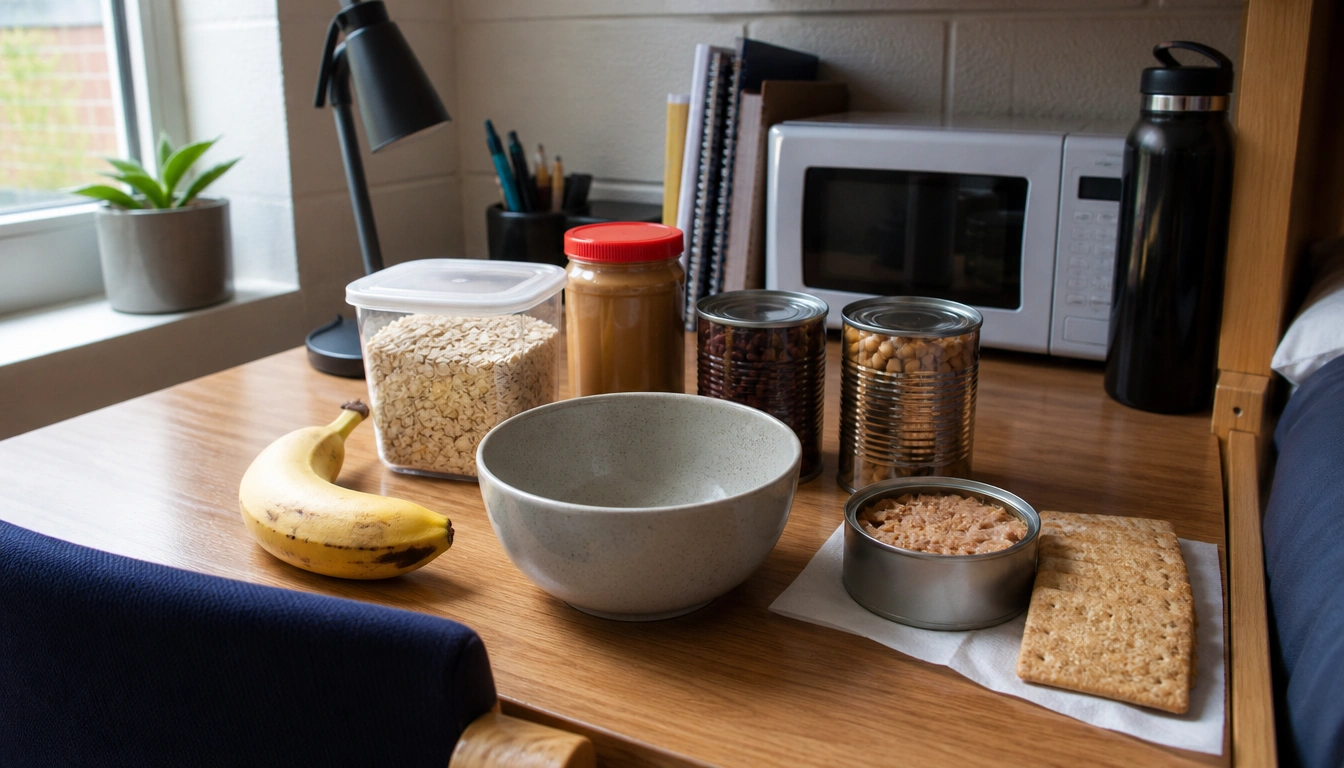
The best protein-rich pantry staples for college students are usually canned beans, canned tuna or salmon, peanut or seed butter, oats, and other shelf-stable grains that are cheap, easy to store, and simple to combine into filling meals. The most useful choices are the ones that work in a dorm with only a microwave or mini-fridge, stretch across multiple meals, and fit your budget without creating much food waste.
Key Takeaways
- Shelf-stable protein can be cheaper per serving than fresh meat or seafood and is easier to keep on hand in a dorm.
- Beans, lentils, tuna, salmon, peanut butter, and oats can turn into filling meals with almost no cooking.
- Pair pantry protein with fiber-rich foods like beans, oats, and whole grains for longer fullness and steadier energy.
- Check labels for sodium, because canned proteins can be high in salt; low-sodium versions and rinsing help.
- Shared kitchens require extra caution with nuts and seafood because allergy cross-contact can happen on shared surfaces.
Dorm Pantry Protein Basics
For college students, protein-rich pantry staples solve three common problems at once: they help meals feel satisfying, they store well in tight spaces, and they are usually kinder to a student budget than frequent takeout or last-minute convenience foods. Protein plays a role in muscle maintenance, immune function, and satiety, which is why a meal with enough protein often keeps you fuller than a meal built from refined carbohydrates alone.
That matters in dorm life, where meal timing can be irregular and access to a full kitchen may be limited. A shelf-stable pantry is also less likely to spoil before you use it, which lowers food waste. The USDA and Dietary Guidelines for Americans encourage nutrient-dense eating patterns that include beans, nuts, seeds, seafood, and other protein foods as part of a balanced routine.
For students, the most practical staples are the ones that require almost no equipment. If you only have a microwave or mini-fridge, focus on foods that can be eaten straight from the package or mixed into a bowl in minutes. If you have access to a kettle or shared kitchen, you can add quick-cooking grains or lentils, but the basic strategy stays the same: choose foods that are cheap, stable, and flexible.
Best Protein-Rich Pantry Staples by Type
Canned seafood is one of the most efficient shelf-stable protein choices. Tuna and salmon are compact, widely available, and easy to eat with crackers, rice, toast, or salad kits. A standard 3-ounce serving of canned tuna provides about 20 grams of protein, making it one of the fastest ways to raise a meal’s protein content without cooking. Water-packed versions are often easier to fit into a budget and can feel lighter than oil-packed options.
Beans, lentils, and chickpeas are especially useful because they bring protein and fiber together. That combination can make meals more filling and help steady energy through long classes or study sessions. Canned beans need only draining and rinsing. Dried lentils are another strong option if you have a microwave-safe bowl, hot water, or a small cooker, because they soften quickly compared with many other dried legumes.
Nut and seed butters such as peanut butter, almond butter, or sunflower seed butter are dense, portable, and shelf-stable before opening. They are handy for snacks and breakfasts because they add protein, fat, and texture with no cooking. Two tablespoons typically provide a meaningful amount of protein, and they pair easily with bread, crackers, fruit, or oats.
Whole grains are not usually the highest-protein foods on their own, but some are more useful than others in a student pantry. Rolled oats, whole-wheat bread, whole-grain crackers, quinoa, and whole-wheat pasta can all help build a meal that lasts longer. Oats are especially helpful because they can be made in a microwave and combined with peanut butter, seeds, or milk to create a more balanced breakfast.
Other shelf-stable options can help fill gaps: roasted edamame, dry milk powder, shelf-stable soy milk, protein-fortified oatmeal cups, and roasted chickpeas. These are not required, but they can add variety if you get tired of the same few foods.
How to Choose the Best Option in the Store
For a student budget, the best protein food is usually the one with the best cost per serving, not just the lowest price on the shelf. A larger container may cost more upfront but still be cheaper over time if it provides several meals. Shelf-stable foods also reduce the risk of throwing away spoiled chicken, yogurt, or deli meat that never got eaten in time.
Start with four label checks: protein per serving, sodium, storage life, and convenience. Protein per serving tells you whether the food will actually help build a meal. Sodium matters because canned proteins and beans can be much saltier than fresh versions. Storage life matters if your pantry space is limited or if you shop infrequently. Convenience matters because a food that is hard to open, mix, or portion often goes unused.
When comparing products, look for terms like low sodium or reduced sodium. In practical terms, these options usually make it easier to keep salt intake lower across the week. If you buy regular canned beans, draining and rinsing them under water can reduce some of the sodium and improve flavor. That simple step also helps if you want beans in a cold salad or burrito bowl rather than a strongly salted canned taste.
For canned tuna or salmon, choose the style that fits how you actually eat. Tuna in a pull-top can or single-serve pouch is convenient for dorm life. Salmon can be a useful change of pace if you want more variety. If you do not enjoy one option, do not buy a large quantity just because it is inexpensive; waste usually costs more than a small price difference.
No-Cook and Microwave Meal Builds
The easiest dorm meals are built from one protein, one fiber source, and one flavor booster. That pattern keeps shopping simple and helps avoid meals that are technically high in protein but still leave you hungry an hour later.
No-cook ideas include tuna mixed with mustard or hummus and eaten with whole-grain crackers; peanut butter on whole-wheat toast with banana slices; canned chickpeas tossed with olive oil, pepper, and any salad mix you have; or cottage cheese with fruit if you have fridge space. These are quick, portable, and easy to assemble between classes.
Microwave meals can be just as simple. A bowl of instant oats with peanut butter and seeds works well for breakfast. A rice cup topped with canned beans and salsa makes a fast lunch. Microwaveable grains can also be combined with canned salmon, frozen vegetables, or a bagged salad. If your dorm allows it, quick-cooking lentils or microwavable grain cups can turn pantry ingredients into a full meal without a stove.
A useful rule is to add fiber-rich foods whenever possible. Beans, oats, whole grains, fruit, and vegetables help the meal last longer and improve the overall nutrient balance. If you only eat protein alone, you may still feel hungry quickly. If you pair it with fiber and some carbohydrate, the meal is usually more satisfying and easier to rely on during a busy day.
Budget-Friendly Shopping and Storage Tips
Buying pantry protein on a student budget works best when you shop for repetition and versatility rather than novelty. Choose foods you can use in more than one meal: beans for bowls, soup add-ins, and salads; oats for breakfast and snack bars; peanut butter for toast, oatmeal, and apples; tuna for sandwiches and crackers. The fewer single-use items you buy, the less likely food is to sit untouched at the back of a cabinet.
Bulk buying can help, but only if you actually have space and will finish the food before moving out or the semester ends. A giant container of something cheap is not a bargain if it goes stale or becomes boring. Start with a few reliable staples, then add variety in small amounts. This approach reduces waste and keeps your pantry manageable.
Use a first-in, first-out habit: keep older items at the front and newer items behind them. Check expiration or best-by dates before shopping again, and build meals around what you already own. If you move between home, campus, and part-time housing, keep a short inventory list on your phone so you do not rebuy the same items twice.
For dorm storage, think about packaging. Resealable containers, zip bags, and single-serve packs can be helpful if you have little shelf space. They also make it easier to portion food instead of opening a large package and forgetting about the rest.
Vegetarian and Plant-Forward Pantry Protein Options
Students who want to eat less meat do not need complicated recipes to meet protein needs. The most practical vegetarian pantry staples are beans, lentils, chickpeas, peanut butter, sunflower seed butter, roasted edamame, soy milk, oats, quinoa, and whole-grain breads or wraps. These foods are widely available, generally affordable, and easy to mix into meals that feel familiar.
Plant-forward eating works best when you combine sources instead of relying on just one item. For example, oats plus peanut butter is more filling than oats alone. Beans plus rice or quinoa creates a sturdier meal than either food by itself. Hummus with whole-grain crackers or pita also works well as a no-cook option.
If you are vegetarian, pay attention to variety across the day rather than trying to make every meal perfect. The goal is a routine that is realistic on a college schedule. A mix of legumes, grains, nuts, and seeds can provide plenty of protein for everyday student needs while staying simple enough to repeat.
Safety and Label Considerations
Sodium is the main nutrition label issue for canned proteins and beans. A product can still be a useful choice even if it is not low-sodium, but students who eat these foods often should watch the total salt across the day. If a can is labeled low sodium or reduced sodium, that usually makes it easier to keep the meal balanced. Rinsing canned beans is a practical extra step, especially if you want a milder taste or lower sodium intake.
Allergies and shared housing need extra care. Peanut butter, tree nuts, fish, and shellfish are common allergens. In a shared kitchen, use clean utensils, wash cutting boards and counters, and avoid leaving residue on shared jars or spoons. If a roommate has a severe allergy, ask what foods or handling practices they need you to avoid. Even in a dorm, cross-contact can happen if crumbs, shared knives, or shared microwave surfaces are ignored.
Also check for food intolerance or medical conditions that may change what works best for you. Some students do better with smaller portions of beans at first, especially if they are not used to high-fiber foods. Others may need individualized advice if they have kidney disease, digestive disorders, or another condition that changes protein goals. In those cases, a registered dietitian or healthcare professional can help tailor choices safely.
For most students, the safest and most practical approach is simple: buy foods you will actually eat, choose lower-sodium versions when possible, keep allergy risks in mind, and build meals from stable ingredients you can store easily.
Frequently Asked Questions
How much protein do common pantry staples like canned tuna, beans, peanut butter, and oats provide?
Amounts vary by brand and serving size, but canned tuna is especially protein-dense, beans provide moderate protein plus fiber, peanut butter adds a smaller but useful amount, and oats contribute some protein while mainly serving as a filling grain base. Check the Nutrition Facts panel because serving sizes differ.
Which protein pantry foods work best in a dorm with only a microwave or mini-fridge?
The easiest options are canned tuna or salmon, canned beans, peanut butter, shelf-stable soy milk, oats, whole-grain bread or crackers, and ready-to-eat grains. These can be eaten cold, warmed briefly, or combined with fruit, salsa, or salad kits without needing a stove.
How can college students build high-protein meals without spending much money?
Use one cheap protein, one fiber-rich food, and one flavor item. For example, beans with rice and salsa, tuna with crackers, or oats with peanut butter. Buying foods that work in multiple meals and avoiding spoilage usually saves more money than chasing the lowest sticker price alone.
What should students look for on labels to choose lower-sodium canned proteins?
Look for low-sodium or reduced-sodium on the front label, then compare the sodium on the Nutrition Facts panel. If you buy regular canned beans, draining and rinsing can help lower the sodium in practice. This is useful if you use canned foods often during the week.
How can students avoid allergy and cross-contamination issues in shared housing?
Keep nut butters and seafood separate from communal foods, use clean utensils every time, and wipe shared counters, shelves, and microwave surfaces after use. If a roommate has a serious allergy, ask directly about their safety needs so you do not accidentally expose them to an allergen.
The Bottom Line
Cheap, shelf-stable protein can make college eating more realistic. The best options are the ones you can store easily, use in multiple meals, and prepare with almost no equipment.
For most students, the strongest pantry lineup includes canned beans, tuna or salmon, peanut or seed butter, oats, and a few whole grains. Pair those foods with fiber-rich ingredients so meals stay filling longer.
Pay attention to sodium, allergens, and food storage. A small, well-used pantry usually works better than a crowded one full of food you never open.
Medical disclaimer
Medical disclaimer: This content is for educational and informational purposes only and is not a substitute for professional medical advice, diagnosis, or treatment. Dietary needs and supplement suitability vary by individual.
Sources
- U.S. Government / Health Authority — dietaryguidelines.gov. Accessed October 2026.
- U.S. Government / Health Authority — nutrition.gov. Accessed October 2026.
- Academic Research Institution — msudenver.edu. Accessed October 2026.
