
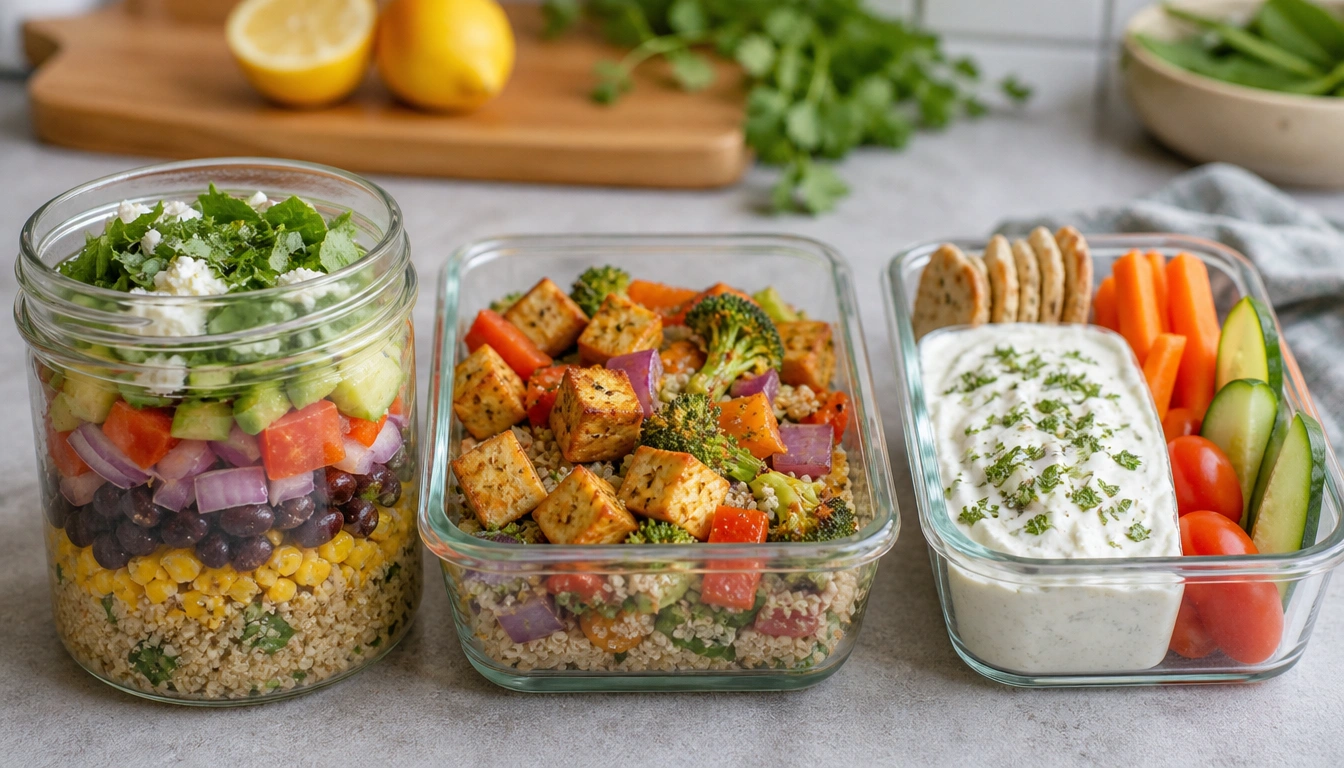
Easy vegetarian lunches that meal-prep well usually start with a sturdy base, then use protein stacking: combine two protein sources in one container, such as beans plus Greek yogurt, tofu plus edamame, or lentils plus whole grains. The best options for beginners are grain bowls, layered salads, and dip boxes because they hold texture, travel well, and stay satisfying for 3 to 4 days when stored safely.
Key Takeaways
- Use a simple formula: one base, two protein sources, one or two fiber-rich vegetables, and a sauce or dressing.
- Protein stacking makes vegetarian lunches easier to build to a more filling protein level than relying on one plant food alone.
- Soy foods, dairy, eggs, and quinoa are complete proteins; most beans and grains do not need to be perfectly combined at every meal.
- Keep dressings, juicy vegetables, and dips separate until eating to prevent soggy lunches.
- If you are new to beans and lentils, increase them gradually and drink enough fluids to ease bloating or gas.
- For plant-forward diets, watch key nutrients such as vitamin B12, iron, zinc, and vitamin D, especially if your menu becomes more restrictive.
A beginner-friendly framework for protein-rich vegetarian lunches
The easiest way to build protein-rich vegetarian lunch ideas for meal prep is to use a repeatable formula instead of trying to invent a different lunch every day. Start with one sturdy base, add two protein sources, include one or two fiber-rich vegetables, and finish with a flavorful dressing or sauce. That structure gives you a lunch that is filling, easy to portion, and less likely to taste flat after a few days in the refrigerator.
A good lunch container usually has one grain or leafy base, one main protein anchor, and one supporting protein or crunchy topping. For example, quinoa with tofu, edamame, roasted broccoli, and sesame dressing works because each part has a job: the grain provides structure, the proteins provide staying power, the vegetables add volume, and the sauce keeps everything enjoyable. According to the USDA and Dietary Guidelines for Americans, a healthy vegetarian pattern can lean on legumes, soy foods, nuts, seeds, whole grains, dairy, and eggs to create balanced meals.
If you are new to meal prep, begin with ingredients that are forgiving. Sturdy grains, roasted vegetables, baked tofu, lentils, and thick yogurt-based sauces are easier to manage than delicate greens or watery salads. The goal is not culinary perfection. The goal is a lunch you will actually want to open on day three.
Why protein stacking works better than chasing one perfect ingredient
Many vegetarian lunches feel short on protein because people expect one food to do all the work. In practice, it is simpler to stack protein by combining two sources in the same container. That might mean beans plus cheese, tofu plus whole grains, or lentils plus Greek yogurt. This approach is practical because plant foods often provide moderate protein in normal portions rather than very large amounts at once.
Protein stacking also gives you more texture options. Beans bring creaminess, tofu adds chew, yogurt adds richness, and seeds contribute crunch. That variety makes it easier to build lunches that still taste good after refrigeration. It also helps with fullness, especially if you are eating lunch away from home and need it to hold you over until dinner.
Another reason this strategy helps is flexibility. You do not need to calculate every amino acid at lunch. Soy foods, dairy, eggs, and quinoa are complete proteins. Most beans and grains are complementary across the day, so a varied vegetarian diet generally covers essential amino acids without requiring you to pair every meal perfectly. A lunch of rice and black beans may not look fancy, but it works well as part of a varied pattern.
Best meal-prep-friendly vegetarian protein anchors
Some vegetarian proteins are much easier than others for beginners. The best anchors are foods that stay pleasant after chilling, reheat well, and can be mixed into more than one lunch style.
- Tofu: Pressed and roasted tofu is one of the most meal-prep-friendly options. It absorbs flavor well and keeps its shape in grain bowls and salads.
- Tempeh: Nutty, firm, and satisfying. It is especially useful if you want a denser texture that holds up for several days.
- Edamame: Easy to add to bowls and salads for extra protein and color.
- Beans and lentils: Black beans, chickpeas, white beans, and lentils are budget-friendly, versatile, and ideal for batch cooking.
- Greek yogurt and cottage cheese: Great for dip boxes, creamy dressings, and lunch sides if you include dairy.
- Eggs and paneer: Handy for lacto-ovo vegetarians who want a concentrated protein source with minimal prep.
- Nuts and seeds: Hemp seeds, pumpkin seeds, chia, and chopped nuts add crunch and a protein boost, though usually not enough on their own.
- Whole grains: Quinoa, farro, barley, and brown rice help round out the meal and support a more complete lunch pattern.
For most beginners, the easiest mix is one main anchor and one supporting anchor. For example, lentils plus feta, or tofu plus edamame. That keeps assembly simple while still producing a lunch that feels substantial.
Three meal-prep blueprints that stay good in the fridge
The best vegetarian meal prep ideas are the ones that tolerate time. These three blueprints are reliable starting points because they use ingredients that keep their texture and flavor for several days.
Layered grain and bean salad jars
Build these from the bottom up: dressing first, then sturdy vegetables, beans, grains, and greens on top. Farro, brown rice, and quinoa all work well. Add black beans or chickpeas, then a crisp vegetable such as bell pepper or carrot, and finish with a handful of greens or herbs. If you want more protein, add feta, hemp seeds, or a scoop of hummus on the side.
This style works because the dressing stays away from the greens until lunch. It is one of the easiest ways to avoid a limp salad. If you prefer a bowl instead of a jar, keep the same structure and pack the dressing separately.
Roasted tofu or tempeh grain bowls
Roast cubed tofu or tempeh until it is firm and lightly browned, then serve it over quinoa, barley, or brown rice with roasted broccoli, cabbage, carrots, or cauliflower. A peanut-ginger sauce, tahini dressing, or sesame-soy glaze adds flavor without making the bowl watery. Edamame fits naturally here if you want more protein density.
These bowls can be eaten cold or gently reheated, which makes them especially useful for office lunches. They are also forgiving if you batch-cook on Sunday and eat them through the week.
High-protein dairy or legume dip boxes
This format works well if you get bored with bowls. Pack a thick Greek yogurt herb dip, cottage cheese dip, or white bean spread with whole-grain pita, seeded crackers, cucumbers, carrots, snap peas, and cherry tomatoes kept separate until mealtime. Add hard-boiled eggs or a scoop of lentil salad if you want a more complete lunch.
Dip boxes are useful for people who like variety and crunch. They also make it easy to eat a protein-rich lunch without needing to reheat anything.
Batch-cooking and assembly tips for beginners
Meal prep gets much easier when you choose ingredients that behave well together. Start with grains that stay fluffy after chilling, such as quinoa, farro, barley, or brown rice. Cook them a little on the firm side so they do not turn mushy after storage. Roast vegetables instead of using raw high-moisture vegetables in every lunch, because roasted vegetables often hold texture better for 3 to 4 days.
Cool cooked food before sealing containers and refrigerating them. Warm food trapped in a closed container can create excess condensation, which speeds up sogginess. Use shallow containers when possible so food cools more quickly. According to USDA food-safety guidance, cooked leftovers should be refrigerated promptly and eaten within 3 to 4 days for best safety and quality.
Keep wet ingredients separate whenever you can. Pack dressings, sauces, salsa, yogurt toppings, tomatoes, cucumbers, and pickled items in small side containers if their moisture would soften the rest of the meal. If you are making a sandwich or wrap, line it with greens or cheese before adding wetter fillings so the bread does not absorb as much liquid.
For a beginner, it helps to batch-cook one grain, one protein, and two vegetables at the same time. Then mix and match them into different lunches with different sauces. That gives you variety without needing a completely new recipe each day.
How to keep vegetarian lunches from getting soggy
Sogginess is usually a storage problem, not a recipe problem. The easiest fix is to separate ingredients by texture. Crisp vegetables, sauces, and juicy foods should not sit on top of delicate greens or bread for days. Instead, give each part a job. Sturdy grains form the base, roasted or cooked vegetables add body, and a dressing or dip gets added right before eating.
Some ingredients hold up especially well. Roasted tofu, tempeh, lentils, chickpeas, edamame, quinoa, farro, and cabbage-based slaws usually stay pleasant for several days. Ingredients that are more likely to soften include lettuce, cucumbers, tomatoes, avocado, and soft cheeses if they are mixed in too early. That does not mean you have to avoid them; just use them thoughtfully.
If you want a salad that stays crisp for the longest time, choose sturdy greens such as kale or cabbage, then keep the dressing in a separate container. A little planning here makes a big difference in how lunch tastes on day three or four. Reheat bowls only if the ingredients benefit from it; many grain bowls and bean bowls are perfectly good cold.
Protein, amino acids, and when a higher-density lunch makes sense
Healthy adults generally need about 0.75 to 0.8 grams of protein per kilogram of body weight per day, according to authoritative dietary references. That baseline does not tell you exactly how much to eat at lunch, but it explains why a lunch built around fruit, crackers, and a small salad often leaves people hungry. A more protein-dense lunch can be useful if you are active, have a long gap until dinner, or simply feel better with a more substantial midday meal.
Amino acid completeness is also easier than many beginners think. Animal foods, eggs, dairy, soy, and quinoa are complete proteins. Most beans and grains do not need to be perfectly matched in a single meal because the body uses amino acids over the course of the day. A varied vegetarian pattern can cover essential amino acids without complicated planning.
That said, some people do benefit from choosing higher-density protein at lunch. This may include older adults, athletes, growing adolescents, or anyone with higher energy needs. In those cases, adding tofu, tempeh, Greek yogurt, cottage cheese, eggs, paneer, or a larger portion of legumes can make lunch more satisfying without making it more complicated.
Food safety, fiber tolerance, and when to get individualized advice
Food safety matters as much as flavor. Refrigerate cooked grains, beans, and proteins promptly, and keep your fridge cold enough for safe storage. If a lunch smells off, looks slimy, or develops unusual discoloration, throw it out. When in doubt, do not taste it first.
If you are new to beans, lentils, and other high-fiber foods, increase them gradually over a couple of weeks instead of making a sudden jump. This gives your digestive system time to adapt and may reduce bloating or gas. Adequate fluid intake can also help as your fiber intake rises. Start with smaller portions of legumes, then build up as your comfort improves.
Some people should seek personalized guidance before making a big dietary shift. That includes people with advanced kidney disease, significant food allergies, or digestive conditions that are clearly worsened by legumes or dairy. It also makes sense to speak with a registered dietitian if you are switching to a more restrictive vegetarian pattern and want help monitoring nutrients such as vitamin B12, iron, zinc, and vitamin D. Those nutrients deserve attention when animal foods become limited or absent.
Frequently Asked Questions
How do I get enough protein in a vegetarian lunch without relying on meat?
Use protein stacking: combine two vegetarian protein sources in one meal, such as beans plus yogurt, tofu plus edamame, or lentils plus whole grains. That approach is usually easier than trying to make one ingredient do all the work.
What are the best plant-based protein combinations for lunch meal prep?
Good combinations include tofu and quinoa, beans and cheese, lentils and a grain like farro or brown rice, or edamame with roasted vegetables and a nut or seed topping. These mixes are practical because they store well and feel more complete.
Which vegetarian lunch meal-prep ingredients hold up best in the refrigerator?
Sturdy grains, roasted tofu, tempeh, lentils, chickpeas, edamame, cabbage, carrots, broccoli, and thicker sauces tend to hold up well. Delicate lettuce, cucumbers, and watery dressings are more likely to turn soggy if mixed too early.
How much protein do healthy adults generally need per day?
Authoritative dietary references commonly place healthy adult needs around 0.75 to 0.8 grams of protein per kilogram of body weight per day. Individual needs vary with age, activity level, health status, and overall calorie intake.
Do vegetarian proteins need to be perfectly combined at every meal to be complete?
No. Soy, dairy, eggs, and quinoa are complete proteins, and most beans and grains can be balanced across the day rather than in every single meal. A varied diet matters more than chasing perfection at lunch.
The Bottom Line
The easiest vegetarian meal-prep lunches start with a sturdy base, then stack two protein sources so the meal feels filling and stays interesting. Think grain bowls, layered salads, and dip boxes rather than fragile sandwiches that wilt quickly.
For the best results, choose ingredients that keep their texture, store dressings and juicy vegetables separately, and eat prepped lunches within 3 to 4 days. If beans and lentils are new to you, build up slowly and drink enough fluids as your fiber intake rises. If you are making a bigger dietary transition, pay attention to B12, iron, zinc, and vitamin D, and get individualized advice when needed.
Medical disclaimer
Medical disclaimer: This content is for educational and informational purposes only and is not a substitute for professional medical advice, diagnosis, or treatment. Dietary needs and supplement suitability vary by individual.
Sources
- U.S. Government / Health Authority — usda.gov. Accessed November 2026.
- U.S. Government / Health Authority — dietaryguidelines.gov. Accessed November 2026.
- U.S. Government / Health Authority — usda.gov. Accessed November 2026.
- Academic / Medical Research Institution — heart.org. Accessed November 2026.
- Johns Hopkins Medicine — hopkinsmedicine.org. Accessed November 2026.
