
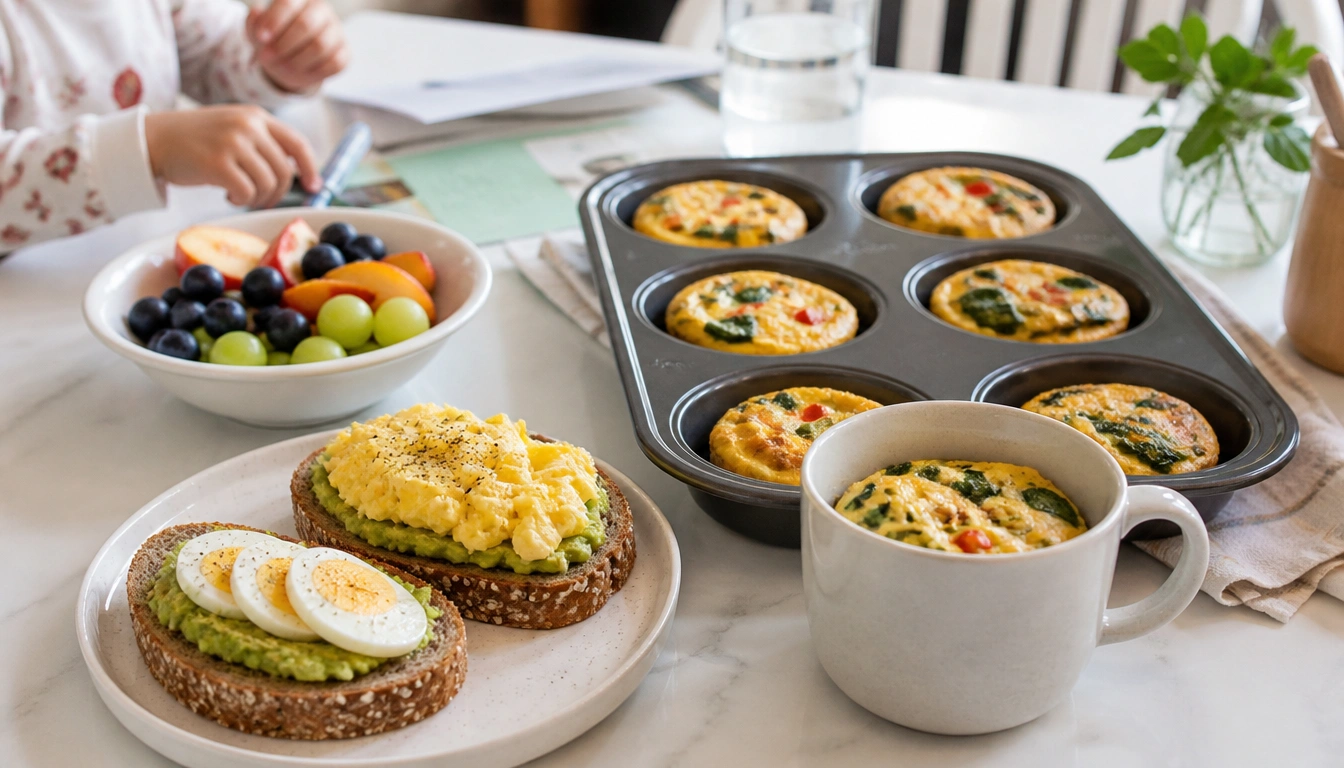
The fastest egg breakfast ideas for busy parents are the ones that can be made in one pan, one mug, or in a batch ahead of time: egg muffins, microwave mug omelets, soft scrambled eggs with toast, and avocado egg toast. Eggs work well because they cook quickly, provide complete protein, and pair easily with whole grains or fruit for a more balanced breakfast.
Key Takeaways
- Eggs are a fast protein base that can help make breakfast more filling and easier to balance with fruit, toast, or vegetables.
- For the quickest mornings, choose mug omelets, soft scrambles, or grab-and-reheat egg muffins.
- Batch-cooked egg cups and simple prep the night before can save time and reduce cleanup.
- You can keep the same egg base family-friendly by changing texture, portion size, and mix-ins for different ages.
- Cooked egg breakfasts should be refrigerated promptly, eaten within the safe storage window, and reheated until hot throughout.
Choose the right egg breakfast for the morning you are actually having
Busy-parent breakfasts work best when they match the day instead of aiming for an ideal routine that never happens. If you have five minutes and everyone is heading in different directions, a mug omelet or a simple egg-and-toast plate is usually the right fit. If you are planning ahead for school mornings, egg muffins or sheet-pan egg cups are easier because they can be baked once and reheated later.
For picky eaters, start with the least complicated version: plain scrambled eggs, a small toast square, or an egg tucked into a familiar sandwich. For one adult who needs something fast before commuting, a single mug omelet or avocado toast may be enough. For a family breakfast, make a larger batch of eggs, then add bread, fruit, or yogurt so each person can build a plate that suits appetite and age.
The best option is usually the one that lowers friction. That means fewer dishes, ingredients that are already in the kitchen, and a serving style your household will actually eat on a rushed morning.
Why eggs help a busy morning feel more steady
Eggs earn their place in a quick breakfast routine because they are naturally fast, versatile, and protein-rich. They are a complete source of protein, which means they provide all nine essential amino acids. That matters in a morning meal because protein helps make breakfast feel more satisfying than a carb-only option and supports a steadier energy pattern while the day gets moving.
Eggs also bring useful micronutrients such as choline, selenium, and B vitamins. In practical terms, that makes them a strong foundation food for children and adults who need something simple but more nourishing than a pastry or sweet cereal alone. Public health guidance from groups such as the USDA and the American Academy of Pediatrics emphasizes balance: pair protein with a complex carbohydrate and add fruit or vegetables when possible.
A simple breakfast formula is easy to remember: eggs plus whole grains or starchy foods plus produce. Think scrambled eggs with whole-grain toast, egg muffins with fruit, or avocado toast topped with egg. The grain or fruit adds fiber and staying power, while the egg brings protein and a savory flavor that many children accept more readily than a larger mixed meal.
That pairing also helps avoid the common sugar crash that can follow highly refined breakfast foods. The goal is not a perfect meal; it is a breakfast that keeps hunger, mood, and attention on a more even keel until the next snack or meal.
Make-ahead egg muffins and the 2-minute mug omelet
Egg muffins and sheet-pan egg cups are the easiest make-ahead option for families who need breakfast to be ready before the rush starts. Whisk eggs with a splash of milk if you use it, then add shredded cheese and finely chopped vegetables such as spinach, bell pepper, or grated zucchini. Pour the mixture into a greased muffin tin or lined pan and bake until set. Once cooled, store them in the refrigerator in an airtight container and reheat as needed.
These work especially well when you want a breakfast that can be eaten in the car, at the kitchen counter, or halfway through getting shoes on. They are also useful for families with different preferences because you can divide the batter into a few versions: plain, cheese-only, or veggie-filled. If you are making them for several days, keep the add-ins small and even so the muffins hold together well and reheat evenly.
The fastest single-serving option is a microwave mug omelet. Lightly grease a microwave-safe mug, crack in one or two eggs, add a splash of water or milk if desired, and beat with a fork. Stir in a spoonful of cheese, diced leftover vegetables, or a little ham if your family uses it. Microwave in short intervals, stirring between bursts, until the egg is just set.
The mug version is useful when everyone wants something different and you do not want to wash a skillet for one breakfast. It also gives you control over texture. Keep the cooking gentle if you prefer soft eggs, and use a wider mug or bowl if the egg mixture tends to rise.
Both versions are practical because they reduce the morning decision load. The food is either already cooked or nearly done, which is often the biggest barrier on school days.
Soft scrambled eggs, tomato herb flavor, and avocado toast
Soft scrambled eggs are a good fit for toddlers, cautious eaters, and adults who want a warm breakfast without much cleanup. A simple version with tomato and herbs adds flavor without making the dish feel too complicated. Cook chopped tomatoes briefly so they soften and release some of their juices, then add beaten eggs and stir slowly over low heat until the curds are tender. Serve with whole-grain toast so the meal has both protein and a satisfying carbohydrate.
For many children, the softer texture matters as much as the ingredients. Gentle scrambling keeps the eggs familiar and easy to chew, and the tomatoes can be chopped very finely or cooked down until they almost disappear into the eggs. If your child is wary of visible vegetables, this style often works better than a heavily loaded scramble.
Egg-and-avocado open-faced toast is the quickest from-scratch idea when time is tight and you want something filling without a big stack of dishes. Toast whole-grain bread, mash avocado on top, and add a fried, poached, or hard-boiled egg. If you need a variation, add sliced tomato, a pinch of mild cheese, or a sprinkle of herbs. For adults, a second slice of toast or an extra egg can make it more substantial.
This is also a useful template for using what you already have. Ripe avocado, leftover hard-boiled eggs, or a few cherry tomatoes can all become breakfast without much planning.
How to adapt egg breakfasts for toddlers, kids, teens, and adults
One of the advantages of eggs is that the same base can work for different ages with only small adjustments. For toddlers, texture matters most. Soft scrambled eggs, tiny pieces of egg muffin, or small bites of avocado toast are often easier to handle than dry or browned eggs. Keep portions small and simple, and cut food into manageable pieces to reduce frustration at the table.
School-age children often do well with a familiar combination: egg plus toast plus fruit. They may eat more when the breakfast is easy to recognize and not overloaded with new ingredients. If they are in a growth spurt or have a busy activity schedule, offer a little more bread, a second muffin, or a side of yogurt or fruit to match appetite.
Teens and adults usually need a larger plate, especially if the morning includes sports, commuting, or a long stretch before lunch. Add a second egg, another slice of whole-grain toast, or a more substantial side such as fruit and yogurt. The same breakfast can be scaled up without changing the recipe by much.
For toddlers and children with limited appetite, keep the meal calm and low-pressure. A small serving is often more successful than a plate that looks overwhelming. For adults who need more fuel, the same recipe can be made heartier by increasing the bread, adding extra protein, or serving it with fruit and nut butter.
The advantage of this flexible approach is that no one has to eat a separate breakfast. One basic egg idea can meet different appetite needs without turning the kitchen into a short-order diner.
Picky-eater strategies that keep breakfast realistic
Picky eating is easier to manage when breakfast stays familiar. Start with a known base, such as toast, a muffin, or plain scrambled eggs, and add only one new element at a time. If your child usually accepts cheese, keep the egg dish close to that flavor profile. If they prefer plain foods, serve eggs separately rather than mixed with several ingredients all at once.
It also helps to lower the morning stakes. A child does not need to eat a full plated breakfast for the meal to count. If they will only eat toast and a few bites of egg, that may be enough for the moment. The goal is to offer food without turning breakfast into a power struggle.
Giving children a role can help without adding real work to your morning. Let them choose between fruit options, sprinkle a little cheese, or pick which shape or cup they want. According to child-feeding guidance used in family nutrition programs, children are often more willing to try foods they had a hand in assembling.
For families with a child who is especially hesitant in the morning, keep backup options ready. A plain egg muffin, a small piece of toast, or fruit on the side is often better than nothing. The idea is to keep breakfast low-pressure, predictable, and quick enough that everyone can move on with the day.
Food safety and storage for prep-ahead egg breakfasts
Prepared egg breakfasts need a little care because they are convenient only if they are stored safely. Cooked egg dishes such as muffins, cups, and scrambles should be refrigerated promptly in an airtight container. The California Department of Public Health advises keeping refrigerated leftovers within a safe time window and discarding food that has been left out too long or stored beyond recommended limits. When in doubt, it is safer to throw it out.
For reheating, the goal is simple: warm the egg dish until it is hot throughout, with no cold center. A microwave works well for muffins, mug omelets, and small portions of scrambled eggs. If the texture seems dry after reheating, add a fresh side such as fruit, avocado, or a little salsa rather than overcooking the eggs.
Food safety matters even more with family breakfasts because the same container may be opened and closed repeatedly through the week. Label the prep date if that helps, and keep cooked eggs toward the front of the refrigerator so they do not get forgotten. If the leftovers smell off, look unusual, or have been stored too long, do not try to salvage them.
Egg allergy is another important consideration. Eggs are a common food allergen, especially for young children. If you are introducing eggs for the first time, watch for a reaction and talk with a pediatric clinician or allergist if there is a history of food allergy concerns. If a child cannot have eggs, use the same breakfast framework with another protein source that fits the family’s dietary needs.
Simple planning shortcuts that prevent a sugary backup breakfast
The easiest way to avoid a last-minute pastry run is to make breakfast easier the night before. Set out mugs, a bowl, a whisk, a skillet, or a muffin tin before bed so the morning starts with less searching. If you plan to make egg muffins, chop vegetables ahead of time and store them in the refrigerator so the actual cooking step is faster.
Batch cooking is another useful shortcut. Make a dozen egg muffins on the weekend, or prep a few portions of hard-boiled eggs and toast fixings so breakfast is assembled, not invented, each morning. Some families also keep fruit washed and ready in the fridge, which makes the meal feel complete with very little effort.
It helps to think in templates rather than recipes. A breakfast template might be egg plus toast plus fruit, or egg muffin plus yogurt, or mug omelet plus sliced apple. Once you have a few dependable combinations, you can rotate them without adding decision fatigue. That is often what keeps a good breakfast routine going long enough to matter.
If your household tends to reach for sugary convenience foods when mornings get chaotic, keep one or two egg options visible and easy to grab. Convenience is not just about speed; it is about which food is easiest to choose when everyone is rushing.
Frequently Asked Questions
How can I make egg breakfasts ahead of time for the week?
Bake egg muffins or sheet-pan egg cups, cool them completely, then store them in an airtight container in the refrigerator. Reheat individual portions as needed. Pre-chopping vegetables and setting out cooking tools the night before also makes weekday prep much faster.
What egg breakfast ideas work best for picky toddlers or low-appetite kids?
Soft scrambled eggs, tiny pieces of egg muffin, or simple egg toast usually work best because they are familiar and easy to chew. Keep portions small, use mild flavors, and avoid loading the plate with too many new ingredients at once.
How do I build a balanced breakfast around eggs for steady morning energy?
Pair eggs with a whole grain or starchy food and add fruit or vegetables when possible. For example, eggs with whole-grain toast and berries, or an egg muffin with fruit, gives more staying power than eggs alone.
How should I store and reheat egg breakfast leftovers safely?
Refrigerate cooked egg dishes promptly in a sealed container, and use them within the usual safe refrigerator window. Reheat until the food is hot throughout, and discard anything that was left out too long or seems questionable.
What is the easiest egg breakfast when I have only 2 to 5 minutes?
A microwave mug omelet is usually the fastest option. It uses one mug, one fork, and a few ingredients, and you can customize it with cheese or small amounts of leftover vegetables without dirtying a skillet.
The Bottom Line
Quick egg breakfasts are useful because they are fast, flexible, and easy to scale up or down for different ages. Whether you make a mug omelet, soft scramble, egg muffin, or avocado toast, the main advantage is a breakfast that gives protein plus a more balanced start to the day.
For busy parents, the best system is the one that matches your real morning. Keep a couple of reliable egg ideas on repeat, use batch prep when you can, and make food safety part of the routine so the shortcut stays practical.
Small changes such as whole-grain toast, fruit on the side, soft textures for toddlers, and a little night-before prep can make breakfast feel much more manageable without turning it into a project.
Medical disclaimer
Medical disclaimer: This content is for educational and informational purposes only and is not a substitute for professional medical advice, diagnosis, or treatment. Dietary needs and supplement suitability vary by individual.
Sources
- U.S. Government / Health Authority — ca.gov. Accessed October 2026.
- Academic Research Institution — sdstate.edu. Accessed October 2026.
- unicef.org — unicef.org. Accessed October 2026.
