
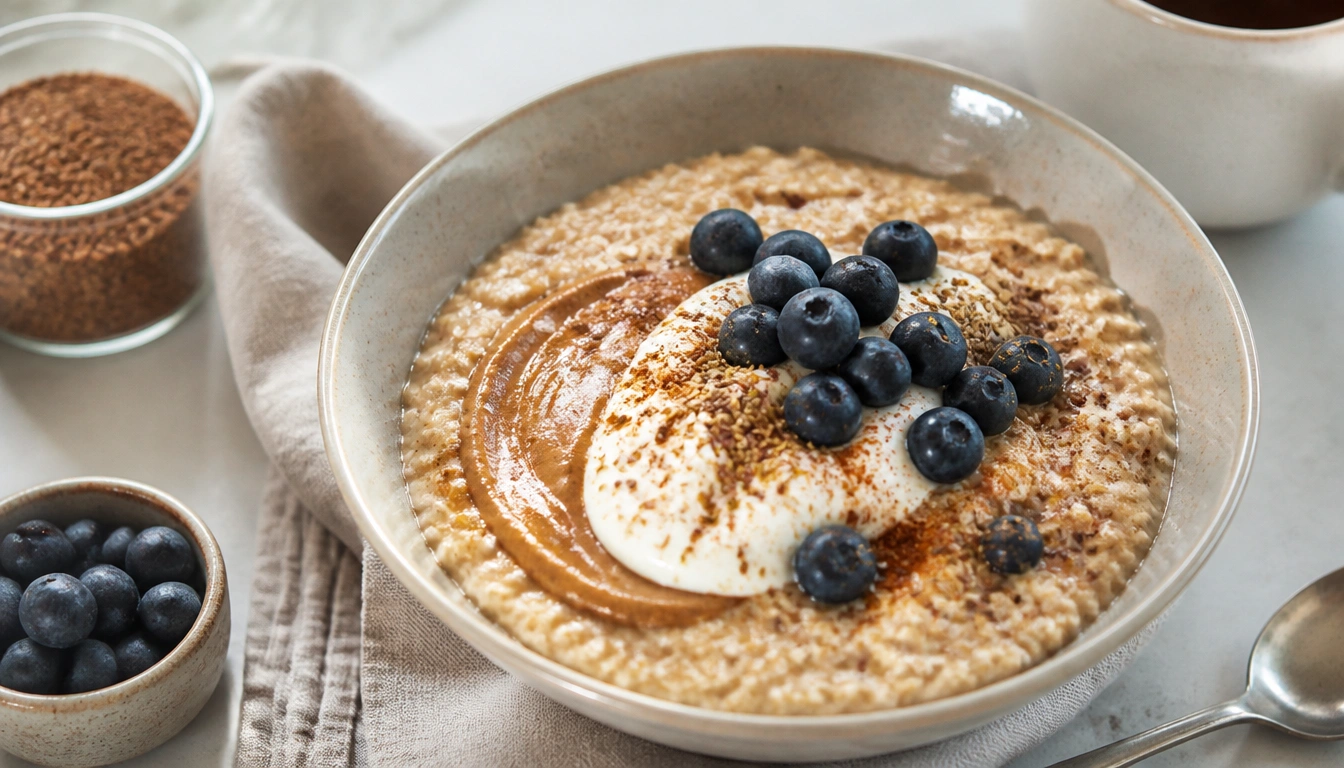
The fastest healthy oatmeal toppings for adults over 50 are ones that add protein, healthy fats, and fiber without much prep: Greek yogurt, nut butter, ground flax, chia, hemp hearts, berries, and soft cooked fruit. Those additions help plain oats feel more filling and more age-appropriate by supporting muscle maintenance, cholesterol management, and steadier blood sugar.
Key Takeaways
- Aim to add a protein anchor at breakfast, not just sweetness. Older adults often benefit from a more protein-forward bowl because aging muscles respond less efficiently to protein.
- Combine oats with protein, fat, and fiber to slow digestion and reduce a sharp blood sugar rise after eating.
- Soft toppings such as nut butters, ground flax, and stewed fruit work well for dry mouth, dental sensitivity, or dentures.
- Oats help with fiber, but they may not cover the full daily fiber target on their own for men 51+ or women 51+.
- If you have chronic kidney disease or take medicines that need careful timing, oatmeal toppings may need to be individualized.
Why oatmeal works well after 50
Plain oatmeal already gives adults over 50 a useful start: it is easy to prepare, budget-friendly, and rich in soluble fiber. That fiber, especially beta-glucan, is one reason oats are often linked with cholesterol support and better digestive regularity. For many people, a warm bowl is also gentle on the stomach and easy to modify.
What plain oats often miss is enough protein and fat to make breakfast hold you over. After midlife, muscle maintenance matters more, not less. Aging is linked with sarcopenia, or gradual muscle loss, and with anabolic resistance, which means the body may need a stronger protein signal at meals to support muscle protein synthesis. That is why a bowl of oats alone can feel light, even when it is high in fiber.
There is also a blood sugar angle. Oats are a smart carbohydrate, but a bowl topped only with honey, brown sugar, or dried fruit can become more spiky than steady. Pairing oats with protein and fat helps slow digestion and can make the meal more even in energy delivery.
Fiber goals matter too. U.S. guidance for adults 51 and older is about 30 grams per day for men and 21 grams per day for women. Oatmeal can help, but it usually should be one part of a larger fiber pattern across the day, not the only source.
The quickest topping formula for a more balanced bowl
The easiest way to upgrade oatmeal is to think in three parts: protein anchor, healthy fat, and fiber or flavor boost. That pattern keeps the bowl simple while making it more filling and more age-friendly.
A protein anchor helps with muscle preservation and appetite control. A healthy fat adds richness and slows stomach emptying. A fiber or flavor topping brings texture, natural sweetness, and more staying power without leaning on added sugar. If you use this structure, you can build a better breakfast in the same amount of time it takes to make plain oats.
For example, plain oats with cinnamon are tasty but incomplete for many older adults. Oats with Greek yogurt, almond butter, and berries are more balanced. Oats with ground flax, peanut butter, and stewed apples are softer and often easier to chew. The goal is not perfection; it is a bowl that better matches midlife nutrition needs and your morning routine.
Protein boosters to add fast
Greek yogurt is one of the fastest options because it requires no cooking. Stir it in after the oats are cooked so it stays creamy. Plain Greek yogurt works especially well with cinnamon, berries, or mashed banana. It also adds a tangy flavor that can replace some of the sweetness people usually add.
Protein powder and collagen peptides are another quick route when you want a higher-protein bowl with almost no extra effort. Unflavored or lightly flavored powders mix best. Collagen peptides dissolve easily, but they are not the same as a complete protein on their own, so they are better viewed as a simple protein boost rather than the only source.
Liquid egg whites can be whisked into oats while they cook, giving the bowl a fluffy texture and a more substantial protein base. This works best on the stovetop, where you can stir continuously and cook until the egg whites are fully set. Use pasteurized egg whites only.
If you are trying to make oatmeal truly breakfast-worthy after 50, this protein step matters more than adding another sweet topping. Many older adults do better when breakfast is built around protein first, then flavored with fruit and spices.
Heart-healthy fats and soft texture helpers
Nut butters are one of the most practical oatmeal toppings for adults over 50. Peanut, almond, and walnut butter all add richness, healthy fats, and some protein. They are also easy to eat for people with dental sensitivity because they are soft and spoonable. A little goes a long way in texture and flavor.
Ground flax is a good choice if you want fiber and plant-based omega-3 fats without crunch. Use ground rather than whole flaxseed so your body can access more of the nutrients. Chia can thicken oatmeal and add fiber, but it absorbs liquid and may be too much for some people if added suddenly. Hemp hearts are soft, mild, and easy to sprinkle on top.
Walnuts and pecans also fit well if chewing is comfortable. They add crunch, healthy fats, and a more satisfying finish. If chewing is harder than it used to be, you can pulse nuts lightly, choose nut butter instead, or skip the crunch and use a softer topping. The best fat choice is the one you can comfortably eat consistently.
| Fast topping | Why it helps | Best for |
|---|---|---|
| Nut butter | Adds protein, fat, and creaminess | Soft texture, more fullness |
| Ground flax | Adds fiber and omega-3 fats | Digestive support, gentle texture |
| Hemp hearts | Soft, mild, easy to sprinkle | Quick protein and fat boost |
| Chopped walnuts or pecans | Adds crunch and healthy fats | People who still chew comfortably |
Fiber-rich fruit and flavor add-ins
Berries are one of the best low-sugar fruit toppings for oatmeal. Blueberries, raspberries, and blackberries add color, fiber, and a fresh taste without pushing the bowl toward dessert. Frozen berries are especially convenient because they thaw quickly in hot oats.
Stewed apples or pears are especially useful when raw fruit feels too hard or too irritating to chew. A few minutes in the microwave with a splash of water softens them into a compote-like topping. This is a good option for readers with dry mouth, dentures, or a sensitive jaw. The natural pectin in these fruits also adds a pleasant thick texture.
Spices can do more than flavor. Cinnamon brings warmth and helps a bowl taste sweeter without extra sugar. Cardamom and nutmeg can do the same in smaller amounts. These are especially useful when appetite is lower, because they make oatmeal more appealing without turning it into a sugary breakfast.
If you like a sweeter bowl, try fruit first, then spices, before reaching for honey or syrup. That approach keeps the meal more blood-sugar-friendly and usually tastes better once you get used to it.
Three balanced bowls you can make in under five minutes
For steady energy: Cook oats, then stir in Greek yogurt, blueberries, and ground flax. This bowl is creamy, quick, and well balanced for people who want breakfast to keep them full until lunch.
For a softer, more chew-friendly bowl: Use oats topped with almond butter and stewed pears, then finish with cinnamon. This version is especially useful for dry mouth, dental issues, or mornings when you want something gentle and warm.
For a higher-protein bowl: Make oats with pasteurized liquid egg whites or stir in protein powder after cooking, then add hemp hearts and raspberries. This is the best fit if your main goal is to make breakfast more muscle-supportive and less carb-heavy.
These combinations are flexible. If one ingredient does not agree with you, swap it within the same category. Greek yogurt can replace protein powder. Nut butter can replace chopped nuts. Soft fruit can replace fresh fruit. The structure matters more than any single ingredient.
Texture, chewing, and digestion adjustments
Adults with dental sensitivity, dentures, or dry mouth often do best with toppings that are soft, moist, and easy to swallow. Nut butter, yogurt, hemp hearts, ground flax, and stewed fruit are usually better choices than hard granola, large seeds, or very crunchy nuts. If oatmeal itself feels too thick, add extra milk or water and serve it a little looser.
Digestion matters too. If you are not used to much fiber, adding chia, flax, berries, and oats all at once can cause gas, bloating, or cramping. Increase fiber gradually and drink enough fluids through the morning. That matters especially for people who are trying to improve constipation but have a sensitive gut.
If your appetite is low, smaller bowls can still be useful. A modest serving of oatmeal with one protein boost and one soft topping may be easier to finish than a giant bowl that feels heavy. For many older adults, consistency beats volume.
When oatmeal toppings need modification
Some situations call for a more individualized approach. People with chronic kidney disease may need to watch protein, potassium, or phosphorus, depending on their care plan. That means toppings such as dairy, nuts, seeds, or protein powders may need to be adjusted with a clinician or renal dietitian.
Medication timing can also matter. Some medicines are better separated from high-fiber meals because fiber may affect absorption. If you take regular morning medication and are unsure how oatmeal fits, ask your pharmacist or prescriber for guidance rather than guessing.
Other situations that may call for extra care include poor appetite, unintended weight loss, swallowing problems, or digestive symptoms that get worse when fiber goes up. In those cases, oatmeal can still be a good base, but the topping plan should match your medical needs and tolerance. The healthiest bowl is the one that fits your body, not just the one that looks best on paper.
Frequently Asked Questions
How much protein should an older adult try to include in breakfast?
There is no single perfect number for everyone, but many older adults do better when breakfast includes a meaningful protein source rather than only carbohydrates. A practical target is often enough protein to make the meal feel substantial and to support muscle maintenance across the day. A clinician or dietitian can tailor the amount if you have kidney disease, low appetite, or other conditions.
Which oatmeal toppings help with heart health and cholesterol support?
Toppings that pair well with oats for heart health include ground flax, chia, walnuts, pecans, and unsweetened yogurt. These add healthy fats, fiber, and more staying power without leaning on added sugar. Oats themselves already contribute soluble fiber, so the best approach is usually to build on that base rather than replace it.
What toppings are best for constipation or digestive regularity?
Fiber-rich toppings such as ground flax, chia, berries, and stewed pears or apples can help support regularity. The key is to increase fiber gradually and drink enough fluid, because a sudden jump in fiber can backfire with bloating or cramping. Warm oatmeal with soft fruit is often easier to tolerate than dry, crunchy toppings.
What toppings are easiest to chew for adults with dental issues or dry mouth?
The easiest options are usually smooth nut butters, Greek yogurt, hemp hearts, ground flax, and stewed fruit. These are soft, moist, and less likely to irritate sensitive teeth or gums. If needed, skip crunchy nuts, hard granola, and large seeds until chewing is more comfortable.
Can oatmeal be a complete breakfast for adults over 50?
Yes, if it includes more than plain oats. Oatmeal becomes more complete when you add protein, healthy fat, and a fiber-rich fruit or seed topping. A bowl that contains oats plus Greek yogurt, nut butter, or another protein source is usually much more filling than oats alone.
The Bottom Line
Plain oatmeal is a strong start after 50, but it usually works best when you add protein, healthy fats, and a soft fiber-rich topping. That combination can help with fullness, muscle maintenance, cholesterol support, and steadier morning energy.
The fastest upgrades are also the simplest: Greek yogurt, nut butter, ground flax, berries, hemp hearts, and stewed fruit. If chewing is difficult, choose soft toppings and avoid dry crunch. If you have kidney disease or take medications that need timing adjustments, personalize the bowl with professional guidance.
Medical disclaimer
Medical disclaimer: This content is for educational and informational purposes only and is not a substitute for professional medical advice, diagnosis, or treatment. Dietary needs and supplement suitability vary by individual.
Sources
- U.S. Government / Health Authority — acl.gov. Accessed November 2026.
- National Institutes of Health (NIH) — nih.gov. Accessed November 2026.
- Academic Research Institution — stanford.edu. Accessed November 2026.
