
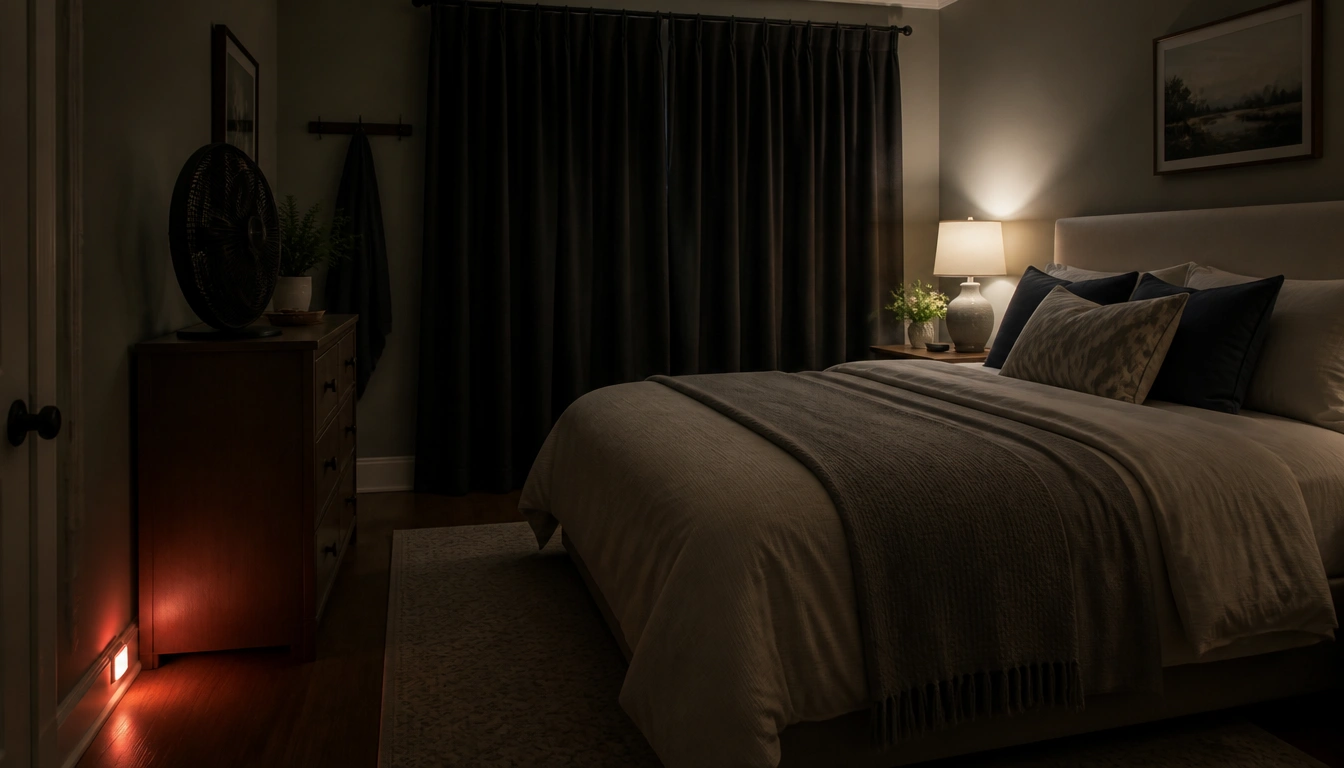
If you are over 50, start by making your bedroom darker, cooler, quieter, and easier to navigate at night. The highest-impact changes are usually removing small light and noise sources, using blackout curtains or liners, choosing breathable bedding, adding a dim red nightlight for bathroom trips, and fixing partner-related disturbance. Adults 50 and older still generally need 7 to 9 hours of sleep, but feeling refreshed matters too.
Key Takeaways
- Adults over 50 often wake more easily from small noises and light changes, so the goal is to reduce micro-arousals, not just obvious noise.
- A cool room, usually around 60°F to 67°F, supports sleep; breathable bedding and layers are often more useful than one heavy comforter.
- For nighttime bathroom trips, use dim red nightlights placed low to the floor so you can see safely without flooding the room with bright light.
- If a partner snores or moves a lot, environmental fixes like separate blankets, white noise, or a bed re-setup can help without medication.
- A room that seems quiet can still disrupt sleep if there are blinking LEDs, early morning light, stiff bedding, or temperature swings.
- If sleep remains poor despite bedroom changes, a medical issue such as insomnia, sleep apnea, restless legs, or nocturia may need evaluation.
Why a quieter bedroom matters more after 50
As sleep changes with age, many adults over 50 become easier to wake from small disturbances. A dripping faucet, hallway footsteps, a dim LED, or a brief burst of traffic noise may not fully awaken you, but it can still trigger micro-arousals that fragment sleep. That matters because broken sleep can leave you feeling less restored even when you spend enough time in bed.
Public health guidance from the National Institutes of Health and the Centers for Disease Control and Prevention still supports 7 to 9 hours of sleep for adults 50 and older. The target is not a perfect bedroom or a perfect sleep score. It is a room setup that helps you stay asleep longer, wake less often, and feel more refreshed in the morning.
Age-related sleep changes also affect timing. Some adults get sleepy earlier and wake earlier, which makes early morning light and household noise more noticeable. That is why the most useful bedroom changes after 50 usually focus on three things at once: fewer sound spikes, less light leakage, and better thermal comfort.
A room-by-room bedroom audit for noise, light, temperature, bedding, and safety
Walk through the bedroom as if you were trying to wake up in the dark at 2 a.m. Start with noise sources inside the room: ticking clocks, charging bricks, a humming fan, a loose vent cover, or a noisy air purifier. Then check what enters from outside: streetlights, porch lights, hallway sound, thin windows, shared walls, and gaps under the door.
Next, look at light from every angle. Small sources matter more than many people expect: a glowing alarm clock, a cable light, a power strip indicator, a bright thermostat, or the blue-white standby light on a television. Then assess temperature and bedding. If you wake overheated, chilled, or stiff, your body is getting nudged out of deeper sleep. The National Institute on Aging and other sleep experts commonly recommend a cooler bedroom, often around 60°F to 67°F, because thermal comfort supports sleep onset and continuity.
Safety belongs in the audit too. If you get up at night, the route to the bathroom should be clear of clutter, cords, loose rugs, and furniture corners. The best quiet bedroom checklist for adults over 50 is not only about making the room peaceful. It is also about making the room easy to use safely in the dark.
Noise control and darkness setup without full soundproofing
You do not need to soundproof an entire room to sleep better. Start by lowering the sharp sounds that create sudden wake-ups. Tighten loose hardware, move buzzing electronics out of the room if possible, and unplug anything that emits a faint whine or hum. If you live near traffic or in an apartment, try adding a steady masking sound rather than chasing total silence. A fan, a white noise machine, or a continuous ambient sound app can help blur sudden noise spikes into the background.
For renters or anyone on a budget, simple fixes can make a real difference. Heavy curtains, a draft guard under the door, or a rolled towel can reduce noise leakage from the hallway. Blackout liners can improve both darkness and a little sound dampening without permanent changes. If your window faces a streetlight or early sun, layered window coverings are often more practical than replacing the whole window.
For light control, aim to remove small sources, not just obvious ones. Cover blinking LEDs with opaque tape, move chargers away from the bedside, and place the phone face down or outside the room if you do not need it nearby. Even a tiny light can be enough to make sleep feel less deep for some older adults. A dark room also helps preserve melatonin signals, which are part of the body’s natural sleep timing system.
Temperature and bedding choices for older adults
Temperature swings can matter more after 50, especially during menopause or the years around it. Hot flashes, night sweats, and general temperature sensitivity can make a single heavy comforter feel too hot at one point in the night and too cold later. Instead of one thick layer, use breathable bedding you can adjust easily.
Cotton, linen, bamboo, or other breathable fabrics can help air move and reduce trapped heat. A layered setup works well: sheet, light blanket, and a removable comforter or quilt. That way you can adjust without fully uncovering yourself or waking up chilled. If you share a bed with someone who runs warmer or cooler than you do, separate covers can be a simple improvement.
The mattress also deserves attention. If it sags, traps heat, or leaves you stiff in the morning, it may be contributing to fragmented sleep. You do not need a luxury upgrade to improve comfort. Sometimes a mattress topper, pillow change, or better pillow placement is enough to reduce pressure on hips, shoulders, or the lower back.
Nocturia-safe nighttime navigation
Many adults over 50 wake to urinate at least occasionally, so the bedroom should support a safe path to the bathroom. The challenge is to reduce light enough to protect sleep while still seeing where you are going. That is where a low, dim red nightlight can help. Red light is less likely to interfere with sleep signals than brighter white or blue-toned light, and placing it near the floor helps guide your steps without lighting the entire room.
Avoid turning on a harsh overhead light unless you truly need it for safety. Instead, use one or two small nightlights along the route, especially near doorways, steps, or turns. Keep the floor clear, and consider a simple motion-activated light with a warm or red tone. For some people, even a small light at ankle height is enough to prevent stumbles while keeping the room calm.
If bathroom trips are frequent, it is also worth looking at evening fluids and bladder irritants. Reducing large drinks right before bed can help, though any major change should fit your health needs and medication schedule. The bedroom checklist works best when it supports both sleep and safe movement, not one at the expense of the other.
How to adapt the checklist for a snoring or restless bed partner
Partner disturbance is a distinct sleep problem, not a personal failing. If your partner snores, tosses, uses a different schedule, or kicks off the covers, the room may need a different setup rather than just more effort from you. Start with environmental fixes that do not involve medication. Separate blankets can reduce tugging and temperature conflict. A white noise source can soften snoring bursts or movement sounds. Sometimes simply moving the bed a few inches away from a shared wall changes how much vibration reaches you.
Rearranging the bed setup can also help. If one side of the bed is closer to a window, hallway, or heating vent, switch sides or shift the bed so the quieter side is yours. If the partner’s snoring is loud and frequent, that can point to sleep apnea, which is worth evaluating because it affects more than sleep quality. You do not need to diagnose the cause yourself, but you also should not assume snoring is harmless if it is persistent or severe.
The goal is to reduce mutual disruption with the least complicated fix first. Many couples do best with a blend of bedding changes, sound masking, and a room layout that lowers movement and noise transfer.
Low-cost and renter-friendly ways to improve the sleep environment
You do not need expensive equipment to make a bedroom quieter and more sleep-friendly. Draft guards, rolled towels, or adhesive weather stripping can reduce noise and light leakage around doors and windows. A fan can work as both airflow and white noise. Blackout liners, clip-on curtains, and removable window film can help if you cannot replace blinds. Cord covers and simple tape can hide small LEDs and reduce visual clutter that keeps the brain alert.
For renters, the best upgrades are usually reversible. A thick rug or rug pad can soften sound if your room has hard flooring. A bedside shelf or basket can keep chargers, glasses, and medications organized so they are not glowing or scattered across the room. If you cannot install a permanent nightlight, a plug-in or battery-powered option with a dim setting may be enough.
Common mistakes can make a bedroom seem quiet while still disrupting sleep. Bright clocks, a TV left on for background sound, overly warm bedding, and a mattress that is too old are all common culprits. So is chasing “silence” while ignoring comfort. A room can be quiet but still not restorative if it is too hot, too bright, or physically uncomfortable. The best results often come from a few modest changes rather than one big purchase.
When bedroom changes are not enough
If your room is set up well and sleep is still poor, the problem may be medical rather than environmental. Talk to a healthcare professional if you regularly take a long time to fall asleep, wake often and cannot get back to sleep, or feel unrefreshed most mornings despite enough time in bed. Sleep apnea is a concern if loud snoring, choking, gasping, or marked daytime sleepiness is present. Restless legs symptoms, frequent nighttime urination, pain, reflux, depression, medication side effects, or anxiety can also interfere with sleep.
At that point, a better bedroom still helps, but it should be paired with evaluation. The American Academy of Sleep Medicine and geriatric experts often favor behavioral approaches such as cognitive behavioral therapy for insomnia over routine long-term sleeping pill use, especially in older adults. That is because medications can raise fall risk or cause next-day grogginess for some people. If the quiet bedroom checklist does not produce clear improvement within a reasonable time, the next step is not to keep guessing. It is to look for the reason sleep remains broken.
Frequently Asked Questions
What bedroom temperature is best for adults over 50?
A cool room is usually best, often around 60°F to 67°F. That range supports the body’s natural drop in core temperature during sleep. If menopause, night sweats, or medication effects make you run hot or cold, use layers so you can adjust without fully waking.
How can I block outside noise without expensive soundproofing?
Start with the easiest sources of noise leakage: close gaps under doors, use heavy curtains or blackout liners, and add a fan or white noise machine to mask sudden sounds. Even moving the bed away from the noisiest wall or window can help.
What kind of nightlight is safest if I wake up to use the bathroom?
Use a dim nightlight placed low to the floor, ideally with a red or warm tone. It should light the path enough to prevent falls without brightening the whole room. Avoid harsh overhead lights if you can safely navigate with a softer option.
How do I reduce sleep disruption from a bed partner?
Try separate blankets, a white noise source, and a small bed or room re-setup to reduce sound and movement transfer. If snoring is loud, frequent, or paired with gasping, your partner may need medical evaluation for sleep apnea.
When is a quiet bedroom not enough and I should talk to a doctor?
If you still have trouble falling asleep, wake often, feel unrefreshed, or snore loudly despite a good bedroom setup, it is time to talk to a clinician. Persistent bathroom trips, leg discomfort, gasping, or daytime sleepiness also deserve evaluation.
The Bottom Line
For adults over 50, a better bedroom usually means fewer light and noise spikes, safer nighttime movement, and bedding that matches how your body sleeps now. Focus first on the changes that reduce micro-arousals: darkness, steady sound masking, cooler air, and a clear path to the bathroom.
If cost or renting limits what you can change, start small. Blackout liners, draft guards, fan-based white noise, dim red nightlights, and separate blankets can make a meaningful difference without major renovation. If sleep remains poor after those adjustments, the next step is medical evaluation, not more guesswork.
Medical disclaimer
Medical disclaimer: This content is for educational and informational purposes only and is not a substitute for professional medical advice, diagnosis, or treatment. Dietary needs and supplement suitability vary by individual.
Sources
- Centers for Disease Control and Prevention (CDC) — cdc.gov. Accessed October 2026.
- National Institutes of Health (NIH) — nih.gov. Accessed October 2026.
- Centers for Disease Control and Prevention (CDC) — cdc.gov. Accessed October 2026.
- Academic Research Institution — harvard.edu. Accessed October 2026.
