
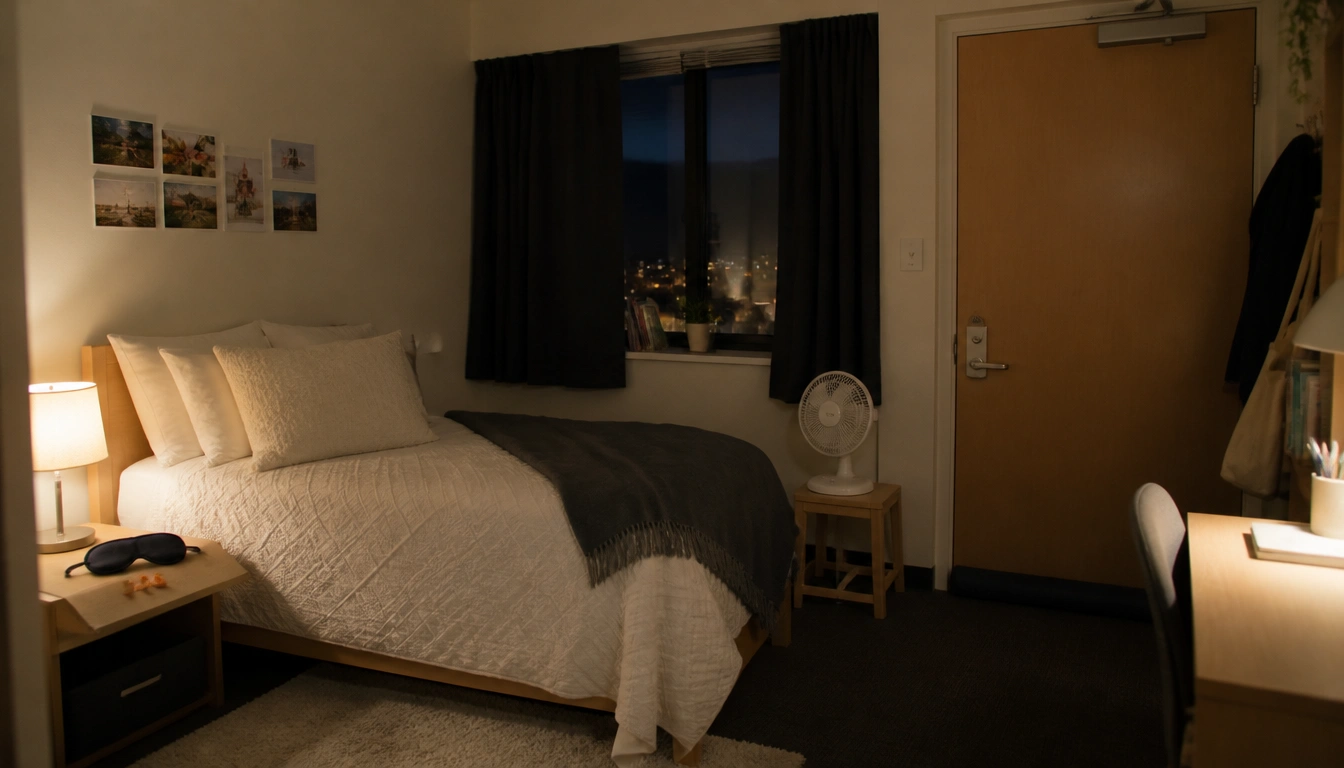
You can usually improve sleep right away by combining small, temporary fixes: seal door gaps, use earplugs or white noise, soften hard surfaces, block light, and keep your room cool. In a dorm or shared apartment, the goal is not perfect silence; it is reducing the most disruptive sounds and cues enough to help your brain wind down and stay asleep.
Key Takeaways
- Dorm noise, hallway traffic, light leaks, and roommate schedules can all fragment sleep even if you do not fully wake up.
- A layered setup often works better than one tool alone: earplugs block some sound, white noise masks irregular noise, and soft furnishings reduce echo.
- Cheap, roommate-friendly changes like a draft guard, sleep mask, phone placement, and a small fan can make a real difference fast.
- Keeping a consistent wake time and a short wind-down routine helps your room changes work better, especially on busy college schedules.
- If stress or rumination keeps you awake after the room is quiet, you may need a mental reset—not just more sound blocking.
- Persistent insomnia, loud snoring, gasping, or daytime impairment are signs to stop self-managing and get evaluated.
Why dorm sleep gets disrupted so easily
College bedrooms are built for convenience, not quiet. Thin walls, slamming doors, shared bathrooms, late-night arrivals, street noise, and a roommate’s study or sleep schedule can all interrupt rest. Even if you do not fully wake up, these small noise spikes can break up sleep and leave you feeling less alert the next day. The CDC and other major health organizations recommend that adults, including college-aged students, get at least 7 hours of sleep a night, and many students do best with more consistent sleep across the week.
Sleep is not just “time off.” During sleep, the brain supports learning, memory consolidation, emotional regulation, and physical recovery. That matters in college because poor sleep can make lectures harder to follow, studying less efficient, and stress more intense. Environmental factors matter too: light and sound interact with your body clock, so a room that is too bright or too noisy can make it harder to fall asleep and stay asleep.
The practical goal is to make your room predictable. A predictable room tells your brain that it is safe to downshift. In a dorm or apartment, that usually means reducing sudden sound, blocking light leaks, and creating a few cues that bedtime has started.
How to quiet a dorm room without upsetting a roommate
Start with changes that are temporary, inexpensive, and easy to reverse. That matters in student housing, where you may not be allowed to make permanent modifications. The best first targets are the places where noise sneaks in most often: under the door, around the window, and through hard surfaces that bounce sound around the room.
If hallway noise is a problem, a removable draft guard or door sweep can help fill the gap under the door. If window noise is the issue, check whether the frame leaks light or sound and use a removable seal, curtain, or even a tightly fitted fabric panel if building rules allow it. For shared-wall noise, move the bed away from the loudest wall when possible and use furniture, shelving, or a fabric-covered headboard to create a little extra distance.
Roommate schedule disruptions deserve a separate plan. Ask for a few specific agreements instead of a vague request for “more quiet.” For example: use headphones after a certain hour, keep the main light low, silence phone alerts overnight, and avoid leaving the door open when coming and going late. A calm, practical conversation usually works better than trying to solve everything with one rigid rule.
If you share a suite or apartment, look for the biggest noise sources first: the door, the hallway, the bathroom, and the wall closest to foot traffic. Small changes in these spots often matter more than trying to treat the whole room equally.
Best sound-blocking and sound-masking tools for student housing
The strongest quiet setup usually combines sound blocking and sound masking. Those are not the same thing. Earplugs reduce how much sound reaches your ear. White noise or fan noise does not remove sound; it makes irregular noise less noticeable. Soft furnishings absorb some reflected sound so the room itself feels less sharp and echoey.
Earplugs are useful when the problem is unpredictable noise, such as slamming doors, laughing in the hallway, or a roommate with a very different bedtime. A comfortable pair can be enough for some students, but many people sleep better when earplugs are paired with a steady background sound. If earplugs bother you, try them for the noisiest nights rather than every night. Comfort matters because a tool you hate will not get used.
A white noise machine, phone app, or fan can help mask sudden spikes in noise. The best placement is usually between you and the main source of disruption, such as near the door or window. A fan can also improve comfort because moving air often feels cooler, but if fan noise is irritating, a dedicated white noise source may be easier to tolerate. This is where layering helps: earplugs block part of the sound, while a steady background sound makes the remaining noise less intrusive.
Soft textiles do not “soundproof” a room, but they can make hard surfaces less reflective. A rug, heavy curtains, a fabric wall hanging, or extra bedding can reduce the sharpness of echoes in a small room. That is especially useful in dorms with bare floors and minimal furniture.
If you want a low-cost starter kit, think in layers: a draft guard, a sleep mask, one source of steady background noise, and a pair of earplugs for especially loud nights. You do not need every tool at once, but combining two or three often works better than expecting one item to do everything.
How to make a dorm room dark and cool enough for sleep
Light matters because it can signal your brain to stay alert. Even small amounts of brightness from a hallway, streetlamp, or roommate’s desk lamp can make sleep harder to start. A sleep mask is often the easiest fix in shared housing because it works even when curtains are not allowed or do not fully block the light. If your room gets strong outside light, blackout curtains or temporary blackout shades can help, as long as they fit your housing rules.
Notifications and screen light can also keep your room “mentally bright” even after the lights are off. Put your phone on do-not-disturb, silence nonessential alerts, and charge it away from the bed so you are less tempted to check it. If your roommate keeps later hours, agree on a point when shared lights go low and desk lamps become the main source of light.
Temperature is the other basic piece. Most people fall asleep more easily when the bedroom is cool, because the body needs to drop core temperature to start sleep. If your room runs warm, use breathable bedding, keep blankets easy to remove, and use a fan if it helps. If your residence hall has poor temperature control, focusing on lighter layers and airflow may matter more than trying to “power through” in a heavy comforter.
Think of darkness and coolness as signals. They tell your body that it is time to slow down. In a college room, small changes often work better than one big change that is uncomfortable or not allowed.
College schedule habits that support a quieter bedroom
A quieter room works best when your routine stops adding new stimulation at bedtime. The CDC and major sleep medicine guidance both emphasize regular sleep and wake times. College life makes this hard, but consistency still helps. Waking up around the same time each day can reduce the mismatch between your biological clock and your class schedule, even if your bedtime varies a little.
Build a short wind-down routine that starts before you are exhausted. You do not need a perfect one; you need one that is repeatable. Examples include washing up, dimming the lights, setting out clothes for the next day, reading a few pages of something calm, and putting devices on charge. Try to reduce heavy meals, alcohol, and late caffeine near bedtime, since those can interfere with sleep quality and make a quiet room less effective.
Late-evening stimulation matters too. Group chats, noisy study sessions, and intense content on your phone can make your brain feel “on,” even when the room is dark. If your social schedule runs late, keep one part of the evening predictable: the same wake time, the same basic wind-down sequence, and the same cue that signals the end of the day.
College does not usually allow a perfect sleep schedule, but a stable anchor is still useful. Even one consistent habit, like waking up at the same time, can make it easier for your body to adapt.
What to do when noise is not the only problem
Sometimes the room is quiet enough, but sleep still will not start. That often means the problem is not only environmental. Stress, racing thoughts, and bedtime rumination can keep your brain alert even when the lights are off and the noise is under control. This is common during exams, social stress, homesickness, or a difficult semester.
If you find yourself awake and mentally busy for about 20 minutes, get out of bed and do something quiet and non-stimulating until you feel sleepy again. Choose an activity that does not involve bright screens or a lot of decision-making: reading physical text, folding clothes, or sitting somewhere dim and calm. The point is to break the association between bed and frustration. When you return to bed, try again without forcing sleep.
It also helps to have a simple “brain dump” routine before bed. Write down tomorrow’s tasks, any worries that keep looping, and one next step for each. That can reduce the urge to rehearse plans in your head after lights out. If your mind tends to wander at night, a quiet room is necessary but not sufficient; you may need a separate way to lower mental arousal.
Do not treat being awake as failure. A calm reset is usually more effective than staring at the clock and trying to make sleep happen on command.
Who may need a stronger setup
Some students need more than standard sleep hygiene. If you are sensitive to noise, minor sounds such as a refrigerator hum, hallway foot traffic, or a clock tick may feel disproportionately disruptive. Students with ADHD, autism, or other sensory differences may benefit from stronger masking, more consistent routines, and fewer changing cues at night. In those cases, layering earplugs and a steady sound source is often more useful than trying a single fix.
Chronotype matters too. Many young adults naturally drift later, which can create social jet lag when class schedules demand early mornings. If your body wants to sleep later, you may not be able to change that overnight, but you can reduce the damage by keeping wake times steadier and making the room easier to sleep in at the time you actually go to bed.
If roommate noise is the issue and you are especially sensitive, plan for it the way you would plan for light or temperature. That may mean keeping a sleep kit ready, choosing a bed position that is farther from the doorway, or using more than one form of masking. The right setup is the one that helps you sleep reliably in your actual housing situation, not the one that would work in a perfect apartment.
When to stop self-managing and get help
If you have tried practical changes for a few weeks and you are still struggling to fall asleep, stay asleep, or feel rested, it is time to talk with a campus health clinician or primary care provider. Persistent insomnia can have causes beyond noise, including anxiety, depression, circadian rhythm problems, medication effects, or another sleep disorder.
Get evaluated sooner if you hear loud habitual snoring, gasping, choking, or repeated pauses in breathing during sleep. Those signs are not normal “college tiredness.” Daytime impairment matters too: falling asleep in class, needing lots of caffeine just to function, or having trouble driving safely are all reasons to seek care.
It is also worth asking for help if you are relying on alcohol, over-the-counter sleep aids, or other shortcuts to get through the week. Those may seem helpful at first but can make sleep less stable over time. A clinician can help sort out whether the main issue is sleep hygiene, stress, a schedule mismatch, or a medical condition that needs treatment.
The goal is not to tough it out. The goal is to sleep well enough to study, think clearly, and feel like yourself.
Frequently Asked Questions
How can I block hallway noise and roommate noise in a dorm room?
Start with the leak points: put a draft guard under the door, use a sleep mask for light, and try earplugs or steady white noise for unpredictable sound. If your roommate has a different schedule, agree on quiet hours, headphone use, and low light after a certain time.
What are the best cheap sleep tools for a noisy college bedroom?
The best low-cost tools are usually earplugs, a sleep mask, a fan or white noise app, and a removable draft guard. Soft items like a rug or extra blanket can also reduce echo. The goal is a layered setup, not an expensive one.
Do earplugs, white noise, or a fan work better for student sleep?
They help in different ways. Earplugs reduce sound reaching your ear, while white noise and fan noise mask sudden sounds like doors or voices. Many students sleep best with a combination, especially in a dorm or shared apartment where noise is irregular.
How do I make my room dark and cool enough for better sleep?
Use blackout curtains or a sleep mask if outside light leaks in, and silence notifications or keep your phone away from the bed. For temperature, use breathable bedding, lighter layers, and airflow from a fan if needed. A cool, dark room supports easier sleep onset.
What should I do if I’m still awake because of stress even after my room is quiet?
If you are awake for about 20 minutes, get out of bed and do something quiet and non-screen-based until you feel sleepy. A brief note-taking or worry list before bed can also help reduce rumination. If this keeps happening, it may be more than a noise problem.
The Bottom Line
A quiet college bedroom usually comes from layers, not one perfect fix. Seal obvious gaps, use a steady sound source, block light, and keep your sleep area cool and predictable.
If your roommate’s schedule, hallway traffic, or outside light are the main problems, focus on temporary changes you can actually keep using. If stress, snoring, gasping, or ongoing insomnia are in the picture, it is time to get help rather than trying to solve everything with sleep hacks.
Medical disclaimer
Medical disclaimer: This content is for educational and informational purposes only and is not a substitute for professional medical advice, diagnosis, or treatment. Dietary needs and supplement suitability vary by individual.
Sources
- Centers for Disease Control and Prevention (CDC) — cdc.gov. Accessed October 2026.
- National Institutes of Health (NIH) — nih.gov. Accessed October 2026.
- Mayo Clinic — mayoclinic.org. Accessed October 2026.
- Academic Research Institution — harvard.edu. Accessed October 2026.
- Academic Research Institution — usc.edu. Accessed October 2026.
- Academic Research Institution — snhu.edu. Accessed October 2026.
- Academic Research Institution — colostate.edu. Accessed October 2026.
- Academic Research Institution — ncsu.edu. Accessed October 2026.
