
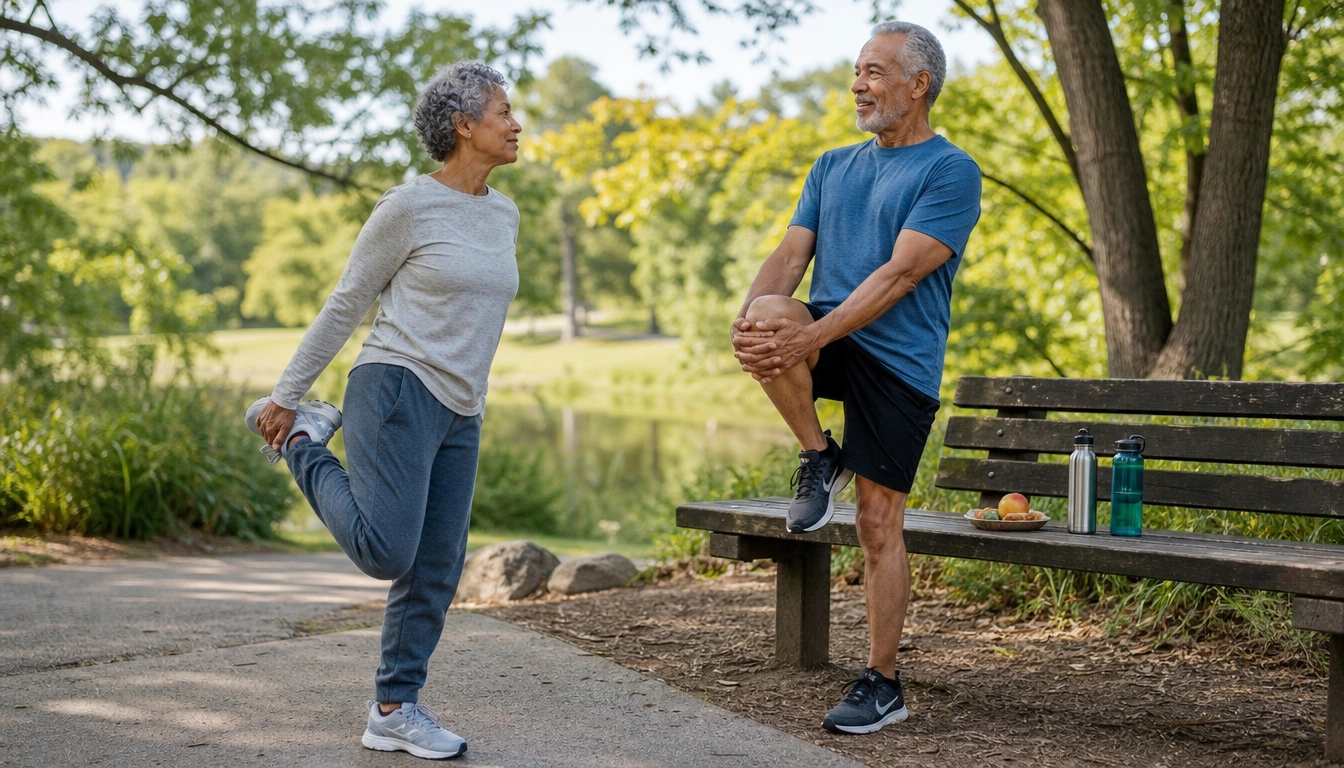
After a long walk, adults over 50 usually recover best with a gradual cool-down, gentle mobility work, intentional hydration, and a simple protein-plus-carbohydrate snack or meal within a few hours. Finish with a relaxed pace instead of stopping suddenly, then pay attention to how your joints, breathing, and energy feel. If you have arthritis, take certain medications, or notice warning signs such as chest pain or sharp joint pain, adjust the routine and seek medical advice when needed.
Key Takeaways
- A gradual cool-down after walking helps your body transition more safely than stopping abruptly, especially if you take beta-blockers or feel lightheaded easily.
- Adults over 50 may not feel thirst as clearly, so hydrating on purpose after a long walk matters even when you do not feel dehydrated.
- Gentle mobility is usually more useful than aggressive stretching; focus on calves, hamstrings, quads, and hips without forcing tight areas.
- A recovery snack or meal should be simple: fluids plus protein and carbohydrate to support muscle repair and energy replacement.
- Normal post-walk soreness is usually mild, generalized, and improves with rest; sharp joint pain, swelling, chest pain, dizziness, or unusual shortness of breath needs medical attention.
Why recovery matters more after long walks as you get older
A good recovery routine after a long walk is not about being cautious for no reason. It is about matching your habits to the way the body changes with age. Adults over 50 can still get major benefits from walking, including better cardiovascular fitness, mobility, mood, and blood sugar control, but recovery may take a little more planning than it did in earlier decades. The National Health Service, the CDC, and the World Health Organization all support regular walking for healthy aging, along with other movement across the week.
As people age, muscle repair may be slower and thirst cues can become less reliable. That means a walk that felt easy during the activity can still leave you feeling flatter, stiffer, or more tired later in the day. Recovery does not have to be complicated. The goal is to lower stress on the body, replace fluid, give muscles the nutrients they need, and avoid turning one long walk into two days of soreness.
A practical first-hour approach: slow down for the last part of the walk, breathe normally, drink something after you finish, and do a few minutes of gentle movement before sitting for long periods. If the walk was unusually long, hilly, hot, or fast, recovery deserves even more attention.
A simple recovery routine after a long walk for adults over 50
The easiest routine is the one you can repeat. A practical post-walk sequence starts before you fully stop. For the last five to ten minutes, reduce your pace so your heart rate and breathing come down gradually. This is especially useful if you tend to feel woozy when you stop suddenly or if you use medication that changes heart-rate response.
After the walk, keep moving lightly for a few minutes rather than collapsing into a chair. A brief cool-down walk indoors or around the yard can help your body settle. Then do a short check-in: How do your legs feel? Are you breathing comfortably? Do your joints feel merely tired, or do they feel sharp and irritated? That quick scan helps you choose the right next step.
From there, move into three basics: hydrate, mobilize, and refuel. Those steps do more for recovery than complicated gadgets or recovery trends. If your schedule is busy, even ten minutes can make a difference.
Gentle mobility and stretching for calves, hamstrings, quads, and hips
After a long walk, gentle mobility usually works better than intense stretching. The goal is to ease stiffness, not force range of motion. Keep movements smooth and comfortable. If you feel a sharp pull, back off. A mild stretch sensation is enough.
Focus on the lower body areas that do most of the work during walking:
- Calves: Stand near a wall and lean into a gentle calf stretch, or do ankle circles while seated.
- Hamstrings: Sit on a chair and extend one leg forward with a soft knee, hinging slightly at the hips.
- Quads: Hold a chair for balance and gently bend one knee to bring the heel toward the glute if it feels comfortable.
- Hips: Try easy hip circles, a short march in place, or a seated figure-four position only if it feels natural.
For adults with stiff backs or knees, small motions can be more helpful than deep stretches. A few minutes of seated leg lifts, ankle pumps, or slow heel raises may improve circulation without stressing the joints. If stretching tends to aggravate an old injury, do less and move more gently. Recovery should leave you looser, not more irritated.
Hydration after walking when thirst cues are less reliable
Adults over 50 may not feel thirsty as quickly as younger adults, so waiting for thirst alone is not always enough. That matters after a long walk, especially in warm weather, on hilly routes, or after sweating more than expected. Even mild dehydration can make fatigue and stiffness feel worse.
A sensible habit is to drink water soon after finishing, then keep sipping with your next meal or snack. You do not need a special sports drink for most long walks unless you were sweating heavily, walking in heat for a long time, or have been advised otherwise by a clinician. For many people, water is enough.
What helps in practice:
- Keep a bottle with you so hydration is automatic, not optional.
- Drink before you feel fully thirsty.
- If your urine is very dark or you feel unusually dry, aim to drink a bit more over the next hour or two.
- If you have heart, kidney, or fluid-balance concerns, follow the plan your clinician has given you rather than making big changes on your own.
The point is consistency. A steady water habit supports recovery better than trying to “catch up” later in the day.
What to eat after a long walk: protein and carbohydrate basics
Food-first recovery does not need to be fancy. After walking, your body benefits from protein to support muscle repair and carbohydrate to help restore energy. That is especially relevant for adults over 50, because aging muscle can show anabolic resistance, meaning it may need more deliberate nutritional support to trigger repair.
A balanced snack or meal within a couple of hours is usually enough for a long walk. You do not need a strict recovery formula. Choose something you will actually eat regularly. Examples include yogurt with fruit, eggs with toast, cottage cheese and crackers, a turkey sandwich, tofu with rice, or beans with a grain and vegetables. If the walk was especially long or you have trouble eating later, a smaller snack soon after may be more realistic than waiting for a full meal.
Think in simple parts:
- Protein: helps muscles repair and adapt.
- Carbohydrate: helps restore walking energy.
- Fluids: support circulation and reduce the “wiped out” feeling that dehydration can worsen.
If you have diabetes or another condition that affects blood sugar, your food choice may need to be more individualized. The broad principle still holds: recovery usually goes better when you refuel in a steady, balanced way instead of skipping food entirely.
How sleep fits into recovery and why consistency matters
Sleep is part of recovery, not a separate luxury. Walking creates a training stimulus, and sleep is when the body does much of its repair work. For adults over 50, consistent sleep timing can matter as much as sleep length. An erratic schedule can leave you feeling more sore, less energized, and less ready for the next walk.
A short post-walk routine can help protect sleep later. Hydrate earlier in the evening if needed, avoid making the walk so late that you stay overstimulated, and keep your bedtime as steady as possible. If a long walk makes you tired in a healthy way, that is fine. If it leaves you overstimulated or achy, a calmer cool-down and earlier refueling may help.
Good sleep habits work best when they are routine-based: regular bedtime, a cool dark room, and enough wind-down time after evening walking. The goal is not perfection. It is to make sleep predictable enough that your body can count on it for recovery.
How to adapt the routine if you have arthritis, diabetes, or take certain medications
Recovery is not one-size-fits-all. If you have arthritis or lower-extremity joint degeneration, the safest response to a long walk is usually gentler movement, not more intensity. That may mean shorter recovery walks, seated range-of-motion work, or non-weight-bearing movement such as pool walking. Aggressive stretching or extra mileage can make irritated joints feel worse instead of better.
If you take beta-blockers or other medications that affect heart rate, heart-rate-based recovery cues may be less useful. Your pulse may not tell the full story. In that situation, use symptom-based monitoring instead: breathing should settle gradually, dizziness should not persist, and you should feel increasingly steady as you cool down. A gradual pace change is more useful than trying to hit a specific heart-rate number.
People with diabetes or other chronic conditions may also need to pay closer attention to hydration, food timing, and how they feel after exertion. If your blood sugar tends to drop after activity, you may need a more planned snack. If you have heart, kidney, balance, or circulation issues, recovery advice should be personalized by a healthcare professional. The safest routine is the one that fits your conditions, medications, and recent activity level.
How much rest is enough before the next long walk
Rest does not always mean complete inactivity. For many adults over 50, one recovery day may be enough after a moderate long walk, but the right amount depends on distance, hills, pace, surface, weather, sleep, and your baseline fitness. If the walk was especially long or hard, you may need more recovery time before repeating it.
A useful guide is how you feel the next day. If you can walk normally, your soreness is mild, and your joints are calm, a lighter walk or regular daily movement may be fine. If you still feel heavy, stiff, or unusually tired, a gentler day makes sense. Recovery should help you stay consistent over time, not force you to prove anything about toughness.
If you are building up distance after a break, increase gradually. The CDC and WHO both emphasize regular activity, but consistency matters more than one big effort. Good pacing between long walks lowers the risk of overuse irritation and makes the habit more sustainable.
Signs your soreness is normal vs. a sign to stop and get help
Normal post-walk soreness is usually mild, fairly general, and most noticeable in the muscles you used most. You might feel temporary stiffness, fatigue, or some heaviness in the legs. That kind of soreness often improves with gentle movement, hydration, food, and rest.
Warning signs are different. Seek medical attention if you have chest pain, severe shortness of breath, fainting, dizziness that does not pass, or an irregular heartbeat that feels new or concerning. Also pay attention to sharp or localized joint pain, swelling, or pain that changes your gait. Those symptoms are not just “normal aging” and should not be pushed through.
If soreness is repeatedly worse than expected, or if your recovery time keeps getting longer, it may be worth discussing with a clinician or physical therapist. That is especially true if you have arthritis, a history of injury, or a heart or metabolic condition. Recovery should improve function, not mask a problem.
Frequently Asked Questions
How long should I cool down after a long walk?
A short cool-down is usually enough: keep walking at a gentler pace for about five to ten minutes, or until breathing and heart rate begin to settle. If you feel lightheaded, extend the cool-down and avoid stopping abruptly.
What should adults over 50 eat or drink after walking for recovery?
Water is a good first step, followed by a balanced snack or meal with protein and carbohydrate within a couple of hours. That supports muscle repair and replaces energy used during the walk. You usually do not need a special recovery drink for an ordinary walk.
Is stretching or mobility work better than resting after a long walk?
Gentle mobility is often more helpful than aggressive stretching, especially for stiffness. Rest still matters, but a few minutes of easy movement can help muscles and joints settle. The best choice is usually a light cool-down plus comfortable mobility, not either extreme.
How do arthritis or joint stiffness change post-walk recovery?
Arthritis often calls for gentler recovery. Choose shorter mobility work, avoid forcing stretches, and consider lower-load options such as seated movements or pool walking. If a walk causes sharp joint pain or swelling, that is a sign to back off and get guidance.
When is post-walk soreness normal and when is it a warning sign?
Mild, generalized muscle soreness or stiffness is common after a longer walk. Warning signs include chest pain, unusual shortness of breath, dizziness, fainting, swelling, or sharp pain in a specific joint. Those symptoms deserve prompt medical attention.
The Bottom Line
A good recovery routine after a long walk for adults over 50 is simple: cool down gradually, drink fluids, move gently, and refuel with a balanced snack or meal. That basic pattern supports muscle repair, hydration, and steadier energy without turning recovery into a second workout.
If you have arthritis, take beta-blockers, or manage a chronic condition, adjust the routine to fit your body and medications. Use symptoms, not just heart rate, to judge recovery, and seek medical help for warning signs such as chest pain, unusual shortness of breath, dizziness, swelling, or sharp joint pain.
Medical disclaimer
Medical disclaimer: This content is for educational and informational purposes only and is not a substitute for professional medical advice, diagnosis, or treatment. Dietary needs and supplement suitability vary by individual.
Sources
- World Health Organization (WHO) — who.int. Accessed November 2026.
- National Health Service (NHS) — www.nhs.uk. Accessed November 2026.
- Centers for Disease Control and Prevention (CDC) — cdc.gov. Accessed November 2026.
- National Health Service (NHS) — www.nhs.uk. Accessed November 2026.
- American College of Sports Medicine (ACSM) — acsm.org. Accessed November 2026.
