
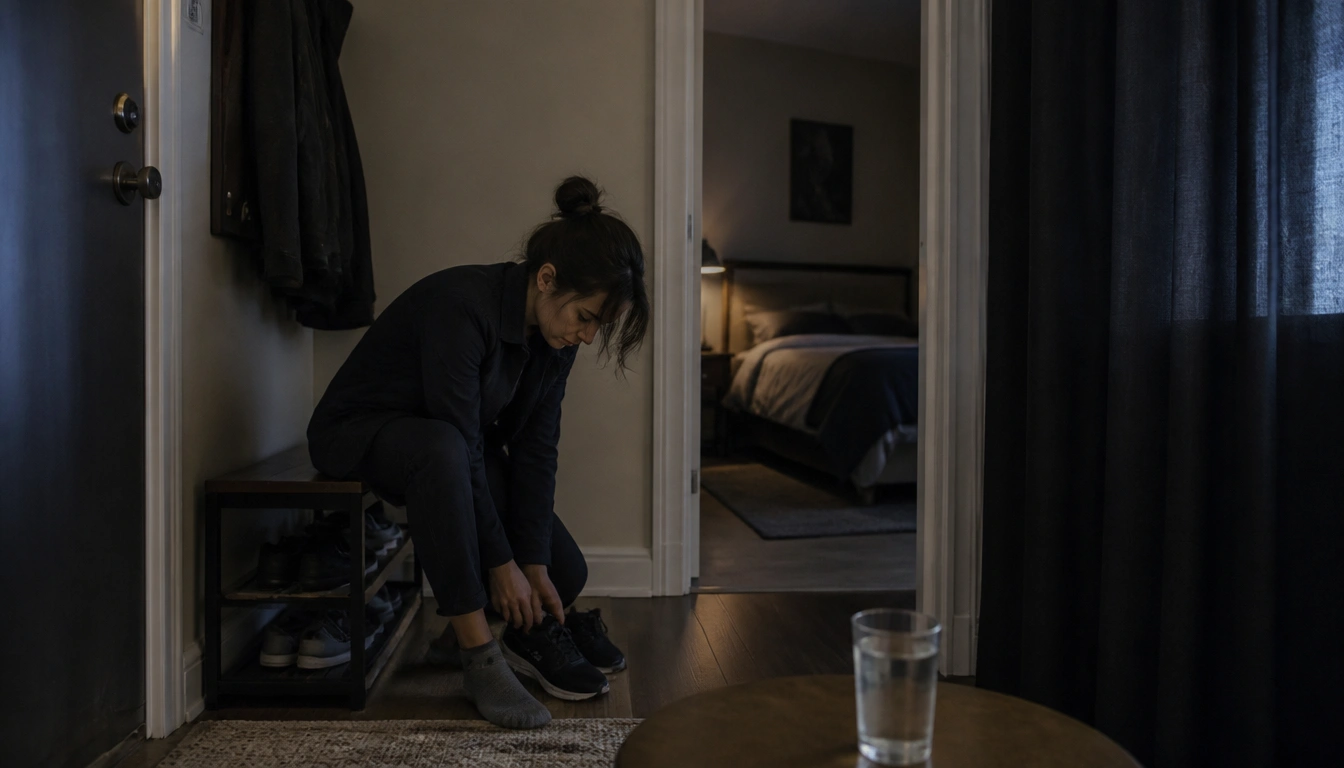
After a long walk, shift workers should cool down gradually, rehydrate, dim light, and avoid anything that boosts alertness if sleep is next. If you are coming off a night shift, get home fast, block morning light, and sleep as soon as you safely can. If you walked after an evening shift, use a short wind-down so the walk does not leave you overstimulated before bed.
Key Takeaways
- A long walk can add physical fatigue on top of shift-related sleep debt, so recovery should support both muscle recovery and sleep timing.
- The best routine starts before you get home: slow your pace, reduce stimulation, and let heart rate and body temperature come down.
- After a night shift, light exposure matters more than usual; morning sun can make it harder to fall asleep.
- Food timing is a balance: a light snack can help if hunger would wake you, but heavy or spicy meals can interfere with sleep.
- Sleep setup matters for daytime rest: darkness, cooler temperature, and noise control help more than willpower.
- If you are too drowsy to drive safely, rest at work, use transit, or carpool instead of pushing through.
Why a long walk hits harder when you work shifts
A long walk is healthy, but for shift workers it often lands on top of three stressors at once: physical exertion, sleep debt, and circadian misalignment. That combination can leave you feeling more drained than the same walk would on a regular schedule. The walk may raise heart rate, body temperature, and alertness right when your body is already trying to recover from a night of work or an odd sleep window.
That matters because sleep is not only about being tired. The body also needs the right timing signal. If you are awake and active when your internal clock expects sleep, recovery feels harder. CDC and NIOSH guidance on shift work emphasizes that the goal is not just to “get tired enough,” but to help the body shift from activity to rest without adding more stimulation than necessary.
The walk can also create ordinary exercise-related needs: fluid loss, depleted energy stores, and muscle strain. In a shift-work context, those needs compete with the need to sleep quickly and deeply. A good recovery routine therefore does two jobs at once: it helps the body downshift from the walk, and it avoids making sleep timing worse.
What the recovery goal is
Your immediate goal after a long walk is not to “do recovery” in a sporty sense and then separately “do sleep hygiene.” It is to make recovery and sleep support each other. That usually means three things: lower arousal, protect sleep timing, and replace the basics your body used during the walk.
Lowering arousal means helping the nervous system move out of the alert, active state. Protecting sleep timing means avoiding bright light, noisy tasks, and stimulating conversations that make it harder to fall asleep. Replacing the basics means drinking enough fluid, eating only as much as you need, and addressing soreness or tightness without turning your post-walk routine into a second workout.
For shift workers, the CDC and NIH frame sleep as a scarce resource, not an afterthought. That is why the recovery routine should be simple and repeatable. You are trying to preserve the chance to sleep, not prove you can tolerate more strain.
A shift-specific recovery routine by timeline
The easiest way to think about recovery is in stages. In the last 10 to 15 minutes of the walk, begin to slow down instead of stopping abruptly. A gentler pace helps your heart rate come down and gives your body time to transition out of exercise. If possible, avoid using those final minutes for intense calls, scrolling, or problem-solving; mental stimulation can keep you wired even after the movement ends.
During the first 30 minutes after arriving home, keep the environment quiet and low effort. Drink water, change out of sweaty clothes, and decide whether you truly need food before bed. If you are sore, short stretching or a few mobility moves can be fine, but avoid turning that into a full training session. If you need to shower, keep it brief and aimed at calming down rather than waking up.
In the pre-sleep window, remove the things most likely to delay sleep: bright screens, bright overhead lights, heavy chores, and emotionally loaded conversations. If you have obligations at home, try to batch them earlier in the day or before the walk when possible. The closer you are to sleep, the more you want the routine to feel boring in a good way.
Post-night-shift and post-evening-shift routines are not the same
After a night shift, light exposure becomes the biggest issue. Morning sunlight tells the brain it is time to be awake, which is the opposite of what you need if sleep is next. If you are walking home after dawn, wearing sunglasses and a hat can reduce the wake-up signal from light. Keep indoor lighting low when you get home, and move quickly toward sleep rather than lingering on errands or chores.
After an evening or day shift, the problem is different. You are not usually fighting sunrise, but you may still be carrying work stress and exercise arousal into the evening. In that case, the recovery routine should emphasize a gentle pace-down. A short quiet period, dim lighting, and a lukewarm shower can help the body lower core temperature and arousal before bed.
That distinction matters because one routine does not fit every shift. A night-shift worker often needs fewer “wind-down” extras and more protection from morning alerting cues. An evening-shift worker may need a little more time to transition out of activity mode without creating a second wind.
Food and fluids after the walk
Rehydration comes first. Water is usually enough after a typical long walk, though some people may want fluids with electrolytes if the walk was long, hot, or very sweaty. The goal is not to chug a large amount right before lying down, which may lead to bathroom trips that interrupt sleep. Sip enough to feel comfortable and stop before the fluid itself becomes a sleep problem.
Food is more nuanced. A light snack can make sense if hunger would wake you, leave you restless, or make it hard to stay asleep. A small, balanced option with some carbohydrate and protein is often easier on sleep than a large meal. Public health guidance and sleep research both support avoiding heavy meals close to bedtime when possible.
That said, an empty stomach is not always better. If you finish a long walk and know hunger will pull you awake later, a modest snack is reasonable. Heavy, greasy, or spicy meals are more likely to cause reflux, discomfort, or sleep disruption. The right choice is usually the smallest amount that keeps hunger from stealing sleep.
| Situation | More sleep-friendly choice | Less helpful choice |
|---|---|---|
| Hungry but going to bed soon | Small snack with carbs and protein | Large meal or multiple snacks |
| Thirsty after a sweaty walk | Water, sipped gradually | Large amounts of fluid all at once |
| Want food for comfort | Light, simple option | Spicy, heavy, or greasy meal |
Sleep-environment setup for daytime or irregular sleep
For shift workers, the bedroom is part of recovery, not just where sleep happens. The best setup aims to mimic night as much as possible. Darkness is the most important piece, especially for daytime sleep after a night shift. Blackout curtains, a good eye mask, or both can help. If outside light leaks into the room, even a brief exposure can make sleep feel lighter or shorter.
Noise control matters next. Earplugs, white noise, or a fan can help reduce the startle effect of daytime activity, traffic, or household noise. Cooler room temperature also tends to support sleep. The point is not to create a perfect laboratory, but to reduce the kinds of sensory input that keep the brain in “stay alert” mode.
Phone boundaries are part of the environment too. Put the phone on do not disturb, silence nonessential alerts, and avoid “one last check” if you are trying to sleep. If you need the phone nearby for family or work reasons, keep it out of reach and use the most minimal settings that still feel safe.
How to adjust the routine based on your body
Age, fitness, and chronotype all change how much recovery you may need. A younger, well-trained person may bounce back faster from a long walk than someone who is older, sleep deprived, or carrying a high workload at home and work. People who naturally lean evening-oriented may also tolerate later walks more easily than early birds, but that does not eliminate the sleep cost of late light or long wakefulness.
The length and difficulty of the walk matter too. A brisk uphill walk in heat is not the same as an easy flat stroll. If the walk left you very sweaty, shaky, or unusually sore, the recovery window should be more deliberate. If it was a light decompression walk, you may only need a short reset before bed.
A useful test is simple: if your routine reliably leaves you awake longer than you want, make it quieter and shorter. If you wake up sore or thirsty, add a little more hydration, cooling, or mobility work. If you wake up hungry, add a small snack. The routine should respond to your actual recovery needs, not to a fixed rule.
Safety and red flags
Safety comes first if the walk is followed by driving. NIOSH highlights that drowsy driving risk rises after night work, and a long walk does not cancel that risk. If you feel yourself nodding off, missing details, or fighting to keep your eyes open, do not drive. Rest at work if you can, use transit, or carpool. Waiting until you are more alert is safer than trying to push through.
Seek medical advice if fatigue keeps happening despite good sleep opportunity, or if you have persistent insomnia, loud snoring, frequent awakenings, or symptoms that suggest a sleep disorder. Ongoing pain, repeated muscle or joint problems, or a major drop in exercise tolerance also deserve attention. Those signs can mean the issue is bigger than post-walk recovery.
It is also worth getting help if shift work is leaving you chronically exhausted, low in mood, or unable to function safely. A clinician can help sort out whether the problem is shift work disorder, another sleep condition, or a separate health issue that needs treatment. The aim is not to label normal tiredness; it is to catch the situations where fatigue is no longer normal recovery.
Frequently Asked Questions
How should a night-shift worker recover differently after a long walk than a day-shift worker?
A night-shift worker usually needs to block morning light, reduce stimulation quickly, and get to sleep soon after arriving home. A day-shift worker more often needs a calmer wind-down after evening activity, with less concern about sunlight and more focus on easing out of alertness.
What should I eat or drink after a long walk if I need to sleep soon?
Start with water, then decide whether hunger is strong enough to interrupt sleep. If it is, a small snack with some carbohydrate and protein is usually easier on sleep than a big meal. Heavy, spicy, or greasy foods are more likely to disturb sleep.
How can I lower my alertness after walking home from a night shift?
Slow your pace near the end of the walk, keep light exposure low, and avoid stimulating tasks once you get home. A lukewarm shower, dim indoor lighting, and a quiet room can help your body shift out of alert mode and toward sleep.
What bedroom setup helps shift workers sleep better after evening or overnight activity?
Aim for darkness, a cool room, and less noise. Blackout curtains or an eye mask, earplugs or white noise, and phone silence all help protect sleep when your schedule is irregular or you need to sleep during the day.
When is post-walk fatigue a sign of a bigger sleep or health problem?
If fatigue keeps happening despite enough time to rest, or if you also have insomnia, snoring, mood changes, persistent pain, or a major drop in function, it deserves medical review. Those signs can point to a sleep disorder, shift work disorder, or another health issue.
The Bottom Line
A good post-walk routine for shift workers is short, repeatable, and focused on sleep protection. Cool down gradually, rehydrate, keep light low, and avoid activities that make you more alert than you already are.
Night-shift and evening-shift recovery are not identical. Morning sunlight is a bigger issue after overnight work, while late-day activity more often calls for a gentle wind-down, a brief shower, and a calm pre-sleep window.
If fatigue is severe, sleep is consistently poor, or you are too drowsy to drive safely, treat that as a safety issue rather than a willpower issue. Adjust the routine and seek medical help when symptoms persist.
Medical disclaimer
Medical disclaimer: This content is for educational and informational purposes only and is not a substitute for professional medical advice, diagnosis, or treatment. Dietary needs and supplement suitability vary by individual.
Sources
- National Health Service (NHS) — tims.nhs.uk. Accessed November 2026.
- National Institutes of Health (NIH) — nih.gov. Accessed November 2026.
- Centers for Disease Control and Prevention (CDC) — cdc.gov. Accessed November 2026.
- Centers for Disease Control and Prevention (CDC) — cdc.gov. Accessed November 2026.
