
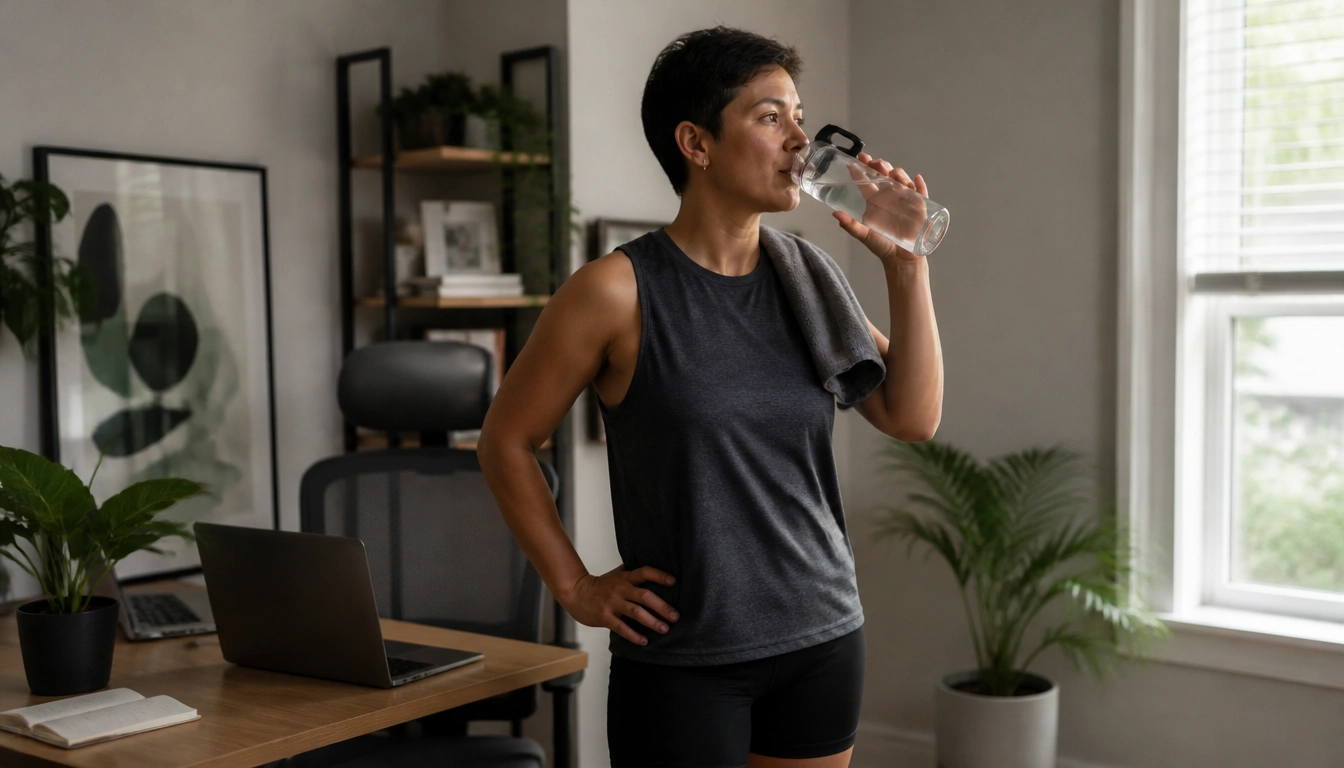
After strength training, give yourself a short transition before settling into work: walk around, drink fluids, and eat a recovery meal or snack if you need one. Then keep the rest of the day recovery-friendly with brief movement breaks, a setup that does not lock you into a stiff sitting posture, and exercise that stays truly easy. For most people working from home, that means active recovery should feel light enough to carry on a conversation and never like a second training session.
Key Takeaways
- A short post-lift transition helps more than sitting immediately, especially after leg day or higher-volume sessions.
- True active recovery should stay easy: conversational pace and about 2 to 4 out of 10 effort, not another workout.
- After sweaty training, replace fluids based on body weight lost and include sodium plus carbohydrates when possible.
- Remote work adds stiffness risk, so build in brief movement breaks every 45 to 60 minutes instead of waiting until you feel tight.
- Chair height, foot support, and monitor position matter more after lifting because poor ergonomics can compound back and neck strain.
Why remote work changes recovery after lifting
Strength training creates the stimulus for adaptation, but recovery is where the body makes the actual changes. Working from home can interfere with that process because the day often shifts from hard effort to long, uninterrupted sitting. After lifting, especially after lower-body or high-volume sessions, staying folded at the hips for hours can contribute to stiffness, make your back feel compressed, and leave your legs feeling more “stuck” than they need to be.
The first adjustment is simple: do not treat the workout as the whole recovery plan. A short period of movement after you finish helps blood continue circulating, and that can support nutrient delivery to working muscles. The National Institutes of Health and sports medicine guidance both support the idea that recovery is helped by restoring fluids, food, and regular movement rather than going straight into prolonged stillness. For a remote worker, the challenge is not only what happens in the gym, but what happens in the chair afterward.
In practical terms, the first 30 minutes after lifting should be a bridge between training and desk work. Walk for a few minutes, drink water, and change out of sweaty clothing if that helps you feel more settled. If you are hungry, eat a balanced snack or meal with protein and carbohydrate. If you trained hard, the recovery window is also a good time to make sure the rest of the day supports sleep later, because sleep is one of the most important parts of recovery, especially after demanding sessions.
Avoiding the post-workout slump when you still have to sit
The post-workout slump is not always a sign that you did too much in the gym. Sometimes it is a sign that you trained hard and then immediately stopped moving for too long. Sitting right away, especially in a chair that keeps your hips deeply flexed, can make you feel tighter through the front of the hips and more compressed through the low back. That does not mean you should avoid sitting altogether. It means you should interrupt the “all-or-nothing” transition from lifting to work.
A useful rule is to create a brief reset before your first long work block. Start with a few minutes of light walking around your home, easy stair climbing if that feels good, or slow dynamic mobility that does not spike effort. Then settle into work with the expectation that you will not stay in one position for hours. This is particularly helpful after sessions that use a lot of squatting, hinging, pressing overhead, or volume that leaves you feeling generally flat rather than energized.
If you feel drained after training, do not try to rescue the day with more intense movement. Recovery improves when you lower the demand on the body. That may mean less standing, fewer extra errands, or simply choosing a comfortable first work task instead of jumping into something mentally stressful while your body is still cooling down. The goal is to shift out of the workout without becoming motionless.
What active recovery should feel like for remote workers
Active recovery is not another training session in disguise. According to sports medicine guidance, it should stay very easy: about 2 to 4 out of 10 on a perceived exertion scale, with a pace that still lets you talk normally. If you need to concentrate on breathing, push through fatigue, or recover afterward, you have gone too hard for recovery purposes.
Good examples include a relaxed walk, easy stationary cycling, gentle mobility work, or a few minutes of flowing movement between meetings. These options can support circulation without adding much fatigue. The point is not to “burn calories” or chase a sweat. It is to keep muscles from going cold and stiff after a workout-heavy morning or a long period of desk time.
What does not count as active recovery? A brisk cardio session, a hard bodyweight circuit, a second lifting workout, or stretching so aggressively that it feels like strain. Those may have their place on another day, but they do not belong in the role of post-strength recovery if your goal is to feel better and be ready for the next session.
Movement breaks during the workday
Remote work makes movement optional, which is exactly why you need a plan. A practical movement-break protocol is to stand up and move every 45 to 60 minutes for about 2 minutes. That is short enough to fit into a workday and long enough to interrupt the stiffness that builds from sitting in one position after lifting.
Keep the break simple. You can walk to another room, do a few sit-to-stands, reach your arms overhead, open the chest in a doorway, or switch from sitting to standing for part of a call. If your legs feel especially tight after lower-body training, use the break to take a short walk rather than forcing deep stretching. If your upper back feels welded from pressing work, gentle shoulder and thoracic movement is usually enough.
Consistency matters more than intensity. Two minutes every hour is more useful than one long stretch session at the end of the day if you spend most of the day seated. For people who are training several times a week, these “movement snacks” also help distinguish normal fatigue from the kind of stiffness that comes from being locked in one posture for too long.
Home-office ergonomics that matter after training
Ergonomics do not replace recovery, but they can reduce the extra strain that piles onto a sore body. After lifting, the most useful home-office adjustments are the ones that prevent you from sinking into a position that keeps the hips, neck, and back under steady load. According to occupational ergonomics principles, a chair that lets your hips and knees rest at roughly a right angle is a better starting point than a low seat that folds you deeply at the hips.
Feet should be flat on the floor or supported by a footrest if needed. That helps you avoid dangling legs or uneven pressure through the low back. The monitor should be high enough that you are not constantly jutting your head forward to look at it, because neck strain tends to feel worse after training sessions that already taxed the upper body. If you are working from a kitchen table or a fixed-height desk, small adjustments matter: raise the screen, support the feet, and avoid reaching forward to the keyboard for hours at a time.
Think of ergonomics as reducing friction in recovery. If your setup makes your back or hips feel worse every time you sit down, your body has to spend the whole afternoon recovering from both the workout and the workstation.
How recovery changes with workout type and volume
Not every strength session requires the same recovery routine. A lighter, sub-maximal workout may leave you ready for a normal day with basic hydration, a decent meal, and a few breaks from sitting. A high-volume hypertrophy session usually needs more attention to food, fluids, and sleep because the total training stress is higher. The more sets, total work, and muscle damage you accumulate, the more carefully you should support recovery afterward.
That does not mean you need a different life plan after every workout. It means you should match the recovery effort to the training demand. A heavy leg day, for example, is more likely to leave you stiff after long sitting than a short upper-body session. A very hard session may also make your appetite, hydration needs, and evening fatigue feel different. In those cases, a simple recovery meal, a clear plan for movement breaks, and an earlier bedtime matter more than trying to do extra mobility work for an hour.
According to ACSM guidance, post-exercise rehydration should replace fluids and electrolytes lost during exercise. A practical benchmark is to drink roughly 450 to 675 milliliters, or 15 to 23 ounces, of fluid for every 0.5 kilogram, or 1 pound, of body weight lost during training. Including sodium and carbohydrate can help support faster rehydration. If you do not weigh yourself before and after workouts, use thirst, sweat level, and urine color as rough feedback, but do not overcomplicate the process.
DOMS versus injury: when soreness is normal and when to get help
Delayed-onset muscle soreness, or DOMS, is common after strength training, especially when you try a new movement, increase volume, or do more eccentric work. Mild to moderate soreness that peaks a day or two later is usually normal. It can feel achy, tight, or tender when you move the affected muscle, and it often improves as you warm up.
Injury tends to look and feel different. Sharp pain, sudden swelling, a clear loss of strength on one side, pain that localizes to a joint, or discomfort that worsens sharply with specific movements deserves more caution. Nerve-like symptoms, such as tingling, numbness, or pain radiating down the arm or leg, are also reasons to seek professional evaluation. If sitting after lifting makes your back or neck pain noticeably worse and the pain does not settle with movement changes, ergonomic changes, and rest, a physical therapist or sports medicine clinician can help sort out whether this is a training issue, a posture issue, or something else.
Do not try to push through pain that feels unstable, increasingly sharp, or clearly different from the usual post-workout soreness you know from past sessions. Recovery is meant to help you return to training, not to ignore warning signs.
Sample routines for a work-from-home recovery day
For a heavy leg day, start with a 5 to 10 minute walk and a fluid refill before sitting down. Eat a recovery meal or snack with protein and carbohydrate if the workout was hard or close to mealtime. During the first work block, keep your chair supportive, use foot support if needed, and stand up every 45 to 60 minutes for a short movement break. Later in the day, choose a very easy walk or a little mobility work if it feels good, then prioritize sleep.
For an upper-body day, the same structure works, but sitting posture becomes more important if your traps, neck, or upper back feel loaded. Keep the monitor at eye level, avoid reaching toward the screen, and use small shoulder and thoracic motion breaks throughout the day. If the workout was moderate rather than hard, your recovery focus can be shorter and simpler.
For a lighter session, you may only need a brief transition, normal hydration, and movement breaks to stay comfortable. The goal across all three versions is the same: recover enough to train again, but do not create extra fatigue by turning recovery into another workout.
Frequently Asked Questions
How long should I wait before sitting down to work after lifting?
You do not need a long delay, but it helps to take a short transition first. A few minutes of walking, drinking fluids, and changing out of sweaty clothes can make sitting more tolerable than going straight from the rack to the chair. If you trained legs hard, an immediate long sitting block is more likely to leave you stiff.
What counts as active recovery versus just exercising more?
Active recovery should feel easy enough to hold a normal conversation and stay around 2 to 4 out of 10 effort. A relaxed walk, gentle cycling, or light mobility fits that goal. If it feels like cardio training, a hard stretch session, or another workout, it is probably too much for recovery.
What should I eat and drink after a strength workout if I work from home?
After training, focus on fluids, sodium, and carbohydrate plus protein if you are hungry or the session was demanding. ACSM guidance uses body-weight loss from exercise as a practical hydration benchmark, so sweaty sessions often need more than just a few sips of water. A balanced meal or snack is usually enough for most people.
How often should I take movement breaks during a remote workday after training?
A good target is a brief movement break every 45 to 60 minutes, lasting about 2 minutes. That can be a short walk, a few sit-to-stands, or simple mobility. The main goal is to interrupt long periods of sitting before stiffness builds up.
How can I set up my home workspace to reduce stiffness and soreness after lifting?
Aim for hips and knees at roughly a right angle, feet supported, and a monitor high enough that you do not crane your neck forward. These small adjustments reduce the extra strain that can pile onto sore muscles after training. If your setup is fixed, use a footrest, books, or a monitor stand to get closer to that position.
The Bottom Line
After strength training, recovery for remote workers works best when it starts right away and continues through the workday. Move briefly before you sit, drink enough to replace sweat losses, and eat a recovery meal or snack when needed.
The most useful habits are usually the least dramatic: easy active recovery, short movement breaks, and a home setup that does not force you into a cramped posture. Match the recovery effort to the workout, and pay attention to pain that seems unusual or one-sided.
If soreness feels like normal DOMS, it should gradually improve. If pain is sharp, unstable, swollen, or associated with tingling or weakness, get it checked by a qualified clinician rather than trying to train through it.
Medical disclaimer
Medical disclaimer: This content is for educational and informational purposes only and is not a substitute for professional medical advice, diagnosis, or treatment. Dietary needs and supplement suitability vary by individual.
