
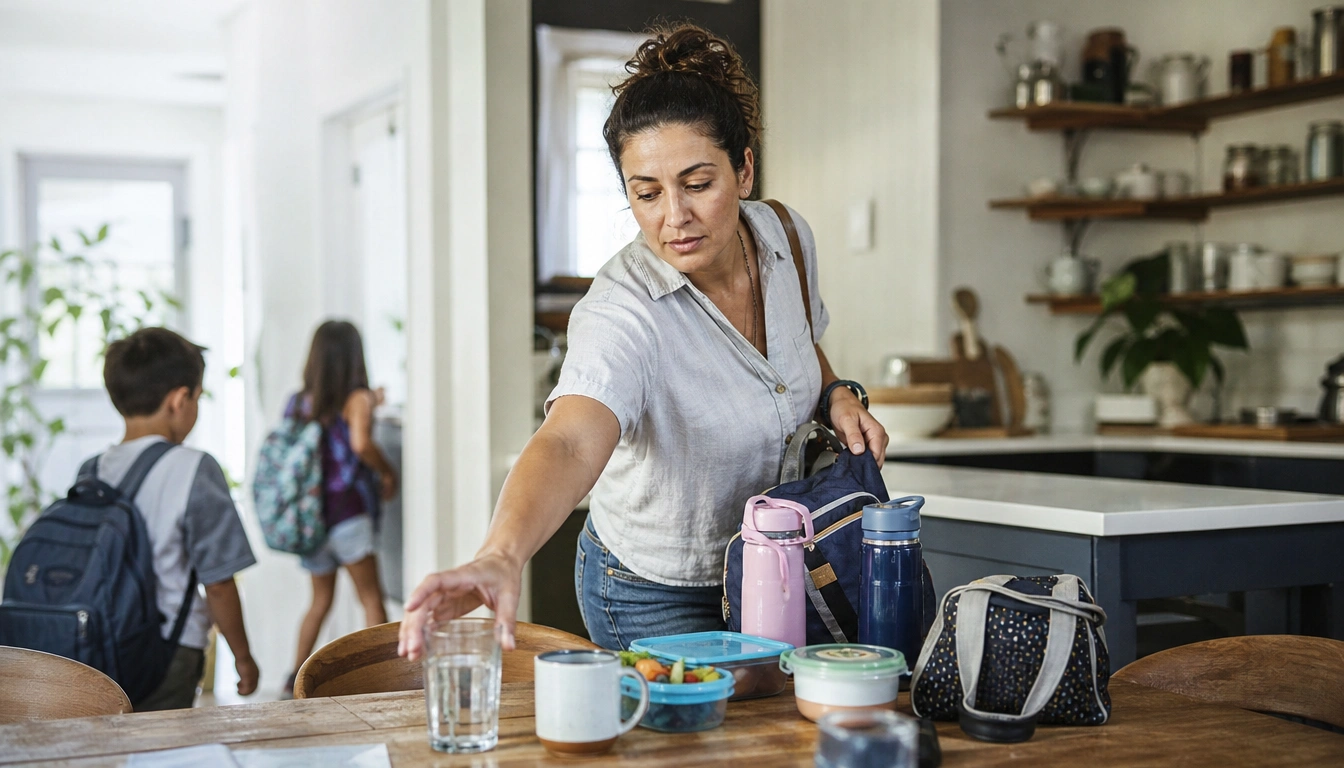
The easiest realistic way for busy parents to drink enough water consistently is to attach it to routines that already happen every day: wake-up, school drop-off, meal prep, dishwashing, and meals. That works better than relying on thirst alone or trying to track every ounce. You do not need only plain water, either; other drinks and water-rich foods can count, and a simple check like urine color can help you know if your routine is working.
Key Takeaways
- Start with one automatic cue, such as a glass of water before coffee, then add more cues only after that feels easy.
- Hydration does not have to come only from plain water; milk, herbal tea, diluted juice, and water-rich foods all contribute.
- Busy parents often miss thirst because they are distracted, tired, or running on caffeine, so linking water to routines is more reliable than waiting to feel thirsty.
- A pale straw or light yellow urine color is a low-friction sign that you are probably drinking enough for day-to-day needs.
- Fluid needs can rise in hot weather, with exercise, during pregnancy, and while breastfeeding; medical fluid limits should always override general advice.
Why busy parents miss water during the day
For many parents, hydration slips because the day is broken into interruptions. You may start with coffee, answer one request after another, and realize late in the afternoon that you have barely had any water. That pattern is common, and it is one reason a routine for drinking more water for busy parents needs to be built around real life rather than ideal habits.
Thirst is not always a dependable reminder when you are juggling work, childcare, and household tasks. Mild dehydration can show up as fatigue, headache, irritability, or foggy concentration, which can blend into the normal exhaustion of parenting. The CDC and NHS both emphasize practical daily fluid intake, but the best routine is the one you can repeat on a hectic day, not the one that looks perfect on paper.
Coffee and tea can still fit into a hydration pattern, but they should not be the only drinks you rely on. If you wait until you feel very thirsty, you may already be behind. That is why the goal is not “drink more someday”; it is to make drinking a little water happen automatically at predictable moments.
How much water to aim for without obsessing over ounces
There is no single number that works for every parent every day. Public health guidance gives broad daily ranges, such as the NHS recommendation for 6 to 8 cups or glasses of fluid a day, while other authorities give higher adequate intake figures for total beverages. Those numbers are useful as a general reference, but busy parents usually do better with a simpler approach: aim for steady fluid intake across the day instead of trying to count every sip.
It also helps to think in terms of total fluids, not only plain water. Drinks and water-rich foods both contribute. A parent who has a glass of water in the morning, tea later, milk with a meal, and fruit or soup during the day may be meeting hydration needs without measuring anything.
If counting makes hydration feel like another chore, use your routine and your body as the guide. A practical target is to build several water moments into the day and then adjust based on thirst, activity, weather, and urine color. That keeps the plan flexible enough for school runs, work meetings, and bedtime chaos.
Build hydration into the routines you already have
The easiest routine for drinking more water for busy parents is one that attaches to moments you already repeat. Instead of setting a separate reminder you may ignore, pair water with routine actions that happen without fail. Habit stacking makes hydration less about willpower and more about timing.
Start with wake-up. Put a glass or bottle by your bed or on the kitchen counter the night before, and drink from it before coffee. Then link the next drink to the school run or daycare handoff. When you come back inside, refill the bottle or pour another glass before the house gets noisy again.
Meal prep and dishwashing are especially useful cues. If you are chopping vegetables, packing lunchboxes, loading the dishwasher, or sitting down to eat, that can be your signal to take a few sips. Bedtime routines can work too: after the kids are settled, drink a final glass while you reset the kitchen or pack for the next day. The goal is not a rigid schedule. It is to make water a normal part of the day’s transitions.
The four easiest habit-stacking strategies for parents
Wake-up glass: Drink water before coffee or tea. This is often the simplest win because it happens before the day gets away from you. If plain water feels hard first thing, keep it cold or keep the glass visible and ready.
Transition sips: Take a few sips whenever you move from one task to the next. Leaving the house, coming back home, opening the laptop, or switching from dinner prep to cleanup can all be water cues. Small repeated sips are easier to sustain than waiting for one large “hydration session.”
Family water breaks: Fill your drink at the same time as the children’s cups or bottles. This can become a family cue, such as “water break” before a car ride, after school, or before screen time. Children often respond well to routines that are visible and repeated.
Meal-time pairing: Put water on the table or counter at meals so drinking becomes part of eating, not a separate task. This also works with snack prep, lunch packing, and reheating leftovers. The more often you connect water to something you already do, the less you have to remember later.
What counts toward hydration
Plain water is a great default because it is calorie-free and tooth-friendly, but it is not the only option. Hydration can come from a mix of drinks and foods, which is useful for parents who do not want to force down glass after glass of plain water.
Lower-fat milk, sugar-free squash or diluted juice, and herbal tea can all contribute to fluid intake. Water-rich foods also matter, especially when a meal is already happening. Think fruit, cucumber, tomatoes, melon, soup, yogurt, and similar foods with a high water content. For many families, that makes hydration easier because it fits normal eating patterns.
It is still smart to limit drinks that add a lot of sugar without much benefit, and some caffeinated drinks can make you urinate more often. That does not mean coffee or tea are off-limits; it just means they should not be your only strategy. A realistic routine can include several different fluid sources over the course of the day.
How to make water easier to drink
If water feels boring or inconvenient, reduce the friction. Cold water often goes down more easily, so keeping a jug in the fridge or adding ice may help. If plain water tastes dull, try subtle flavoring such as lemon, lime, cucumber, mint, or frozen berries. The point is to make the drink appealing enough that you reach for it without resistance.
Placement matters more than motivation. Put water where you already pause: beside the kettle, on the counter near the fruit bowl, in the car cup holder, by the diaper bag, or next to your work laptop. If carrying a large bottle feels annoying, use a smaller bottle or keep multiple water spots around the house instead of one bulky container.
For parents who spend time in the car, a bottle that fits the cup holder can make a bigger difference than a giant reusable jug that never gets used. The easiest hydration setup is the one you do not have to think about. Make the water visible, easy to reach, and easy to refill.
When parents need more fluids and how to tell the routine is working
Some days call for more fluid than usual. Hot weather, physical activity, long walks with a stroller, and exercise can all increase fluid needs. Pregnancy and breastfeeding also raise fluid requirements, so a generic routine may need to be adjusted during those life stages. If a clinician has given you a specific fluid plan, follow that instead of a general target.
You do not have to count ounces to know whether your routine is doing its job. A practical self-check is your urine color: pale straw or light yellow usually suggests adequate hydration, while darker yellow or amber can mean you need more fluids. Thirst is also useful, especially if you are noticing it repeatedly across the day.
Other signs that you may need to drink more include dry mouth, headache, or feeling unusually tired after a busy stretch. If those signs keep happening, it may be worth adjusting your routine so water shows up earlier and more often, rather than waiting until late afternoon when you are already depleted.
When a one-size-fits-all hydration rule is the wrong choice
General hydration advice is useful for many healthy adults, but it is not appropriate for everyone. People with certain medical conditions, such as heart failure or advanced kidney disease, may be told to limit fluids. Some medications can also affect fluid balance. In those situations, individualized medical advice matters more than any general parenting routine.
It is also possible to drink too much water, especially in a short period of time. That is uncommon in everyday parenting, but it is one reason not to force water beyond thirst or ignore medical guidance. If you have been given a fluid limit, make that your priority and ask your healthcare professional how to apply it to your daily routine.
For most busy parents, the safest and most workable approach is simple: build a routine around the day you already live, use several kinds of fluids and water-rich foods, and let thirst and urine color guide small adjustments. That keeps hydration practical without turning it into another source of pressure.
Frequently Asked Questions
How much water should a busy parent aim to drink each day?
There is no single perfect number for every parent, but public health guidance commonly suggests about 6 to 8 cups or glasses of fluid a day. That can include more than plain water. A practical goal is to spread drinks through the day and adjust for heat, exercise, pregnancy, breastfeeding, and your own thirst.
What are simple habit-stacking tricks that help parents remember to drink water?
The easiest habit-stacking tricks are wake-up water before coffee, a few sips during transitions, water with meals, and family water breaks before leaving the house or after school. Tying water to something you already do makes it much easier than trying to remember on its own.
Does coffee, tea, or flavored water count toward hydration?
Yes, fluids like tea and flavored water can count toward hydration, and lower-fat milk or diluted juice can contribute too. Plain water is still the best default, but you do not need to rely on only plain water. Try to keep sugary drinks limited and make water the main drink whenever possible.
How can parents tell if they are dehydrated without tracking ounces?
A low-friction check is urine color. Pale straw or light yellow usually suggests good hydration, while darker yellow or amber can mean you need more fluids. Thirst, dry mouth, headache, and feeling unusually tired can also be clues, though they are not specific to dehydration on their own.
When should a parent increase fluid intake for heat, exercise, pregnancy, or breastfeeding?
Increase fluids when you are in hot weather, exercising, doing long active days, pregnant, or breastfeeding. Those situations raise fluid needs. If you have a medical condition that requires fluid restriction, or you have been told to limit fluids, follow that guidance instead of a general rule.
The Bottom Line
The most realistic hydration routine for busy parents is built on habits you already have: drink at wake-up, at meals, during school runs, and while doing kitchen tasks. That approach is easier to keep than a rule that depends on willpower or tracking every ounce.
You also do not need to rely on plain water alone. Tea, milk, diluted juice, and water-rich foods can help you meet your fluid needs, and a simple check like urine color can tell you whether the routine is probably working. Adjust upward in heat, exercise, pregnancy, or breastfeeding, and follow personalized fluid limits if a clinician has given you one.
Medical disclaimer
Medical disclaimer: This content is for educational and informational purposes only and is not a substitute for professional medical advice, diagnosis, or treatment. Dietary needs and supplement suitability vary by individual.
Sources
- Centers for Disease Control and Prevention (CDC) — cdc.gov. Accessed November 2026.
- National Health Service (NHS) — www.nhs.uk. Accessed November 2026.
- Mayo Clinic — mayoclinic.org. Accessed November 2026.
