
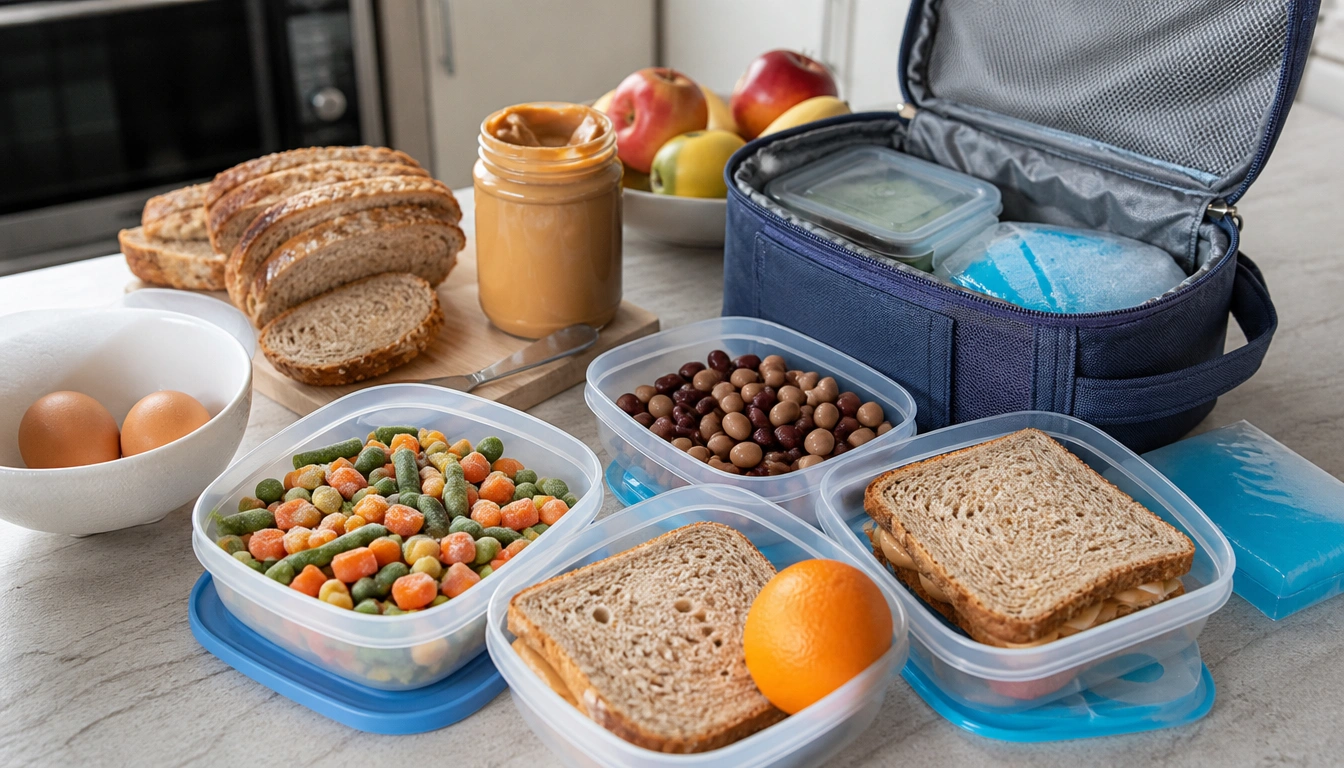
You can keep a lunch-packing routine affordable by choosing a few low-cost staples, planning one weekly shopping list, and building each lunch from 3 to 4 food groups in a MyPlate-style pattern. Batch-cook the cheapest basics, portion them for the week, and use frozen or canned produce when fresh food is likely to spoil. If lunches won’t be refrigerated, keep them cold with an insulated bag and frozen gel pack.
Key Takeaways
- Start with a short weekly routine: check what you already have, shop once, prep once, and pack from the fridge each morning.
- Build lunches around high-value staples like beans, lentils, eggs, oats, peanut butter, frozen vegetables, canned low-sodium items, and whole grains.
- Use a simple MyPlate-style lunch formula so each meal has a grain, protein, and fruit or vegetable, with dairy or fortified soy added when practical.
- Choose frozen and canned produce when fresh food would likely go unused before it spoils; that often saves more money than buying “fresh” and throwing food away.
- For school or work lunches that sit out, use an insulated bag with a frozen gel pack and discard perishable food that has been left too long at room temperature.
Budget-first lunch planning: the simple weekly routine
A routine for packing lunches works best when it removes weekday decisions. The simplest version is the same every week: use up what you already have, choose a small set of budget foods, prep a few components at once, and portion them into lunch containers before the busy days start. That structure helps households avoid last-minute takeout, duplicate grocery buys, and food that spoils before anyone eats it.
Nutrition guidance from USDA MyPlate and the Dietary Guidelines for Americans supports a pattern built from familiar food groups rather than expensive specialty products. That means a lunch does not need to be fancy to be balanced. A sandwich, fruit, and yogurt can work just as well as a grain bowl or salad if the parts are chosen with cost and practicality in mind. The goal is consistency, not perfection.
A realistic weekly routine usually has four parts: inventory, plan, shop, and prep. Inventory means checking the fridge, freezer, and pantry before making a list. Planning means deciding what lunches will look like for the next few days and reusing ingredients across meals. Shopping means buying only what is needed for those meals. Prep means cooking the parts that take the most time so the rest of the week feels easier.
The cheapest building blocks to keep on hand
The most budget-friendly lunch foods are usually the ones that do double duty and last well. Beans and lentils are strong staples because they are low-cost, filling, and easy to use in wraps, rice bowls, soups, and pasta salads. Eggs are another economical protein when they fit your household’s preferences and storage space. Peanut butter is useful for sandwiches, dips, and oatmeal, and whole grains such as oats, brown rice, whole-wheat pasta, and whole-grain bread stretch across many lunches.
Frozen vegetables deserve a place in the routine because they reduce waste. They are picked and frozen at a useful stage of freshness, so you can use only what you need and keep the rest for later. Canned vegetables, beans, tuna, and tomatoes can also be smart choices, especially when the low-sodium versions are available. These items help households avoid paying more for single-serve convenience foods that may be less filling and less flexible.
Dairy foods or fortified soy alternatives can round out a lunch when the budget allows. Plain yogurt, milk, and fortified soy beverages can add protein and calcium, but they do not need to appear in every lunch to make the pattern work. The point is to keep a few reliable, low-waste foods on hand so lunch can be assembled from what is already available instead of from expensive last-minute purchases.
How to assemble a balanced lunch on a budget
A MyPlate-style lunch formula keeps things simple: choose at least three food groups, and often four if the lunch is meant to keep someone full for several hours. A practical version is one whole grain, one protein, one fruit or vegetable, and sometimes a dairy or fortified soy item. This framework is flexible enough for adults, kids, and mixed household needs while still fitting a budget.
For example, whole-wheat bread with peanut butter, a banana, and milk covers several needs quickly. A rice bowl with beans, frozen vegetables, and salsa can do the same. Oatmeal with peanut butter and fruit can become a cold or warm lunch when you need something cheap and filling. These are not special recipes; they are repeatable combinations that use affordable ingredients in a balanced way.
If you need more staying power, increase the grain or protein portion rather than buying a separate convenience snack. If you need a lighter lunch, keep the same structure but shrink the portions. The value comes from the formula itself: low-cost foods, little waste, and enough variety to keep lunch from feeling repetitive.
Weekend batch-prep workflow that actually saves time
The easiest batch-prep plan is not complicated. Pick one day to cook the basics, then divide them into meal parts. A pot of lentils, a tray of roasted vegetables, a batch of rice, or a carton of hard-boiled eggs can become several lunches with small changes in sauce, bread, or toppings. USDA-style meal planning works best when one cooking session produces several mix-and-match options.
Shopping works better when it follows the prep plan, not the other way around. Buy ingredients that appear in more than one lunch idea so leftovers have a purpose. If you roast vegetables for one meal, plan to use the extra portion in wraps, pasta, or grain bowls. If you cook beans, decide in advance whether they will become tacos, rice bowls, or a sandwich filling. That reduces the chance that food sits in the fridge waiting for a “good enough” use that never comes.
Storage matters just as much as cooking. Portion lunches into containers right after prep, then move them to the fridge or freezer as appropriate. If a lunch will not be eaten for several days, freezing part of the batch can be a low-stress way to protect both food and money. The best prep routine is the one that makes weekday packing nearly automatic.
How to reduce food waste and avoid single-serving price traps
Food waste is one of the biggest budget leaks in household lunch planning. Fresh produce can be useful, but it becomes expensive if it is bought with good intentions and then tossed out. Frozen and canned fruits and vegetables often solve that problem because they last longer, can be portioned as needed, and usually cost less than buying fresh items that may spoil before the week ends. That makes them especially helpful for households with irregular schedules.
Single-serving convenience foods are another common trap. Individually packaged snack boxes, drink pouches, and grab-and-go meals often cost more per serving than the same foods bought in larger sizes and portioned at home. A large tub of yogurt, a family-size bag of popcorn, or a block of cheese can be split into containers for the week. The savings are usually strongest when you build the lunch around core ingredients instead of around packaged extras.
This is also where shopping habits matter. If a food is only on sale in a form your household will not actually use, it is not a savings. Affordable lunches depend on foods that will be eaten, not just purchased. The best budget strategy is to buy versatile basics, use them in several ways, and skip the items that look convenient but are likely to be wasted.
Food safety for packed lunches that sit out of the fridge
Cost savings should not come at the expense of food safety. Perishable lunches that contain meat, poultry, eggs, dairy, cooked rice, or other temperature-sensitive foods need to stay cold until they are eaten. USDA food safety guidance is clear: if a lunch cannot be refrigerated right away, pack it in an insulated lunch bag with a frozen gel pack. That helps keep the food out of the temperature range where bacteria grow quickly.
Timing matters too. Perishable food left at room temperature for more than two hours should be discarded. If the room or outdoor temperature is above 90°F, the safe window is shorter. That rule applies even if the food still looks and smells fine. The safest routine is to pack perishable items with cold storage in mind and to avoid sending fragile foods unless the lunch will be eaten soon after it is packed.
Some lunches are naturally easier to manage without refrigeration. Shelf-stable items such as whole fruit, crackers, nut or seed butter, canned fruit packed in water or 100% juice, and dry whole-grain items are often better choices when refrigeration is uncertain. If a household has a long commute, a shared fridge that is unreliable, or a school rule that limits storage, that should shape the menu from the start.
Adjustments for kids, active teens and adults, and nut-free rules
Children usually do better with simpler portions than adults. Too many separate containers can lead to waste, unfinished lunches, or a sense that the meal is too complicated. A smaller sandwich, fruit, and one side is often enough. Involving kids in choosing or packing part of the lunch can improve acceptance and reduce the odds that they come home with untouched food. Even a small role, such as picking the fruit or helping place items in containers, can make the routine easier.
Active teens and adults often need more food than a standard lunchbox provides. The easiest way to adjust is to enlarge the grain and protein portions, not to add expensive packaged extras. Extra rice, an additional slice of bread, a second egg, or a larger serving of beans can raise the energy content without changing the basic structure. That keeps the lunch affordable while better matching physical demands.
For nut-free schools or workplaces, peanut butter may not be allowed, so it helps to have a backup plan. Sunflower seed butter, roasted chickpeas, beans, eggs, cheese, or leftover chicken can often fill the same role at a similar cost. Always check the site’s allergy policy before packing. The safest lunch is the one that fits the rules and still feels satisfying enough to be eaten.
Budget lunch examples that can be mixed and matched across the week
Examples work best when they are treated like templates rather than rigid recipes. One low-cost lunch could be a peanut butter sandwich, an apple, and yogurt. Another could be brown rice, black beans, frozen corn, and salsa. A third could be whole-wheat pasta with canned tuna and peas. Each one uses affordable staples, includes several food groups, and can be adjusted based on sales, leftovers, and household preferences.
You can also reuse the same base ingredients in different forms so lunches do not feel repetitive. Cooked beans can go into wraps one day and rice bowls the next. Eggs can be eaten hard-boiled, chopped into sandwiches, or added to fried rice. Frozen vegetables can be warmed and served on the side or mixed directly into a grain dish. That kind of repetition is helpful, not boring, when it saves time and keeps the grocery list short.
A useful way to think about the week is not “What should I cook every day?” but “What 3 to 5 ingredients can I use in several lunches?” That shift is usually what makes the routine affordable enough to repeat.
Simple mix-and-match combinations
| Staple | Easy lunch use | Why it helps the budget |
|---|---|---|
| Beans or lentils | Bowls, wraps, soups, pasta | Low cost, high fiber, filling |
| Eggs | Sandwiches, salads, bowls | Versatile and quick to prep |
| Frozen vegetables | Side dish, mixed into grains | Less spoilage, easy portioning |
| Whole grains | Bread, rice, oats, pasta | Stretch meals and improve fullness |
| Peanut butter or seed butter | Sandwiches, dip, oatmeal | Cheap, shelf-stable, portable |
A routine built this way does not require special products or daily motivation. It relies on a few dependable foods, a short prep session, and realistic expectations about what your household will actually eat. That is what makes it sustainable.
Frequently Asked Questions
What are the cheapest healthy foods to build lunches around?
The most useful low-cost staples are beans, lentils, eggs, peanut butter, oats, whole-grain bread, brown rice, pasta, frozen vegetables, and canned low-sodium items. They are flexible, filling, and easier to stretch across several meals than single-serve convenience foods.
How do I batch-prep lunches for the whole week without wasting food?
Plan around ingredients that can be reused in more than one lunch, such as rice, beans, eggs, and frozen vegetables. Cook once, portion right away, and freeze part of the batch if you will not use it within a few days. Start by shopping from a menu, not from impulse.
What’s the best low-cost lunch formula that still follows MyPlate?
A practical version is one whole grain, one protein, and one fruit or vegetable, with dairy or fortified soy when it fits the budget. That could be peanut butter toast, fruit, and milk; or rice, beans, and vegetables. The formula matters more than the exact recipe.
How can I pack lunches safely if they won’t be refrigerated right away?
Use an insulated lunch bag with a frozen gel pack for any perishable food. Keep lunch cold until eating time, and discard perishables left at room temperature for more than two hours, or one hour if it is very hot. Shelf-stable items are safer when refrigeration is uncertain.
What should I change for kids, athletes, or people with dietary restrictions?
Children usually need simpler portions, while active teens and adults may need larger grain and protein servings. For nut-free settings, swap peanut butter for seed butter, beans, eggs, or cheese if allowed. Anyone with a medical diet, such as kidney or sodium restrictions, should personalize the plan with clinical guidance.
The Bottom Line
A budget-friendly lunch routine works best when it is repeatable: check what you have, buy a short list of versatile foods, and build lunches from a simple MyPlate-style pattern. That keeps costs down without making meals feel random or complicated.
The strongest savings usually come from staples that do not waste easily: beans, lentils, eggs, oats, frozen vegetables, canned low-sodium items, peanut butter, and whole grains. Frozen and canned produce can be the smarter buy when fresh food is likely to spoil.
For packed lunches that sit out, food safety has to stay part of the routine. Keep perishables cold, use an insulated bag and frozen gel pack, and adjust the menu for kids, allergies, and higher-energy households as needed.
Medical disclaimer
Medical disclaimer: This content is for educational and informational purposes only and is not a substitute for professional medical advice, diagnosis, or treatment. Dietary needs and supplement suitability vary by individual.
Sources
- U.S. Government / Health Authority — usda.gov. Accessed October 2026.
- U.S. Government / Health Authority — dietaryguidelines.gov. Accessed October 2026.
- Academic Research Institution — purdue.edu. Accessed October 2026.
- Academic Research Institution — uic.edu. Accessed October 2026.
