
Screen Time and Sleep: evidence-based guide
Screen Time and Sleep: Better Nighttime Habits
Screen time and sleep are connected through more than blue light. Phones, tablets, games and streaming can delay bedtime, replace sleep, increase mental alertness and interrupt the night with notifications.
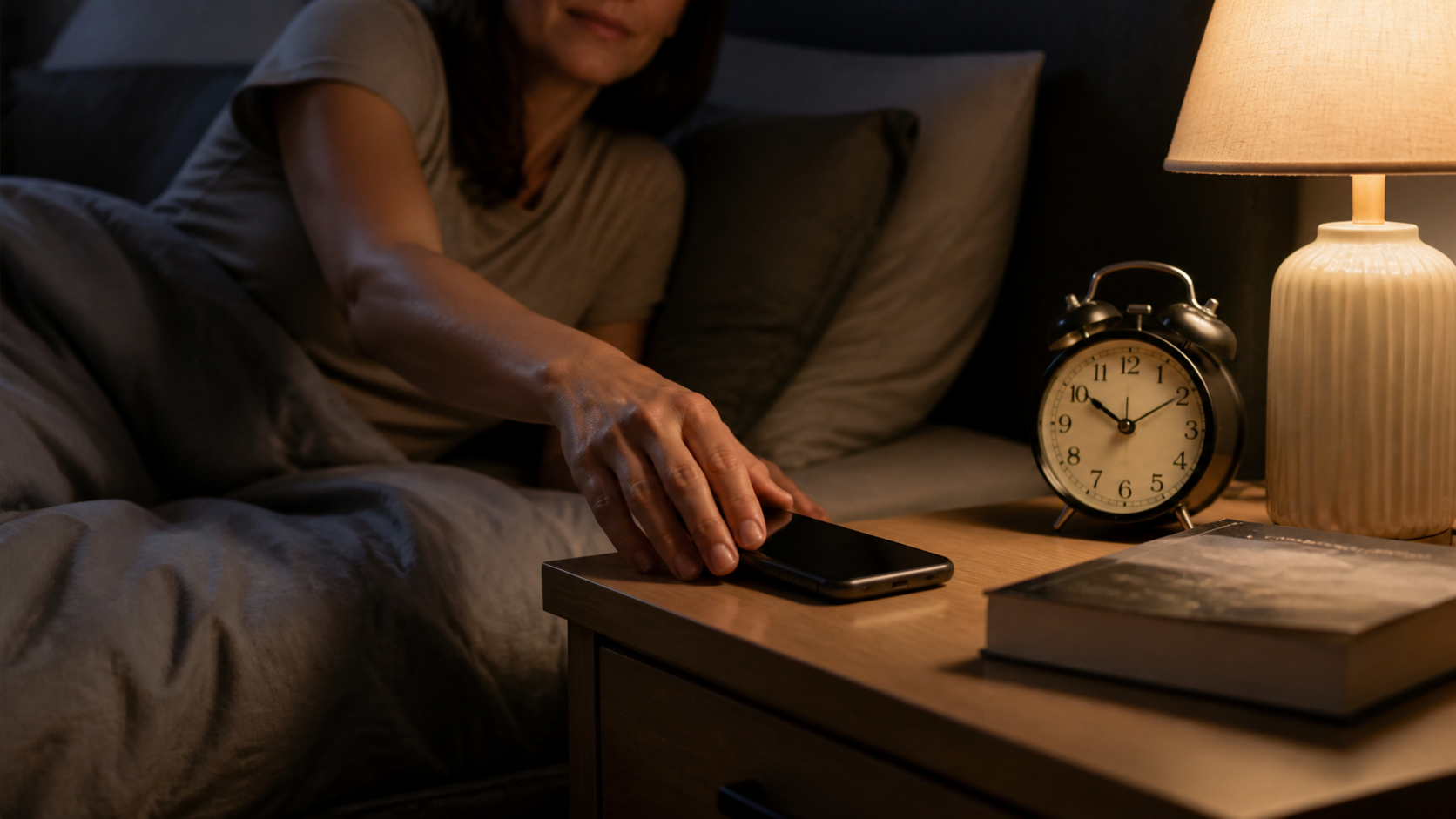
This guide explains what the evidence shows, which changes are most practical for adults and families, and why sleep supplements should not be the first response to an overstimulating bedtime routine.
Screen Time and Sleep at a Glance
| Screen-related factor | Possible sleep effect | Practical response |
|---|---|---|
| Bedtime displacement | Scrolling or streaming pushes sleep later | Set a stopping cue before the intended bedtime |
| Bright light | May increase alertness and alter circadian timing | Dim the room and screen; reduce late exposure |
| Stimulating content | News, games or social conflict can increase arousal | Choose calm offline activities |
| Notifications | Sounds, vibration and anticipation can fragment sleep | Use do-not-disturb and charge devices away from bed |
| Bedroom devices | Easy access encourages checking during the night | Use an alarm clock and create a charging station elsewhere |
How Screen Time and Sleep Interact
The clearest mechanism is simple: time on a device can become time not spent sleeping. Autoplay, endless feeds and “one more episode” remove natural stopping points. Even when bedtime does not move, checking a device after lights-out can shorten sleep.
Content matters too. Competitive games, work messages, distressing news and emotionally charged social media can keep the brain alert. A National Sleep Foundation consensus review concluded that screen use impairs sleep health in children and adolescents and that behavioral strategies can reduce harm. Much adult evidence is observational, so individual response and context still matter.
Blue Light Is Only Part of the Story
Short-wavelength light from screens can affect melatonin and circadian timing, especially when exposure is bright, close to the eyes and late at night. However, focusing only on “blue light” can distract from bedtime delay, content and notifications.
Night mode, warmer color settings and lower brightness may reduce light exposure, but they do not turn a stimulating feed into a calming activity. The most reliable approach combines dimmer light with less engaging content and a clear stopping time.
Screen Time and Sleep for Adults
Adults often need screens for work, caregiving or communication. An all-or-nothing digital detox is rarely necessary. Instead, protect the final part of the evening. NHLBI recommends using the hour before bed for quiet time and avoiding bright artificial light from televisions and computers.
If late-night screen use is the only private or relaxing time in the day, the problem may be an overloaded schedule rather than weak willpower. Move some leisure earlier when possible and make the screen-free alternative genuinely pleasant.
Screen Time and Sleep for Children and Teens
Children and teenagers are especially vulnerable to bedtime displacement and device interruptions. The American Academy of Pediatrics recommends protecting age-appropriate sleep, avoiding screens for about an hour before bed and keeping phones and other media out of bedrooms overnight.
Family rules work better when adults model them. Create a shared charging location, apply the same notification policy to caregivers and avoid making a child’s bedroom the place for unrestricted entertainment. For schoolwork, distinguish required use from recreational use and preserve a wind-down period after the task ends.
A Practical Screen-Free Wind-Down
- Choose the target bedtime. Work backward to protect enough sleep.
- Set a 30–60 minute digital sunset. Start with 15 minutes if an hour feels unrealistic.
- Park devices. Charge them outside arm’s reach and activate do-not-disturb.
- Lower stimulation. Dim lights and switch from work, news or games to a quiet activity.
- Repeat a cue. Use reading, gentle stretching, breathing or preparing for tomorrow.
- Keep wake time steady. A regular schedule reinforces the sleep-wake rhythm.
Do Blue-Light Glasses Improve Sleep?
Blue-light-blocking glasses are marketed heavily, but results depend on lens filtering, timing, adherence and the outcome measured. They may reduce some light exposure, yet they cannot prevent a person from staying awake to keep scrolling. Treat them as an optional layer, not a substitute for limiting bedtime device use.
Sleep Supplements, Melatonin and Screen Habits
Taking a supplement while continuing stimulating screen use may treat the wrong problem. Melatonin is a timing signal, not a general-purpose sedative. NCCIH reports potential benefit for certain circadian conditions such as jet lag or delayed sleep-wake phase disorder, but evidence is not strong enough to recommend it routinely for chronic insomnia.
Melatonin can cause headache, dizziness, nausea or daytime sleepiness and can interact with medicines. Product content may differ from the label. Parents should consult a pediatric clinician before giving melatonin to a child and store gummies securely.
Magnesium and herbal sleep blends
Evidence for magnesium in people without a deficiency is limited, and supplemental magnesium may cause diarrhea or interact with medicines. Multi-ingredient “sleep” blends create added uncertainty; valerian, 5-HTP and other botanicals are not automatically safer because they are natural.
A 7-Day Screen Time and Sleep Reset
- Days 1–2: record bedtime, wake time and the last screen use.
- Days 3–4: turn on do-not-disturb and move the charger away from bed.
- Days 5–6: stop high-arousal content 30 minutes before bed.
- Day 7: compare sleep onset, awakenings and morning alertness.
Change one variable at a time. If sleep improves, keep the smallest effective boundary. See our related guides to healthy morning routines, supplement safety and supplement–medication interactions.
Frequently Asked Questions
How long before bed should I stop using screens?
A practical target is 30–60 minutes. AAP recommends about one hour for children and teens. Begin with a smaller repeatable change if needed.
Does dark mode protect sleep?
It may reduce brightness, but it does not address bedtime delay, stimulating content or notifications. Combine it with a stopping time.
Is television better than a phone before bed?
A television is usually farther from the eyes and less interactive, but engaging programs can still delay bedtime. Content, duration and timing all matter.
Should I take melatonin after using my phone late?
Do not use melatonin simply to cancel out late screen use. Discuss persistent sleep problems and supplement safety with a clinician.
What if I use my phone as an alarm?
Place it across the room, activate do-not-disturb and avoid checking it after the alarm is set. A basic alarm clock removes the temptation entirely.
Bottom Line
Screen time and sleep are linked through light, mental stimulation, notifications and lost time. The best first step is usually environmental: create a stopping cue, move devices away from the bed and replace late scrolling with a short calming routine.
Sources
- NHLBI: Healthy Sleep Habits
- NHLBI: Insomnia Treatment
- American Academy of Pediatrics: Screen Time Affecting Sleep
- AAP: Digital Ecosystems, Children, and Adolescents
- National Sleep Foundation Consensus: Screen Use and Sleep Health
- NCCIH: Melatonin—What You Need To Know
This article is educational and does not replace individualized medical care.
