
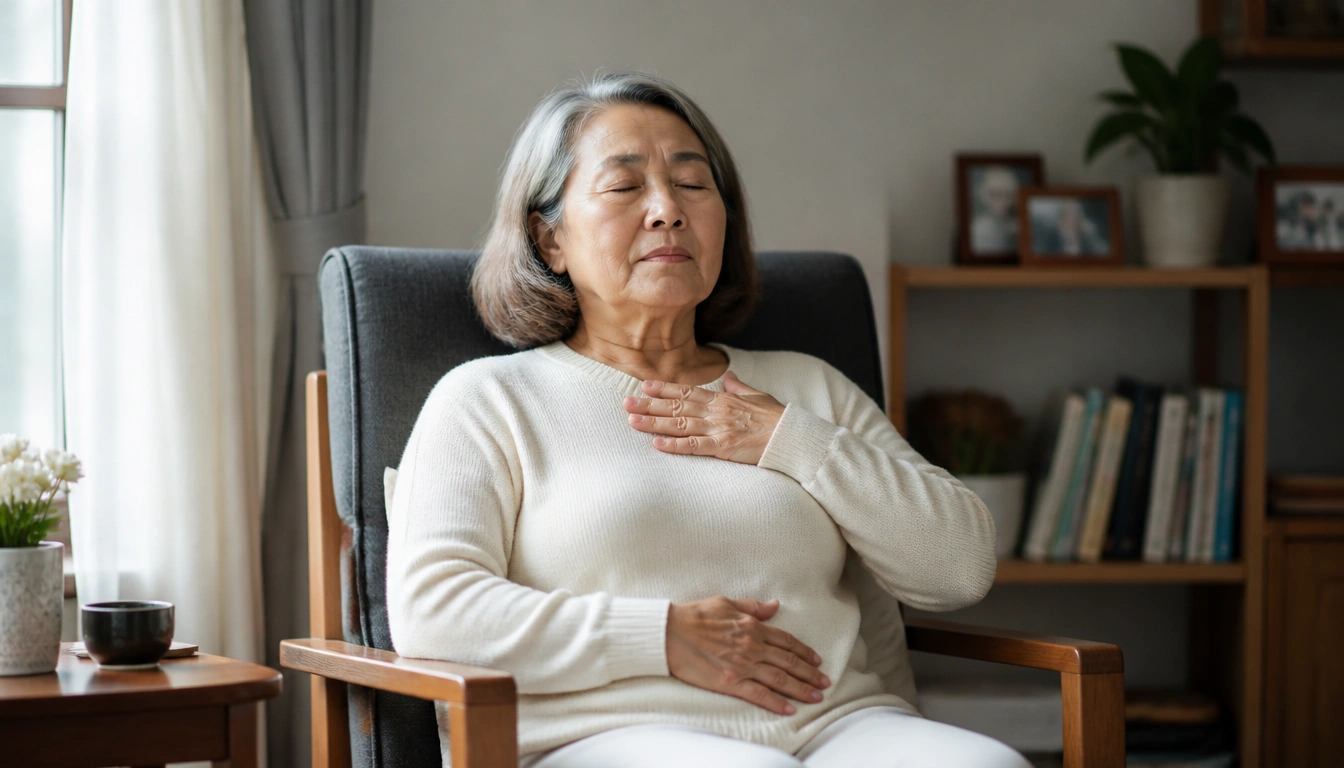
The easiest breathing exercise for most adults over 50 is slow diaphragmatic breathing: sit supported or lie down, place one hand on your chest and one on your abdomen, breathe in gently through the nose so the belly rises, then exhale slowly through the nose or pursed lips a little longer than the inhale. Keep it easy, not forced. If you feel dizzy, tingly, or tight in the chest, stop and return to natural breathing.
Key Takeaways
- Slow diaphragmatic breathing is usually the simplest option because it is gentle, repeatable, and easy to do seated or lying down.
- Aim for a relaxed, unforced rhythm rather than a deep or fast breath; overbreathing can cause lightheadedness.
- Adults over 50 may do better with chair-backed or reclined positions if standing, floor work, or stretching feels uncomfortable.
- Short daily sessions can be useful: many people start with 2 minutes and build toward 5 to 20 minutes once or twice a day.
- A brief 4-to-6 breath reset can help during everyday stress spikes, such as frustration, traffic, or worry.
- If breathing practice causes dizziness, tingling, chest tightness, or lingering breathlessness, stop and seek medical advice if it does not settle.
Why simple breathing helps the nervous system
Simple breathing practice for adults over 50 works by influencing the autonomic nervous system, the part that runs body functions without conscious effort. Faster, shallow breathing tends to go along with stress activation. Slower breathing, especially when the exhale is relaxed and slightly longer, can support a calmer parasympathetic response. That is one reason slow breathwork is often used as a stress-management tool in health settings.
According to the NIH and NHS, slow, controlled breathing is a practical way to reduce stress arousal and bring attention back to the body. It is not a cure for anxiety or a replacement for treatment, but it can be a useful first-line self-care skill. For many people, the best version is the one they can do gently and repeatably.
Start with diaphragmatic breathing, sometimes called belly breathing:
- Sit in a supportive chair with your feet on the floor, or lie on your back with your knees bent if that feels easier.
- Place one hand on your upper chest and the other on your abdomen, just below the ribs.
- Let your shoulders soften.
- Inhale slowly through your nose, aiming for the hand on your abdomen to rise more than the hand on your chest.
- Exhale slowly through your nose or pursed lips and let the abdomen fall naturally.
- Keep the breath smooth and light. The goal is calm control, not a big breath.
If you are new to the practice, think “gentle and even” rather than “deep.” A smaller, quieter breath is often safer and more comfortable than trying to fill the lungs as much as possible.
How adults over 50 can adapt it
Age-related stiffness, neck tension, balance concerns, and joint discomfort can make some breathing positions feel awkward. That does not mean the practice is off-limits. The safest version for many older adults is the one done in a supported position with minimal strain.
If standing feels unsteady, skip it. If getting to the floor causes knee, hip, or back discomfort, do not force floor work. A sturdy chair with a backrest is usually enough. Sit near the back of the seat, keep both feet flat, and rest your hands where they feel comfortable. You can also practice lying down on a bed or couch if that reduces effort.
Some people like to place a small cushion behind the lower back or under the head. If your shoulders tend to creep up, let them drop before each exhale. The purpose is to make breathing easier, not to add another stretch or exercise challenge.
If you feel dizzy when moving from lying to sitting or standing, stay seated for the practice. Older adults with joint pain, limited mobility, or balance issues often do best with a “no-fuss” version that can be done in the same chair every day.
How long and how often to practice
There is no universal dose for breathing practice, but a realistic starting point for adults over 50 is short and regular. A session can be as brief as 2 minutes when you are building the habit, or longer if it feels pleasant. Many people do well with 5 to 20 minutes once or twice a day, according to clinical and integrative health guidance.
Consistency matters more than intensity. A few calm breaths repeated daily are more useful than occasional long sessions that leave you tense or distracted. If you want a simple structure, try this:
- Morning: 2 to 5 minutes after waking.
- Midday or afternoon: 2 to 5 minutes before a meal, after a walk, or during a break.
- Evening: 2 to 10 minutes before bed.
You can also use a short reset during a stressful moment. A calm 4-to-6 breath cycle, where the exhale is a little longer than the inhale, may help interrupt a frustration spike or a wave of anxious feeling. Keep the rhythm comfortable; there is no need to count perfectly or breathe forcefully.
How to tell if you are doing it right
When the technique is working well, the breath usually feels smooth, quiet, and unhurried. The chest and shoulders stay relatively relaxed. The abdomen moves gently. Many people notice a slower heart rate, less muscle tension, or a clearer sense of settling after a few rounds.
Signs you may be overdoing it include yawning repeatedly, sighing too much, feeling air-hungry, or trying to force the belly to move. Overbreathing can cause tingling, wooziness, or a sense that you cannot get a satisfying breath even though you are breathing plenty of air. That usually means the breath is too deep, too fast, or both.
A useful self-check is whether the practice feels easier after a minute or two. If your jaw tightens, your neck muscles strain, or your rib cage feels rigid, make the breath smaller and slower. You should not need to “perform” the technique. Comfort is a better sign than intensity.
When to stop and when to get medical advice
Stop the practice right away if you feel dizzy, tingling in the hands or face, chest tightness, or a sudden sense of panic. Return to natural breathing without trying to control it. Sit quietly until the sensation passes. In many cases, that is enough.
Get medical advice if breathing practice repeatedly causes symptoms, if you have persistent shortness of breath, or if anxiety does not settle after you stop. These symptoms can have medical causes that deserve attention.
Be cautious with aggressive breathwork methods that include long breath-holds or rapid cycles. Unsupervised intense techniques are not a good fit for many older adults, especially those with uncontrolled blood pressure, a history of stroke, severe heart disease, or panic symptoms that flare with breathing changes. Gentle diaphragmatic breathing is a safer starting point than advanced methods.
If you already live with asthma, COPD, heart disease, or another chronic condition, breathing exercises are often still possible, but the safest approach is individualized. A clinician can help you decide whether any technique needs modification.
How to make it stick
The easiest way to keep a breathing practice going is to attach it to something you already do. This is habit stacking: linking a new action to an established routine so you do not have to remember it from scratch. For example, breathe for 2 minutes after waking, while waiting for the kettle, or right before sleep.
Environmental cues help too. A note on the fridge, a cushion on the chair where you practice, or a reminder near the bedside can prompt the habit without much effort. Keep the cue subtle and practical, not demanding.
It may help to use the same spot and the same time each day. Repetition lowers decision fatigue. If mornings are rushed, try bedtime. If your evenings are unpredictable, try the first cup of tea or coffee. The exact anchor matters less than whether it is reliable.
Some people find it useful to think of the practice as a “pause” rather than an exercise. That framing can make it feel less like another task and more like a reset built into the day.
Common mistakes to avoid
The most common mistake is trying to make the breath too big. Big breaths are not automatically better. In fact, they can make you feel worse if they are forced or repeated too quickly. The aim is steady and comfortable, not dramatic.
Another mistake is breathing too fast in an attempt to relax. Speed can increase stress arousal and may trigger lightheadedness. A third mistake is holding the breath for too long, especially without guidance. Brief, natural pauses are fine if they happen on their own, but deliberate long breath-holds can be uncomfortable and are not necessary for this practice.
Posture matters as well. A slumped position can make breathing feel harder, while unsupported standing can be tiring or unsteady for adults over 50. If your body has to work hard just to hold the position, the breathing exercise becomes less useful. Choose support first, then focus on the breath.
If you notice tension creeping into your neck, jaw, or shoulders, reset by softening those areas and reducing the size of the inhale. The breath should feel like a calm rhythm, not a workout.
Practical examples you can use today
Morning: Sit on the edge of the bed or in a chair, place one hand on your abdomen, and take five quiet breaths before checking your phone. This gives the day a calmer start without needing extra time.
Waiting for the kettle: Use the waiting time for two minutes of slow belly breathing. The kettle becomes the cue, so the practice is easier to remember.
Traffic delay or frustration: Try a 4-to-6 breath reset. Inhale comfortably, then exhale a little longer. Keep your attention on the shoulders dropping as you breathe out.
Bedtime: Lie on your back or sit propped up in bed and do a few minutes of easy breathing. If you feel sleepy, stop. If you feel more alert, shorten the session and keep the breaths smaller.
After a stressful conversation: Step away if you can, sit down, and take several calm breaths before responding. That brief pause may help you choose your next words more deliberately.
These examples work best when the goal is small and realistic. You are not trying to become perfect at breathwork. You are building a reliable tool for everyday stress, one short practice at a time.
Frequently Asked Questions
How long should a breathing practice last each day?
A useful starting point is 2 to 5 minutes, once or twice daily. Many people build toward 5 to 20 minutes as the practice feels more natural. Short, regular sessions are often easier to keep than long ones.
Can breathing exercises help with anxiety and stress in older adults?
They can help reduce stress arousal and may make anxiety feel more manageable, especially when used early during a stress spike. They are best seen as a coping skill, not a replacement for treatment if anxiety is persistent or severe.
Is belly breathing safe if I have asthma, COPD, or heart disease?
Gentle diaphragmatic breathing is often safe, but chronic lung or heart conditions can change what feels comfortable. Avoid forcing deep breaths or long breath-holds, and ask a clinician for personalized guidance if you are unsure.
What should I do if breathing practice makes me dizzy or lightheaded?
Stop right away and return to natural breathing. Sit quietly until the feeling passes. If dizziness happens often, or if you also have chest tightness, persistent breathlessness, or other concerning symptoms, seek medical advice.
Should I do breathing exercises sitting, lying down, or standing?
Sitting in a supportive chair is often the easiest option for adults over 50. Lying down can also work well. Standing is optional, but it is usually the least necessary and may be less comfortable if you feel unsteady.
The Bottom Line
For most adults over 50, the easiest safe breathing exercise is gentle diaphragmatic breathing done in a supported chair or lying down. Keep the inhale soft, let the exhale be easy and slightly longer, and avoid forcing the breath.
The best results usually come from short, repeatable practice tied to daily routines. If the breath ever causes dizziness, tingling, chest tightness, or ongoing shortness of breath, stop and get medical advice if the symptoms do not settle.
Medical disclaimer
Medical disclaimer: This content is for educational and informational purposes only and is not a substitute for professional medical advice, diagnosis, or treatment. Dietary needs and supplement suitability vary by individual.
Sources
- National Institutes of Health (NIH) — nih.gov. Accessed October 2026.
- National Health Service (NHS) — www.nhs.uk. Accessed October 2026.
- National Institutes of Health (NIH) — nih.gov. Accessed October 2026.
