
Adults over 50 do not need a total lifestyle reset to stay healthy and independent. The most useful daily habits are regular movement, two days of strength work each week, brief balance practice, and consistent sleep. Add low-impact walking, simple home exercises, and safer routines you can repeat on busy days. If you have symptoms, frequent falls, or a chronic condition that is not well controlled, check with a healthcare professional before increasing intensity.
Key Takeaways
- Aim for small habits you can repeat daily: walking, strength work, balance practice, and regular sleep are more helpful than occasional big efforts.
- The CDC and NIH recommend about 150 minutes of moderate aerobic activity weekly and muscle-strengthening work at least 2 days a week.
- Short walks, chair squats, wall push-ups, and supported balance drills can build fitness without gym equipment.
- For many adults with arthritis, high blood pressure, or diabetes, movement still helps, but the starting point and intensity may need adjustment.
- Good sleep habits matter too: a regular schedule, a dark cool room, and less screen time before bed can improve recovery and daytime function.
- If you feel chest discomfort, dizziness, unusual shortness of breath, frequent falls, or new pain with exercise, get medical advice before pushing harder.
Why simple daily health habits for adults over 50 work better than a big overhaul
For adults over 50, the best health plan is usually the one you can keep doing. Small daily habits matter because they support the systems that tend to change with age: muscles, bones, balance, heart and blood vessels, sleep, and brain health. The National Institute on Aging and the CDC both emphasize steady physical activity because it helps maintain function, not just fitness.
Walking and other aerobic movement help the heart pump more efficiently and support blood pressure, circulation, and blood sugar control. Strength work gives muscles and bones a signal to stay strong, which matters because muscle loss and lower bone density can make everyday tasks harder over time. Balance practice trains coordination and steadier reactions, which can lower fall risk. Sleep supports memory, repair, and daytime energy, so the habits you repeat at night matter almost as much as the ones you do during the day.
The goal is not perfection. It is building a routine that helps you get up from a chair, carry groceries, climb stairs, walk safely, and stay confident in daily life.
A realistic weekly movement target translated into everyday actions
Public health guidance for adults calls for at least 150 minutes of moderate-intensity aerobic activity each week, such as brisk walking, swimming, or cycling. That number can sound abstract, so it helps to turn it into ordinary moments. Thirty minutes a day, five days a week, is one common pattern, but shorter blocks still count if they add up across the week.
If 30 minutes feels like too much, begin with 10-minute walks after meals, after a phone call, or after getting the mail. A few short walks can still build stamina and make movement less intimidating. Walking is useful because it is simple, weight-bearing, and easy to match to your current ability. You do not need speed to get value from consistency.
Low-impact options also count, especially if your joints are sensitive or your conditioning is low. Water aerobics, easy cycling, and steady marching in place are often gentler than high-impact exercise. The practical goal is to move often enough that sitting no longer fills most of the day. For many people, the habit of walking after meals is one of the easiest ways to reach the weekly target without scheduling a separate workout.
Low-impact strength ideas that protect muscle and bone without gym equipment
Strength training after 50 is about preserving the ability to do ordinary things: stand up, lift, reach, carry, and climb. It also gives muscles and bones the kind of loading that encourages maintenance rather than loss. The CDC recommends working all major muscle groups at least 2 days per week, and you can do that at home without equipment.
Good beginner choices include chair squats or sit-to-stands, wall push-ups, heel raises while holding a counter, and standing hip lifts. These movements use your own body weight and can be adjusted by changing how far you bend, how many repetitions you do, or how much support you use. If you feel unsteady, keep a hand on a countertop or sturdy chair.
A useful way to think about strength work is function first. Chair squats support getting in and out of beds, cars, and toilets. Wall push-ups help with pushing tasks around the home. Heel raises support calf strength for walking and stair climbing. A light resistance band can add challenge later, but it is not required to start. The best exercise is the one that feels safe enough to repeat regularly.
Balance practice and fall-prevention habits you can build into ordinary routines
Balance declines quietly if it is never challenged. Short balance practice helps train the body to make small corrections before a stumble becomes a fall. You do not need long sessions. A few minutes most days can be enough to make balance work part of ordinary life.
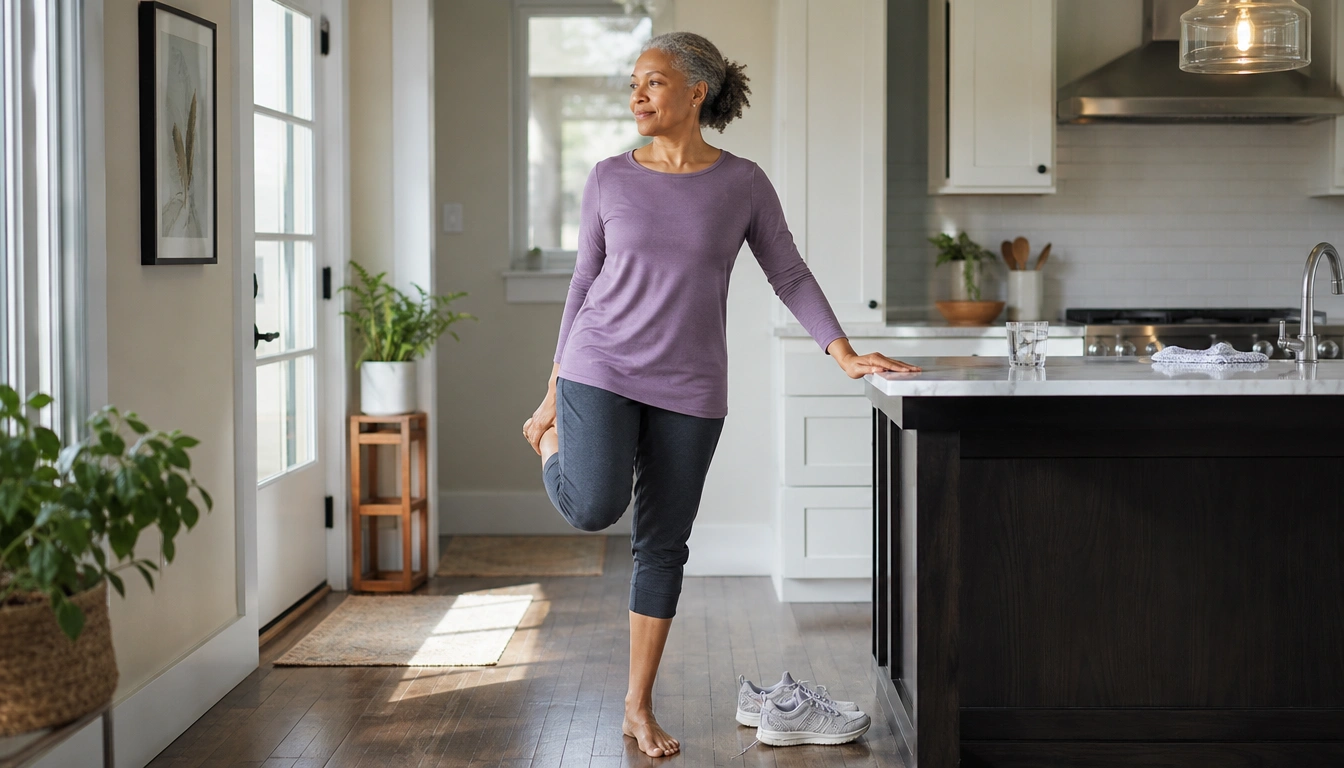
Use a stable support surface, such as a kitchen counter, wall, or heavy chair, when you practice standing on one foot, shifting weight from side to side, or walking heel to toe. The support is not a crutch; it is a safety boundary that lets you practice without unnecessary risk. If standing balance is too hard, start by practicing while lightly holding the counter and lifting one foot just an inch off the floor.
Fall prevention also includes small home habits. Keep walking paths clear, use good lighting at night, wear shoes that stay on your feet, and avoid rushing when you first get up. You can fold balance work into routine tasks by standing tall while the kettle boils or practicing one-leg balance while brushing your teeth, as long as a stable surface is within reach. These tiny repetitions build confidence and make steadiness feel normal.
How to adapt these habits if you have arthritis, high blood pressure, diabetes, or low fitness
Many adults over 50 live with a chronic condition, and that does not cancel the value of daily movement. It usually means the activity should be adjusted, not abandoned. If you have arthritis, choose low-impact options like walking on level ground, water aerobics, cycling, or gentle range-of-motion work on stiffer days. Heat, pacing, and shorter bouts may also make movement feel more manageable.
If you have high blood pressure or diabetes, consistent moderate activity is often part of good long-term management, but it should fit your overall care plan. Moderate walking, light strength work, and regular daily movement can support circulation and glucose control. People with diabetes should pay attention to foot comfort and any symptoms of low blood sugar if they use medicines that can lower glucose. For blood pressure concerns, avoid breath-holding or straining during strength exercises.
Low fitness is not a reason to wait for a future version of yourself. Start with what your body can tolerate today. Ten-minute walks, one set of chair squats, a few wall push-ups, and supported balance practice are enough to begin. The point is to build a pattern that feels repeatable, then increase gradually as your energy and confidence improve.
Simple sleep-hygiene changes that support recovery and brain health
Sleep is not a luxury habit; it is part of healthy aging. For older adults, guidance commonly points to about 7 to 8 hours of sleep per night. Good sleep helps memory, mood, immune function, and recovery from physical activity. It can also make it easier to stay active the next day.
The most effective sleep habits are usually simple. Go to bed and wake up at about the same time each day. Keep the bedroom cool, dark, and quiet. Limit bright screens before bed so your brain has a chance to shift toward rest. Try to avoid heavy meals, caffeine late in the day, and alcohol close to bedtime, especially if those things make you wake up at night.
If you wake often, think about the whole day, not just the night. Regular daytime movement, morning light, and a predictable evening routine can support sleep timing. A brief wind-down period with reading, stretching, or quiet music may be more useful than trying to force sleep on command. If sleep problems are persistent or severe, they deserve medical attention rather than endless self-help experiments.
How to start safely if you’ve been sedentary or have warning symptoms
If you have been inactive for a while, start with less effort than you think you need. That makes the habit more sustainable and reduces the chance of soreness that derails you. A 10-minute walk is a valid beginning. So is one set of chair squats, a few wall push-ups, or standing balance practice while holding the counter. You can build from there in small steps.
Some symptoms should prompt medical evaluation before you increase exercise intensity. These include chest discomfort, unexplained shortness of breath, dizziness, frequent falls, new weakness, or pain that gets worse with activity. If you have a complex heart, lung, or metabolic condition, or if you have been told to limit activity, ask a clinician what level of movement is appropriate for you. The safest start is one that respects your current health status.
Use a “start small, repeat often” mindset. The first goal is not to work hard; it is to become consistent enough that movement feels like part of the day rather than a special event.
A one-week starter plan with morning, midday, and evening habit stacking
A starter plan works best when it attaches to things you already do. This is habit stacking: pairing a new action with a routine you rarely skip. It reduces decision-making and makes follow-through easier on low-motivation days.
Morning: after coffee or brushing your teeth, do two to five minutes of balance work near the counter, then take a short walk outside if weather and safety allow. Midday: walk after lunch, or use part of a break for sit-to-stands from a chair and a few wall push-ups. Evening: do gentle stretching, set out your walking shoes for tomorrow, and begin a consistent wind-down routine that includes dimmer lights and less screen time.
Across the week, you could repeat a simple pattern: Monday, Wednesday, and Friday for short walks plus strength work; Tuesday and Thursday for walking and balance; weekend days for longer movement or a low-impact activity you enjoy. If that sounds like too much, shrink it. The right starter plan is the one you can do again next week.
Try linking balance practice to kitchen routines, walking to meals, and strength work to television commercials. These pairings make healthy habits feel ordinary, which is exactly why they work.
Starter-plan snapshot
| Time of day | Habit stack | Why it helps |
|---|---|---|
| Morning | Balance practice after brushing teeth | Builds steadiness when you are fresh |
| Midday | 10-minute walk after lunch | Supports circulation and daily activity |
| Evening | Chair squats or wall push-ups during TV breaks | Maintains muscle and bone support |
| Night | Regular bedtime routine with fewer screens | Supports sleep quality and recovery |
Frequently Asked Questions
How much exercise do adults over 50 need each week?
Public health guidance commonly recommends 150 minutes of moderate-intensity aerobic activity each week, plus muscle-strengthening activity at least 2 days weekly. You do not have to do it all at once; shorter sessions can add up across the week.
What kinds of strength exercises are safest and most useful after 50?
The safest starting point is often body-weight or lightly supported work such as chair squats, wall push-ups, heel raises, and standing hip movements. These exercises help with everyday tasks and can be scaled up gradually without gym equipment.
How can adults over 50 improve balance and reduce fall risk at home?
Practice balance near a stable support surface such as a counter or wall, and build it into daily routines like brushing your teeth or waiting for water to boil. Good lighting, clear walkways, and sturdy shoes also reduce fall risk.
What sleep habits matter most for healthy aging?
A regular sleep schedule, a cool dark quiet bedroom, less screen time before bed, and avoiding heavy meals or caffeine late in the day can all help. If sleep problems are persistent, they should be discussed with a clinician.
When should an adult over 50 ask a doctor before starting a new exercise routine?
Get medical advice first if you have chest discomfort, dizziness, unexplained shortness of breath, frequent falls, new pain with activity, or a complex chronic condition. If you have been sedentary for a long time, a clinician can help you choose a safe starting level.
The Bottom Line
The most effective habits for adults over 50 are usually the simplest: walk regularly, do strength work twice a week, practice balance, and protect sleep. These routines support independence by helping preserve muscle, bone, coordination, and energy.
You do not need to overhaul your life to benefit. Ten-minute walks, chair squats, wall push-ups, and balance practice at the counter are enough to begin. Build them into meals, TV time, or morning routines so they are easier to repeat.
If symptoms, falls, or chronic conditions make exercise feel uncertain, get personalized medical guidance before increasing intensity. The safest routine is the one that fits your current health and can grow gradually over time.
Medical disclaimer
Medical disclaimer: This content is for educational and informational purposes only and is not a substitute for professional medical advice, diagnosis, or treatment. Dietary needs and supplement suitability vary by individual.
Sources
- Centers for Disease Control and Prevention (CDC) — cdc.gov. Accessed October 2026.
- National Institutes of Health (NIH) — nih.gov. Accessed October 2026.
- U.S. Government / Health Authority — medlineplus.gov. Accessed October 2026.
- World Health Organization (WHO) — who.int. Accessed October 2026.
