
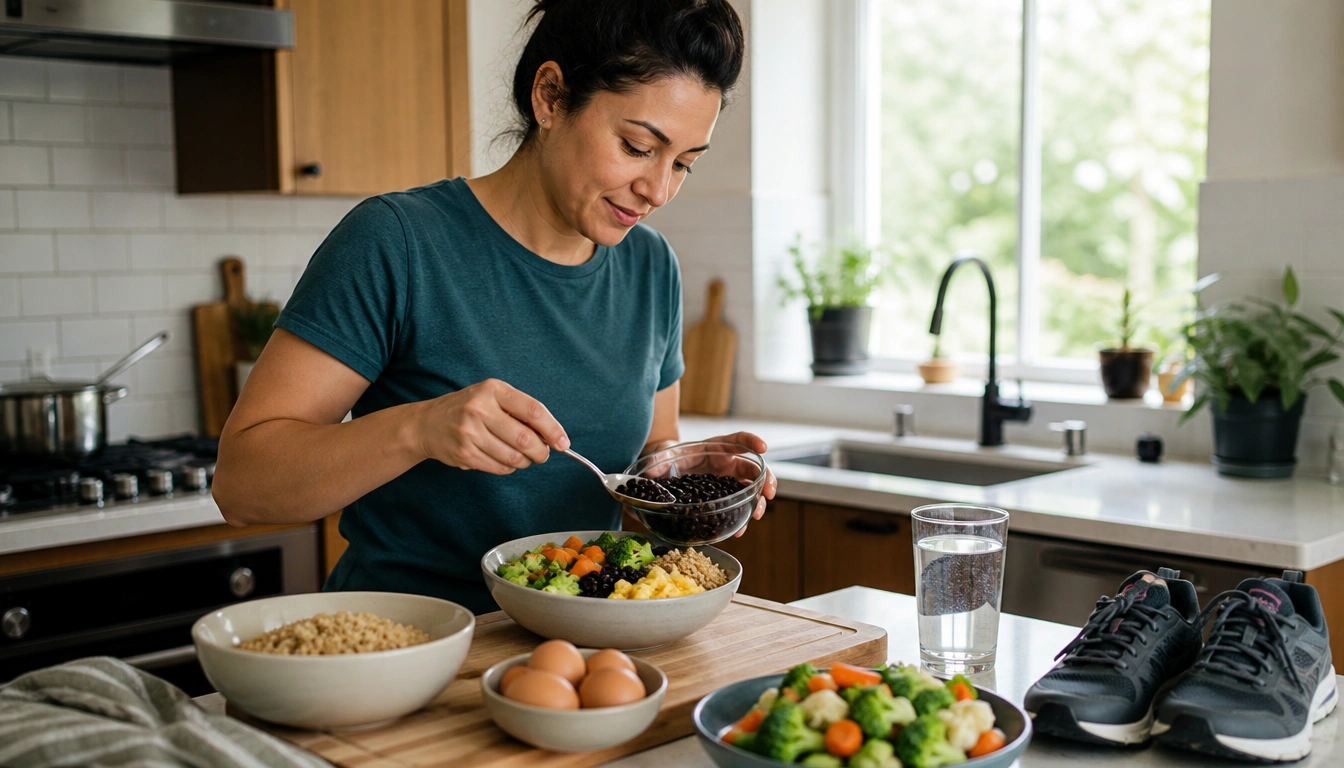
The cheapest daily habits that actually improve health are the ones you can repeat: walking, short bodyweight exercise, basic meal planning, beans and lentils, frozen or canned produce, tap water, and a steady sleep schedule. These habits support heart health, energy, weight control, and mood without needing expensive products. Consistency matters more than intensity or cost.
Key Takeaways
- You can improve health with low-cost habits that are free or nearly free: walking, home exercise, water, sleep regularity, and simple meals.
- For activity, 150 minutes per week can be built from short walks or 10-minute movement breaks, not just gym workouts.
- Budget meals work well when built around beans, lentils, eggs, frozen vegetables, canned produce, and whole grains.
- Frozen fruits and vegetables can be nutritious and often cost less than fresh produce out of season.
- People with diabetes, chronic kidney disease, severe hypertension, or mobility limits may need individualized changes, not one-size-fits-all advice.
- Lifestyle habits can support mental health, but they do not replace professional care for depression, anxiety, or other clinical conditions.
Start with the habits that give the most health value for the least money
For most adults, simple daily health habits for people on a budget should focus on the basics that public health agencies emphasize: moving more, eating enough nourishing food, sleeping regularly, and avoiding common stressors that come from skipping meals, sitting all day, or staying up late. A pricey supplement, detox product, or membership cannot replace those foundations.
A practical priority stack is usually:
- Move every day with walking or bodyweight activity.
- Build meals from inexpensive staples such as beans, lentils, eggs, grains, and frozen vegetables.
- Drink water instead of sugary drinks most of the time.
- Protect sleep with a repeatable bedtime and wake time.
- Keep plans simple so the routine survives busy weeks, shift work, and caregiving.
The goal is not perfection. It is to choose habits that are cheap, easy to repeat, and likely to keep paying off over time for heart health, metabolism, and energy.
Build cheap meals that still cover the basics
Budget nutrition does not have to mean bland or low-quality food. The lowest-cost useful foods are often the ones that fill you up and provide fiber, protein, and key vitamins: beans, lentils, eggs, oats, brown rice, whole-grain bread, frozen vegetables, canned tomatoes, canned beans, tuna or other affordable proteins, and fruit when it is in season. Tap water is usually the most economical drink choice and helps avoid the extra cost of sugary beverages.
Frozen fruits and vegetables deserve a special place in a budget routine. They are often picked and frozen at peak ripeness, which helps preserve nutrients, and they may be cheaper than fresh produce when a fruit or vegetable is out of season. They also reduce spoilage, which matters when money is tight.
Meal planning can keep costs down without becoming complicated. Check what you already have before shopping, write a short list, cook once and eat twice when you can, and use leftovers in soups, rice bowls, wraps, or scrambled eggs. That reduces waste and keeps you from buying duplicate items. If you are trying to stretch a small food budget, a few repeatable meals are often better than many ingredients you rarely use.
Use free movement instead of paid fitness
Exercise does not need equipment, boutique classes, or a gym. Brisk walking is one of the most useful free options because it is accessible, scalable, and easy to fit around work or family life. Parks, stairs, sidewalks, hallways, and free online routines can all support a movement habit. Bodyweight exercise is also practical: squats to a chair, wall push-ups, modified push-ups, step-ups, calf raises, and simple planks can all be done at home.
For many people, the best routine is the one that starts small enough to repeat. If you have not been active, five minutes is still a real starting point. If you already walk some days, add a few minutes or a few extra trips up the stairs. If you sit for long stretches, stand, stretch, or walk briefly between tasks. These choices cost little or nothing, yet they can improve stamina, blood pressure, and daily function over time.
Strength work matters too, especially as people age. A couple of short sessions each week using body weight can help maintain muscle and make daily life easier, from carrying groceries to getting up from a chair. The point is not to train like an athlete; it is to keep your body working well enough for ordinary life.
Meet activity targets with short sessions and micro-bouts
The CDC and NHS both support a weekly activity target that many adults can meet without a gym: about 150 minutes of moderate activity each week. That sounds large, but it can be broken into pieces. Ten-minute brisk walks after meals, a 15-minute walk before work, or several short movement breaks across the day all add up.
This is useful for busy workers, caregivers, and shift workers because the body counts total movement, not just one long workout. You do not need to finish all 150 minutes in one block. Three 10-minute walks in a day can be more realistic than one long session, and a routine you can maintain usually beats a perfect plan you cannot repeat.
A simple way to think about it is to attach movement to existing moments: walk while a meal cooks, do squats while coffee brews, take the stairs when possible, or walk during phone calls. For many people, this is the easiest path to consistency. It also reduces the all-or-nothing feeling that stops people from starting in the first place.
Sleep better without buying sleep products
Adults generally need at least seven hours of sleep a night, according to public health guidance. That does not mean every night will be perfect, especially for parents, shift workers, or people with stress. Still, sleep habits matter because sleep affects energy, mood, appetite, and concentration the next day.
You usually do not need a special mattress, supplement, or app to improve sleep hygiene. Start with the cheapest changes: keep a fairly regular wake time, dim screens before bed if you can, and make the room as dark and cool as is practical. A predictable wind-down routine helps too, even if it is short. Reading a few pages, washing up, or preparing tomorrow’s clothes can signal that the day is ending.
If your schedule changes from week to week, aim for anchors instead of perfection. A consistent wake time on workdays, a no-caffeine cutoff that fits your routine, or a 20-minute quiet period before sleep can make rest more reliable. These small habits often work better than trying to force an ideal bedtime that your life cannot support.
Make the plan work for older adults, beginners, and people with mobility limits
Budget-friendly health advice should still fit the person using it. Older adults, beginners, and people with joint pain or limited mobility may need lower-impact choices, slower progress, and a stronger focus on balance and function. Chair rises, wall push-ups, supported marches, heel raises, and short walks can be excellent starting points.
If standing exercise is difficult, movement can still happen in smaller forms: seated marching, gentle stretching, arm raises, or very short walking intervals with rest breaks. The goal is to keep the body active in a way that feels safe and realistic. For someone who has not exercised in a long time, starting with too much intensity can lead to soreness, discouragement, or injury, which makes the habit harder to keep.
If balance is a concern, choose steady surfaces, supportive shoes, and a place to sit nearby. If fatigue is severe or you notice dizziness, chest pain, or unusual shortness of breath, stop and seek medical advice rather than pushing through.
Know when low-cost advice needs medical tailoring
Budget habits are a strong baseline, but some health conditions need personalized guidance. People with diabetes may need help adjusting carbohydrate patterns, meal timing, and glucose monitoring. People with chronic kidney disease may need limits or adjustments for protein, potassium, phosphorus, or sodium. People with severe hypertension may need a specific sodium plan or medication review. And people with pain, balance problems, or other mobility limits may need a movement plan that is more gradual and individualized.
Clinical advice also matters if you have unexplained weight loss, ongoing fatigue, frequent dizziness, chest symptoms, swelling, or other signs that basic routines are not enough. Lifestyle changes are helpful, but they are not a substitute for care when a medical condition is driving the problem.
Mental health deserves the same caution. Better sleep, regular movement, and steady meals can support mood, but they do not replace treatment for depression, anxiety, or other clinical mental health disorders. If symptoms are persistent, worsening, or affecting daily life, professional support is appropriate.
A sample no-spend routine you can repeat
A good low-cost routine is not fancy; it is repeatable. Here is one example of a day built around habits that cost little or nothing:
- Morning: Drink water, eat a simple breakfast if you need one, and take a 5- to 10-minute walk or mobility break.
- Midday: Pack or buy the cheapest balanced meal available, then walk after eating if possible.
- Afternoon: Use a short bodyweight circuit, stairs, or another brief walk to break up sitting.
- Evening: Keep dinner simple, use leftovers when available, and start dimming lights and screens before bed.
- Weekly: Plan a small grocery list, batch-cook one or two staples, and schedule movement the same way you schedule errands.
If your days are unpredictable, make the plan more flexible rather than more ambitious. The habit should survive busy days, low-energy days, and cheap-food weeks. That is what turns a health idea into an actual routine.
Frequently Asked Questions
What are the best low-cost foods for healthy everyday eating?
The most useful budget foods are usually beans, lentils, eggs, oats, rice, whole-grain bread, frozen vegetables, canned tomatoes, canned beans, and affordable fruit. These foods are filling, versatile, and easier to stretch across several meals. Frozen produce can be especially helpful because it is often cheaper out of season and reduces waste.
How can I exercise daily at home with no equipment?
You can combine walking, stair climbing, chair squats, wall push-ups, calf raises, marching in place, and short mobility breaks. Even five to ten minutes at a time can help if you do it consistently. Free online routines can also guide basic bodyweight exercise without any special gear.
How much sleep do adults need for better health?
Public health guidance generally recommends at least seven hours per night for adults. Some people may need a little more or less, but regularly falling short can affect mood, concentration, appetite, and recovery. A steady schedule and a darker, cooler room often help more than buying sleep products.
What can I do if I only have 10 minutes at a time for exercise?
Use the time you have. A 10-minute brisk walk, a short stair routine, or a simple bodyweight circuit still counts. Several 10-minute sessions across the day can add up to a meaningful weekly total. For many busy adults, this is more realistic than one long workout.
When should I stop self-managing and talk to a clinician instead?
Get medical advice if you have diabetes, chronic kidney disease, severe hypertension, mobility problems, unexplained weight loss, dizziness, chest symptoms, or ongoing fatigue. Also seek help if low mood, anxiety, or stress is persistent or worsening. Budget habits are useful, but they do not replace individualized care.
The Bottom Line
The cheapest health habits are usually the most basic ones: walk more, eat simple meals built from low-cost staples, drink water, and protect sleep. Those habits are realistic because they do not depend on money, equipment, or perfect schedules.
If you only change a few things, choose the ones you can repeat on your busiest week. A short walk, a bean-based meal, frozen vegetables, and a regular bedtime often do more for long-term health than occasional expensive wellness purchases.
Adjust the plan when health conditions or mobility limits require it, and get clinical support when symptoms or diagnosis make one-size-fits-all advice unsafe or incomplete.
Medical disclaimer
Medical disclaimer: This content is for educational and informational purposes only and is not a substitute for professional medical advice, diagnosis, or treatment. Dietary needs and supplement suitability vary by individual.
Sources
- Centers for Disease Control and Prevention (CDC) — cdc.gov. Accessed October 2026.
- Centers for Disease Control and Prevention (CDC) — cdc.gov. Accessed October 2026.
- National Health Service (NHS) — www.nhs.uk. Accessed October 2026.
- National Health Service (NHS) — derbyshirehealthcareft.nhs.uk. Accessed October 2026.
