
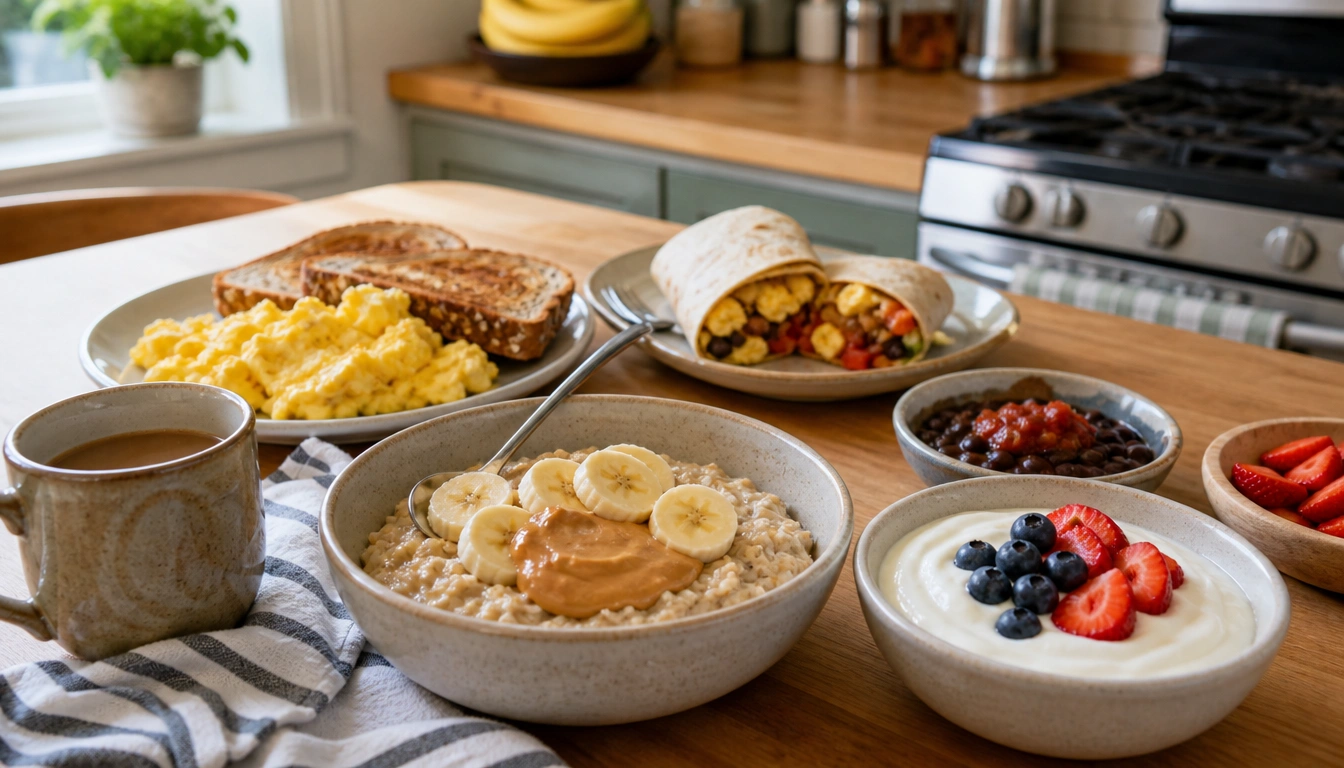
Yes—simple family breakfasts can be low-cost, filling, nutritious, and fast. The best budget breakfasts usually pair a whole grain with protein and a fruit or vegetable, such as oats with yogurt and fruit, eggs with toast, or beans in a breakfast burrito. This combination helps steady energy, improves fullness, and keeps grocery costs down when you rely on staple ingredients and make-ahead prep.
Key Takeaways
- Cheap breakfast staples like oats, eggs, beans, and yogurt work well because they combine fiber, protein, and energy-giving carbohydrates.
- For families, the easiest formula is: whole grain + protein + fruit or vegetable.
- Children and teens often do better with enough protein and iron at breakfast; adults with blood sugar concerns usually need more fiber and less added sugar.
- Frozen, canned, and bulk ingredients can be just as useful as fresh produce for saving money and time.
- Batch-cooked breakfasts can be safe and convenient if they are chilled, stored, and reheated properly.
Why budget breakfasts can still be balanced and satisfying
A low-cost breakfast does not have to mean a sugary cereal bar or a meal that leaves everyone hungry an hour later. Public guidance from the USDA emphasizes building meals from several food groups, and that approach works especially well in the morning. When you combine a starch that digests more slowly, a protein food, and produce, breakfast tends to feel more satisfying and less likely to trigger a mid-morning crash.
Staples such as oats, eggs, beans, and yogurt are useful because they do more than fill the plate. Oats bring fiber and steady energy. Eggs and dairy or fortified soy foods add protein. Beans add both protein and fiber. Fruit and vegetables add volume, vitamins, and flavor without a big price tag if you use seasonal, frozen, or canned options. That is why a family breakfast can be inexpensive without becoming nutritionally thin.
The budget breakfast formula: grain, protein, produce
A simple breakfast formula makes planning easier: choose one whole grain, one protein source, and one fruit or vegetable. The goal is not perfection. It is to create enough structure that breakfast is filling and repeatable.
Examples include oats with peanut butter and banana, whole-grain toast with eggs and orange slices, or a breakfast burrito with beans, scrambled eggs, and salsa. If breakfast is usually rushed, this formula is still flexible. A bowl of yogurt with oats and berries can work on one day, while toast with scrambled eggs and sautéed spinach can work the next.
This balance matters because protein and fiber help slow digestion and support fullness. For adults who are trying to manage blood sugar, that can be especially helpful. For children and adolescents, the same pattern can support concentration and provide nutrients they may need at the start of the day.
Pantry-and-fridge staples that stretch the breakfast budget
Families do best when the kitchen is stocked with a small set of ingredients that can be mixed in different ways. Rolled oats are one of the most useful items because they are inexpensive, store well, and work in hot cereal, overnight oats, baked oat cups, and smoothie bowls. Eggs are another strong choice because they cook quickly and pair with toast, tortillas, vegetables, or leftovers.
Beans are often overlooked at breakfast, but black beans, pinto beans, or refried beans can make burritos, toast toppings, or savory grain bowls more filling. Plain yogurt is also versatile, especially when paired with fruit, oats, or a sprinkle of nuts or seeds. If your family uses milk alternatives, fortified soy milk can be a good option because it brings protein along with calcium and vitamin D when fortified.
For produce, frozen berries, frozen spinach, onions, peppers, and peas are useful budget items. Canned fruit packed in water or 100% juice can also help when fresh fruit is expensive. A few shelf-stable extras—peanut butter, whole-wheat bread, tortillas, salsa, cinnamon, and cheese—can turn basic ingredients into several breakfast patterns without much waste.
Simple breakfast ideas that come together fast
Warm oats with fruit and nut butter: Cook oats with water or milk, then top with banana slices, frozen berries, or diced apple. Add peanut butter or sunflower seed butter for extra fullness. This works well for children because it is familiar and easy to customize.
Egg and toast plates: Scramble or fry eggs and serve with whole-grain toast and fruit. Add spinach, tomatoes, or leftover vegetables if you have them. For a family, eggs can be stretched by serving them alongside toast and fruit instead of making them the entire meal.
Breakfast burritos: Fill tortillas with scrambled eggs, beans, and a little cheese. Add salsa or cooked vegetables. Burritos are especially useful for school mornings because they can be eaten with one hand and frozen ahead of time.
Yogurt bowls: Use plain yogurt with oats, thawed frozen berries, or chopped fruit. If needed, stir in cinnamon or a small amount of honey. Plain yogurt usually gives more control over added sugar than flavored cups.
Savory grain bowls: Use leftover rice or oats, then top with a fried egg, beans, and vegetables. This is a helpful way to use leftovers and reduce food waste.
Make-ahead strategies for busy mornings
Batch cooking can turn a rushed weekday into a much easier one. The most practical options are foods that hold up well in the fridge or freezer and can be reheated quickly. Breakfast burritos, baked oat squares, and cooked egg mixtures are especially useful because they can be portioned in advance.
For burritos, cook the filling, let it cool, wrap tightly, and freeze them individually. In the morning, reheat until hot throughout. For oats, overnight oats or baked oats can be made in a container for the next day, which saves both time and dishes. If you use a grain bowl format, store the base and toppings separately when possible so the texture stays better.
Families with school-age children often benefit from a repeatable prep routine: cook one grain, one protein, and one produce item on the weekend, then mix and match across several breakfasts. That approach reduces decision fatigue and makes grocery shopping easier because the same ingredients can appear in more than one meal.
Budget swaps for picky eaters, allergies, and blood sugar needs
Different households need different versions of the same idea. For picky eaters, keep the structure familiar and change only one element at a time. A child who will not eat mixed vegetables may still accept eggs with toast and fruit. Another may prefer yogurt with fruit but no seeds. Small changes are often more successful than trying to overhaul the entire plate.
For gluten-free households, certified gluten-free oats can replace standard oats, and corn tortillas can stand in for wheat tortillas. For lactose intolerance, lactose-free milk or yogurt may work, and fortified soy milk is another practical option. If blood sugar control is a concern, the focus should be on less added sugar, more fiber, and enough protein. That often means plain yogurt instead of sweetened yogurt, fruit instead of juice, and whole grains instead of refined pastries.
Children and adolescents may need enough iron and protein at breakfast because they are growing and often have long mornings between meals. Adults with insulin resistance or prediabetes often do better when breakfast is built around protein and fiber instead of sweet baked goods, juice, or sweet coffee drinks. When a health condition is involved, the best breakfast is the one that fits both the budget and the person’s medical needs.
Food safety basics for storing and reheating breakfast prep
Make-ahead breakfasts are helpful only if they are handled safely. According to the USDA, cooked foods should be cooled promptly, stored in the refrigerator, and used within a few days if they are not frozen. For families, a practical rule is to label containers with the date so leftovers do not get forgotten.
Breakfast burritos and grain bowls are good candidates for freezing. Store them in airtight packaging and reheat until steaming hot. If you are using the microwave, rotate or stir partway through so the center heats evenly. Avoid leaving cooked eggs, dairy, or grain dishes sitting out for long periods, especially in warm kitchens.
If you are unsure whether a breakfast has been stored too long, it is safer to discard it. Food safety matters just as much as nutrition when you are feeding children or relying on leftovers for a quick morning meal.
How to stretch breakfast dollars without relying on sugary packaged foods
Shopping with a plan is one of the easiest ways to lower breakfast costs. Start by choosing a few core ingredients that can become multiple meals. Oats can become hot cereal, baked bars, or overnight oats. Eggs can become scrambles, burritos, or toast toppers. Beans can move from dinner leftovers into breakfast burritos or savory bowls. That kind of overlap makes grocery spending go further.
Buying larger containers of plain yogurt, oats, and eggs often costs less per serving than single-serve packaged items. Frozen fruit and vegetables reduce waste because you can use only what you need. Store brands may also be enough for basics like bread, tortillas, and canned fruit. Most of the savings come from avoiding highly processed breakfast pastries, sweetened drinks, and individually wrapped snacks that disappear quickly but do not keep anyone full for long.
If mornings are especially chaotic, keep a backup shelf of breakfasts that require little or no cooking: oats, peanut butter, fruit, yogurt, and whole-grain bread. That gives you a low-cost safety net for days when cooking from scratch is not realistic.
Frequently Asked Questions
How can I build a balanced breakfast with cheap staples like oats, eggs, beans, and yogurt?
Use a simple formula: whole grain plus protein plus fruit or vegetables. Oats, eggs, beans, and plain yogurt cover those roles well, especially when paired with fruit, toast, or vegetables. That mix supports fullness and gives you more nutrition per dollar than most sugary packaged breakfasts.
Which breakfast foods give the best nutrition for the lowest cost?
Rolled oats, eggs, beans, plain yogurt, whole-grain bread, bananas, frozen fruit, and frozen vegetables are usually strong budget choices. They are versatile, filling, and easier to combine into meals than heavily processed breakfast foods.
How can I make breakfasts ahead of time to save money and morning time?
Batch-cook items that reheat well, such as breakfast burritos, baked oats, egg-and-vegetable scrambles, or overnight oats. Portion them into containers, cool them promptly, and freeze extra portions if you will not use them within a few days.
What are easy breakfast swaps for kids, picky eaters, or adults with blood sugar concerns?
For picky eaters, keep the meal familiar and change just one part at a time. For blood sugar concerns, choose plain yogurt instead of sweetened yogurt, whole grains instead of refined pastries, and add protein and fiber to every meal. For kids, fruit, eggs, and oats are often easier wins than complicated recipes.
How should I store and reheat make-ahead breakfast burritos or oat-based breakfasts safely?
Cool them promptly, refrigerate them in sealed containers, and use them within a few days unless frozen. Reheat burritos until steaming hot, and make sure the center is hot throughout. If the food has been left out too long or smells off, throw it away.
The Bottom Line
Affordable family breakfasts work best when they are built from the same few staples in different combinations. Oats, eggs, beans, yogurt, fruit, and whole grains can cover most mornings without requiring expensive specialty foods.
If you want the biggest payoff, focus on balance, not novelty: grain plus protein plus produce, with make-ahead options for busy days. That pattern supports fullness, steadier energy, and lower grocery waste.
For families with allergies, picky eaters, or blood sugar concerns, small swaps can make the same breakfast idea work for everyone. The most useful budget breakfasts are the ones you can repeat, store safely, and actually serve on a real weekday morning.
Medical disclaimer
Medical disclaimer: This content is for educational and informational purposes only and is not a substitute for professional medical advice, diagnosis, or treatment. Dietary needs and supplement suitability vary by individual.
