
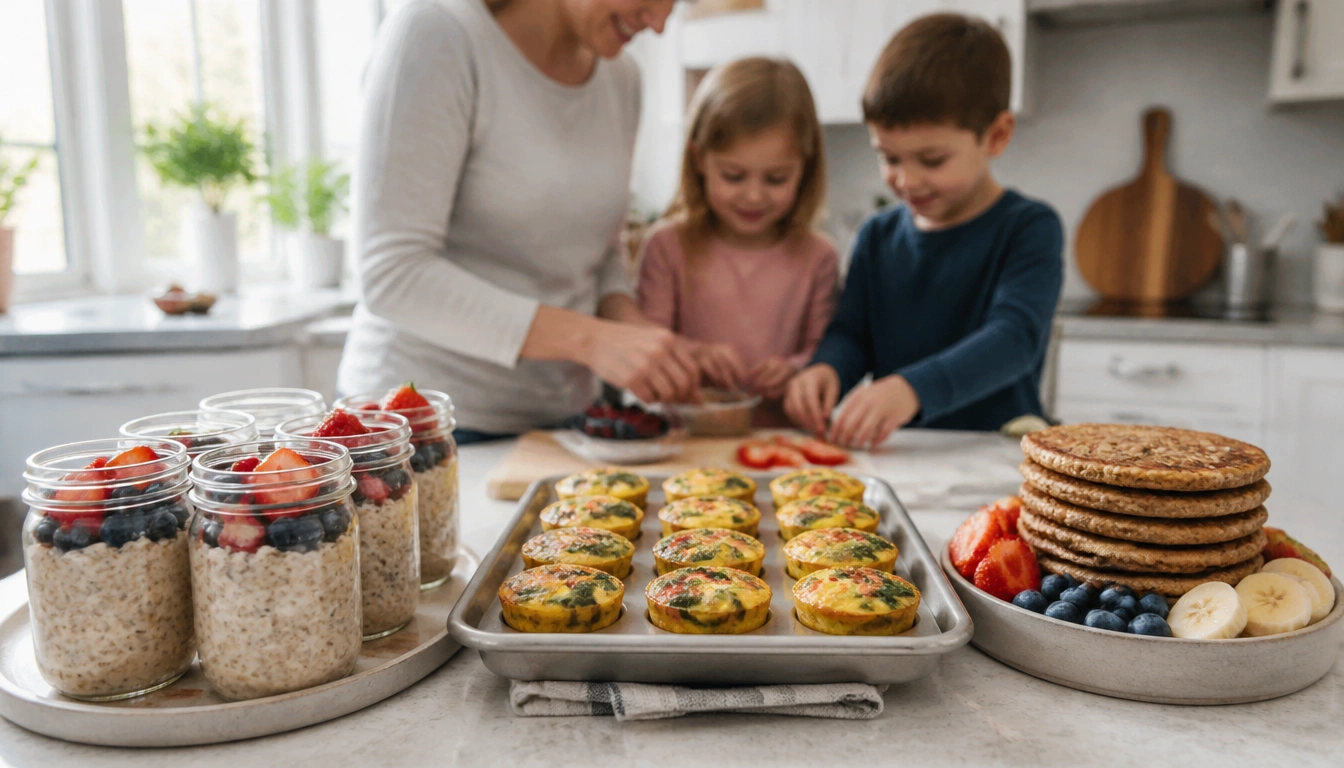
The easiest healthy breakfast recipes for meal-prep beginners are overnight oats, egg cups, and freezer pancakes or waffles. They store well, reheat quickly, and can be built around protein, fiber, and at least two food groups so the family starts the day with a steadier, more filling meal. If mornings are hectic, choose one recipe, prep it once, and repeat it all week.
Key Takeaways
- Aim for protein plus fiber at breakfast to help kids and adults stay fuller longer and avoid a quick mid-morning crash.
- Overnight oats are the simplest no-cook option: mix oats, milk, and a protein boost, then add fruit or seeds.
- Egg cups work well for busy families because they are portable, freezer-friendly, and easy to customize with vegetables and cheese.
- Freezer pancakes or waffles are useful when you want something familiar that still includes whole grains and fruit.
- For kids with small morning appetites, use a small “bridge breakfast” now and save a larger portion for later.
- Start with one recipe category, then reuse chopped vegetables or leftover cooked ingredients from dinner to save time and money.
How to choose the easiest make-ahead breakfast
If you want a make-ahead breakfast that actually gets used on school mornings, start with the option that fits your household’s rhythm. Overnight oats are best when you need zero cooking and want something you can grab straight from the fridge. Egg cups are the better choice if your family does well with savory food and you want a higher-protein option. Freezer pancakes or waffles work well for children who prefer familiar breakfast foods but still need something more balanced than plain pastries or cereal.
Think about the morning problem you are trying to solve. If everyone leaves at different times, individual containers matter. If your main issue is low appetite, smaller portions may be more successful than large plates. If you are trying to reduce weekday cooking, choose recipes that can be made in one batch and eaten in different ways across several days. The best beginner breakfast is not the most impressive one; it is the one you can repeat without stress.
The beginner breakfast formula: protein, fiber, and a second food group
Most public health and nutrition guidance points toward a simple breakfast structure: include protein, fiber, and at least two to three food groups. That might mean oats plus yogurt plus berries, eggs plus vegetables plus toast, or whole-grain pancakes plus fruit and a dairy topping. This style of breakfast is more satisfying than a pastry or a bowl of sugary cereal because protein and fiber slow digestion and help steady blood sugar.
For families, MyPlate-style balance makes planning easier. You do not need a perfect menu every morning. You just need a mix that usually includes a whole grain, a protein food, and fruit or vegetables. Dairy can be part of that pattern too, whether it is milk, yogurt, or a fortified alternative. The point is not to make breakfast elaborate; it is to make it more filling and more useful for the day ahead.
If you are new to meal prep, this formula also keeps decision-making simple. When a recipe already has oats, yogurt, eggs, fruit, or vegetables, you do not need to reinvent breakfast every week. You can adjust the flavor and still keep the same structure.
Overnight oats for a no-cook breakfast
Overnight oats are one of the most beginner-friendly healthy breakfast recipes because they require no stovetop time in the morning. The basic method is simple: combine rolled oats with milk, then add a protein-rich ingredient such as Greek yogurt or a spoonful of chia seeds. After a night in the refrigerator, the oats soften into a creamy texture that can be eaten cold or gently warmed.
A practical starter formula is equal parts rolled oats and milk, plus a scoop of yogurt or a tablespoon or two of chia seeds. From there, add fruit for flavor and fiber. Berries, banana slices, diced apple, or thawed frozen peaches all work well. If your family likes a little extra richness, add a small amount of nut butter or seed butter. Cinnamon, vanilla, and cocoa powder are easy ways to change the flavor without turning the breakfast into dessert.
Use jars or lidded containers for easy grab-and-go storage. Overnight oats are often best within several days, which makes them useful for a short weekday run. For texture, keep crunchy toppings separate until serving time. If you are making oats for children who prefer sweeter foods, let the fruit provide most of the sweetness instead of relying on added sugar.
One helpful variation is a layered jar: oats at the bottom, yogurt in the middle, fruit on top. That makes the container look more appealing and keeps mix-ins from getting soggy too soon. You can also prep several jars at once and vary the toppings so the family does not feel like they are eating the same thing every day.
Egg cups and freezer pancakes for the main batch-prep work
Egg cups are a strong option when you want a protein-forward breakfast that reheats quickly. Whisk eggs with a splash of milk, then fold in finely chopped vegetables such as spinach, bell peppers, onions, or mushrooms. Pour the mixture into a greased muffin tin and bake until set. For more flavor, you can add a little shredded cheese, diced turkey, or cooked breakfast sausage, though vegetables alone already make a solid base.
The best part of egg cups is flexibility. A family member who likes bold flavors can get pepper, onion, and cheese. Someone else can have a milder version with spinach and a little cheddar. If you are making breakfast for children, keep the pieces small and the seasoning light. Egg cups also work nicely with toast, fruit, or a small serving of potatoes if you want a bigger meal.
Freezer pancakes or waffles are the easiest comfort-food option for families who want something familiar. Use a whole-grain batter when possible, and consider adding mashed banana or pumpkin puree for extra moisture and natural sweetness. Cook a full batch, cool completely, then freeze with parchment between pieces so they do not stick together. Reheat in a toaster, toaster oven, or microwave until hot.
For topping ideas, think simple and balanced: berries, sliced banana, applesauce, yogurt, or a thin spread of seed butter. If you use syrup, keep it modest and let fruit do more of the work. This keeps the meal feeling familiar while still moving closer to a healthier breakfast pattern.
How to serve different family members without making separate meals
One of the easiest ways to make breakfast prep sustainable is to treat the food as a set of building blocks. You do not need a different meal for every person. Instead, prep one base and change the serving style. A parent may want a full bowl of overnight oats. A child with a small appetite may only want half a jar and some fruit. Another family member may want egg cups with toast and a piece of fruit.
This approach is especially helpful when appetites vary. Some children wake up ready to eat; others do not. Rather than forcing a full plate, offer a smaller bridge breakfast such as a few bites of oats, a half banana, a yogurt cup, or one egg cup plus fruit. Then pack a second portion for later if needed. That can reduce morning resistance and still keep nutrition on track.
It also helps to think in terms of shared ingredients. One weekend batch of chopped peppers can go into egg cups at breakfast, then into fajitas or grain bowls at dinner. Extra berries can top oats, yogurt, or pancakes. If the family has different preferences, set up a small topping bar so each person can build a plate that feels personal without requiring another round of cooking.
Storage, fridge time, freezer use, and reheating safety
Food safety matters as much as convenience. Cooked egg dishes and dairy-containing breakfast items should be kept cold and used within a short refrigerator window, generally no more than 3 to 4 days in standard home storage. That makes them ideal for Monday through Thursday, with a fresh batch later in the week if needed. Store everything in airtight containers so moisture loss and contamination are less likely.
Overnight oats are usually fine for several days in the refrigerator, especially when made in clean containers and kept chilled. If the toppings are delicate, add them just before serving. Pancakes and waffles freeze well when wrapped or separated so they do not clump. They can go from freezer to toaster or microwave, which is one reason they are useful for beginners.
Reheat egg cups and other egg-based items until they are hot all the way through, especially if they were frozen. Do not rely on a quick warm-up if the center is still cool. When reheating in the microwave, use short bursts and rotate or stir as needed. If food smells off, has been left out too long, or shows obvious spoilage, throw it out. Safe storage is part of making meal prep easier, not an extra chore to ignore.
If you are packing breakfast for school or work, use insulated containers when needed and follow the school’s food safety rules. For families with very young children, keep textures soft enough to eat easily and avoid toppings that create a choking risk, such as whole nuts.
A beginner plan for weekend prep and leftover ingredients
The best way to succeed with breakfast meal prep is to start smaller than you think. Pick one recipe category for your first week. Overnight oats are usually the simplest starting point because they need no cooking. If your family prefers savory food, choose egg cups instead. If you already make pancakes on weekends, make extra and freeze them.
Use a weekend or evening prep window and build breakfast around ingredients you already have. If you are cooking dinner with vegetables, set aside a little extra onion, spinach, mushrooms, or peppers for morning egg cups. If you bought fruit for lunches, reserve some for oats or pancake toppings. That reduces waste and keeps breakfast prep from becoming another separate project.
It also helps to define success realistically. You do not need to prep seven perfect breakfasts. Even two or three prepared options can change the tone of the week. A small amount of planning often saves more time than trying to force a complicated routine that nobody keeps using. Once one recipe becomes routine, then add a second.
Nut-free and dairy-free swaps that still work
Families dealing with allergies or school restrictions need substitutions that are safe, not just convenient. For nut-free breakfasts, use sunflower seed butter or another school-approved seed spread instead of peanut butter. Check labels on oats, granola, and pancake mixes because cross-contact can matter in nut-free households. If you are sending breakfast to school, choose container and topping combinations that meet classroom rules.
For dairy-free breakfasts, use fortified soy, oat, or other plant-based milks in overnight oats and pancakes, and choose a dairy-free yogurt if you want a creamy texture. In egg cups, you can skip cheese entirely and rely on vegetables and herbs for flavor. If you want a richer result, a dairy-free shredded topping can work, but it is optional rather than essential.
The best substitution is the one that preserves the structure of the meal. Keep the oats, eggs, fruit, whole grains, or vegetables in place and swap the allergen component carefully. That way the breakfast still fits the same meal-prep plan for the whole family instead of becoming a completely separate menu.
Frequently Asked Questions
How can I meal prep breakfast for kids who are not hungry early in the morning?
Use a smaller “bridge breakfast” instead of a full plate. Half a portion of oats, a yogurt cup, one egg cup, or fruit with a seed butter can be enough early on, with a second snack packed for later if needed.
What are the best beginner-friendly make-ahead breakfast recipes that store well for several days?
Overnight oats, baked egg cups, and freezer pancakes or waffles are the easiest starting points. They are simple to batch, hold up well in storage, and can be customized for different family preferences without much extra work.
How do I make breakfast meal prep healthier with more protein and fiber?
Use rolled oats, whole-grain batter, eggs, Greek yogurt, beans, chia seeds, fruit, and vegetables. Those ingredients increase protein and fiber and make breakfast more filling than refined grains or sugary packaged foods.
Which breakfast prep ideas work for nut-free or dairy-free families?
Nut-free families can use sunflower seed butter and skip nut toppings. Dairy-free families can use fortified plant milks and dairy-free yogurt in oats and pancakes, and egg cups can be made without cheese.
How long can overnight oats, egg cups, and freezer pancakes safely stay in the fridge or freezer?
Overnight oats usually keep for several days in the fridge if stored cold. Egg cups are best used within 3 to 4 days in the refrigerator, or frozen for longer storage. Pancakes and waffles freeze well and can be reheated straight from frozen.
The Bottom Line
For meal-prep beginners, the easiest family breakfasts are the ones with a short ingredient list, a clear storage plan, and a strong mix of protein, fiber, and fruit or whole grains. Overnight oats, egg cups, and freezer pancakes cover those needs without demanding much morning effort.
Start with one recipe, use leftovers from dinner when you can, and adjust portions for different appetites instead of making separate meals. That keeps breakfast realistic enough to repeat, which is what makes the habit stick.
Medical disclaimer
Medical disclaimer: This content is for educational and informational purposes only and is not a substitute for professional medical advice, diagnosis, or treatment. Dietary needs and supplement suitability vary by individual.
Sources
- U.S. Government / Health Authority — illinois.gov. Accessed November 2026.
- Academic Research Institution — usu.edu. Accessed November 2026.
