
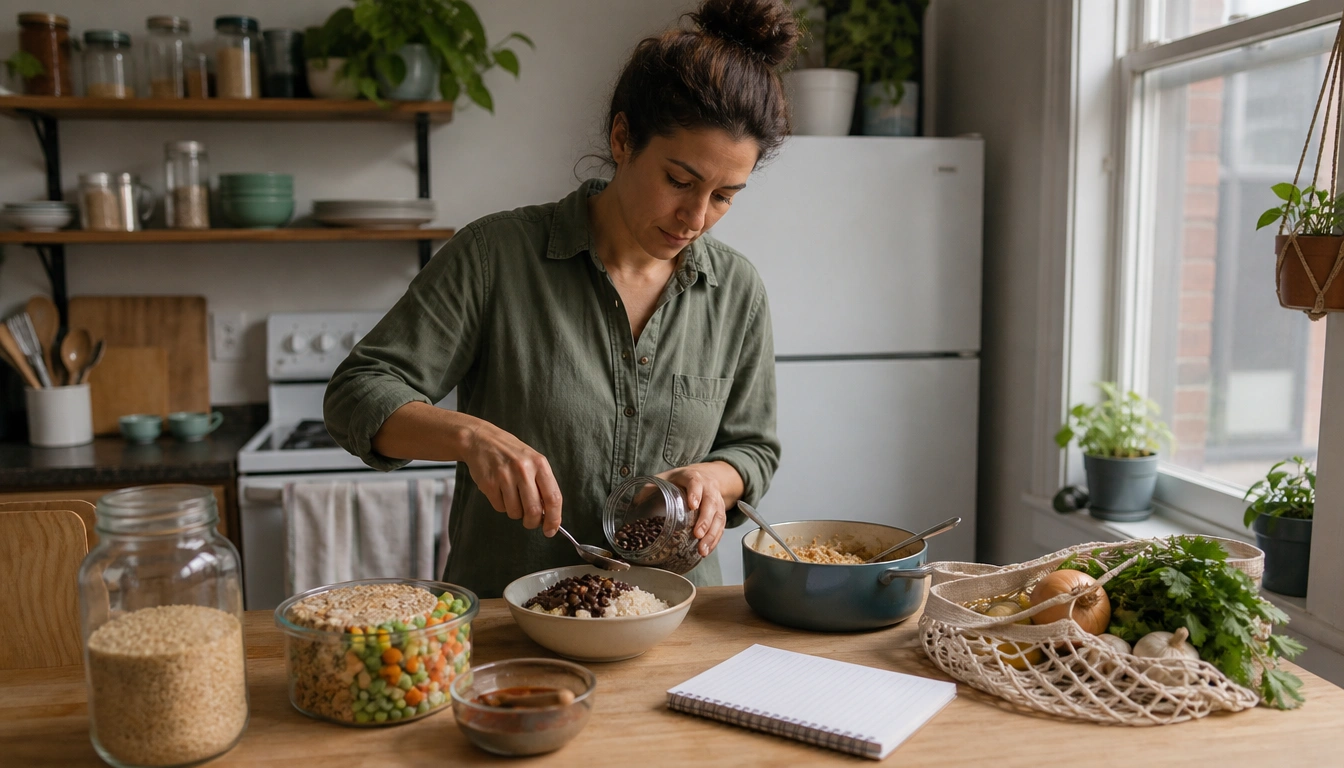
A few simple health goals can make a real difference this month without costing much: pick one food goal, one movement goal, and one recovery goal. For many people, that means using what is already in the kitchen, choosing low-cost staples like beans and frozen vegetables, and building free movement into the day with walking or bodyweight exercises. The best goals are small enough to repeat, even when money, time, or energy is tight.
Key Takeaways
- Start with one food goal, one movement goal, and one recovery goal instead of trying to change everything at once.
- Budget-friendly staples such as beans, lentils, frozen vegetables, and whole grains can deliver strong nutrition without expensive specialty products.
- Free activity counts: brisk walking, stairs, and bodyweight exercises can help you meet public health activity guidance without a gym.
- A monthly kitchen audit, unit pricing, batch cooking, and using pantry food first can lower waste and stretch your grocery budget.
- If you have food insecurity, diabetes, kidney disease, mobility limits, or are older, your best goal may need to be adjusted or focused on getting support first.
Why small, low-cost goals work better than a full overhaul
If money is tight, the most realistic health goals are usually the ones that fit into ordinary life. That matters because large overhauls often fail when they depend on extra cash, extra time, or perfect motivation. Smaller goals are easier to repeat, and repetition is what turns a short-term burst of effort into a routine.
Behavior change research consistently supports habit stacking: attaching a new action to something you already do. That might mean drinking water with breakfast, taking a 10-minute walk after work, or adding a serving of frozen vegetables to dinner. These goals are modest, but they reduce decision fatigue and make success more likely.
For a new month, a useful structure is to choose three goals:
- One food goal, such as cooking one more meal at home each week or adding beans to lunches.
- One movement goal, such as walking after meals or using stairs when possible.
- One recovery goal, such as keeping a steadier bedtime or cutting back on late-night scrolling.
That approach gives you balance without asking you to become a different person overnight. It also helps if work shifts, caregiving, fatigue, or stress make your schedule unpredictable. The goal is not perfection; it is a set of actions you can keep doing most weeks.
Week 1: Audit your pantry and kitchen before you buy more
One of the cheapest health upgrades is using what you already have. Before shopping, check the fridge, freezer, cupboards, and spice shelf. Make a list of foods that need to be used soon, then build meals around them. This simple audit reduces waste and often reveals enough ingredients for several meals.
Try asking three questions: What is already edible? What is close to expiring? What meals can be made from these foods with one or two additions? That might lead to rice and beans, soup with frozen vegetables, oatmeal with fruit, or pasta with canned tomatoes and lentils. You do not need a perfect meal plan; you need a workable one.
Kitchen audits also help you spot repeated spending. If you keep buying the same ingredient because you cannot remember what is at home, a short list on the fridge or phone can save money. If you have leftovers, freeze them in single portions so they are easier to use later. The less food you throw away, the more room you have in the budget for nutritious staples.
Week 2: Build meals around low-cost staples
Some of the most budget-friendly foods are also the most nutritionally useful. Beans, lentils, frozen vegetables, whole grains, eggs, canned fish, plain yogurt, tofu, peanut butter, and seasonal produce can make balanced meals without the cost of specialty “health” products. According to the USDA and other public health guidance, a healthy eating pattern is built around vegetables, fruits, whole grains, and a variety of protein foods—not expensive labels.
Beans and lentils are especially helpful because they bring fiber, protein, and minerals to the table at low cost. Frozen vegetables are another strong option: they are convenient, usually affordable, and can be added to soups, stir-fries, rice bowls, and pasta. Whole grains like brown rice, oats, whole-wheat pasta, and whole-grain bread can help meals feel more filling.
Here is a simple way to think about cheap nutrition: build a base, add a protein, then add vegetables and flavor. For example, oatmeal with peanut butter and fruit; rice with beans, salsa, and frozen peppers; or pasta with lentils, tomato sauce, and spinach. These combinations are practical because they are flexible, shelf-stable, and easy to repeat.
If you are used to thinking of “healthy food” as expensive fresh items, it can help to reframe the question. Often the healthiest choice is not the fanciest one. It is the meal that gives you fiber, protein, and enough energy to get through the day without straining your budget.
| Budget staple | Why it helps | Easy use |
|---|---|---|
| Beans and lentils | Protein, fiber, minerals | Soups, chili, salads, grain bowls |
| Frozen vegetables | Affordable, low waste, easy to store | Stir-fries, pasta, omelets, soups |
| Whole grains | Filling and versatile | Oatmeal, rice bowls, side dishes |
| Eggs or canned fish | Quick protein options | Breakfast, sandwiches, rice bowls |
Week 3: Use free movement to get closer to activity goals
Public health guidance for adults recommends regular aerobic activity and muscle-strengthening activity each week. That does not require a gym. Walking is one of the easiest ways to begin, and brisk walking can count as moderate-intensity activity. Stairs, active commuting, household chores done briskly, and bodyweight exercises all add up.
If a weekly target feels too large, break it into smaller blocks. A few short walks can be easier to manage than one long session. Ten minutes before work, ten minutes at lunch, and ten minutes after dinner may be more realistic than trying to carve out a full half hour all at once. That still builds consistency.
For strength work, try a simple home circuit using bodyweight only: wall push-ups, chair squats, calf raises, or modified planks. You can do a short set while waiting for laundry, before a shower, or after a work shift. The goal is not athletic performance. It is to keep your body moving often enough to support heart health, mobility, and strength.
Use the environment you already have. If there is a stairwell, use a few flights. If there is a safe walking route near home, repeat it. If you care for children, a walk together can serve both needs. Free movement works best when it is built into the day instead of treated like a separate project.
Week 4: Protect sleep, hydration, and stress on a small budget
Recovery habits are often overlooked, but they are part of health too. Sleep, hydration, and stress management do not require supplements or expensive products. They do require a few repeatable routines. A steady bedtime, a consistent wake time, and less screen time before bed can improve sleep quality for many people.
Hydration can also stay simple. Water is the default budget-friendly drink, and using tap water where it is safe and available is much cheaper than bottled drinks, specialty coffee, or sugary beverages. If plain water is hard to remember, keep a refillable bottle in the same place each day. Small cues work better than trying to rely on willpower alone.
Stress goals should be practical, not idealized. You may not be able to remove the stress of money worries, shift work, or caregiving, but you can create short pauses. A few minutes of breathing quietly, stretching after a shift, or sitting down for a screen-free break can help your nervous system recover. For many people, the goal is not to eliminate stress. It is to create one or two moments each day when the body is not bracing.
If your schedule is unstable, set goals around anchors instead of clock times. For example: “I will have water with my first meal,” or “I will shut down my screens when I get into bed.” Anchored habits are easier to keep when the rest of the day changes.
Make goals realistic when time, energy, or money is tight
The most useful goal is the one you can still do on a hard day. If you are tired, the goal should shrink, not disappear. A short walk is better than none. A frozen vegetable plus rice is better than a skipped meal. A five-minute stretch is still a recovery habit. Health goals need to fit the life you actually have.
It helps to set a minimum version and an ideal version. The minimum version might be “walk for 10 minutes” or “cook one meal at home this week.” The ideal version could be longer, but the minimum keeps the habit alive when things get difficult. This reduces the all-or-nothing mindset that often causes people to stop entirely after one missed day.
Monthly goals can also be tied to routines you already do. After payday, do a quick kitchen audit. On grocery day, check unit prices. On days off, batch cook a pot of soup or rice. These small systems reduce mental load and make healthy choices more automatic. For people living close to the edge financially, predictability is often more valuable than novelty.
Special considerations for older adults, mobility limits, and chronic conditions
Some people need a different version of the same goal. Older adults may benefit from shorter, more frequent movement sessions, balance work, and strength exercises that protect independence. People with joint pain or mobility limitations may need seated exercises, support from a chair or wall, or gentler walking goals. The aim is still movement, but the format should fit the body.
For people with diabetes, health goals may need to pay attention to meal timing, carbohydrate consistency, and how different foods affect blood sugar. For people with kidney disease, some budget foods may still need limits because of sodium, potassium, phosphorus, or protein needs. In both cases, the cheapest option is not automatically the best one. Individualized medical advice matters more than a generic shopping list.
Shift workers and caregivers often need routines that work across changing hours. That may mean keeping ready-to-eat foods on hand, using short movement breaks, and choosing sleep rituals that can happen at different times of day. If fatigue is severe, simplify further. A smaller, steadier habit is usually better than an ambitious plan that cannot survive your schedule.
Shop smart without cutting nutrition
Good budgeting is not only about buying less. It is about buying what gives the most value for the money. Unit pricing can help you compare items fairly, especially when package sizes differ. It is also worth comparing forms of the same food: dried beans versus convenience snacks, frozen vegetables versus single-serve packaged sides, or store-brand oats versus branded cereal.
Shopping with a list matters because impulse purchases are often the most expensive items in the cart. If possible, shop after a meal rather than when hungry. That small habit can reduce unplanned buying. It also helps to plan around sales without making the entire week depend on a single discounted item. Flexible meals make it easier to use what is cheapest.
Batch cooking is another useful habit. Making a large pot of chili, soup, rice, or roasted vegetables can cover several meals and save both time and energy. Leftovers are not a failure; they are a budget tool. If you have a freezer, divide extra portions into containers so they can be used on busy days instead of ordering food or skipping meals.
When saving money on health is not the right goal
Sometimes the best health goal is not to spend less. It is to make sure there is enough food and support in the first place. If you are skipping meals, worrying about running out of food, or unable to afford enough variety, the priority should shift toward food access. That may mean using a food pantry, applying for benefits, or asking a local community organization for help.
The same is true if a medical condition requires specific nutrition that is hard to manage on your own. People with uncontrolled diabetes, kidney disease, recent injuries, or other medical concerns may need guidance from a healthcare professional or dietitian before making major changes. Health goals should never make symptoms worse or push you toward restriction that leaves you underfed.
If a budget goal is causing distress, dizziness, persistent fatigue, or an unhealthy fear of food, stop and reassess. Good health planning should make life more stable, not more precarious. When resources are thin, the most practical goal may be to protect access, simplify routines, and ask for help early.
Frequently Asked Questions
How can I set health goals if I have very little money and limited time?
Choose one food goal, one movement goal, and one recovery goal that fit your actual week. Keep them small enough to do on a busy or tired day. For example: use what is already in the pantry, walk for 10 minutes after work, and keep a steadier bedtime.
What are the cheapest healthy foods I can use to build better meals?
Dry or canned beans, lentils, oats, brown rice, whole-wheat pasta, frozen vegetables, eggs, canned fish, peanut butter, and plain yogurt are common budget-friendly choices. They can form filling meals with fiber, protein, and key nutrients without relying on expensive specialty foods.
How do I meet exercise guidelines for free?
Walking, stairs, household chores done briskly, and bodyweight exercises can all count. You can also split activity into short blocks across the day if a long workout is unrealistic. The goal is regular movement, not a gym membership.
How can I improve sleep and stress without buying supplements or equipment?
Use low-cost habits: keep a steadier bedtime, limit screens before sleep, drink water regularly, and build short pauses into the day. A few minutes of quiet breathing or stretching can help. These habits are simple, but repetition matters more than expensive products.
What budget health goals make the biggest difference first?
The biggest early wins are often using less food waste, cooking from staples more often, moving more for free, and improving sleep consistency. If money is extremely tight, the first goal may be getting enough food and support rather than cutting costs further.
The Bottom Line
The most effective budget health goals are usually the simplest ones: use what you already have, build meals around low-cost staples, move in free ways, and protect sleep as best you can. Small changes repeated over time are more sustainable than a complete overhaul.
If your finances are stretched, focus on goals that reduce waste and fit your life instead of adding pressure. And if food insecurity, a medical condition, or severe fatigue is part of the picture, adjust the plan and seek support early rather than trying to force a generic routine.
Medical disclaimer
Medical disclaimer: This content is for educational and informational purposes only and is not a substitute for professional medical advice, diagnosis, or treatment. Dietary needs and supplement suitability vary by individual.
Sources
- National Health Service (NHS) — ruh.nhs.uk. Accessed November 2026.
- Centers for Disease Control and Prevention (CDC) — cdc.gov. Accessed November 2026.
- U.S. Government / Health Authority — nutrition.gov. Accessed November 2026.
