
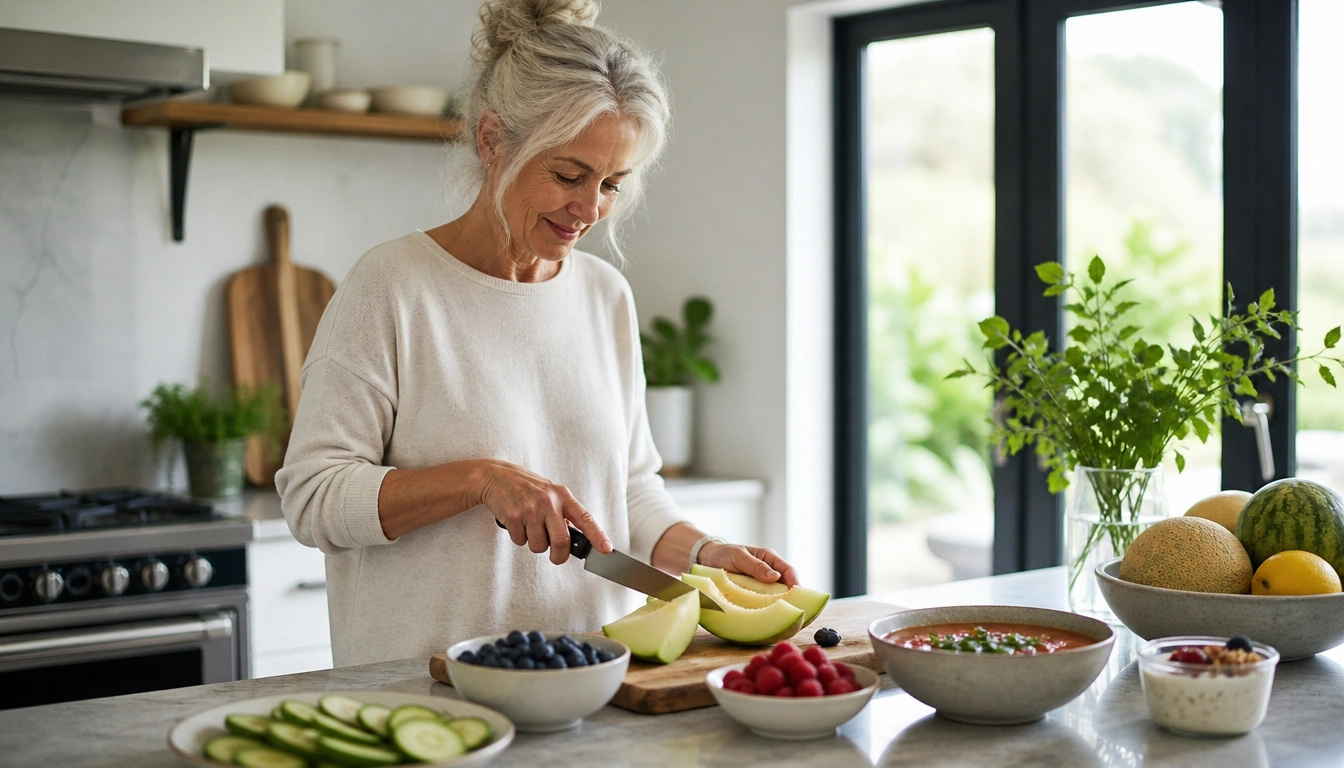
The best hydrating foods after 50 are water-rich fruits and vegetables, soups, broths, yogurt, and other moist foods that are easy to eat in small amounts. They can meaningfully support daily fluid intake, especially when thirst is muted or appetite is smaller. Food is not a replacement for all drinks, but it is a practical way to stay hydrated through meals and snacks.
Key Takeaways
- Thirst can become less dependable after 50, so waiting to feel thirsty may not be enough.
- Foods can contribute a meaningful share of daily fluid intake, often around one-fifth or more, depending on the diet.
- Water-rich produce, soups, and broths can add hydration plus fiber, potassium, and other helpful nutrients.
- Small, frequent portions often work better than large drinks, especially if appetite is low or bladder concerns are a factor.
- People with heart failure, kidney disease, liver disease, or fluid-restricting plans should not change fluid intake without medical guidance.
Age-related hydration changes after 50: why thirst is less reliable
After 50, the body does not always give the same hydration signals it once did. Thirst can become less sensitive, so an older adult may already be underhydrated before feeling the urge to drink. The National Institutes of Health notes that aging can change how the body senses and handles water, and practical hydration often needs to be more deliberate than simply following thirst.
That matters because mild, ongoing dehydration can show up in subtle ways: dry mouth, constipation, fatigue, headache, dizziness, or less clear thinking. It can also make recovery from heat, illness, or a busy day harder. For many adults over 50, the goal is not to force huge amounts of liquid at once. It is to spread moisture through the day in a way that fits appetite, habits, and any medical limits.
Food-based hydration helps because meals already happen at predictable times. If thirst cues are muted, a moist breakfast, a fruit snack, a soup at lunch, or vegetables at dinner can work as steady support rather than relying on a big glass of water after symptoms start.
How food contributes to hydration and why it is not just about plain water
Food does more than add water. Many fruits, vegetables, dairy foods, and soups bring fluid together with potassium, magnesium, fiber, protein, and other nutrients that support normal body function. Research and public-health guidance consistently show that a meaningful share of total daily water intake comes from food, not just beverages.
That is especially useful for adults who do not like plain water, forget to drink, or feel full quickly. A serving of melon, cucumber, tomato, soup, or yogurt may not seem like “hydration” in the usual sense, but it adds to daily fluid intake. It can also be easier on the stomach than a large drink, particularly when appetite is small.
There is one important distinction: foods help, but they do not automatically replace every drink. Some people still need beverages to meet their overall fluid needs, and some medical conditions require special monitoring. Still, food-first hydration is a practical tool because it works with normal meals instead of depending on extra effort all day long.
Best hydrating foods by type: water-rich vegetables, fruits, and soups/broths
The easiest hydrating foods are usually the ones with a high water content and a texture that is comfortable to chew and swallow. Water-rich vegetables are a good starting point. Cucumbers, tomatoes, zucchini, celery, lettuce, and bell peppers are all useful because they add volume and moisture without feeling heavy. They also fit easily into sandwiches, salads, wraps, and side dishes.
Fruits are another strong choice, especially if chewing is still comfortable but eating large portions is not. Melons, berries, peaches, oranges, grapes, and pears can all contribute fluid and natural sweetness. Many people find fruit easier to choose than plain water because it feels like food rather than a chore.
Soups and broths are especially helpful for older adults who prefer warm foods or do not enjoy cold drinks. Brothy soups, vegetable soups, bean soups, and pureed soups can all provide fluid in a soothing format. If chewing is tiring, a blended soup can be easier to manage than a salad or raw produce. The best options are usually those with enough broth or liquid base to count meaningfully toward hydration, not just thick soups with very little fluid.
Dairy foods can also help. Yogurt, kefir, milk, and smoothie-style drinks contribute fluid along with protein and calories, which can be useful when appetite is smaller. For some people, these are more filling than water but still manageable in modest portions.
Simple meal and snack ideas that make hydration easier all day
Hydrating foods work best when they are built into routines. A breakfast could include oatmeal with berries, yogurt with melon, or toast with sliced tomatoes and a side of fruit. Lunch might be a sandwich with lettuce and cucumber plus a cup of soup. Dinner can include vegetables with extra moisture, such as sautéed zucchini, roasted tomatoes, or a side salad with juicy produce.
For snacks, keep the choices simple enough to repeat. A small bowl of grapes, orange segments, sliced cucumber, or peach slices can be eaten quickly. Cottage cheese or yogurt can also work well if you want a snack that offers both moisture and protein. If a snack needs to be portable, pack it in a small container so it is easy to reach for between meals.
Smoothies are especially useful when chewing feels tiring or the appetite is low. They can combine water-rich fruit with yogurt, milk, or even ice for a softer texture. A smoothie can be more appealing than a large glass of water because it doubles as a snack. For some people, that is the difference between skipping fluids and getting a practical amount across the day.
A useful approach is to pair hydration with regular habits you already follow. Eat fruit with breakfast, include a wet vegetable at lunch, have soup at midday, and add a juicy snack in the afternoon. Small repeats matter more than a perfect plan.
How to use hydrating foods when appetite is smaller or drinking feels difficult
Small appetites call for small portions. After 50, especially during illness, stress, heat, or medication changes, large meals and large drinks can feel unappealing. In that situation, it helps to think in terms of “little and often.” A few bites or sips every couple of hours may be easier than trying to catch up with a full glass later.
Choose foods that give the most moisture per bite. A cup of melon, a bowl of broth, a handful of berries, or a small yogurt can deliver hydration without a heavy feeling. Foods with a soft texture may be easier if chewing is tiring or dry mouth is an issue. If you are not hungry enough for a full meal, a soup or smoothie can serve as a bridge between meals.
For caregivers, it can help to offer two or three small options instead of one large serving. Some people respond better when food is visible and ready to eat. Pre-washed fruit, cut vegetables, single-serve yogurt, or a container of soup in the fridge makes hydration easier to act on when appetite appears briefly and then fades.
If constipation is part of the picture, hydrating foods can help as part of a broader routine that also includes fiber, movement, and enough total fluid. Water-rich produce plus regular meals is often more tolerable than trying to correct constipation with large amounts of fluid all at once.
Practical tips for people worried about urinary urgency or incontinence
Fear of urgency or leakage is one of the most common reasons older adults cut back on fluids. That reaction is understandable, but overly restricting fluids can backfire by making urine more concentrated and irritative. It can also increase the risk of constipation and make the bladder less comfortable overall.
For many people, smaller amounts more often are easier than large drinks at once. Food-based hydration supports that pattern because meals and snacks can be spaced through the day. A few bites of fruit, a cup of soup, or a moist breakfast may be easier to tolerate than finishing a big bottle of water in one sitting.
Timing also matters. Some people prefer to shift more of their fluids earlier in the day and reduce large drinks close to bedtime if nighttime trips to the bathroom are a concern. That is a personal strategy, not a one-size-fits-all rule. If urgency is frequent or new, it is worth discussing with a clinician because bladder symptoms can have many causes, including infection, medications, and pelvic floor issues.
When hydrating foods are not enough: fluid restriction, medication, and when to ask a clinician
Some older adults should not increase fluids on their own. If you have heart failure, advanced kidney disease, severe liver disease, or another condition with a prescribed fluid limit, follow your medical plan rather than adding extra beverages or large amounts of watery food without guidance. In those situations, even “healthy” hydration foods may need to be counted within a total fluid target.
Medicines can also change the picture. Diuretics, sometimes called water pills, and certain blood pressure medicines can affect fluid and electrolyte balance. Other medications may cause dry mouth, increase urination, or make dizziness more likely if intake drops. A pharmacist or clinician can help review whether your medication list affects hydration needs.
Ask for medical guidance if you notice persistent dizziness, confusion, very dark urine, repeated falls, swelling, shortness of breath, vomiting, diarrhea, or a sudden change in bladder habits. Those are not situations to manage by simply “drinking more” or “drinking less” on your own. For older adults, hydration should fit the whole health picture, not just thirst.
Simple shopping and prep shortcuts for keeping hydrating foods available
The easiest way to eat more hydrating foods is to make them easy to see and easy to reach. Keep a short list of reliable foods on hand: cucumbers, cherry tomatoes, lettuce, zucchini, melon, berries, oranges, yogurt, broth, and soup. Choose a few you actually enjoy rather than buying a long list that spoils before it is used.
Prep matters more than variety. Wash fruit when you bring it home. Slice cucumbers and peppers in advance. Keep soup portions ready to heat. Put the most hydrating foods at eye level in the fridge so they are the first thing you see. If chopping is tiring, use bagged salad greens, pre-cut fruit, frozen fruit for smoothies, or low-sodium canned soups as practical shortcuts.
For caregivers, linking hydration foods to routine moments can help: fruit with breakfast, soup at lunch, and a vegetable side at dinner. If someone dislikes plain water, do not wait for them to ask. Offer moist foods consistently and in small portions. The goal is not perfection. It is making hydration normal enough that it happens without much effort.
Frequently Asked Questions
How much of daily fluid intake can come from foods instead of drinks?
Food can supply a meaningful share of daily fluid intake, often around one-fifth or more depending on what you eat. Water-rich foods do not replace all beverages, but they do count toward total hydration and can make daily intake easier to reach.
Which fruits and vegetables are the most water-rich and easiest to eat after 50?
Common easy choices include cucumbers, tomatoes, zucchini, celery, lettuce, melons, berries, peaches, oranges, grapes, and pears. The best option is usually the one you will actually eat regularly and can chew comfortably.
What are the best warm foods or soups for hydration if I do not like cold water?
Broths, vegetable soups, bean soups, and blended soups are all useful. Choose soups with enough liquid base to meaningfully add fluid. Warm foods can be easier to sip and eat when cold drinks do not appeal.
How can I stay hydrated if I worry about urinary urgency or incontinence?
Try smaller amounts more often rather than large drinks at once, and use moist foods to spread hydration through the day. Cutting fluids too much can make urine more concentrated and may worsen constipation. If symptoms are frequent or new, ask a clinician.
When should an older adult not increase fluids without medical guidance?
Do not change fluid intake on your own if you have heart failure, advanced kidney disease, severe liver disease, or another condition with a prescribed fluid limit. Check with a clinician if you take diuretics or notice dizziness, swelling, shortness of breath, or sudden bladder changes.
The Bottom Line
After 50, hydration often works better when it is built into meals and snacks instead of depending on thirst alone. Water-rich produce, soups, broths, yogurt, and smoothies can all help you stay more comfortable and more consistent.
Think in small, repeatable steps: fruit at breakfast, a wet vegetable at lunch, soup or broth when you want something warm, and a snack with moisture in the afternoon. That approach is often easier than trying to drink a lot at once.
If you have a fluid-restricting condition or take medications that affect fluid balance, use food-based hydration only with medical guidance. For everyone else, the most useful plan is usually simple, steady, and realistic.
Medical disclaimer
Medical disclaimer: This content is for educational and informational purposes only and is not a substitute for professional medical advice, diagnosis, or treatment. Dietary needs and supplement suitability vary by individual.
Sources
- National Institutes of Health (NIH) — nih.gov. Accessed October 2026.
- National Institutes of Health (NIH) — nih.gov. Accessed October 2026.
- Academic Research Institution — harvard.edu. Accessed October 2026.
