
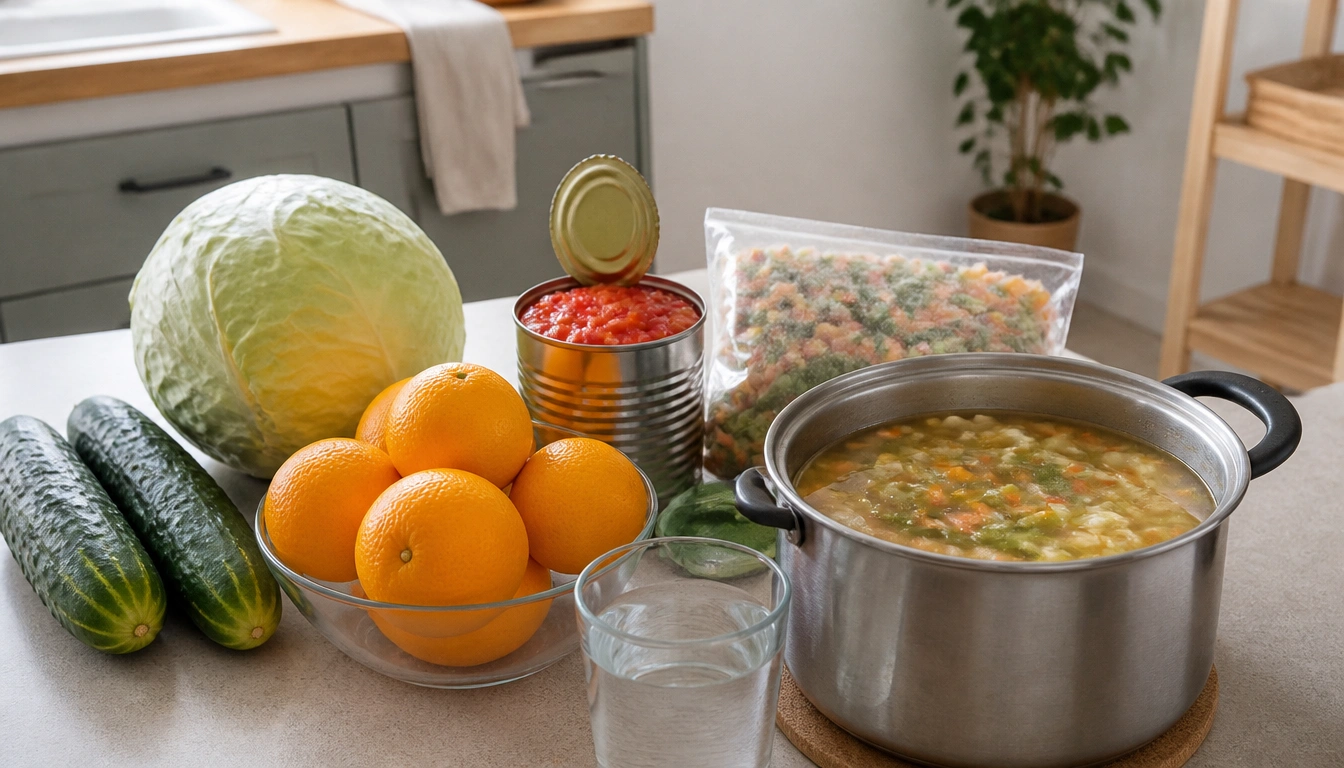
Cheap hydration foods include cucumbers, cabbage, celery, tomatoes, oranges, melons, zucchini, broth-based soups, and frozen or canned fruits and vegetables. Food can meaningfully contribute to hydration, but it does not replace drinking water. The best budget approach is to combine water-rich foods with regular beverages and choose frozen, canned, and seasonal options that fit your grocery budget.
Key Takeaways
- Food provides about 20% of total daily water intake, so water-rich meals can support hydration without specialty drinks.
- Frozen and canned produce can be just as useful for hydration as fresh items, and often cost less with less waste.
- Soups, stews, soft fruits, and broth-based meals are especially helpful when appetite is low or thirst is reduced.
- Urine color is a rough self-check only: pale yellow usually suggests adequate hydration, while dark amber can signal you need more fluids.
- Heavy sweating, heat exposure, and endurance exercise may require more than food alone, including intentional fluid and electrolyte replacement.
Why food can help with hydration
Simple hydration foods for budget shoppers work because water is not only something you drink. Public health guidance recognizes that food supplies a meaningful share of daily water intake—roughly 20% on average. That matters when you are trying to stay hydrated without paying for sports drinks, bottled flavored water, or other specialty products.
Whole foods also behave differently from plain beverages. In fruits and vegetables, water is held inside plant cells along with fiber, potassium, and other electrolytes. This “matrix effect” can make the fluid feel less like a quick splash and more like a steadier release as the food is digested. That does not make food superior to drinking water, but it does help explain why a melon snack or a bowl of soup can contribute to hydration in a practical way.
Food-based hydration is most useful as a daily support strategy. It works best when you build it into meals and snacks instead of expecting one food to fix thirst on its own. The National Academies and the NHS both note that fluid needs vary with body size, activity, and temperature, so there is no one-size-fits-all target for everyone.
For budget shoppers, the advantage is bigger than hydration alone. Water-rich foods often bring fiber, vitamins, and minerals that make meals more filling and more nutritious than a sugary drink would be.
Cheap water-rich foods to prioritize at the store
The cheapest hydrating foods are usually the ones that are easy to find, easy to store, and easy to use in several meals. Produce with high water content is a smart place to start, but frozen and canned options deserve just as much attention.
Fresh produce
Cucumbers, celery, cabbage, zucchini, and tomatoes are reliable budget picks in many stores. They are light, versatile, and high in water. Oranges and grapefruit can also be affordable when they are in season. Melons are another strong option, especially when bought whole and portioned at home.
These foods are useful because they can show up in meals without much prep. Sliced cucumber can go into sandwiches or salads. Shredded cabbage can stretch slaw, soup, or stir-fry. Zucchini can be sautéed, roasted, or added to pasta sauces. Tomatoes work in salads, sandwiches, soups, and sauces.
Frozen produce
Frozen fruits and vegetables are often overlooked, but they are one of the best budget-friendly hydration tools. They are picked and frozen at peak ripeness, which helps preserve moisture and nutrients. Frozen berries, peaches, spinach, broccoli, and mixed vegetables can all support hydration while keeping costs predictable. They also reduce spoilage, which matters when money is tight.
Canned produce
Canned tomatoes, canned fruit packed in juice or water, and low-sodium canned vegetables can be very practical. Canned tomatoes are especially useful because they bring moisture, flavor, and body to soups, stews, and pasta sauces. If sodium is a concern, choose lower-sodium versions when possible and rinse canned vegetables under water to reduce excess salt.
For hydration and nutrition, fresh is not automatically better than canned or frozen. The best choice is the one you can afford, store safely, and actually use.
How to shop for hydration on a budget
Shopping for hydrating foods on a budget is mostly about flexibility. Seasonal produce usually costs less, so it makes sense to follow price rather than force a particular recipe. If cucumbers are cheap, buy cucumbers. If cabbage is on sale, use cabbage. If frozen fruit is cheaper than fresh berries, buy frozen fruit.
Store brands often make a difference too. Generic canned tomatoes, frozen vegetables, plain yogurt, broth, and unsweetened applesauce can all help you build water-rich meals without paying for packaging or marketing. For produce, choose items that hold up well over several days, such as cabbage, carrots, oranges, apples, onions, and squash.
Avoiding waste is part of hydration budgeting. Buy smaller amounts of highly perishable produce if you will not use it quickly. Choose frozen when you want flexibility. Use wilted greens in soup, soft fruit in smoothies or oatmeal, and leftover vegetables in broth-based meals. The goal is not to own the perfect hydrating food list; it is to keep water-rich foods moving from the cart to the plate.
When you compare fresh versus frozen versus canned, ask three questions: What costs less per edible portion? What will last long enough to use? What will I actually eat this week? That keeps the focus on practicality rather than food trends.
Easy meals and snacks that add hydration
Hydration foods work best when they are part of real meals. A snack of cucumber slices may help, but a meal that combines water-rich produce with protein, fiber, and starch is usually more satisfying and more useful across the day.
Try oatmeal topped with thawed frozen berries or sliced orange. Make a bean and vegetable soup with canned tomatoes, cabbage, and carrots. Use broth-based vegetable soup as a simple lunch with toast or crackers. Add sliced tomato and cucumber to sandwiches. Mix watermelon or melon with plain yogurt for a cooler snack. Toss zucchini into pasta or rice dishes so your meal carries more moisture without much added cost.
These combinations matter because water-rich foods are not just about fluid. They also help with satiety, which can reduce the urge to chase hunger with sugary drinks or snack foods that do little for hydration. Foods with fiber can also slow digestion a bit, which helps a meal feel more steady and satisfying.
If you are cooking on a budget, soups and stews are especially efficient. They let you combine inexpensive vegetables, beans, lentils, grains, and broth into one pot. That is often cheaper than buying multiple convenience items and gives you a meal that is both filling and hydrating.
Who needs extra caution
Some people can lean more heavily on food-based hydration than others, but certain groups need extra attention. Older adults are a good example. Thirst often becomes less noticeable with age, so an older person may not feel thirsty even when they need more fluids. Soups, broths, soft fruits, yogurt, and cooked vegetables can be especially useful because they are easier to eat and easier to fit into regular meals.
Athletes, outdoor workers, and anyone doing heavy labor in heat may need more than water-rich foods. Sweating increases losses of both water and sodium, so food alone may not replace what is being lost. In those situations, hydration often needs to include intentional drinking and, depending on the situation, electrolyte replacement. Food can support the plan, but it should not be the only strategy.
People with chronic kidney disease, heart failure, liver disease with fluid buildup, or other medical conditions that require fluid limits should not increase water-rich foods on their own without guidance from their care team. “Hydrating foods” still count toward fluid intake, and in some cases extra fluids or very large portions of soups can be unsafe. Individual medical advice always overrides general food guidance.
Using urine color and symptoms as a rough check
Urine color is a practical, imperfect self-check. A pale yellow color usually suggests you are reasonably hydrated, while a darker amber color can mean you need more fluids. That is a rough clue, not a diagnosis. Foods, vitamins, and medicines can change urine color, and one sample does not tell the whole story.
Symptoms matter too. Dry mouth, headache, dizziness when standing, unusual fatigue, and reduced urination can all point toward low fluid intake, especially if they happen after heat exposure, illness, or exercise. If urine stays very dark or you are not urinating much, that is worth taking seriously.
Seek medical help promptly if dehydration seems severe or if you have confusion, fainting, rapid heartbeat, severe weakness, or you cannot keep fluids down. CDC and NHS guidance both treat these as warning signs that need more than a grocery-store fix. Food can support recovery, but it is not a substitute for medical care when symptoms are significant.
Making water taste better without specialty drinks
If plain water is boring, you do not need a pricey flavored beverage aisle to make it more appealing. Small, low-cost changes can make a big difference in whether you actually drink enough.
Try adding cucumber slices, lemon wedges, orange peel, mint, or a few pieces of thawed frozen fruit to a pitcher of tap water. Chill it well and let it sit for a while so the flavor infuses. A splash of 100% juice in water can also make it more palatable without turning it into a sugar-heavy drink, though plain water should still be the main beverage.
Herbal tea, served hot or iced, is another low-cost option if you like it unsweetened. Broth can count toward fluid intake too, especially when it is part of a meal. The point is not to replace water with gimmicks. The point is to make ordinary fluids easier to use consistently.
For some people, the best strategy is habit-based: keep a bottle or cup where you spend time, pair water with meals, and use hydrating foods as a backup instead of waiting to feel thirsty.
Building a hydrating grocery cart around budget staples
A good budget hydration cart does not need specialty ingredients. It needs a few flexible staples that can become snacks, side dishes, or full meals. A practical cart might include cabbage, cucumbers, carrots, onions, canned tomatoes, frozen vegetables, seasonal fruit, broth, oats, beans, and a low-cost grain such as rice or pasta.
From there, build meals that are naturally moist. Vegetable soup, bean chili, tomato-based pasta, stir-fries with zucchini and cabbage, and fruit-and-yogurt snacks all support hydration while using inexpensive ingredients. If a food is on sale and high in water, it is worth considering whether it can replace something more processed and less filling.
There is no need to chase the highest-water food ever listed online. A cart built around soups, stews, frozen produce, canned tomatoes, and a few sturdy fresh fruits and vegetables can support hydration day after day without putting pressure on your grocery budget. That is usually more sustainable than buying specialty drinks you will not keep using.
Frequently Asked Questions
Which budget vegetables and fruits have the highest water content?
Cucumbers, celery, cabbage, zucchini, tomatoes, oranges, grapefruit, and melons are all strong choices. The cheapest option is often the one that is in season, on sale, or available frozen or canned without added sugar.
Is food-based hydration enough, or do I still need to drink water?
You still need to drink water. Food can contribute meaningfully to hydration, but it is only part of total fluid intake. Food is best viewed as a helpful supplement to regular drinks, not a replacement for them.
Are canned or frozen fruits and vegetables good for hydration and nutrition?
Yes. Frozen and canned produce can be excellent budget choices because they are convenient, reduce waste, and still contain water and nutrients. Choose low-sodium canned vegetables and fruit packed in water or its own juice when possible.
How can older adults use hydration foods when thirst is low?
Older adults can lean on soups, broth-based meals, soft fruits, yogurt, and cooked vegetables because they are easier to eat and often more appealing when thirst is reduced. Setting regular meal and drink routines can help too.
When is increasing water-rich foods unsafe because of a medical fluid restriction?
If you have kidney disease, heart failure, liver fluid buildup, or another condition with a prescribed fluid limit, extra soups and other hydrating foods may count toward that limit. Follow your clinician’s instructions rather than general advice.
The Bottom Line
Cheap hydration foods can make a real difference, especially when your budget is tight or fresh produce is limited. Cabbage, cucumbers, tomatoes, celery, oranges, melons, soups, and frozen or canned vegetables are all practical places to start.
The most useful approach is simple: pair water-rich foods with regular drinking, choose frozen or canned produce when it saves money, and use urine color as a rough check rather than a diagnosis. If you sweat heavily, feel unwell, or have a fluid-restricting medical condition, personal medical guidance matters more than any grocery rule.
Medical disclaimer
Medical disclaimer: This content is for educational and informational purposes only and is not a substitute for professional medical advice, diagnosis, or treatment. Dietary needs and supplement suitability vary by individual.
Sources
- National Health Service (NHS) — sath.nhs.uk. Accessed October 2026.
- Centers for Disease Control and Prevention (CDC) — cdc.gov. Accessed October 2026.
- National Health Service (NHS) — www.nhs.uk. Accessed October 2026.
- National Institutes of Health (NIH) — nih.gov. Accessed October 2026.
- Academic Research Institution — uconn.edu. Accessed October 2026.
