
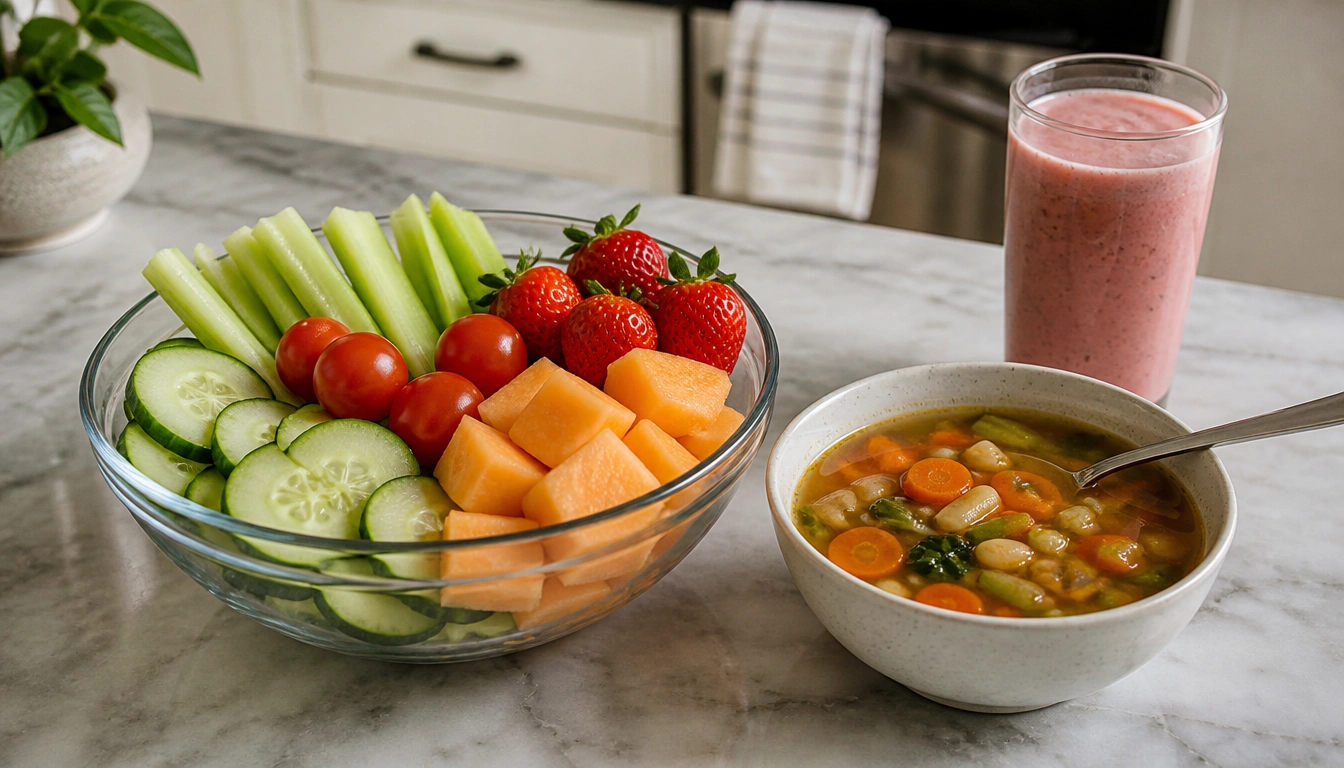
The easiest hydration foods for vegetarian beginners are water-rich, low-prep options such as cucumbers, celery, lettuce, tomatoes, melon, strawberries, zucchini, soups, and smoothies. They contribute fluid along with fiber and minerals like potassium and magnesium, which can make hydration more practical and satisfying. They help support your daily intake, but you still need beverages for hot weather, exercise, or heavy sweating.
Key Takeaways
- Water-rich foods can supply part of your daily fluid intake, especially when they are easy to eat regularly.
- The best beginner choices are simple, affordable, and low-prep: cucumbers, melon, tomatoes, lettuce, celery, berries, smoothies, and broth-based soups.
- Plant foods deliver water differently than plain water because fiber and cell structures slow release and add electrolytes such as potassium and magnesium.
- If you suddenly increase raw produce, you may get bloating or gas; easing in with smaller portions, blended foods, or lightly cooked vegetables can help.
- Food helps with hydration, but it does not fully replace drinking water during exercise, hot weather, or heavy sweating.
- People with kidney disease, heart failure, or fluid or potassium limits should ask a clinician before aggressively increasing high-water produce.
What counts as a hydration food
For vegetarian beginners, a hydration food is simply a plant food that contains a lot of water and is easy enough to eat often. The most useful choices are foods that are mostly water by volume, such as cucumbers, lettuce, celery, tomatoes, melon, strawberries, zucchini, and broth-based soups. Public health guidance notes that food typically provides a meaningful share of total daily water intake, not just drinks. Harvard and other nutrition sources also point out that fruits and vegetables can help with hydration because they come packaged with fiber, vitamins, and minerals rather than water alone.
That matters because a beginner does not need a perfect meal plan to make progress. If you keep one or two water-rich foods in your fridge or pantry and use them repeatedly, hydration becomes easier to support without much extra work. The goal is not to chase the highest water percentage on a chart. The goal is to choose foods you can actually eat every day.
Easy vegetarian picks for snacks, meal bases, blends, and cooked meals
The simplest way to organize hydration foods is by how easy they are to use.
Snacks: cucumber spears, celery sticks, cherry tomatoes, watermelon, cantaloupe, strawberries, and bell pepper strips are all easy to wash, cut, and grab. If you want more staying power, pair them with hummus, yogurt, cottage cheese, or bean dip.
Meal bases: romaine lettuce, iceberg lettuce, spinach, and shredded cabbage can replace some dry bread or dense grain volume in wraps, bowls, and sandwiches. They add crunch and moisture without needing much prep.
Blended options: smoothies are one of the most beginner-friendly choices because they are easy to drink, easy to customize, and gentle for many people who struggle with raw vegetables. A simple mix of fruit, spinach, cucumber, and water or unsweetened plant milk can work well.
Cooked options: soups, stews, and lightly steamed vegetables are practical when raw foods feel too heavy. Zucchini, spinach, bok choy, broccoli, and tomato-based soups can all contribute fluid without requiring a large raw salad.
If you want the shortest path to success, start with the foods you are most likely to buy again. Consistency matters more than variety at the beginning.
Why water-rich plant foods hydrate differently than plain water
Plain water is absorbed quickly, but water in plant foods is packaged inside a cellular structure. Fruits and vegetables contain fiber and natural plant matrices that change how water moves through the digestive tract. That can slow release compared with a drink, which is one reason high-water produce often feels more filling than a glass of water alone.
These foods also provide electrolytes. Water-rich produce often contains potassium, and some options contribute magnesium as well. That is useful because electrolytes help your body manage fluid balance, especially when you are eating a more plant-forward diet. So the value of hydration foods is not just the water itself; it is the combination of fluid, fiber, and minerals.
Still, this does not mean food replaces beverages. Food contributes to daily hydration, but it is only one part of the picture. Total daily water needs vary by size, environment, and activity level, and official guidance from the National Academies describes total water intake as coming from both beverages and food. In other words, hydration foods are a support strategy, not a substitute for drinking.
How to increase raw produce without bloating or gas
A common beginner mistake is to jump from low-fiber eating to large amounts of raw vegetables all at once. Even very healthy foods can cause bloating, gas, or a heavy feeling if your digestive system is not used to that much fiber. That does not mean the foods are a problem; it usually means your intake changed faster than your gut could comfortably adapt.
A gradual shift is usually easier. Start with small portions of one or two produce items per meal, then build up over time. If raw vegetables feel rough, try lightly steamed options, blended smoothies, peeled cucumbers, soft fruit, or soups. Those choices still add hydration while being easier to digest for many beginners.
It can also help to spread fiber through the day instead of loading it all into one meal. A cucumber snack at one point in the day, a smoothie later, and a vegetable soup at dinner is often easier than a giant salad for lunch. If bloating is severe, persistent, or painful, that deserves medical review rather than more guesswork.
Simple meal ideas for breakfast, lunch, snacks, and dinner
You do not need complicated meal prep to make hydrating vegetarian foods part of your routine. Keep the structure simple: one watery food, one protein or fat if you need more staying power, and one easy repeatable habit.
Breakfast: a smoothie with strawberries, spinach, and water; yogurt with melon; or overnight oats topped with berries and extra fruit. If you prefer savory food, try tomato slices with toast and a side of fruit.
Lunch: a wrap with romaine, cucumber, tomato, hummus, and beans; a grain bowl with spinach, shredded cabbage, and chopped cucumber; or a lentil soup with a side salad made from whatever greens you tolerate best.
Snacks: a container of grapes or berries, cucumber coins with dip, bell pepper strips, or sliced melon. These are easy to keep visible in the fridge, which improves follow-through.
Dinner: vegetable soup with beans, zucchini and tomato sautéed with pasta, or a simple stir-fry with bok choy and broccoli. Warm meals can be especially helpful if raw foods leave you feeling too full or gassy.
If budget is a concern, buy the produce you will actually finish. Frozen fruit, bagged greens, cucumbers, carrots, cabbage, and seasonal melons often give a lot of hydration value for the cost.
When food is not enough
Hydration foods are helpful in normal daily life, but they are not enough during heavy sweating, endurance exercise, or very hot weather. In those situations, you lose water and electrolytes faster than food can realistically replace them. That is when beverages matter most, and in some cases an electrolyte drink may be more useful than relying on produce alone.
The practical rule is to treat hydration foods as background support and beverages as the main tool when water loss rises. If you are exercising for a long time, working outdoors, or spending time in a hot climate, do not wait for fruit or salad to cover the gap. Drink fluids regularly and pay attention to thirst, urine color, and how you feel.
This section matters because beginners sometimes assume that eating more cucumbers or watermelon means they can drink less in every setting. That is not true. Food helps, but it cannot fully match the speed and volume of fluid losses in heat or strenuous activity.
Food safety and when dehydration needs medical attention
Because many hydrating foods are eaten raw, hygiene matters. Wash fruits and vegetables under running water before cutting or eating them, even if you plan to peel them. Store cut produce promptly and keep it cold to reduce foodborne illness risk. If you are using smoothies, soups, or washed greens often, a basic routine of clean hands, clean knives, and cold storage goes a long way.
Watch for early dehydration signs such as dry mouth, fatigue, headache, dizziness, dark urine, or trouble focusing. Those signs usually mean you need more fluid, but they can also signal something else if they do not improve. Seek urgent care for confusion, fainting, rapid heartbeat, extreme lethargy, or inability to keep fluids down.
Some people need extra caution before increasing high-water produce. That includes people with chronic kidney disease, heart failure, or any fluid-restricted or potassium-restricted plan. For them, a big jump in watermelon, tomato, spinach, or other produce may not be appropriate without individualized medical advice. A clinician or registered dietitian can help balance hydration, potassium, and any other dietary limits safely.
For most vegetarian beginners, the safest approach is steady and simple: use foods to add water, not to replace common sense. Build from what you tolerate, and adjust based on your activity level and medical needs.
| Food | Easy use case | Why beginners like it |
|---|---|---|
| Cucumber | Snack slices, salads, wraps | Very mild flavor, crisp, easy to prep |
| Melon | Grab-and-go snack, breakfast side | No cooking needed, naturally sweet |
| Tomato | Sandwiches, bowls, soups | Works in savory meals and snacks |
| Lettuce and spinach | Wraps, salads, sandwich base | Quick way to add moisture to meals |
| Celery | Snack with dip, chopped into salads | Crunchy, low-prep, easy to portion |
| Soup | Lunch or dinner base | Comforting, filling, and hydrating |
| Smoothie | Breakfast or snack | Good for people who struggle with raw produce |
Frequently Asked Questions
How much water do vegetarian beginners still need from beverages, not just food?
Food can provide a meaningful share of daily water, but it does not cover everything. Total fluid needs depend on body size, climate, and activity. The safest habit is to keep drinking water regularly and use hydrating foods as a support, not the only source.
Which fruits and vegetables are highest in water content and easiest to eat daily?
Some of the easiest daily choices are cucumbers, lettuce, celery, tomatoes, watermelon, cantaloupe, strawberries, spinach, and zucchini. The best option is the one you will actually eat often, because consistency matters more than chasing the absolute highest water content.
Can high-water vegetarian foods replace drinking water during exercise or hot weather?
No. They can help, but they cannot replace beverages when you are sweating a lot or exercising for a long time. In those situations, drinking fluids directly is still important, and some people may need electrolytes as well.
How can a beginner avoid bloating when increasing raw vegetables and fiber?
Increase raw produce gradually, keep portions modest at first, and spread fiber through the day. If raw foods feel uncomfortable, try lightly steamed vegetables, smoothies, soft fruit, or soup. Those options often digest more easily while you adjust.
What are the safest simple snack and meal ideas for adding more hydration through food?
Good beginner options include cucumber with hummus, melon, berries, tomato on toast, lettuce and bean wraps, smoothies, and vegetable soups. Choose foods that are easy to wash, store, and repeat so hydration stays practical.
The Bottom Line
For vegetarian beginners, the easiest hydration foods are the ones that are watery, simple, and repeatable: cucumber, melon, tomatoes, lettuce, celery, berries, smoothies, and soups. They add fluid along with fiber and minerals, which makes them useful for everyday support.
Food can contribute meaningfully to hydration, but it does not replace drinking water in hot weather, heavy sweating, or exercise. Start slowly if raw produce bothers your digestion, and choose softer or cooked options when needed. If you have kidney, heart, or fluid restrictions, get individualized advice before increasing these foods aggressively.
Medical disclaimer
Medical disclaimer: This content is for educational and informational purposes only and is not a substitute for professional medical advice, diagnosis, or treatment. Dietary needs and supplement suitability vary by individual.
Sources
- Centers for Disease Control and Prevention (CDC) — cdc.gov. Accessed October 2026.
- Academic Research Institution — harvard.edu. Accessed October 2026.
