
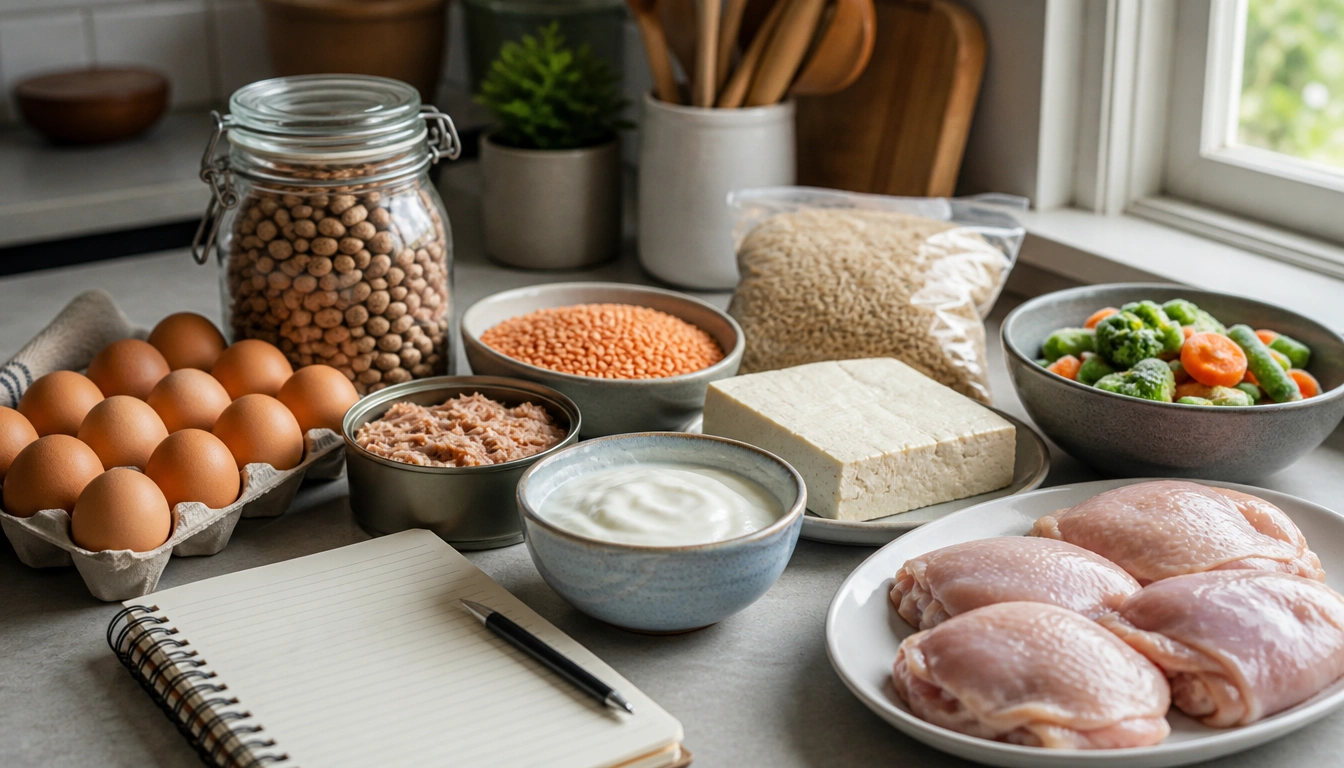
Yes—you can eat enough protein on a tight grocery budget without protein powders or specialty foods. The easiest approach is to build meals around low-cost staples such as eggs, beans, lentils, peanut butter, yogurt, tofu, canned fish, and budget cuts of poultry, then compare foods by unit price and portion cost instead of package price. Mixing plant and animal proteins, batch-cooking, and using fresh, frozen, and shelf-stable options helps keep costs down and meals filling.
Key Takeaways
- Choose protein foods for cost per serving and satiety, not just the cheapest package on the shelf.
- Beans, lentils, peas, eggs, yogurt, tofu, canned fish, and chicken thighs are practical budget anchors.
- Pair beans and grains across the day to support fullness and amino acid balance without needing a perfect meal every time.
- Use a rotation of fresh, frozen, and shelf-stable proteins so price swings and waste do not wreck the budget.
- Increase beans and lentils gradually with enough fluids to reduce gas and bloating.
- Batch-cook once and repurpose ingredients into several meals to save time, fuel, and money.
A budget-first protein plan that actually fills you up
A simple protein meal plan for budget shoppers works best when it is built around foods that do two jobs at once: they provide enough protein and help you stay full. That usually means choosing foods with a strong mix of protein, fiber, and affordability. Public guidance from the USDA and MyPlate supports a broad protein foods group that includes meat, poultry, seafood, eggs, beans, peas, lentils, nuts, seeds, and soy foods such as tofu.
For shoppers watching every dollar, the most reliable “protein anchors” are the foods that deliver a lot of nutrition for the price. In the morning, eggs, plain yogurt, cottage cheese, or peanut butter can be quick starters. For shelf-stable options, canned tuna, canned salmon, canned beans, and peanut butter hold up well in the pantry. For batch cooking, dried beans, lentils, split peas, chicken thighs, and whole chickens are usually strong values. For no-cook meals, Greek yogurt, cottage cheese, canned fish, and hummus with whole-grain bread or crackers can keep prep time low.
Thinking in roles rather than categories makes shopping easier. A breakfast protein does not have to look like a classic breakfast food. A lunch protein may be leftover chicken or lentils stirred into soup. A quick dinner protein may be eggs, tofu, or beans paired with frozen vegetables and a grain. The goal is not perfection; it is a predictable pattern that keeps protein in the cart without pushing the budget off course.
How to shop by unit price, not package price
One of the biggest money-saving mistakes is comparing protein foods by sticker price alone. A package can look cheap and still cost more per serving than a larger bag or a more concentrated food. Unit price is the number that matters most because it tells you the cost per ounce, pound, or gram. When that is available on the shelf tag, use it before you decide.
Package size can be misleading in other ways too. A small tub of flavored yogurt may cost less up front than a larger plain tub, but the plain version may give you more protein per dollar and fewer added sugars. A family pack of chicken may cost more than a single tray, yet it often lowers the cost per serving if you can use it across several meals. Canned beans may seem pricier than dried beans, but they save time and still offer a low-cost protein option when cooking time is limited. That is why the “best” choice changes based on your schedule as well as your budget.
A practical rule is to compare foods by the cost of the amount you will actually eat. If you buy a whole chicken and use the meat for soup, wraps, and grain bowls, the per-meal value is often better than buying three separate convenience items. The same is true for dried beans cooked in a big batch versus individual single-serve protein snacks. Budget shopping gets easier when you stop paying for packaging, marketing, and convenience you do not need every day.
A repeatable weekly meal template
Instead of trying to invent seven different menus, use one simple pattern and repeat it with small changes. That keeps shopping predictable and makes leftovers useful. A budget-friendly week can be built around one breakfast, one lunch, one dinner, and one snack pattern.
Breakfast: eggs with toast and fruit, or plain yogurt with oats and peanut butter, or oatmeal made more filling with milk, seeds, and a spoonful of nut butter. Lunch: a grain bowl with beans or chicken, frozen vegetables, and a simple sauce. Dinner: a stir-fry, soup, chili, or pasta dish built around one core protein and a large vegetable component. Snack: cottage cheese, yogurt, roasted chickpeas, hard-boiled eggs, or hummus with whole-grain crackers.
The value of a template is flexibility. If eggs are on sale, breakfast gets cheaper. If chicken prices rise, use more beans, tofu, or canned fish. If you have leftovers, they slide into the next meal without extra planning. This approach also helps reduce food waste because every protein ingredient has a second job later in the week.
How plant proteins and grains work together
Beans, lentils, and peas are especially useful on a budget because they combine protein with fiber. That combination tends to slow digestion and support fullness, which can help meals feel satisfying even when they cost less. They are also easy to pair with grains such as rice, oats, corn tortillas, or whole-wheat bread. For many shoppers, that pairing is the difference between a meal that feels skimpy and one that lasts.
Plant proteins do not need to be “complete” in every single meal. The body can use amino acids from different foods over the course of the day. That means rice and beans at lunch, peanut butter toast at breakfast, and lentil soup at dinner can work together across the day. You do not have to force every plate to contain every amino acid in one sitting.
This matters because it widens the budget options. If you already use grains as a low-cost base, adding beans or lentils often gives you a much better satiety return than buying a more expensive packaged protein item. If you also include a little dairy, eggs, poultry, or tofu during the day, it becomes even easier to meet protein needs without relying on specialty products.
Meal prep that stretches every grocery dollar
The most efficient budget protein plan usually depends on food you can cook once and use in more than one way. A pot of lentils can become soup on Monday and a grain bowl on Wednesday. A tray of chicken thighs can turn into wraps, pasta, or fried rice. A batch of black beans can be served with rice one night and folded into tacos the next. This “cook once, eat twice” habit saves time, energy, and money.
Cross-use ingredients on purpose. If you buy onions, carrots, and celery, they can support soup, chili, and a skillet meal. If you cook a pot of rice, it can anchor a lunch bowl, side dish, or quick fried rice. If you buy frozen vegetables, they can fill gaps when fresh produce is expensive or starts to soften. Frozen proteins and vegetables are often a smart backup because they reduce waste when plans change.
Blending animal and plant proteins is another useful strategy. Ground turkey mixed with lentils stretches a skillet meal. Chicken stirred into bean soup creates a fuller dinner for less money than chicken alone. Tuna mixed with white beans or pasta can become a simple pantry meal. The goal is not to eliminate animal protein if you enjoy it; the goal is to make each serving go further.
Adjusting for different needs and restrictions
Not everyone needs the same amount of protein, and budget planning should reflect that. Older adults may need protein distributed more evenly through the day to support muscle maintenance. Active people may need more overall food and protein to match training demands. During pregnancy or lactation, needs change again, so it is worth getting individualized guidance from a clinician or registered dietitian if you are unsure how much to aim for.
Vegetarian and mostly plant-based eaters can absolutely build affordable high-protein meal plans, but they should pay attention to variety. Beans, lentils, tofu, soy milk, yogurt, eggs, nuts, seeds, and whole grains can all help. Pairing plant proteins with vitamin C-rich foods can also help support iron absorption from plant sources.
People with chronic kidney disease or another medical condition that changes protein goals should not make major protein changes on their own. For those readers, the right budget plan is still possible, but it should be personalized. A low-cost protein food for one person may be the wrong choice for another if a medical condition changes how much protein is appropriate.
Adding beans and lentils gradually
Beans and lentils can be some of the cheapest protein foods in the store, but a sudden jump in fiber may cause gas or bloating if your body is not used to it. The easiest fix is to add them gradually instead of trying to overhaul every meal in one week. Start with smaller portions and increase as your digestion adapts.
Rinsing canned beans, cooking dried beans thoroughly, and drinking enough fluids can make the transition easier. Some people also find that lentils are gentler than larger beans at first. Spices, garlic, onions, and acidic ingredients like tomatoes or vinegar can make bean-based meals taste better without making them more expensive.
If a bean-heavy meal feels too big, balance it with eggs, yogurt, fish, tofu, or a smaller amount of meat. That lets you use affordable plant protein while keeping the meal comfortable to eat. The point is steady progress, not forcing a sudden change that leads to discomfort and quitting.
Food safety and storage for budget proteins
Affordable protein only stays affordable if you store it safely and prevent waste. Eggs should be kept refrigerated and cooked until set for the dish you are making. Poultry should be handled carefully, cooked thoroughly, and chilled promptly after cooking. Leftovers should be refrigerated quickly and eaten within a safe timeframe according to standard food-safety guidance.
Canned goods are useful because they last a long time, but they should still be checked before use. Discard cans that are bulging, leaking, or deeply dented. If you are watching sodium intake, rinse canned beans and vegetables before using them. Frozen proteins are also valuable because they keep well and make it easier to buy in bulk or during sales without losing food to spoilage.
A freezer backup can save a week’s meal plan when prices spike or schedules change. If fresh chicken goes on sale, freeze part of it. If bread starts to go stale, freeze it. If you make extra chili, portion it into containers. Storage habits are part of the budget strategy because every avoided food waste loss is money saved.
Used thoughtfully, budget protein does not have to mean boring food or a bare-bones diet. It means choosing foods that are filling, versatile, and priced for real life.
Frequently Asked Questions
What are the cheapest high-protein foods I can buy at the grocery store?
Often the best values are eggs, dried beans, lentils, peanut butter, plain yogurt, cottage cheese, tofu, canned tuna, canned salmon, and chicken thighs or whole chickens. The cheapest option can change by store, so compare unit price and cost per serving rather than assuming the lowest sticker price is the best deal.
How do I build a high-protein meal plan without expensive protein powders or bars?
Use everyday foods as the base of your plan: eggs or yogurt at breakfast, beans or chicken at lunch, and a dinner built around lentils, tofu, canned fish, or poultry. Add grains and vegetables for fullness. A repeatable template usually costs less than packaged bars or powders and is easier to sustain.
How do I compare protein foods by unit price instead of package price?
Look at the shelf tag for cost per ounce, pound, or gram. Then think about how much of the food you will actually eat. A larger package may cost more at checkout but less per serving. Unit price is the better measure when you want the best value for protein foods.
How can plant proteins like beans and lentils provide complete nutrition over the day?
Plant proteins do not need to be complete in every meal. Your body can use amino acids from different foods across the day. Pair beans or lentils with grains, nuts, seeds, dairy, eggs, or other plant foods to make the overall daily pattern more balanced.
How can I batch-cook budget proteins so they last for multiple meals?
Cook a larger batch of one or two protein staples, then repurpose them. For example, use lentils in soup one night and bowls the next, or roast chicken once and turn leftovers into wraps, salads, or pasta. Freeze extra portions so the food stays usable if your schedule changes.
The Bottom Line
A tight grocery budget does not mean you have to give up on protein. The most affordable approach is to build meals from versatile staples, check unit price, and rely on foods that are filling as well as protein-rich.
Beans, lentils, eggs, dairy, tofu, canned fish, and budget poultry can cover most weeknight needs if you rotate them well and use leftovers wisely. If you have a medical condition, are pregnant, or have kidney disease, get individualized advice before changing protein intake a lot.
Medical disclaimer
Medical disclaimer: This content is for educational and informational purposes only and is not a substitute for professional medical advice, diagnosis, or treatment. Dietary needs and supplement suitability vary by individual.
Sources
- U.S. Government / Health Authority — usda.gov. Accessed October 2026.
- U.S. Government / Health Authority — nutrition.gov. Accessed October 2026.
- U.S. Government / Health Authority — usda.gov. Accessed October 2026.
